
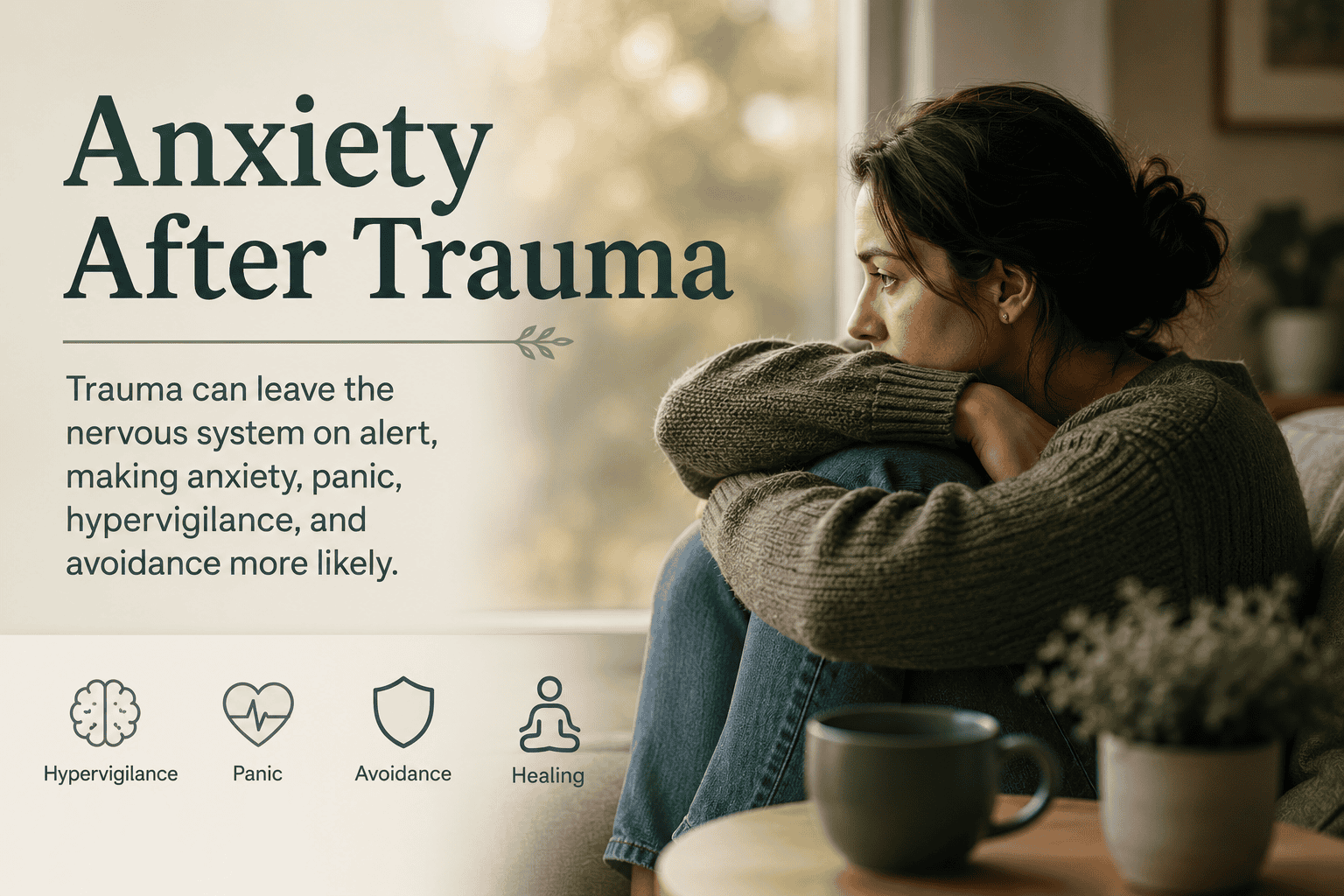
Anxiety After Trauma
Anxiety & Trauma Resources
Anxiety After Trauma: Why the Nervous System Stays on Alert
Trauma can leave the nervous system on alert, making anxiety, panic, hypervigilance, avoidance, sleep problems, and emotional reactivity more likely. This guide explains why anxiety may continue after trauma and how counseling can help the mind and body begin to feel safer.
Start Here
Anxiety After Trauma Is Often a Protection Pattern, Not a Weakness
After trauma, the body may continue acting as if danger could return at any moment. Even when life is more stable now, the nervous system may remain sensitive to sounds, conflict, uncertainty, criticism, crowds, sudden changes, reminders, or situations that feel similar to what happened before.
This can create anxiety that feels confusing or frustrating. You may know logically that you are safe, but your body may still react with tension, panic, dread, irritability, avoidance, or a strong urge to escape. Anxiety after trauma is often the nervous system trying to prevent being hurt, overwhelmed, trapped, or unprepared again.
What Is Anxiety After Trauma?
Anxiety after trauma refers to ongoing worry, panic, hypervigilance, avoidance, body tension, emotional reactivity, or fear responses that continue after a distressing or overwhelming experience. It may occur after a single traumatic event, repeated stress, relationship trauma, loss, abuse, medical trauma, accidents, violence, or prolonged periods of instability.
What It Feels Like
What Anxiety After Trauma Can Feel Like
Trauma-related anxiety can show up emotionally, physically, mentally, and relationally. Some people feel constantly on edge, while others feel numb, avoidant, exhausted, or easily overwhelmed.
Hypervigilance
You may scan for danger, watch people’s moods, notice sounds quickly, or feel unable to fully relax.
Panic or Body Alarm
Your body may react with a racing heart, tight chest, shaking, nausea, shortness of breath, or sudden fear.
Avoidance
You may avoid places, conversations, people, memories, emotions, or situations that activate anxiety.
Intrusive Thoughts
Memories, what-if thoughts, images, or fears may show up even when you are trying not to think about them.
Sleep Problems
Sleep may feel unsafe, restless, interrupted, or difficult because the body remains on alert.
Emotional Reactivity
You may feel easily startled, irritated, tearful, shut down, defensive, or overwhelmed by stress.
Why It Happens
Why Trauma Can Lead to Anxiety
Trauma can teach the nervous system that the world, other people, the body, or certain situations are not fully safe. After a threatening or overwhelming experience, the brain may become more alert to possible danger. This is not because someone is choosing to be anxious. It is often the brain and body trying to prevent another painful experience.
Anxiety after trauma may be connected to reminders of what happened, but it can also appear in situations that do not seem directly related. The nervous system may react to tone of voice, conflict, being trapped, feeling powerless, sudden changes, medical settings, relationship stress, crowded places, or uncertainty.
Trauma can increase anxiety by creating:
- A stronger startle response
- Difficulty feeling safe in the body
- Fear of losing control or being trapped
- Increased scanning for danger
- Avoidance of reminders, emotions, or vulnerability
- Difficulty trusting calm or closeness
- A sense that something bad could happen again
Trauma-related anxiety often makes sense when viewed through the nervous system. The symptoms may be distressing, but they are often protective responses that became stuck in high alert.
Nervous System Response
Trauma Can Keep the Body in Alert Mode
When the nervous system senses danger, it may move into fight, flight, freeze, or shutdown responses. After trauma, those responses can become easier to trigger, even in situations that are not dangerous in the present.
- Fight may look like irritability, defensiveness, or anger.
- Flight may look like panic, restlessness, or needing to escape.
- Freeze may look like feeling stuck, numb, or unable to respond.
- Shutdown may look like exhaustion, disconnection, or emotional collapse.
Important Reframe
Your Body May Be Reacting to Old Danger, Not Current Reality
Trauma-related anxiety can make the present feel unsafe because the body remembers what overwhelm felt like. This can create reactions that feel bigger than the current situation.
- The body may react before the mind can evaluate.
- Triggers may not always be obvious.
- Logic may not immediately calm the body.
- Healing often requires both emotional and body-based support.
Trauma-informed therapy works carefully and gradually. The goal is not to force someone to relive painful experiences, but to help the nervous system develop more safety, choice, and flexibility.
Panic and Body Alarm
Why Panic Can Happen After Trauma
Panic after trauma can feel sudden and frightening. A person may feel a racing heart, chest tightness, shaking, dizziness, nausea, shortness of breath, or a fear that something terrible is happening. These sensations can be especially distressing when they seem to come out of nowhere.
Panic can occur when the body’s alarm system activates quickly. Sometimes the trigger is clear, such as a reminder of the trauma. Other times, the trigger may be subtle, such as feeling trapped, being criticized, hearing a certain tone, smelling something familiar, or experiencing a body sensation that the nervous system associates with danger.
Panic after trauma may involve:
- Sudden fear or dread
- Racing heart or chest tightness
- Shortness of breath or feeling unable to calm down
- Fear of losing control
- Feeling unreal, disconnected, or outside yourself
- A strong urge to leave, escape, or get reassurance
If panic-like symptoms are new, severe, or medically concerning, it is important to consult a medical provider to rule out medical causes. Therapy can support anxiety and trauma patterns, but medical symptoms should be evaluated when needed.
Hypervigilance
Hypervigilance Can Make It Hard to Relax
Hypervigilance means the nervous system is scanning for danger. A person may monitor exits, listen for sounds, watch people’s facial expressions, prepare for conflict, or feel unable to settle even when nothing is happening.
This can be exhausting. The body may stay tense, the mind may stay busy, and calm moments may feel unfamiliar or unsafe. Some people become very good at noticing changes in other people’s moods because earlier experiences taught them that emotional shifts mattered.
Hypervigilance may look like:
- Feeling constantly on guard
- Startling easily
- Monitoring tone, mood, silence, or body language
- Sitting near exits or avoiding crowded places
- Feeling unsafe when things are quiet
- Difficulty relaxing, sleeping, or feeling present
Hypervigilance is often a learned survival response. Therapy can help the nervous system gradually learn that alertness does not have to stay turned on all the time.
Avoidance
Avoidance Can Reduce Anxiety Temporarily but Keep the Cycle Going
Avoidance is understandable after trauma. If something feels like a reminder of pain, fear, helplessness, or overwhelm, the mind and body may try to stay away from it. Avoidance can provide short-term relief because the anxiety decreases when the trigger is removed.
Over time, however, avoidance can narrow a person’s life. Places, conversations, relationships, emotions, or opportunities may begin to feel off limits. The nervous system may never get the chance to learn that some situations are different now.
Avoidance may include avoiding:
- Places or people connected to the trauma
- Conflict or difficult conversations
- Emotional vulnerability
- Medical appointments or legal settings
- Memories, reminders, or anniversaries
- Rest, quiet, or stillness because thoughts become louder
Trauma therapy does not require forcing exposure before someone is ready. A careful approach helps build safety, regulation, and choice before working with painful material.
Relationships and Safety
Trauma-Related Anxiety Can Affect Trust, Closeness, and Communication
Trauma can affect how safe a person feels with others. If past experiences involved betrayal, abandonment, criticism, abuse, unpredictability, or emotional pain, the nervous system may become cautious in relationships. Even healthy closeness can feel vulnerable.
Anxiety may show up as reassurance seeking, conflict avoidance, emotional withdrawal, people-pleasing, fear of being misunderstood, or difficulty trusting that a relationship is secure. These patterns often develop as attempts to prevent future hurt.
Relationship patterns may include:
- Feeling easily rejected or abandoned
- Needing repeated reassurance
- Avoiding conflict to prevent emotional danger
- Shutting down when conversations become intense
- Reading tone, silence, or facial expressions as threats
- Wanting closeness but feeling overwhelmed by vulnerability
Trauma-informed counseling can help clients understand the difference between present relationship concerns and old survival patterns being activated.
An Educational Framework
The Trauma-Anxiety Cycle
Trauma-related anxiety often becomes self-reinforcing. Understanding the cycle can reduce shame and help identify where healing work can begin.
1. A Reminder Appears
A sound, place, tone, memory, body sensation, conflict, or uncertainty activates the nervous system.
2. The Body Scans for Danger
The brain looks for signs of threat, rejection, loss of control, being trapped, or being overwhelmed.
3. Anxiety Increases
The body may react with panic, tension, dread, irritability, nausea, restlessness, or shutdown.
4. Avoidance Brings Relief
Leaving, shutting down, checking, distracting, or avoiding may reduce anxiety in the short term.
5. The Brain Learns the Trigger Is Dangerous
Because avoidance worked temporarily, the nervous system may become more sensitive next time.
6. The Pattern Repeats
Life becomes smaller, anxiety feels stronger, and the body stays prepared for danger.
Healing often begins by helping the nervous system experience safety in small, manageable ways rather than forcing sudden change.
What Helps
What Can Help Anxiety After Trauma
Trauma-related anxiety often improves through a combination of nervous system regulation, emotional support, careful pacing, trauma-informed therapy, and skills that help the body distinguish past danger from present safety.
Build Safety First
Stabilization, grounding, and emotional safety are important before working directly with traumatic memories.
Use Body-Based Calming
Breathing, grounding, movement, sensory cues, and relaxation can help signal safety to the nervous system.
Name the Trauma Response
Identifying fight, flight, freeze, shutdown, hypervigilance, or avoidance can reduce shame and increase choice.
Work at a Manageable Pace
Trauma work should not feel like being pushed too far too fast. Pacing matters for safety and effectiveness.
Process What Feels Stuck
Therapy may help the brain and body update traumatic memories so the past feels less present.
Strengthen Support
Safe relationships, therapy, routines, and support systems can help the nervous system relearn connection.
When to Seek Help
When to Seek Counseling for Anxiety After Trauma
It may be time to seek counseling when anxiety after trauma is interfering with sleep, relationships, work, daily routines, emotional regulation, concentration, physical comfort, or your ability to feel safe. Therapy can help you understand the pattern and begin building steadier ways to respond.
Consider counseling if you notice:
- You feel constantly on edge or unable to relax
- You experience panic, dread, or body alarm
- You avoid reminders, places, people, emotions, or conversations
- You feel easily startled, irritable, numb, or shut down
- You have intrusive memories, nightmares, or distressing reminders
- Relationships feel unsafe, overwhelming, or difficult to trust
- You feel stuck in survival mode even though the trauma is over
If trauma-related anxiety includes thoughts of death, self-harm, or suicide, seek immediate support. In the United States, call or text 988 for the Suicide & Crisis Lifeline, call 911, or go to the nearest emergency room.
Trauma-Informed Counseling at Motivations Counseling
Therapy Can Help When Trauma Leaves Anxiety Behind
Motivations Counseling provides trauma-informed therapy for adults experiencing anxiety, panic, hypervigilance, avoidance, emotional overwhelm, relationship stress, chronic stress, and trauma-related nervous system activation. Counseling may help clients understand why their body remains on alert and begin developing safer, more flexible responses.
Our counseling team serves clients in Sugar Land, Katy, Richmond, Fort Bend County, West Houston, and through telehealth across Texas when clinically appropriate.
Counseling Support
Trauma-Informed Anxiety Counseling in Sugar Land, Katy, and Online Across Texas
If trauma has left you feeling anxious, panicked, guarded, avoidant, or unable to relax, counseling can help you better understand what is happening and begin taking manageable next steps.
- Individual counseling for anxiety after trauma
- Support for panic, hypervigilance, avoidance, and survival mode
- Trauma-informed and nervous-system-informed care
- EMDR therapy when clinically appropriate
- In-person options in Sugar Land and Katy when available
- Telehealth counseling across Texas when clinically appropriate
Therapy Learning Center
Continue Learning About Anxiety, Trauma, and Nervous System Activation
These related resources can help adults better understand trauma responses, chronic stress, anxiety symptoms, EMDR therapy, survival mode, hypervigilance, and emotional safety.
Survival Mode and Chronic Stress
Learn how long-term stress can affect emotions, sleep, focus, relationships, and the nervous system.
Read article →Chronic Hypervigilance
Understand why the nervous system may keep scanning for danger even after life becomes safer.
Read article →The Nervous System and Trauma
Learn how trauma can affect fight, flight, freeze, shutdown, and emotional regulation.
Read article →Why Anxiety Feels Physical
Learn why anxiety can cause body-based symptoms such as tightness, stomach discomfort, racing heart, and tension.
Read article →What an EMDR Session Feels Like
Learn what clients may experience during EMDR therapy and how trauma processing is paced.
Read article →Counseling Resource Center
Explore resources on anxiety, depression, trauma, EMDR, relationships, teen counseling, and emotional health.
Explore Resource Center →Frequently Asked Questions
Common Questions About Anxiety After Trauma
Can trauma cause anxiety?
Yes. Trauma can leave the nervous system on alert, making anxiety, panic, hypervigilance, avoidance, sleep problems, and emotional reactivity more likely.
Why do I still feel anxious even though the trauma is over?
The body may continue responding as if danger could return, even when the current situation is safer. Trauma-related anxiety often reflects a nervous system that has not fully updated from past danger to present safety.
What does hypervigilance feel like?
Hypervigilance can feel like constantly scanning for danger, startling easily, watching other people’s moods, monitoring sounds, feeling tense, or being unable to fully relax.
Can trauma cause panic attacks?
Trauma can contribute to panic when the body’s alarm system becomes highly sensitive. Panic may be triggered by reminders, body sensations, conflict, feeling trapped, or uncertainty.
Why do I avoid things after trauma?
Avoidance is a common protective response. It may reduce anxiety temporarily, but over time it can keep the nervous system from learning that some situations are safer now.
Can anxiety after trauma affect relationships?
Yes. Trauma-related anxiety can affect trust, closeness, reassurance needs, conflict avoidance, emotional withdrawal, and communication patterns.
Can EMDR therapy help with anxiety after trauma?
EMDR therapy may help some clients process traumatic memories and reduce the intensity of triggers when it is clinically appropriate. A therapist can help determine whether EMDR is a good fit based on symptoms, stability, and treatment goals.
When should I seek therapy for anxiety after trauma?
Consider therapy when anxiety, panic, avoidance, hypervigilance, sleep problems, intrusive memories, or emotional overwhelm interfere with daily life, relationships, work, or your ability to feel safe.

Take the Next Step
Trauma-Informed Anxiety Counseling in Sugar Land, Katy, and Online Across Texas
If trauma has left your nervous system on alert, counseling can help you understand the anxiety pattern and begin building steadier, safer ways to respond.

