
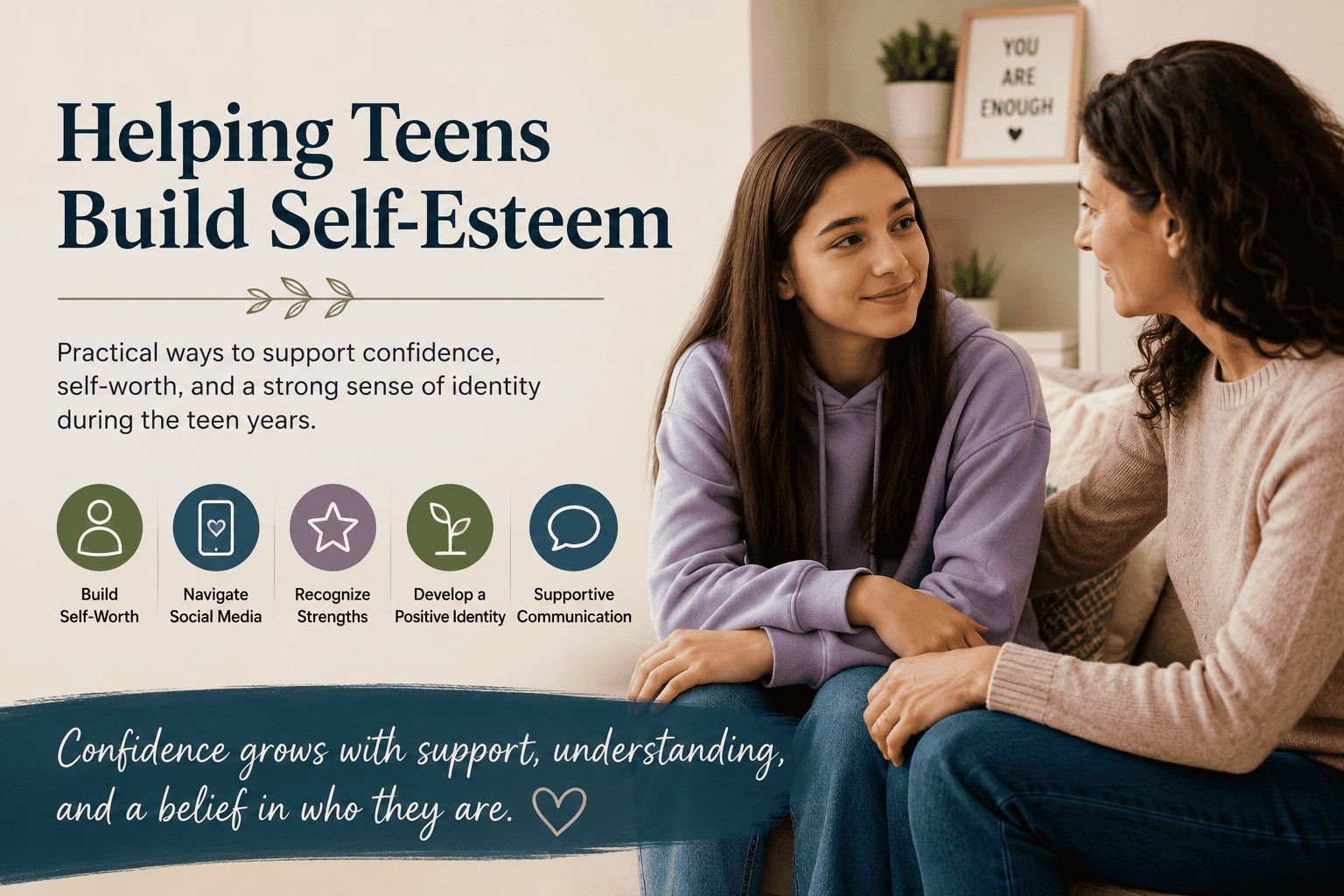
Helping Teens Build Self-Esteem and Confidence
Teen Counseling Resource Center
Helping Teens Build Self-Esteem
Teen self-esteem can be shaped by friendships, school performance, family relationships, appearance, social media, identity development, mistakes, and the feeling of being accepted for who they are. Parents cannot control every influence, but they can help teens build a steadier sense of worth that is not completely dependent on grades, popularity, achievement, appearance, or online approval.
Start Here
Healthy Self-Esteem Is More Stable Than Feeling Confident All the Time
A teen with healthy self-esteem can still feel embarrassed, insecure, disappointed, left out, or uncertain. The difference is that one difficult moment does not automatically become proof that they are worthless, unlikeable, unattractive, or destined to fail. They can recognize that an experience hurts without turning the experience into a permanent identity.
Self-esteem develops through repeated experiences of belonging, competence, autonomy, realistic feedback, emotional safety, and recovery after mistakes. It is strengthened when teens learn that their value remains intact even when they are not the best, do not receive approval, or need help.
The goal is not to convince a teen that they are exceptional at everything. The goal is to help them develop a fair, flexible, and compassionate view of themselves that can survive ordinary comparison, criticism, disappointment, and change.
Understanding Self-Esteem
Self-Esteem Includes Worth, Capability, Belonging, and Self-Respect
Confidence may change from situation to situation. Self-esteem is the broader way a teen understands their value and relates to themselves.
Basic Worth
A teen can believe they matter as a person even when they disappoint someone, make a mistake, or do not meet a goal.
Growing Competence
They trust that skills can develop through practice rather than assuming difficulty means they are incapable.
Belonging
They experience some relationships where they feel accepted, known, and valued without needing to perform constantly.
Personal Identity
They are gradually learning what matters to them instead of defining themselves only through other people’s opinions.
Self-Respect
They can recognize when treatment is unkind, set limits, and avoid abandoning themselves to gain approval.
Ability to Recover
They can feel disappointed or embarrassed and eventually return to perspective rather than remaining defined by the event.
Adolescent Development
Teenagers Are Forming an Identity While Becoming More Aware of How Others See Them
Adolescence involves major physical, emotional, social, cognitive, and relational changes. Teens are separating from childhood, seeking greater independence, testing values, noticing differences, and becoming more sensitive to peer feedback and social status.
This increased self-awareness can support growth, but it can also make rejection, criticism, comparison, appearance concerns, and public mistakes feel especially intense. A teen may understand intellectually that one opinion should not define them while still feeling deeply affected by it.
Development Is Uneven
A Teen Can Seem Mature in One Area and Very Vulnerable in Another
A teen may be academically capable while socially insecure, independent with schoolwork while needing reassurance at home, or confident with friends while highly critical of their appearance. Self-esteem is not one fixed trait.
Parents can support growth by noticing the specific situations that activate shame or insecurity rather than labeling the teen as generally confident, dramatic, sensitive, or unmotivated.
What Shapes Teen Self-Esteem
Many Experiences Contribute to How a Teen Sees Themselves
Low self-esteem usually develops through a pattern of experiences rather than one comment or event.
Family Messages
Criticism, warmth, conflict, expectations, comparison among siblings, and how mistakes are handled can shape self-worth.
School Experiences
Grades, learning differences, teacher feedback, athletics, extracurricular activities, and academic pressure may affect confidence.
Peer Relationships
Friendship, rejection, bullying, exclusion, dating experiences, and group belonging can influence how a teen evaluates themselves.
Online Feedback
Likes, comments, follower counts, group chats, edited images, and constant access to peers may intensify comparison and validation seeking.
Appearance and Body Changes
Puberty, body image, clothing, skin, weight, height, disability, and perceived attractiveness may become emotionally charged.
Mental Health and Neurodiversity
Anxiety, depression, trauma, ADHD, autism, learning concerns, or emotional regulation difficulties may affect self-perception and daily success.
Comparison
Comparison Becomes Harmful When Another Person’s Strength Becomes Proof of Personal Failure
Teens naturally compare themselves with peers while trying to understand where they fit. Comparison can provide information, inspiration, or motivation. It becomes painful when the teen compares another person’s most visible strength with their own most vulnerable area and treats the difference as evidence that they are less valuable.
Comparison may sound like:
- “Everyone else looks better than I do.”
- “I am the dumb one in my friend group.”
- “If I am not the best, there is no point trying.”
- “They got invited, so nobody actually likes me.”
- “My sibling never disappoints you the way I do.”
- “Their life is perfect, and mine is embarrassing.”
Telling a teen to “stop comparing” may not be enough. It can be more useful to help them notice what they are comparing, what information is missing, and what conclusion they are drawing about their worth.
Body Image
A Teen’s Body Is Changing While They Are Receiving Strong Messages About How It Should Look
Body image concerns can affect teens of every gender, body type, activity level, and background.
Notice Without Critiquing
Avoid making the teen’s body a frequent topic, even through teasing, comparison, or repeated compliments focused only on appearance.
Watch Family Language
How adults talk about their own bodies, food, aging, weight, exercise, and other people’s appearance sends powerful messages.
Emphasize More Than Appearance
Notice humor, kindness, effort, creativity, courage, judgment, persistence, values, and the ways the body supports daily life.
Address Cruelty Directly
Body-based teasing, sexual harassment, bullying, or humiliating comments should not be dismissed as normal peer behavior.
Notice Behavior Changes
Food restriction, bingeing, purging, compulsive exercise, hiding the body, or intense distress about appearance may require professional evaluation.
Respond With Care
A teen who dislikes their body may need listening and support before advice, reassurance, or debate about whether the concern is accurate.
Self-Talk and Shame
Harsh Self-Criticism May Feel Like Protection From Failure or Rejection
Some teens criticize themselves before anyone else can. They may believe that harshness will keep them motivated, prevent embarrassment, or prepare them for criticism. Over time, this can make ordinary mistakes feel dangerous and reinforce avoidance, perfectionism, or hopelessness.
Instead of demanding positive thinking, help the teen practice accurate thinking:
- “I did badly on this test” instead of “I am stupid.”
- “That conversation was awkward” instead of “Nobody will ever like me.”
- “I am disappointed” instead of “Everything is ruined.”
- “I need more practice” instead of “I will never be good at this.”
- “Someone did not choose me” instead of “I am unlovable.”
- “I made a mistake” instead of “I am a failure.”
Self-compassion is not pretending that nothing went wrong. It is responding to difficulty in a way that supports responsibility, learning, and recovery rather than humiliation.
Strengths and Competence
Confidence Grows Through Real Experiences of Learning, Contribution, and Follow-Through
Teens need opportunities to discover what they can do—not only repeated statements that they are capable.
Manageable Challenge
Tasks should be difficult enough to create growth but not so overwhelming that the teen repeatedly experiences defeat.
Broader Definitions of Strength
Strength may include empathy, humor, problem-solving, leadership, mechanical skill, creativity, reliability, curiosity, or courage.
Meaningful Contribution
Helping at home, caring for others, volunteering, working, mentoring, or participating in a group can support a sense of usefulness.
Persistence
Notice when the teen returns after frustration, asks for help, tolerates discomfort, or keeps practicing—not only the final result.
Choice and Ownership
Age-appropriate choices help teens experience themselves as active participants rather than passive recipients of adult direction.
Reflection
After a challenge, help the teen identify what worked, what did not, and what they would try differently next time.
Identity Development
Teens Need Room to Explore Who They Are Becoming
Identity development may involve values, interests, beliefs, friendships, culture, family roles, future goals, appearance, talents, personality, and the groups with which the teen feels connected. Some experimentation, inconsistency, and revision are expected.
Parents can remain grounded in family values while showing curiosity about the teen’s developing perspective. A teen is more likely to share honestly when differences do not automatically lead to ridicule, panic, interrogation, or rejection.
Avoid Fixed Labels
Descriptions Can Become Identities
Labels such as “the smart one,” “the difficult one,” “the athlete,” “the dramatic one,” “the shy one,” or “the responsible one” can narrow a teen’s sense of who they are. Even positive labels may create pressure to maintain a role.
Use language that describes a moment or pattern without turning it into the teen’s entire identity: “You are having a hard time getting started” rather than “You are lazy.”
How Parents and Caregivers Can Help
Connection, Respect, Structure, and Realistic Expectations Build a Stronger Foundation
Parents do not have to remove every insecurity. They can create conditions that support a healthier relationship with self.
Listen Before Correcting
Understand what happened and what it meant to the teen before offering perspective, reassurance, or a solution.
Speak With Respect
Limits and consequences can be clear without sarcasm, public embarrassment, name-calling, or attacks on character.
Balance Support and Responsibility
Help enough that the teen can move forward without repeatedly taking over tasks they are capable of learning to manage.
Notice the Whole Teen
Show interest that is not limited to grades, chores, behavior, sports performance, appearance, or future plans.
Protect Emotional Safety
Take bullying, humiliation, harassment, family cruelty, and repeated rejection seriously rather than telling the teen to toughen up.
Repair Parent Mistakes
Apologizing for a harsh tone, unfair assumption, or public criticism models accountability without weakening parental authority.
Praise and Feedback
Specific, Credible Feedback Is Usually More Helpful Than Constant General Praise
Teens often recognize praise that feels exaggerated or disconnected from reality. Statements such as “You are perfect” or “You are the best” may create pressure, feel unbelievable, or communicate that worth depends on being exceptional.
More useful feedback may sound like:
- “You kept working even after you became frustrated.”
- “I noticed you included the new student.”
- “You handled that disagreement more calmly than you did last time.”
- “You asked for help before the situation became unmanageable.”
- “You were honest even though you knew the conversation would be uncomfortable.”
- “That result was disappointing, but it does not erase the work you did.”
Feedback can recognize effort, strategy, values, choices, growth, and impact. This helps the teen understand what they did rather than relying only on an adult’s global judgment of whether they are good or talented.
Mistakes, Rejection, and Setbacks
Self-Esteem Becomes More Resilient When Teens Learn That Painful Outcomes Can Be Survived
A failed test, lost friendship, breakup, rejection, disciplinary consequence, missed opportunity, or poor performance may feel devastating. Parents may want to remove the pain, prove the teen was treated unfairly, or immediately fix the problem. Sometimes advocacy is necessary, but not every difficult feeling requires rescue.
Teens build confidence when adults help them name what happened, tolerate the emotion, identify what is within their control, take responsibility where appropriate, and decide on a next step. The experience becomes evidence that they can recover—not proof that they are ruined.
A supportive response may include:
- “I can see why this hurts.”
- “Do you want listening, help making a plan, or some space first?”
- “What part is within your control now?”
- “Is there anything you need to repair or take responsibility for?”
- “This is one outcome. It is not a complete description of you.”
- “We can think about the next step when you are ready.”
School Performance
Achievement Can Support Confidence Without Becoming the Measure of Worth
Academic success may provide pride, opportunities, structure, and evidence of competence. Problems develop when a teen believes that grades, class rank, college admission, awards, or athletic performance determine whether they deserve respect or love.
Parents can maintain expectations while communicating that performance is information—not identity. A lower grade may require problem-solving, tutoring, changes in habits, evaluation for learning or attention concerns, or a realistic adjustment of workload.
Perfectionism
Fear of Failure Can Look Like Overworking, Avoidance, or Giving Up
Some perfectionistic teens work constantly and remain dissatisfied. Others procrastinate, refuse help, avoid new activities, or stop trying because imperfect performance feels intolerable.
Support may include breaking tasks into smaller steps, defining “good enough,” practicing mistakes, reducing all-or-nothing language, and seeking counseling when anxiety or shame interferes with functioning.
Friendships and Belonging
Peer Acceptance Matters, but One Group Should Not Hold All of a Teen’s Identity
Friendship experiences can strengthen confidence or become a major source of shame, anxiety, and self-doubt.
Support Multiple Connections
Activities, extended family, work, church, teams, clubs, or community groups can broaden belonging beyond one friend group.
Teach Direct Communication
Help teens practice clarifying misunderstandings, expressing hurt, apologizing, and asking for what they need.
Recognize Unhealthy Dynamics
Repeated humiliation, threats, pressure, exclusion, control, or demands for secrecy are not requirements for belonging.
Allow Grief
A friendship loss can be deeply painful. Avoid minimizing it simply because the relationship was young or may eventually change.
Protect Values
Help the teen notice when gaining approval requires behavior that conflicts with their safety, values, or self-respect.
Practice Starting Again
New friendships often require repeated small risks, patience, and tolerance for moments that feel awkward or uncertain.
How Teen Counseling May Help
Therapy Can Help Teens Understand the Story They Have Learned to Tell About Themselves
Low self-esteem may be connected to anxiety, depression, trauma, bullying, rejection, perfectionism, family conflict, learning concerns, social stress, or experiences that created shame. Counseling can help clarify what maintains the pattern instead of treating confidence as a simple attitude problem.
Teen counseling may focus on:
- Identifying harsh self-talk and all-or-nothing conclusions
- Understanding comparison, shame, rejection sensitivity, and validation seeking
- Building emotional regulation and coping skills
- Developing strengths, interests, goals, and realistic competence
- Practicing boundaries, assertiveness, and healthier friendship choices
- Addressing anxiety, depression, trauma responses, or perfectionism
- Improving parent-teen communication while protecting appropriate privacy
- Supporting identity development without forcing immediate certainty
Therapy should not pressure a teen to become outgoing, popular, cheerful, or highly confident. The goal is a more accurate, flexible, and respectful relationship with self.
When Low Self-Esteem May Signal Something More
Persistent Worthlessness, Withdrawal, or Major Changes Deserve Attention
Low self-esteem may overlap with depression, anxiety, trauma, eating concerns, bullying, self-harm, or other emotional difficulties. Consider professional support when negative self-beliefs are persistent, worsening, or interfering with school, sleep, relationships, eating, activities, hygiene, motivation, or daily functioning.
Concerning signs may include:
- Frequent statements such as “I hate myself,” “I am worthless,” or “Nobody would care if I disappeared”
- Withdrawal from friends, family, school, or activities
- Major changes in eating, exercise, sleep, or body-related behavior
- Giving up on goals because failure feels inevitable
- Self-harm, suicidal statements, or feeling like a burden
- Remaining in controlling or abusive relationships because the teen believes they deserve poor treatment
Immediate Safety
Take Self-Harm or Suicide Concerns Seriously
If a teen talks about suicide, wanting to die, not wanting to be here, self-harm, or feeling unsafe, seek immediate crisis or emergency support. Do not leave the teen alone when there is an immediate safety concern, and reduce access to weapons, medications, or other means of harm when possible.
In the United States, call or text 988 for the Suicide & Crisis Lifeline, call 911, or go to the nearest emergency room when urgent safety support is needed. This article is educational and is not a substitute for emergency assessment or individualized mental health care.
Therapist Spotlight
Work With Olivia Pudlo for Teen, Anxiety, Trauma, and Emotional Regulation Support
At Motivations Counseling, Olivia Pudlo, MSW, LCSW is an EMDR Certified Therapist and is TF-CBT certified. She may be a strong fit for teens experiencing anxiety, emotional regulation difficulties, school stress, trauma-related concerns, family challenges, low confidence, or patterns of harsh self-criticism.
Teen counseling can provide a private, supportive space while including parents or caregivers appropriately based on age, clinical needs, safety concerns, and treatment goals. The purpose is not to force disclosure or treat the teen as the problem, but to support emotional understanding, coping, communication, and growth.
Motivations Counseling offers teen counseling through offices in Sugar Land and Katy, with telehealth across Texas when clinically appropriate.
Teen Counseling Learning Center
Continue Learning About Teen Mental Health, Confidence, and Family Support
These resources can help parents and teens understand anxiety, depression, school stress, communication, and counseling options.
Teen Counseling
Learn how counseling can support anxiety, depression, school stress, trauma responses, confidence, emotional regulation, and family communication.
View service page →Teen Anxiety and School Stress
Explore how academic pressure, perfectionism, social stress, and overwhelm can affect confidence, motivation, sleep, and daily functioning.
Read article →Signs a Teen May Be Depressed
Learn how depression in teens may appear through irritability, withdrawal, sleep changes, low motivation, and reduced self-worth.
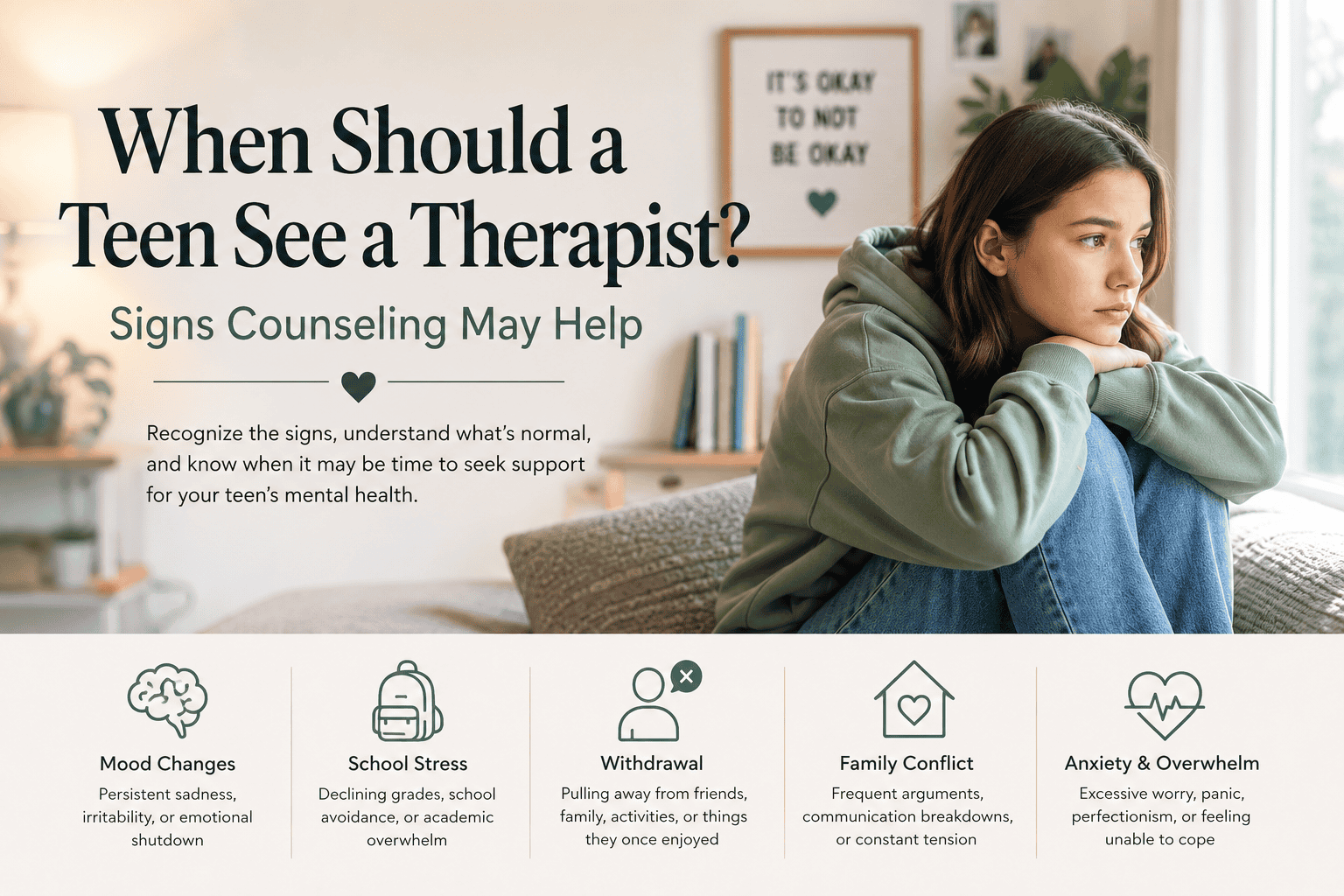
Read article →Parent-Teen Communication Struggles
Understand why conversations may turn into conflict, defensiveness, shutdown, or emotional distance and how families may begin repairing.
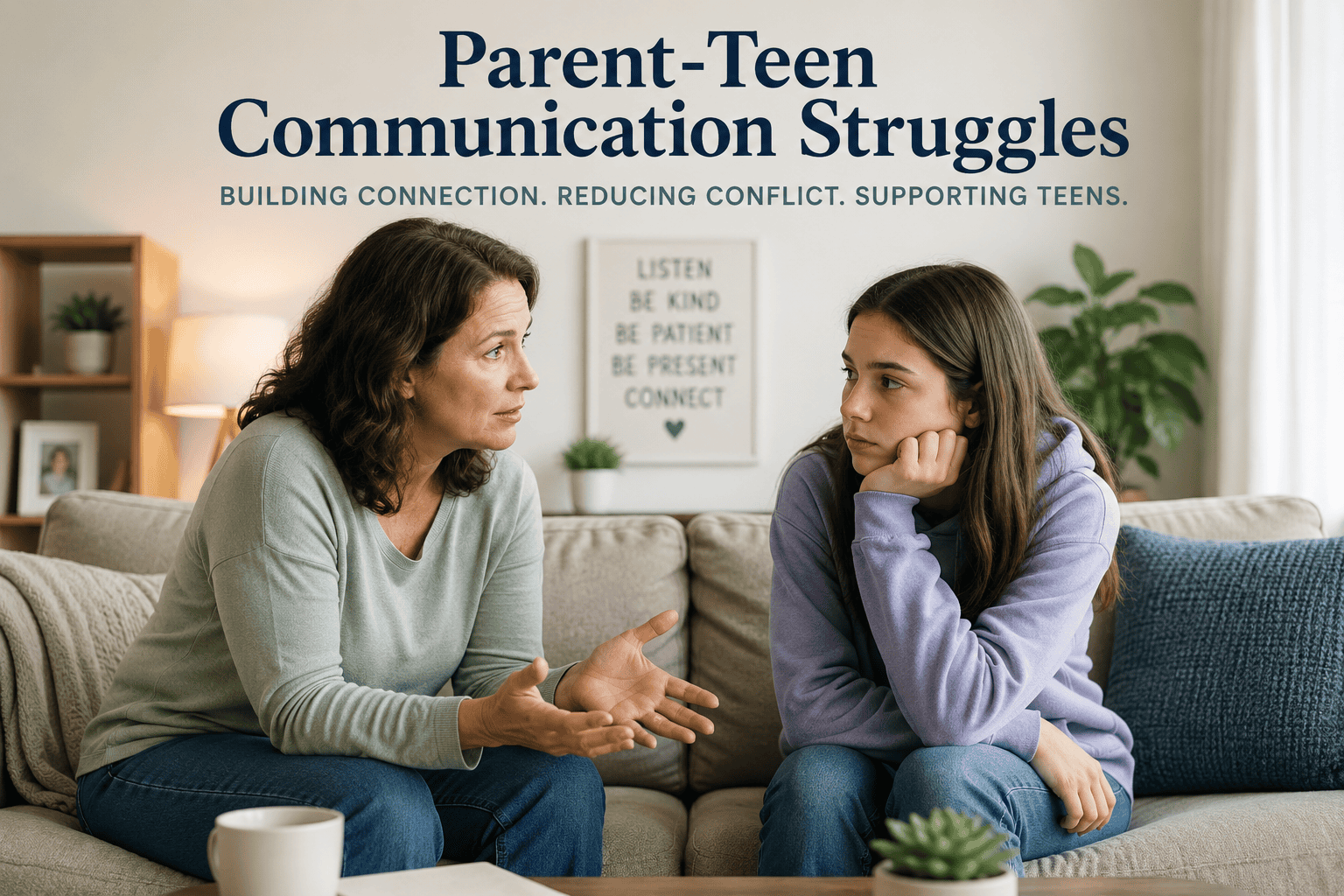
Read article →When Should a Teen See a Therapist?
Review signs that mood, anxiety, stress, withdrawal, school changes, or family conflict may benefit from professional support.
Read article →Counseling Resource Center
Browse educational resources about anxiety, depression, trauma, relationships, teen mental health, emotional regulation, and therapy.
View resources →Frequently Asked Questions
Common Questions About Teen Self-Esteem
What causes low self-esteem in teenagers?
Teen self-esteem may be affected by criticism, bullying, rejection, school difficulties, perfectionism, appearance concerns, social media comparison, family conflict, trauma, anxiety, depression, learning concerns, or feeling that acceptance depends on performance. Usually several influences interact rather than one single cause.
How can parents help a teen with low self-esteem?
Parents can listen without immediately correcting, use respectful language, provide specific and credible feedback, support manageable challenges, avoid sibling comparison, protect the teen from humiliation, allow age-appropriate choices, and help the teen separate mistakes from identity.
Should I compliment my teen more?
Warmth and encouragement matter, but constant general praise may not feel believable. Specific feedback about effort, strategy, courage, kindness, honesty, growth, or impact often gives the teen more useful information and places less pressure on being exceptional.
Can social media cause low self-esteem?
Social media is not the only cause of low self-esteem, but it can intensify comparison, appearance pressure, fear of exclusion, public feedback, and validation seeking. Its effect depends on what the teen sees, how they use it, and what other supports or vulnerabilities are present.
How do I help my teen stop comparing themselves to others?
Rather than demanding that comparison stop, help the teen notice what is being compared, what information is missing, and what conclusion they are drawing about themselves. Encourage personal goals, broader sources of belonging, and attention to growth over ranking.
Can high-achieving teens have low self-esteem?
Yes. A teen may perform very well while feeling that they are only valuable when succeeding. Perfectionism, fear of mistakes, impostor feelings, and constant pressure may remain hidden behind strong grades, leadership, sports, or other accomplishments.
What is the difference between confidence and self-esteem?
Confidence often refers to belief in ability within a particular area, such as school, sports, or social situations. Self-esteem is broader and involves a person’s general sense of worth, self-respect, belonging, and ability to remain emotionally intact when they struggle.
When should low self-esteem receive professional help?
Counseling may be helpful when harsh self-beliefs are persistent, worsening, or interfering with school, sleep, friendships, eating, motivation, activities, family relationships, or daily functioning. Self-harm, suicidal statements, severe food or body concerns, or remaining in abusive relationships require prompt attention.
Can teen counseling improve self-esteem?
Counseling may help a teen understand negative self-beliefs, reduce shame and all-or-nothing thinking, build coping and communication skills, explore identity, strengthen realistic competence, and address anxiety, depression, trauma, bullying, or perfectionism that may affect self-worth.
How involved are parents in teen counseling?
Parent involvement depends on the teen’s age, clinical needs, safety concerns, family dynamics, and treatment goals. Therapy generally aims to give the teen an emotionally safe space while involving parents appropriately around support, progress, communication, and safety.

Teen Counseling in Sugar Land, Katy & Online Across Texas
Help Your Teen Build a Healthier and More Resilient Sense of Self
If comparison, harsh self-criticism, perfectionism, social pressure, appearance concerns, anxiety, depression, or difficult experiences are affecting your teen’s confidence or daily functioning, counseling can provide a supportive place to understand the pattern, develop coping skills, and strengthen self-worth over time.




Social Media and Self-Worth
Online Spaces Can Turn Approval Into a Visible Score
Social media can provide creativity, connection, humor, community, and access to supportive information. It can also make peer response measurable through views, likes, comments, streaks, followers, and public interaction.
A teen may begin monitoring whether others respond, comparing engagement, deleting posts that do not receive enough attention, or interpreting delayed replies as rejection. The emotional impact depends on the teen, the platform, their relationships, and how they use it.
Helpful questions include:
Avoid Shame-Based Monitoring
Technology Limits Work Better When the Teen Understands the Concern
Sudden punishment, secret surveillance, or statements that social media is “ruining your generation” may increase defensiveness and secrecy. Parents still need appropriate oversight, especially when safety is involved, but limits are more effective when they are clear, predictable, age-appropriate, and connected to sleep, privacy, respect, or emotional health.
Parents can also model healthy technology behavior by protecting family time, putting devices away during important conversations, and noticing their own comparison or compulsive checking.