
High-Functioning Depression: Hidden Symptoms Behind Success | Motivations Counseling
Depression Resources
High-Functioning Depression: When Everything Looks Fine on the Outside
Some people keep performing at work, school, or home while privately feeling empty, tired, disconnected, or overwhelmed. This guide explains what high-functioning depression can look like, why it is often missed, and when counseling may help.
Start Here
High-Functioning Depression Can Be Easy to Miss
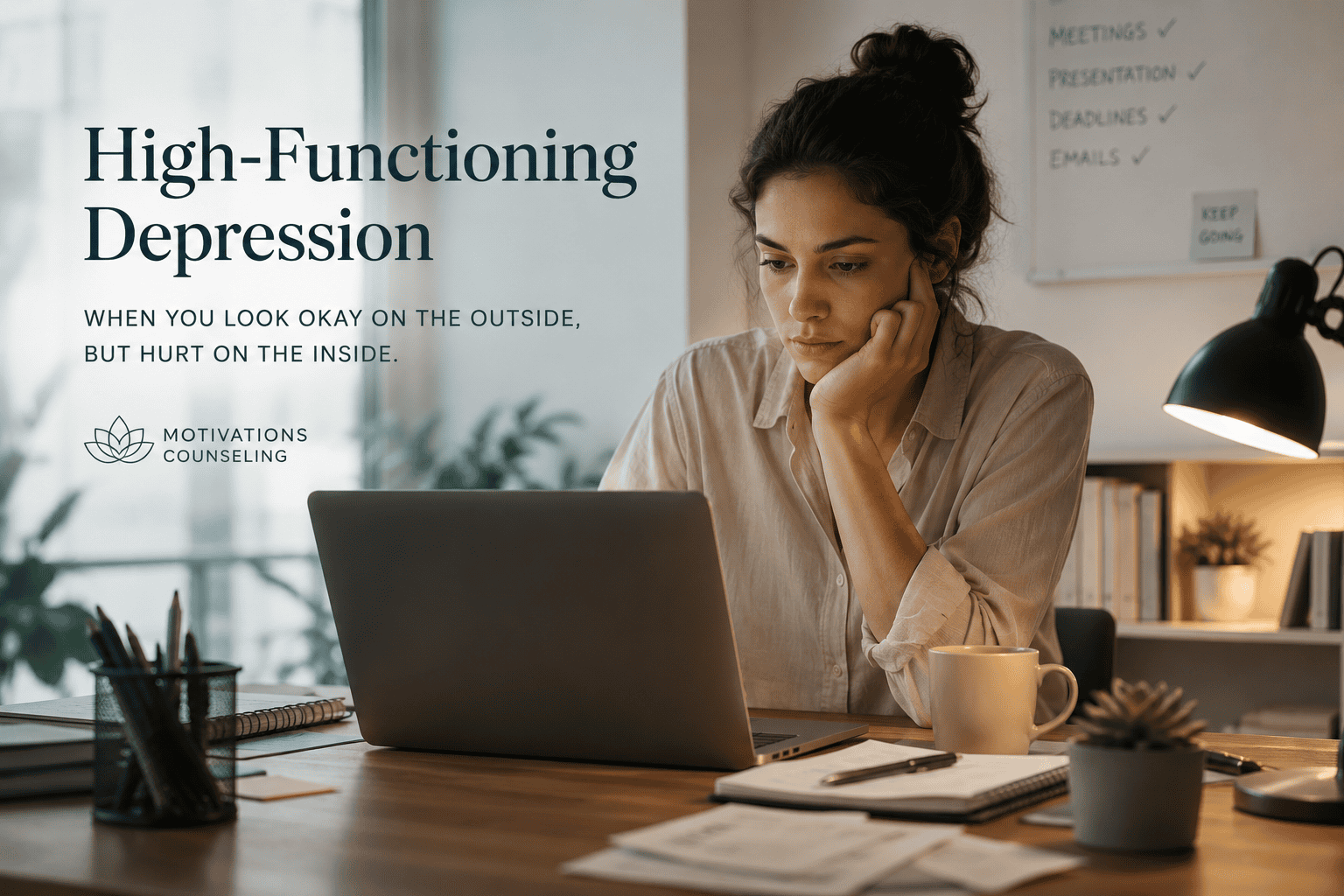
High-functioning depression describes people who continue meeting responsibilities while privately struggling with symptoms of depression. From the outside, they may appear capable, dependable, successful, organized, or emotionally steady. Inside, they may feel exhausted, empty, disconnected, sad, overwhelmed, or like they are simply pushing through the day.
This can be especially confusing because life may not look like it is falling apart. Someone may still go to work, attend school, care for children, show up for others, and complete daily tasks. But the emotional cost of continuing to function can become increasingly heavy.
What Is High-Functioning Depression?
High-functioning depression is a common phrase used to describe depression symptoms that are less visible because a person continues to perform daily responsibilities. It is not a formal diagnosis, but it can describe a real pattern of sadness, exhaustion, numbness, low motivation, self-criticism, isolation, or hopelessness that may exist beneath outward functioning.
What It Feels Like
What High-Functioning Depression Can Feel Like
High-functioning depression often feels like living two different realities: one that other people see, and one that happens internally.
Looking Fine Outside
You may appear successful, calm, responsible, or productive even while feeling emotionally depleted inside.
Constant Exhaustion
Daily tasks may get done, but they may require far more effort than others realize.
Emotional Numbness
You may feel flat, disconnected, empty, or unable to fully enjoy things that used to feel meaningful.
Autopilot Functioning
You may keep moving through responsibilities while feeling mentally or emotionally checked out.
Self-Criticism
Even when you accomplish things, your mind may tell you it is not enough or that you should be doing better.
Private Withdrawal
You may show up where you have to, then isolate, collapse, or disconnect when no one is watching.
Common Signs
Signs of High-Functioning Depression
High-functioning depression may not always look dramatic from the outside. The signs often show up internally, privately, or in the emotional effort required to keep life moving.
- Feeling tired most of the time
- Difficulty feeling joy or excitement
- Feeling emotionally numb or disconnected
- Private sadness, emptiness, or hopelessness
- Increased irritability or impatience
- Difficulty resting without guilt
- Self-criticism despite outward success
- Withdrawing after responsibilities are finished
Important Reframe
Outward Success Does Not Cancel Inner Pain
People with high-functioning depression may doubt their own symptoms because they are still accomplishing things. They may think, “I should not feel this way,” or “Other people have it worse.” But the ability to function does not erase emotional distress.
- You can be productive and depressed.
- You can be responsible and exhausted.
- You can be successful and emotionally disconnected.
- You can be loved and still feel lonely inside.
High-functioning depression often becomes more painful when the person feels they have to keep proving they are okay.
Why People Keep Going
Why Some People Keep Functioning Despite Depression
Some people continue functioning through depression because responsibilities do not stop. Children still need care. Work still expects performance. School still has deadlines. Bills still need to be paid. For many people, pushing through becomes a survival strategy.
Others keep functioning because they have spent years being the dependable one. They may feel uncomfortable needing help, fear disappointing others, or believe they are only valuable when they are productive.
People may keep going because they:
- Feel responsible for everyone else
- Fear being seen as weak or needy
- Use productivity to avoid painful feelings
- Have perfectionistic expectations for themselves
- Believe they should be able to handle things alone
- Do not want to worry their family, partner, coworkers, or friends
- Have learned to hide emotional pain from earlier life experiences
Pushing through may help someone survive for a while, but it can also delay support and deepen emotional exhaustion.
Hidden Cost
The Hidden Cost of High-Functioning Depression
Maintaining responsibilities can look positive from the outside, but it may come at a cost when someone is privately struggling. The person may have little energy left for connection, rest, joy, creativity, hobbies, emotional presence, or self-care.
Over time, the effort required to keep functioning can become harder to sustain. Some people reach a point where their usual coping strategies stop working, and symptoms begin affecting work, relationships, health, sleep, or daily motivation.
High-functioning depression may contribute to:
- Burnout and emotional exhaustion
- Relationship disconnection
- Sleep problems or restless sleep
- Increased anxiety or irritability
- Physical tension, headaches, or fatigue
- Loss of interest in enjoyable activities
- Isolation and reduced support
- Worsening depressive symptoms over time
The goal is not simply to keep functioning. The goal is to feel more connected, supported, emotionally alive, and able to live with less internal strain.
Depression and Anxiety
High-Functioning Depression Can Overlap With Anxiety
High-functioning depression often overlaps with anxiety. A person may keep performing because anxiety pushes them to meet expectations, avoid failure, prevent criticism, or stay in control. This can create a painful cycle where anxiety drives productivity while depression drains emotional energy.
From the outside, the person may look motivated or organized. Internally, they may feel tense, pressured, restless, afraid of disappointing others, or unable to relax.
Anxiety may show up as:
- Perfectionism
- Overthinking and second-guessing
- Fear of failure or disappointing others
- Difficulty resting without guilt
- Feeling responsible for everything
- Racing thoughts at night
- Constant pressure to keep performing
Counseling can help identify whether productivity is coming from healthy motivation, anxiety-driven pressure, depression-related avoidance, or a combination of patterns.
An Educational Framework
The High-Functioning Depression Cycle
High-functioning depression can become self-reinforcing when outward performance hides inner distress.
1. Responsibilities Continue
Work, school, parenting, caregiving, and daily expectations keep demanding effort.
2. The Struggle Is Hidden
The person appears capable while privately feeling empty, tired, sad, or overwhelmed.
3. Energy Drops
More effort is required to do the same tasks, leaving less energy for rest, joy, and connection.
4. Self-Criticism Increases
The person may think they should be doing better because life still looks functional from the outside.
5. Isolation Grows
Because others do not see the struggle, the person may feel increasingly alone or misunderstood.
6. The Pattern Repeats
Functioning continues, but depression remains hidden and emotional exhaustion deepens.
Breaking the cycle often begins with telling the truth about how hard things feel, even if life still appears manageable from the outside.
What Helps
What Can Help High-Functioning Depression
Support for high-functioning depression often includes reducing shame, identifying hidden patterns, building healthier support systems, and creating more realistic ways to manage responsibilities without emotional collapse.
Reduce Shame
Naming the pattern can help people stop blaming themselves for feeling depressed despite functioning.
Make Responsibilities More Realistic
Simplifying tasks, setting limits, and reducing overload can help conserve emotional energy.
Let Support In
Talking honestly with a trusted person or therapist can reduce isolation and hidden pressure.
Support Sleep and Recovery
Depression often worsens when rest is disrupted or when people never fully recover from stress.
Reconnect With Meaning
Therapy can help clients explore what feels meaningful, nourishing, connected, or emotionally alive again.
Address Deeper Causes
Depression may connect to stress, grief, trauma, anxiety, burnout, relationship pain, or long-standing self-pressure.
When to Seek Help
When to Seek Counseling for High-Functioning Depression
It may be time to seek counseling when you are still functioning but privately feeling emotionally depleted, numb, hopeless, overwhelmed, disconnected, or unable to enjoy your life. You do not have to wait until everything falls apart before reaching out for support.
Consider counseling if you notice:
- You feel empty, sad, numb, or disconnected much of the time
- You are exhausted from keeping up appearances
- You function well publicly but collapse privately
- You have lost interest in things that used to matter
- You feel irritable, overwhelmed, or emotionally shut down
- You rely on productivity to avoid feelings
- You feel lonely even when surrounded by others
- You wonder how much longer you can keep pushing through
If depression includes thoughts of death, self-harm, or suicide, seek immediate support. In the United States, call or text 988 for the Suicide & Crisis Lifeline, call 911, or go to the nearest emergency room.
Depression Counseling at Motivations Counseling
Therapy Can Help When You Are Functioning but Not Okay
Motivations Counseling provides depression counseling for adults who may appear functional on the outside while privately experiencing sadness, exhaustion, emotional numbness, low motivation, anxiety, stress, grief, trauma-related symptoms, or difficulty feeling connected to life.
Our counseling team serves clients in Sugar Land, Katy, Richmond, Fort Bend County, West Houston, and through telehealth across Texas when clinically appropriate.
Counseling Support
Depression Counseling in Sugar Land, Katy, and Online Across Texas
If you are still showing up for responsibilities but privately feeling empty, tired, disconnected, or overwhelmed, counseling can help you understand what is happening and begin building healthier support.
- Individual counseling for depression and emotional exhaustion
- Support for high-functioning depression and hidden distress
- Help with perfectionism, self-criticism, avoidance, and burnout
- Trauma-informed counseling when depression connects to painful experiences
- In-person options in Sugar Land and Katy when available
- Telehealth counseling across Texas when clinically appropriate
Therapy Learning Center
Continue Learning About Depression, Anxiety, and Emotional Exhaustion
These related resources can help adults better understand depression symptoms, exhaustion, mental fog, anxiety, sleep problems, emotional disconnection, and counseling support.
Signs of Depression in Adults
Learn how depression may show up emotionally, physically, cognitively, and relationally.
Read article →Can Depression Feel Like Exhaustion?
Understand why depression can feel like deep fatigue, heaviness, and reduced capacity.
Read article →Why Depression Causes Mental Fog
Learn how depression can affect concentration, memory, decision-making, and mental clarity.
Read article →Anxiety and Sleep Problems
Learn how anxious thoughts and nervous system activation can affect sleep and rest.
Read article →Emotional Disconnection
Learn why numbness, shutdown, and emotional distance can happen during stress or depression.
Read article →Counseling Resource Center
Explore resources on anxiety, depression, trauma, EMDR, relationships, teen counseling, and emotional health.
Explore Resource Center →Frequently Asked Questions
Common Questions About High-Functioning Depression
Is high-functioning depression a real condition?
High-functioning depression is not a formal diagnosis, but it is a commonly used phrase for people who experience depression symptoms while continuing to function at work, school, home, or in relationships.
Can someone be successful and still be depressed?
Yes. Depression does not always prevent someone from achieving goals or meeting responsibilities. Many people continue performing well externally while struggling internally.
What are signs of high-functioning depression?
Signs may include emotional numbness, exhaustion, loss of interest, irritability, self-criticism, private withdrawal, difficulty enjoying success, and feeling like you are simply pushing through the day.
How is high-functioning depression different from burnout?
Burnout is often connected to prolonged stress or overwork, while depression may involve broader symptoms such as sadness, hopelessness, emotional numbness, loss of interest, sleep changes, and changes in motivation or self-worth. The two can also overlap.
Why do people hide depression?
People may hide depression because they fear being judged, do not want to worry others, feel responsible for everyone else, believe they should handle things alone, or have learned to mask emotional pain.
Can therapy help high-functioning depression?
Therapy can help by addressing depression symptoms, self-criticism, perfectionism, avoidance, stress, trauma, grief, relationship concerns, and the hidden emotional cost of continuing to function while struggling.
When should I seek counseling?
Consider counseling when sadness, emptiness, emotional numbness, exhaustion, irritability, hopelessness, or disconnection persists and begins affecting your quality of life, relationships, sleep, motivation, or ability to feel present.
Should I wait until things get worse before getting help?
No. You do not have to wait until life falls apart to seek support. Counseling can be helpful even when you are still functioning but privately struggling.

Take the Next Step
Depression Counseling in Sugar Land, Katy, and Online Across Texas
If everything looks fine on the outside but you privately feel empty, exhausted, disconnected, or overwhelmed, counseling can help you understand what is happening and begin finding support.

