
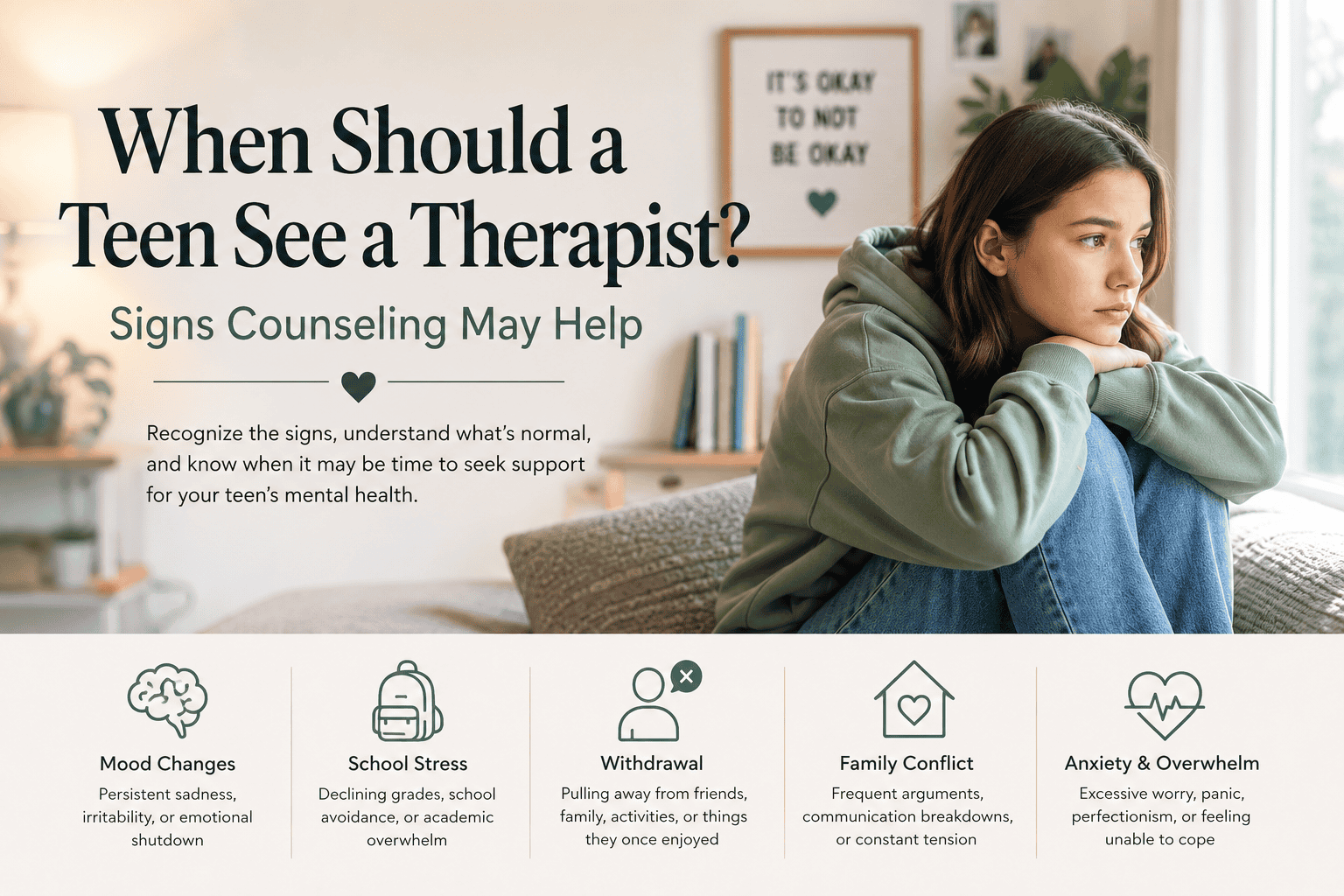
When Should a Teen See a Therapist? Signs Counseling May Help
Teen Counseling Resource Center
When Should a Teen See a Therapist?
Many teens experience stress, mood changes, frustration, and emotional ups and downs as part of normal development. However, when emotional struggles begin interfering with school, relationships, family life, self-esteem, or daily functioning, counseling may provide valuable support.
Start Here
Therapy Is Not Only for Crisis Situations
Parents sometimes wait to seek counseling because they are unsure whether their teen’s behavior is “serious enough.” Therapy can be helpful before a teen is in crisis. Counseling can support emotional wellness, coping skills, communication, confidence, school functioning, and family relationships.
A teen may benefit from therapy when mood, anxiety, stress, withdrawal, family conflict, school concerns, trauma responses, or emotional overwhelm are starting to affect everyday life. The goal is not to label the teen as broken. The goal is to give them a safe, supportive space to understand what they are feeling and build healthier ways to cope.
Normal Teen Behavior or Something More?
It Can Be Hard to Know When to Be Concerned
Teenagers are growing emotionally, socially, physically, and neurologically. They may want more independence, question rules, experience mood shifts, become more private, and feel stronger pressure from peers, school, and identity development. Some of this is expected during adolescence.
The concern increases when changes are persistent, intense, worsening, or interfering with daily functioning. A single bad day is different from weeks or months of withdrawal, anxiety, irritability, sadness, hopelessness, school avoidance, sleep disruption, or family conflict.
A helpful question for parents is: “Is this affecting my teen’s ability to function, connect, cope, or feel like themselves?”
Common Signs
Signs a Teen May Benefit From Therapy
Counseling may be helpful when emotional, behavioral, physical, or relational changes begin to interfere with a teen’s life or the family’s ability to support them.
Mood Changes
Persistent sadness, irritability, anger, hopelessness, emotional shutdown, or feeling unlike themselves may signal a need for support.
Anxiety or Panic
Excessive worry, panic symptoms, perfectionism, social fear, reassurance seeking, or avoidance can make daily life feel overwhelming.
Withdrawal
Pulling away from family, friends, hobbies, sports, church, activities, or things they used to enjoy may be a warning sign.
Low Motivation
A teen may stop trying, avoid responsibilities, fall behind, or feel unable to start tasks that once felt manageable.
Sleep or Appetite Changes
Sleeping too much, too little, staying up all night, fatigue, appetite changes, or stress-related physical symptoms may matter.
Emotional Shutdown
Some teens go quiet, numb, flat, disconnected, or unable to explain what is wrong even when they are clearly not okay.
School Concerns
School Stress Can Be a Major Sign That a Teen Needs Support
School functioning is often one of the first places parents notice a change. A teen may begin missing assignments, avoiding school, struggling to concentrate, dropping grades, becoming overwhelmed by tests, or losing motivation. Sometimes this reflects anxiety, depression, perfectionism, burnout, social stress, ADHD-related concerns, trauma responses, or emotional overwhelm.
Therapy can help teens identify what is making school feel unmanageable and build strategies for coping, planning, communicating, and managing stress.
School-related signs may include:
- Declining grades or missing assignments
- School avoidance or frequent requests to stay home
- Test anxiety, panic, or freezing under pressure
- Perfectionism and fear of mistakes
- Difficulty concentrating or completing work
- Loss of interest in future goals
- Academic burnout or emotional exhaustion
Related resource: Teen Anxiety and School Stress.
Family and Relationships
Therapy May Help When Family Communication Feels Stuck
Parent-teen conflict can become exhausting when the same conversations repeatedly turn into arguments, shutdown, defensiveness, sarcasm, or silence. Teens may feel criticized or misunderstood, while parents may feel worried, ignored, or unsure how to help.
Counseling can help families understand the pattern underneath the conflict and build healthier communication, emotional safety, and repair.
Family-related signs may include:
- Frequent arguments or escalating conflict
- Communication shutting down quickly
- Teen withdrawal from family connection
- Difficulty discussing school, behavior, or emotions
- Parent concern about major changes in mood or functioning
- Blended family stress, divorce adjustment, grief, or major transitions
Related resource: Parent-Teen Communication Struggles.
Mood and Anxiety
Teen Anxiety and Depression Do Not Always Look Obvious
Teen anxiety may look like irritability, perfectionism, avoidance, overthinking, reassurance seeking, panic symptoms, stomachaches, headaches, or refusing to do things that feel overwhelming. Teen depression may look like withdrawal, low motivation, emotional numbness, anger, sleep changes, appetite changes, or loss of interest.
Parents sometimes assume a teen is being lazy, dramatic, defiant, or disrespectful when the teen is actually struggling with emotional overload. Therapy can help clarify what is happening and support the teen with coping skills, communication, and emotional regulation.
Safety Concerns
Some Signs Require Immediate Support
Some concerns should be taken seriously right away. If a teen talks about wanting to die, not wanting to be here, feeling like a burden, self-harm, suicide, or feeling unsafe, parents should seek immediate crisis support or emergency care.
If a teen may be at risk of self-harm or suicide, call or text 988 for the Suicide & Crisis Lifeline, call 911, go to the nearest emergency room, or contact local crisis services. See our Crisis Resources Page for a list of additional emergency & crisis services.
Do not leave a teen alone if there is an immediate safety concern. Remove access to weapons, medications, or other means of self-harm when possible.
Urgent warning signs may include:
- Talking or writing about death, suicide, or not wanting to live
- Self-harm or threats of self-harm
- Giving away belongings or saying goodbye
- Sudden hopelessness or feeling like a burden
- Risky behavior that seems out of character
- Sudden calm after a period of severe distress
How Teen Counseling Helps
Therapy Gives Teens a Safe Place to Build Skills and Feel Understood
Teen counseling provides a supportive space where adolescents can talk about what they are experiencing, understand their emotions, identify stressors, and learn healthier coping strategies. Therapy can also help teens improve communication, strengthen self-esteem, process difficult experiences, and develop more effective ways to manage stress.
Counseling may include individual therapy, parent consultation, family support, trauma-informed therapy, EMDR-informed care when appropriate, coping skills, emotional regulation, and support for school or relationship stress.
Teen counseling may help with:
- Anxiety, panic, and excessive worry
- Depression, sadness, irritability, or withdrawal
- School stress and academic pressure
- Family conflict and communication struggles
- Trauma responses and emotional triggers
- Low self-esteem and identity concerns
- Grief, loss, and life transitions
- Coping skills and emotional regulation
For Parents
How to Talk to a Teen About Starting Therapy
How therapy is introduced matters. Teens may feel defensive if counseling is presented as punishment or proof that something is wrong with them. A calmer approach can help therapy feel like support rather than criticism.
Instead of saying:
- “You need therapy.”
- “Something is wrong with you.”
- “You have to talk to someone because you are acting badly.”
Try saying:
- “I’ve noticed you seem overwhelmed lately, and I want you to have support.”
- “You do not have to handle this alone.”
- “Therapy could give you a private space to talk with someone who is not here to judge you.”
- “We can take it one step at a time and see if it feels helpful.”
Parents do not have to have the perfect words. Calm concern, curiosity, and patience often matter more than a perfect explanation.
Learning Center
Continue Learning About Teen Mental Health and Counseling Support
These related resources can help parents and teens better understand anxiety, depression, school stress, family communication, trauma responses, and therapy options.
Teen Counseling
Learn how counseling can support teens with anxiety, depression, stress, emotional changes, trauma responses, and family communication.
View service page →Teen Anxiety and School Stress
Learn how academic pressure, social stress, performance fears, and overwhelm can affect teen mental health.
Read article →Signs a Teen May Be Depressed
Depression in teens may appear as irritability, withdrawal, sleep changes, low motivation, or school changes.
Read article →Parent-Teen Communication Struggles
Therapy can help families reduce conflict, improve emotional safety, and support healthier communication patterns.
Read article →Trauma-Informed Therapy
Trauma-informed therapy recognizes how stress, fear, grief, and past experiences can affect mood and behavior.
View service page →What an EMDR Session Feels Like
A client-friendly explanation of what to expect before, during, and after EMDR therapy.
Read article →Helping Teens Build Self-Esteem
A future resource on confidence, self-worth, comparison, social media, and identity development.
Coming soon →When School Stress Becomes Burnout
A future article on academic pressure, perfectionism, exhaustion, and emotional overwhelm.
Coming soon →Social Media and Teen Mental Health
A future guide exploring comparison, validation, anxiety, self-esteem, and healthy technology habits.
Coming soon →Start Counseling
Support for Teens and Families
If your teen is struggling with mood changes, anxiety, school stress, withdrawal, family conflict, trauma responses, or emotional overwhelm, counseling can help you explore the right next step.

