
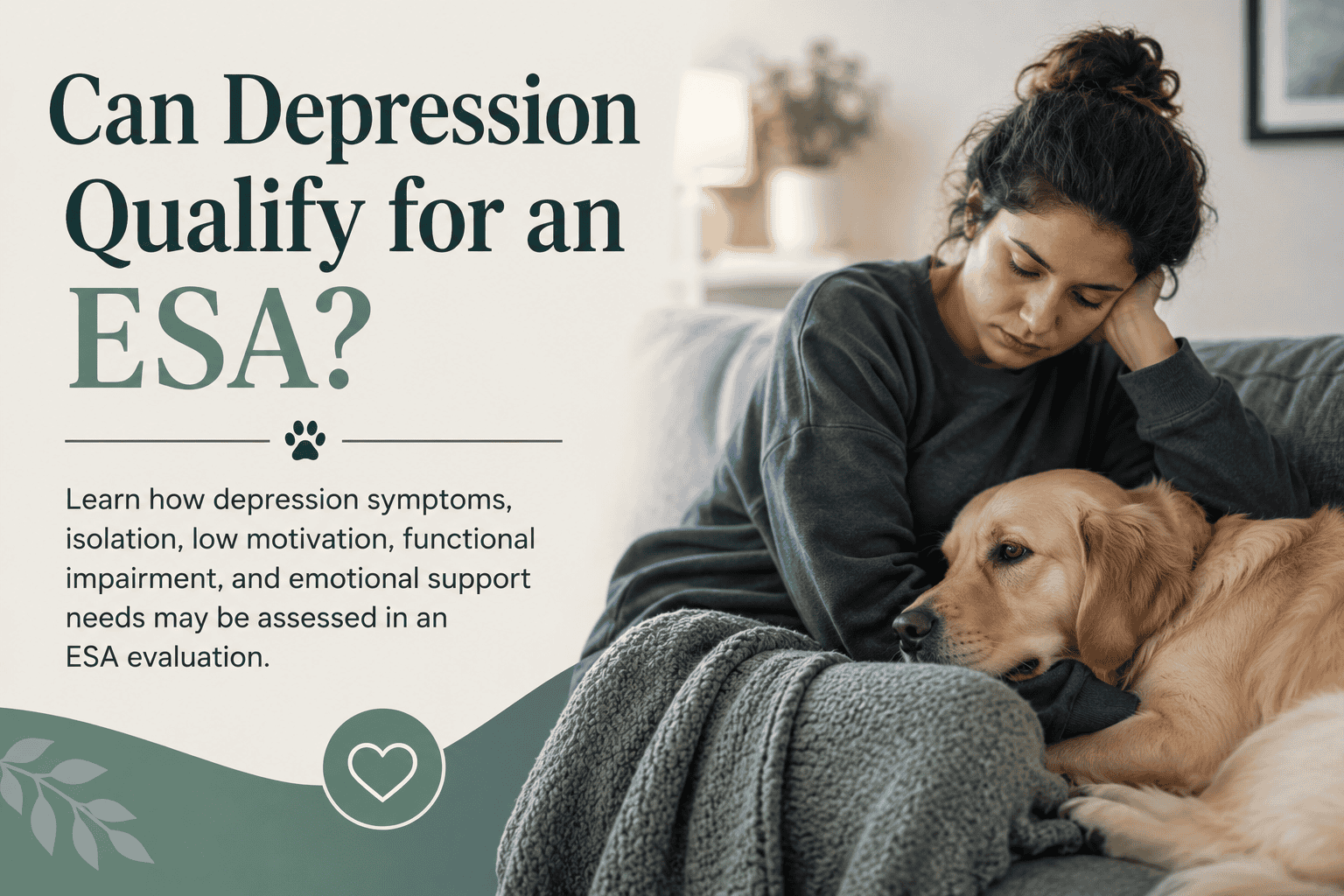
Can Depression Qualify for an ESA?
ESA Learning Center
Can Depression Qualify for an ESA?
Depression may support an emotional support animal recommendation when symptoms create meaningful functional impairment and the animal provides clinically relevant emotional support. An ESA evaluation looks at depression symptoms, isolation, low motivation, daily routine disruption, emotional support needs, and how the animal may help the person function more consistently at home.
Start Here
Depression Can Be Clinically Relevant in an ESA Evaluation
Depression can affect motivation, energy, sleep, appetite, concentration, self-care, emotional connection, and the ability to maintain daily routines. For some people, these symptoms create meaningful impairment in home life and daily functioning.
An emotional support animal may be clinically relevant when the animal helps reduce isolation, support routine, provide companionship, or help the person remain more emotionally engaged and stable. The evaluation focuses on symptoms, functional impairment, and whether the animal provides meaningful support connected to depression.
Depression and Emotional Support Animals
Can Depression Qualify for an ESA?
Depression may qualify for ESA documentation when symptoms create a disability-related need and the animal provides emotional support connected to that need. The focus is not simply whether someone feels sad or has been diagnosed with depression, but whether the symptoms significantly affect daily life and whether the animal helps support functioning.
For example, an animal may help someone maintain a daily routine, feel less alone, get out of bed more consistently, engage in caregiving tasks, or experience a sense of comfort and connection during periods of emotional withdrawal.
Depression does not automatically qualify someone for an ESA. The evaluator must consider symptom severity, functional impairment, and the clinical role the animal plays.
Symptoms Considered
Depression Symptoms That May Be Discussed During an ESA Evaluation
ESA evaluations often explore how depression affects mood, energy, motivation, connection, self-care, and daily functioning.
Low Mood
Persistent sadness, emptiness, tearfulness, hopelessness, or emotional heaviness may be clinically relevant.
Low Energy
Fatigue, slowed activity, low stamina, or difficulty completing normal responsibilities may affect functioning.
Low Motivation
Depression may make it harder to get started, follow through, keep routines, or engage in daily tasks.
Isolation
Some people withdraw from others, avoid social contact, or feel disconnected during depressive episodes.
Sleep Changes
Depression may involve sleeping too much, sleeping too little, or struggling to maintain a healthy sleep rhythm.
Need for Connection
An animal may provide companionship, emotional warmth, and a consistent sense of connection at home.
Functional Impairment
Why Functional Impairment Matters
ESA evaluations do not focus only on whether depression is present. They also consider how depression affects the person’s ability to function. Functional impairment describes the ways symptoms interfere with daily routines, home life, self-care, emotional stability, social connection, and responsibilities.
Depression-related functional impairment may include:
- Difficulty getting out of bed or starting the day
- Reduced motivation for self-care, chores, or responsibilities
- Social withdrawal or emotional isolation
- Difficulty maintaining routine or structure
- Sleep disruption or excessive sleeping
- Reduced interest in normal activities
- Feeling emotionally disconnected or alone at home
The clearer the connection between depression symptoms, functional impairment, and the support provided by the animal, the stronger the clinical basis for an ESA recommendation may be.
Clinical Support
How an Animal May Help With Depression
An emotional support animal may help some people with depression by providing companionship, structure, routine, emotional warmth, and a reason to stay engaged in daily caregiving tasks.
For some clients, the animal helps reduce isolation, supports getting up and moving, provides comfort during low mood, and creates a consistent relationship during periods of withdrawal or emotional numbness.
Important Boundary
Loving a Pet Is Not the Same as Clinical Need
Many people love their pets and feel comforted by them. ESA documentation requires a clearer clinical connection between the animal and the person’s depression-related functional need.
- Does the animal help reduce isolation?
- Does the animal support routine or daily structure?
- Does the animal help the person function more consistently?
- Does the animal provide support connected to a mental health condition?
ESA Qualification
Depression Does Not Automatically Qualify Someone for an ESA
Depression can vary widely. Some people experience temporary sadness or mild symptoms, while others experience significant impairment that affects daily functioning, relationships, self-care, sleep, and emotional stability.
This is why a clinical evaluation matters. The evaluator considers current symptoms, severity, functional impairment, treatment context, housing-related need, and the support the animal provides.
An ESA letter should be clinically grounded.
A responsible ESA letter should be accurate, limited, and connected to a housing accommodation need. It should not claim that the animal is a service animal or that the animal has public access rights.
ESA Evaluations at Motivations Counseling
Texas ESA Evaluations for Depression-Related Needs
Motivations Counseling provides emotional support animal evaluations for Texas residents. Evaluations may be completed through secure telehealth when clinically appropriate, with in-person services available through our Sugar Land and Katy-area counseling practice when scheduling allows.
Documentation is provided only when the evaluator determines that an ESA recommendation is clinically appropriate based on the evaluation.
Clinical ESA Evaluation
Schedule an ESA Evaluation in Texas
The ESA evaluation fee is currently $99. If you qualify and ESA documentation is clinically appropriate, there is no additional charge for the letter.
- Licensed Texas mental health professionals
- Telehealth available statewide for Texas residents
- Same-day options may be available when scheduling allows
- Documentation provided only when clinically appropriate
- No guarantee of landlord approval
ESA Learning Center
Continue Learning About ESA Letters and Housing Accommodations
These related resources can help Texas residents better understand ESA evaluations, documentation, housing requests, and landlord review.
Can Anxiety Qualify for an Emotional Support Animal?
Learn how anxiety symptoms, panic, avoidance, emotional regulation difficulty, and functional limitations may be considered.
Read article →What Documentation Can a Landlord Request for an ESA?
Learn what landlords may request, what documentation usually includes, and how privacy is protected.
Read article →Emotional Support Animal Letters in Texas: What You Need to Know
A broader guide to ESA letters, clinical evaluations, housing requests, and common myths about ESA registration.
Read article →Texas Emotional Support Animal Laws Explained
A plain-language overview of ESA housing documentation, landlord review, and reasonable accommodation requests.
Read article →ESA Letter vs. Service Dog: What Is the Difference?
Understand the difference between emotional support animals, service dogs, therapy animals, and pets.
Read article →Emotional Support Animal Resource Center
Browse our complete library of emotional support animal articles, FAQs, and practical resources covering housing, Texas laws, landlord requests, evaluations, and more.
Explore Resource Center →Featured Page
The Complete Emotional Support Animal Guide
Looking for the complete picture? Our clinician-written guide explains emotional support animal evaluations, ESA letters, Texas housing accommodations, landlord documentation, eligibility, service animal differences, and answers to the most common questions about Emotional Support Animals.
Frequently Asked Questions
Common Questions About Depression and Emotional Support Animals
Can depression qualify for an ESA?
Depression may qualify for ESA documentation when symptoms create meaningful functional impairment and the animal provides emotional support connected to those symptoms.
Does having depression automatically qualify me for an ESA?
No. Depression alone does not automatically qualify someone for an ESA. The evaluation considers symptom severity, functional impairment, and whether the animal provides clinically meaningful support.
Can an ESA help with isolation?
For some people, an emotional support animal may help reduce isolation, provide companionship, and support emotional connection during depressive symptoms.
Can low motivation be considered in an ESA evaluation?
Yes. Low motivation may be relevant when it interferes with daily functioning and the animal helps support routine, caregiving, movement, or engagement.
Is an ESA the same as a service animal for depression?
No. An ESA is not the same as a psychiatric service animal. ESA documentation is usually used for housing accommodation requests and does not create public access rights.
Can a landlord deny an ESA request for depression?
An ESA letter does not guarantee approval. A landlord may review documentation, consider whether the request is supported, and evaluate safety or behavior concerns.
How much does an ESA evaluation cost?
Motivations Counseling currently offers ESA clinical evaluations for $99. If the evaluator determines that ESA documentation is clinically appropriate, there is no additional charge for the letter.

Start Your ESA Evaluation
Schedule an ESA Evaluation for Depression-Related Support
If you are seeking ESA documentation related to depression symptoms, Motivations Counseling can help you complete a clinical evaluation and determine whether an emotional support animal recommendation may be appropriate.

