
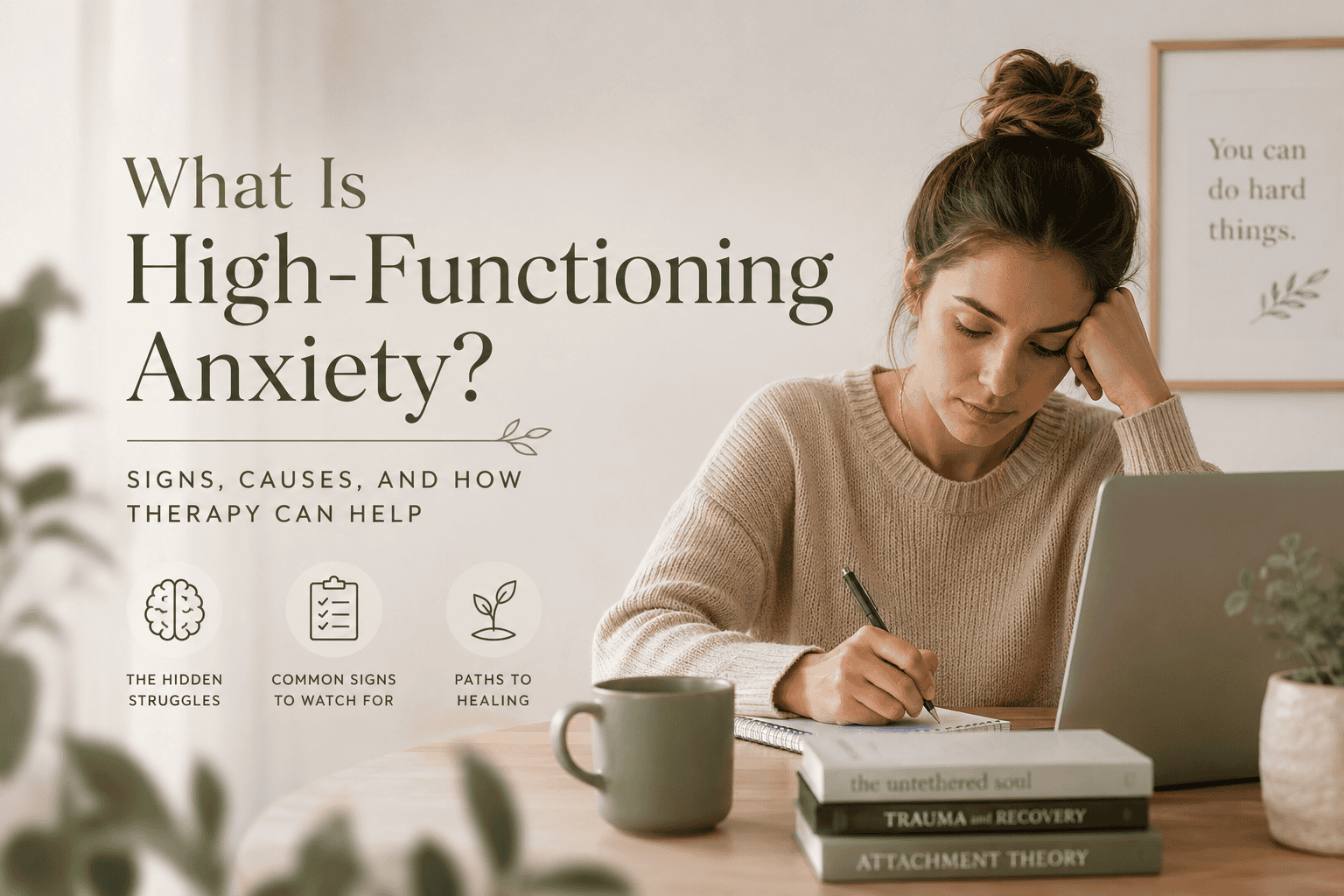
What Is High-Functioning Anxiety?
Anxiety Counseling Resource Center
What Is High-Functioning Anxiety?
High-functioning anxiety can be difficult to recognize because it often hides behind achievement, responsibility, perfectionism, and productivity. From the outside, someone may appear calm, capable, and successful while internally feeling overwhelmed, tense, overextended, or unable to rest.
Start Here
High-Functioning Anxiety Can Look Like Success on the Outside and Exhaustion on the Inside
Many people think anxiety must look obvious. They may imagine panic attacks, avoidance, visible distress, or an inability to function. But anxiety does not always look that way. Some people with anxiety continue performing well, showing up for others, maintaining responsibilities, and appearing calm while privately carrying intense stress.
High-functioning anxiety is not a formal DSM-5-TR diagnosis. It is a common phrase used to describe a pattern where someone seems to be functioning well externally while experiencing persistent worry, overthinking, muscle tension, self-criticism, perfectionism, and difficulty relaxing internally.
What Is High-Functioning Anxiety?
Anxiety Does Not Always Stop Someone From Functioning
A person with high-functioning anxiety may be dependable, thoughtful, organized, successful, and responsible. Others may describe them as motivated, prepared, helpful, or “on top of everything.” Yet internally, that same person may feel overwhelmed, tense, restless, self-critical, and unable to slow down.
This can make high-functioning anxiety especially confusing. Because the person is still accomplishing tasks, meeting expectations, and caring for others, their anxiety may be overlooked by family members, coworkers, friends, partners, or even by the person themselves.
A helpful question is: “Am I functioning because I feel grounded and supported, or am I functioning because I feel afraid to stop?”
High-functioning anxiety may involve:
- Overthinking decisions, conversations, or possible mistakes
- Feeling driven by pressure rather than peace
- Difficulty resting without guilt
- Fear of disappointing others
- Perfectionism or unrealistic self-expectations
- Physical symptoms such as tension, fatigue, headaches, or sleep difficulty
Common Signs
Signs of High-Functioning Anxiety
High-functioning anxiety may show up through patterns that other people praise, but that feel exhausting internally.
Constant Overthinking
You may replay conversations, second-guess decisions, analyze what others meant, or struggle to turn your thoughts off.
Perfectionism
Mistakes may feel unacceptable. You may hold yourself to unrealistic standards and feel anxious when things are imperfect.
Difficulty Resting
Rest may feel uncomfortable, lazy, or undeserved. You may feel guilty slowing down even when you are exhausted.
People-Pleasing
You may say yes when you want to say no, avoid disappointing others, or feel responsible for everyone else’s emotions.
Over-Preparation
You may prepare for every possible outcome, anticipate problems before they happen, or feel unsafe “just winging it.”
Physical Stress
Anxiety may show up as muscle tension, headaches, stomach problems, fatigue, irritability, racing thoughts, or poor sleep.
Possible Causes
High-Functioning Anxiety Usually Develops for a Reason
High-functioning anxiety does not have one single cause. It may develop through a combination of temperament, family patterns, life stress, trauma, attachment experiences, expectations, and learned ways of coping.
For many people, anxiety became a strategy. Staying alert, prepared, helpful, perfect, or productive may have once helped them avoid criticism, conflict, rejection, embarrassment, or emotional pain.
Possible contributors include:
- High expectations during childhood or adolescence
- Critical, unpredictable, or emotionally intense environments
- Trauma, chronic stress, or repeated emotional overwhelm
- Fear of mistakes, rejection, abandonment, or failure
- Attachment patterns that increase sensitivity to disconnection
- Longstanding beliefs such as “I have to be perfect” or “I cannot let people down”
Related resource: Attachment Styles in Relationships.
Anxiety and Relationships
High-Functioning Anxiety Can Affect Emotional Connection
High-functioning anxiety can affect relationships even when someone deeply cares about their partner, family, or friends. Anxiety may create patterns of overthinking, reassurance seeking, irritability, emotional withdrawal, people-pleasing, or difficulty being vulnerable.
A person may appear strong and capable while internally fearing that they are too much, not enough, a burden, or at risk of disappointing others. This can make it difficult to ask directly for comfort, reassurance, help, or emotional support.
In relationships, high-functioning anxiety may look like:
- Replaying conversations after conflict
- Needing reassurance that the relationship is okay
- Feeling responsible for a partner’s emotions
- Becoming irritable when overwhelmed
- Having difficulty slowing down enough to connect emotionally
- Using control, planning, or productivity to manage uncertainty
Related resources: Emotional Safety in Relationships and Emotionally Focused Therapy for Couples.
Burnout and Exhaustion
Functioning Is Not the Same as Feeling Well
Many people with high-functioning anxiety delay therapy because they are still getting things done. They may have a job, maintain responsibilities, care for others, keep commitments, and appear successful. But functioning is not the same thing as feeling emotionally well.
Over time, high-functioning anxiety can contribute to burnout, resentment, emotional numbness, sleep problems, physical symptoms, relationship stress, and a sense that life has become more about keeping up than actually feeling present.
You do not have to wait until anxiety creates a crisis before getting support. Therapy can help before the pressure becomes overwhelming.
When Counseling Can Help
Therapy Can Help You Understand the Pattern Beneath the Pressure
Therapy can help individuals understand the patterns underneath anxiety rather than simply trying to “calm down” or push through. For many people, high-functioning anxiety is not just a stress problem. It may involve beliefs about worth, safety, control, relationships, achievement, or past experiences.
Counseling may help with:
- Recognizing anxiety patterns that have become normalized
- Reducing overthinking and excessive self-criticism
- Developing healthier boundaries
- Understanding the connection between anxiety and the nervous system
- Practicing emotional regulation skills
- Addressing trauma or past experiences that may contribute to anxiety
- Improving communication and emotional safety in relationships
- Building a life that is not driven only by pressure, fear, or productivity
Trauma-informed therapy
Trauma-informed therapy recognizes that anxiety may be connected to the nervous system, past experiences, attachment wounds, or chronic stress. Instead of judging symptoms, trauma-informed care helps clients understand why these patterns may have developed and how to build new ways of feeling safer and more grounded.
EMDR therapy
For some people, anxiety is connected to distressing experiences, painful memories, or long-standing emotional beliefs such as “I’m not enough,” “I have to be perfect,” or “I can’t let anyone down.” EMDR therapy may help when anxiety is tied to trauma, chronic stress, or unresolved emotional experiences.
At Motivations Counseling, therapy may include trauma-informed, attachment-informed, EMDR-informed, and skills-based approaches depending on each client’s needs.
Free Relationship Resource
Anxiety and Attachment Patterns Can Overlap
High-functioning anxiety can sometimes show up in relationships through reassurance seeking, fear of rejection, people-pleasing, overthinking, difficulty asking for needs, or fear of disappointing others. Attachment patterns can influence how people respond to closeness, conflict, distance, and emotional safety.
Attachment Style Quiz
Take the Free Relationship Attachment Style Quiz
Our free attachment style quiz is designed for educational purposes and can help you reflect on patterns related to closeness, independence, reassurance, conflict, and emotional connection.
- No personal information required
- Immediate educational feedback
- Designed for individuals and couples
- May help you better understand relationship patterns
Learning Center
Continue Learning About Anxiety, Trauma, Attachment, and Emotional Wellness
These related resources can help individuals and couples better understand anxiety, overthinking, emotional safety, attachment patterns, trauma, and counseling options.
Anxiety Counseling
Learn how therapy can help with worry, overthinking, stress, panic symptoms, and anxiety-related concerns.
View service page →Why Anxiety Feels Physical
Understand how anxiety can affect the body through tension, fatigue, racing heart, stomach symptoms, and sleep issues.
Read article →Attachment Styles in Relationships
Learn how attachment patterns may affect closeness, reassurance, conflict, emotional safety, and connection.
Read article →Free Attachment Style Quiz
Take a free educational quiz to better understand your relationship attachment patterns. No personal information required.
Take quiz →Emotional Safety in Relationships
Learn why emotional safety matters and how couples can build trust, repair, vulnerability, and stronger connection.
Read article →Emotionally Focused Therapy
Learn how EFT helps couples understand conflict cycles, emotional needs, attachment patterns, and connection.
Read article →Emotional Disconnection in Relationships
Learn why couples can feel emotionally distant, lonely, or disconnected even when they still care about each other, and how counseling may help rebuild emotional safety, communication, and repair.
Read article →EMDR Therapy
Explore how EMDR may help when anxiety is connected to trauma, chronic stress, or distressing memories.
View service page →How Anxiety Affects Relationships
Explore how worry, reassurance seeking, avoidance, and overthinking can influence connection and communication.
Coming soon →Therapy Resource Center
Explore articles on trauma, anxiety, depression, EMDR, teen counseling, relationships, and emotional wellness.
View resources →Frequently Asked Questions
Common Questions About High-Functioning Anxiety
Is high-functioning anxiety a diagnosis?
High-functioning anxiety is not a formal DSM-5-TR diagnosis. It is a common phrase used to describe people who appear to function well externally while experiencing significant internal anxiety, worry, tension, or emotional pressure.
Can you have anxiety if you are successful?
Yes. Many people with anxiety are successful, responsible, and high-achieving. Success does not mean someone is not struggling internally.
What does high-functioning anxiety feel like?
It may feel like constant overthinking, pressure to perform, fear of disappointing others, difficulty relaxing, perfectionism, emotional exhaustion, or feeling unable to turn your mind off.
Can high-functioning anxiety affect relationships?
Yes. High-functioning anxiety may contribute to reassurance seeking, irritability, difficulty being vulnerable, people-pleasing, emotional withdrawal, or fear of conflict.
Can therapy help high-functioning anxiety?
Therapy can help people understand anxiety patterns, reduce self-criticism, develop boundaries, improve emotional regulation, and address trauma or past experiences that may contribute to anxiety.

Start Counseling
You Do Not Have to Keep Carrying Anxiety Alone
Many people with high-functioning anxiety have spent years appearing capable while quietly carrying stress, pressure, and emotional exhaustion. Therapy can provide a space to slow down, understand the patterns underneath anxiety, and develop healthier ways to cope.
Motivations Counseling offers trauma-informed therapy for anxiety, stress, overthinking, relationship concerns, and emotional overwhelm. We provide counseling in Sugar Land, Katy, and through online therapy across Texas.

