
Tag: Trauma-Informed Therapy

Depression and Trauma: How Trauma Can Shape Depression | Motivations Counseling

Depression & Trauma Resources

Depression and Trauma: Understanding the Connection Between Emotional Pain and Hopelessness

Trauma can contribute to numbness, hopelessness, shutdown, low self-worth, and difficulty feeling safe or connected. This guide explains how trauma and depression can overlap, why symptoms may persist long after painful experiences, and how trauma-informed counseling can help.

Start Here

Trauma Can Shape the Way Depression Feels

Depression after trauma can feel different from ordinary sadness. Some people feel emotionally numb, shut down, disconnected, or unable to feel hope. Others feel exhausted, unsafe, easily overwhelmed, ashamed, or trapped in a sense that something is wrong with them. Trauma can change how the brain, body, and nervous system respond to stress, relationships, vulnerability, and emotional pain.

Trauma-related depression may develop after a single overwhelming event, repeated exposure to distress, childhood emotional neglect, abuse, loss, violence, medical trauma, relationship trauma, immigration trauma, accidents, or long periods of instability. The connection is not always obvious at first because depression may appear long after the traumatic experience or after years of trying to function through it.

What Is Trauma-Related Depression?

Trauma-related depression refers to depressive symptoms that are influenced by past or ongoing trauma. These symptoms may include emotional numbness, hopelessness, shutdown, low self-worth, fatigue, isolation, loss of interest, difficulty trusting others, difficulty feeling safe, or a sense of disconnection from oneself, relationships, or life.

Nervous System Response

Trauma Can Keep the Body in Survival Mode

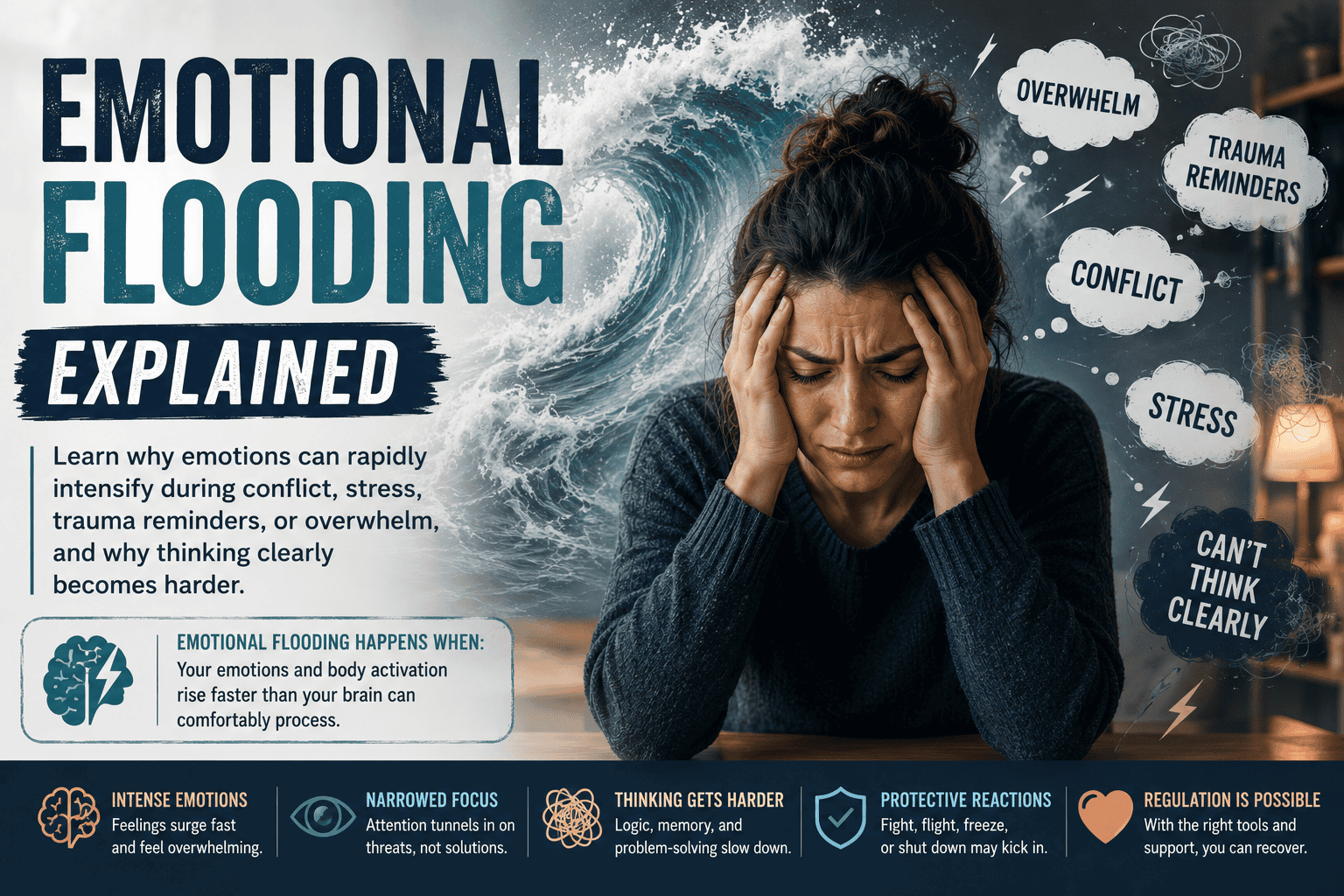
Trauma affects more than memory. It can influence how safe the body feels, how easily emotions become overwhelming, and how the nervous system responds to stress. When the body has learned that danger may return, it may stay prepared for threat even when life is calmer now.

  • Fight may look like anger, irritability, or defensiveness.
  • Flight may look like anxiety, restlessness, or avoidance.
  • Freeze may look like feeling stuck, numb, or unable to act.
  • Shutdown may look like depression, exhaustion, or emotional collapse.

Important Reframe

Depression May Be the Nervous System Trying to Protect You

When overwhelm has been too intense for too long, the nervous system may shift into shutdown. This can feel like depression: low energy, numbness, disconnection, hopelessness, difficulty thinking clearly, and a desire to withdraw from the world.

  • Shutdown is not laziness.
  • Numbness is not a lack of caring.
  • Withdrawal may be a protection response.
  • Healing often requires safety before processing.

Trauma-informed therapy focuses on pacing, stabilization, safety, and choice. The goal is not to force someone to relive painful experiences before they are ready, but to help the nervous system begin to feel safer and more supported.

How Trauma Contributes

How Trauma Can Contribute to Depression

Trauma can affect beliefs, emotions, relationships, the body, and the sense of self. After trauma, a person may begin to feel unsafe in the world, disconnected from others, ashamed of their reactions, or uncertain whether life can improve. Over time, these patterns can contribute to depressive symptoms.

Depression may also develop when the nervous system has been carrying too much for too long. Constant hypervigilance, fear, grief, emotional suppression, or trying to function after painful experiences can drain emotional and physical energy. Eventually, the person may feel like they cannot keep going in the same way.

Trauma can contribute to depression through:

  • Emotional numbness or shutdown
  • Low self-worth or shame
  • Loss of trust in others
  • Difficulty feeling safe
  • Hopelessness about the future
  • Isolation or withdrawal
  • Chronic stress and nervous system exhaustion
  • Beliefs such as “I am not safe,” “I am alone,” or “something is wrong with me”

Trauma-related depression often makes sense when viewed as a response to overwhelm, loss of safety, and emotional injury rather than a personal weakness.

Signs and Symptoms

Signs Trauma May Be Affecting Depression

Trauma-related depression may include familiar depression symptoms, but it often carries an added layer of fear, shame, disconnection, emotional numbness, or nervous system survival responses.

Emotional Numbness

You may feel disconnected from emotions, people, memories, or parts of yourself.

Shutdown or Withdrawal

You may isolate, avoid conversations, or feel unable to respond emotionally.

Low Self-Worth

Trauma can create shame, self-blame, or the belief that you are damaged or not enough.

Difficulty Feeling Safe

Even calm situations may feel uncertain, tense, or emotionally unsafe.

Hopelessness

The future may feel closed off, heavy, or difficult to imagine improving.

Disconnection

Relationships, joy, purpose, or identity may feel distant or hard to access.

Childhood Trauma

Depression After Childhood Trauma

Childhood trauma can affect how a person learns to see themselves, relationships, emotions, safety, and needs. When a child grows up with abuse, neglect, criticism, instability, emotional unavailability, bullying, abandonment, family conflict, or chronic fear, the nervous system may adapt in ways that help the child survive but create pain later in life.

Adults with childhood trauma histories may struggle with depression that is closely connected to shame, perfectionism, emotional numbness, people-pleasing, difficulty trusting others, fear of rejection, or feeling responsible for everyone else. They may not always recognize these patterns as trauma-related because the experiences may have been normalized for years.

Childhood trauma may contribute to depression through:

  • Believing your needs do not matter
  • Feeling unworthy of care or attention
  • Difficulty trusting emotional safety
  • Learning to suppress feelings to avoid conflict
  • Feeling responsible for other people’s moods
  • Carrying shame or self-blame into adulthood
  • Struggling to know what healthy connection feels like

Healing from childhood trauma often involves helping the adult self understand that the survival strategies that once helped may now be keeping depression, disconnection, or shame in place.

Adult Trauma

Depression After Adult Trauma

Trauma in adulthood can also contribute to depression. Relationship betrayal, abuse, assault, accidents, medical crises, immigration stress, grief, job loss, violence, caregiving trauma, divorce, legal stress, or sudden life changes can alter a person’s sense of safety and stability.

After adult trauma, a person may feel like life has been divided into “before” and “after.” They may struggle to feel like themselves, trust others, make plans, experience joy, or feel safe in their body. Depression may develop when the person feels overwhelmed by what happened, isolated in their pain, or unsure how to rebuild.

Adult trauma may contribute to depression through:

  • Loss of safety or stability
  • Loss of identity, trust, or confidence
  • Ongoing fear, grief, or uncertainty
  • Relationship disconnection or betrayal trauma
  • Medical, legal, financial, or immigration-related stress
  • Feeling powerless, trapped, or unable to move forward
  • Difficulty integrating what happened into the larger story of life

Adult trauma can be especially isolating when others expect someone to “move on” before the nervous system and emotional self have had enough support to process what happened.

Emotional Shutdown

Why Depression Can Feel Like Emotional Shutdown

Emotional shutdown can happen when the nervous system has been overwhelmed and no longer feels able to fight, flee, explain, fix, or cope. Instead of intense emotion, the person may feel numb, blank, distant, exhausted, or disconnected from themselves and others.

This shutdown can look like depression. The person may stop caring about things that once mattered, avoid people, lose motivation, feel tired all the time, or struggle to experience pleasure. They may feel guilty for being disconnected, but the numbness may actually be a protective response.

Shutdown may feel like:

  • Feeling emotionally blank or numb
  • Wanting to withdraw from everyone
  • Not feeling joy, sadness, or connection clearly
  • Difficulty making decisions or taking action
  • Feeling like life is happening at a distance
  • Having low motivation even when you care intellectually
  • Feeling exhausted by ordinary emotional demands

Trauma-informed care often begins by helping the nervous system feel safer before asking someone to access painful memories or emotions.

Relationships and Safety

Trauma-Related Depression Can Affect Relationships

Trauma can affect how safe a person feels with others. If past experiences involved betrayal, abandonment, violence, criticism, emotional neglect, abuse, or unpredictability, closeness may feel complicated. A person may want connection but also feel guarded, numb, anxious, or afraid of being hurt again.

Depression can make this harder. Low energy, hopelessness, irritability, shame, or emotional numbness may lead to withdrawal. Loved ones may interpret the distance as rejection, while the person experiencing depression may feel misunderstood or unable to explain what is happening.

Relationship patterns may include:

  • Wanting closeness but feeling overwhelmed by vulnerability
  • Withdrawing when emotions feel intense
  • Difficulty trusting reassurance or support
  • Feeling like a burden
  • Feeling disconnected from partners, friends, or family
  • Expecting rejection, criticism, or abandonment
  • Feeling numb during moments that should feel meaningful

Therapy can help clients understand how trauma affects attachment, trust, emotional safety, and the ability to receive support.

An Educational Framework

The Trauma-Depression Cycle

Trauma-related depression can become self-reinforcing when overwhelm, shame, withdrawal, and disconnection continue without support.

1. Safety Is Disrupted

Trauma changes how the body, mind, or relationships experience safety and control.

2. The Nervous System Adapts

The body may shift into hypervigilance, avoidance, freeze, or shutdown to survive.

3. Numbness or Hopelessness Grows

Emotional shutdown, sadness, exhaustion, or low self-worth may begin to feel normal.

4. Withdrawal Increases

The person may isolate, avoid support, or feel unable to explain what is happening.

5. Shame Deepens

The person may blame themselves for symptoms that are actually connected to trauma survival responses.

6. The Pattern Repeats

Depression and trauma responses reinforce each other until safety, support, and processing become possible.

Breaking the cycle often requires more than positive thinking. It may require trauma-informed support that works with the nervous system, emotions, beliefs, relationships, and past experiences together.

What Helps

What Helps Trauma-Related Depression

Trauma-related depression often improves through support that addresses both depression symptoms and the trauma patterns underneath them. Healing may include emotional safety, nervous system regulation, relationship support, trauma processing, and rebuilding a more compassionate sense of self.

Build Safety First

Stabilization, grounding, and emotional safety help prepare the nervous system for deeper work.

Support the Nervous System

Breathing, grounding, movement, sleep support, and sensory regulation can help reduce shutdown or overwhelm.

Reduce Shame

Understanding symptoms as trauma responses can reduce self-blame and create room for compassion.

Strengthen Support

Safe relationships and therapy can help counter isolation, disconnection, and the belief that no one understands.

Consider EMDR Therapy

EMDR may help some clients process traumatic memories and reduce the emotional charge of triggers when clinically appropriate.

Reconnect With Meaning

Therapy can help clients rebuild identity, values, connection, purpose, and a sense of possibility after trauma.

When to Seek Help

When to Seek Counseling for Depression and Trauma

It may be time to seek counseling when trauma-related depression affects sleep, relationships, work, parenting, emotional regulation, self-worth, motivation, concentration, physical comfort, or your ability to feel safe and connected. Support can help you understand what is happening and begin healing at a manageable pace.

Consider counseling if you notice:

  • You feel numb, shut down, disconnected, or emotionally flat
  • You feel hopeless, ashamed, or unable to imagine things improving
  • You avoid people, places, emotions, or memories connected to pain
  • You feel unsafe even when there is no clear present danger
  • You struggle with low self-worth or self-blame
  • You feel stuck in survival mode
  • You have intrusive memories, nightmares, panic, or hypervigilance
  • You feel like trauma changed who you are

If depression includes thoughts of death, self-harm, or suicide, seek immediate support. In the United States, call or text 988 for the Suicide & Crisis Lifeline, call 911, or go to the nearest emergency room.

Trauma-Informed Depression Counseling at Motivations Counseling

Therapy Can Help When Trauma and Depression Are Connected

Motivations Counseling provides trauma-informed counseling for adults experiencing depression, numbness, hopelessness, shutdown, anxiety, emotional disconnection, low self-worth, grief, relationship stress, hypervigilance, avoidance, and trauma-related symptoms.

Our counseling team serves clients in Sugar Land, Katy, Richmond, Fort Bend County, West Houston, and through telehealth across Texas when clinically appropriate. EMDR therapy may also be considered when clinically appropriate and when the client has enough stability and support for trauma processing.

Counseling Support

Trauma-Informed Depression Counseling in Sugar Land, Katy, and Online Across Texas

If trauma has contributed to depression, shutdown, numbness, hopelessness, or difficulty feeling safe and connected, counseling can help you understand the pattern and begin healing at a manageable pace.

  • Individual counseling for depression and trauma-related symptoms
  • Support for emotional numbness, hopelessness, shutdown, and low self-worth
  • Trauma-informed counseling focused on safety, pacing, and nervous system regulation
  • EMDR therapy when clinically appropriate
  • In-person options in Sugar Land and Katy when available
  • Telehealth counseling across Texas when clinically appropriate
Call or Text: (281) 858-3001

Frequently Asked Questions

Common Questions About Depression and Trauma

Can trauma cause depression?

Trauma can contribute to depression by affecting safety, self-worth, trust, emotional regulation, nervous system responses, and the ability to feel connected or hopeful.

Why does trauma make me feel numb?

Numbness may be a nervous system shutdown response. When emotions or stress feel overwhelming, the body may protect itself by reducing emotional access, which can feel like disconnection or depression.

What does trauma-related depression feel like?

Trauma-related depression may feel like numbness, hopelessness, low self-worth, emotional shutdown, isolation, exhaustion, difficulty trusting others, or difficulty feeling safe and connected.

Can childhood trauma cause depression in adulthood?

Childhood trauma can contribute to depression later in life by shaping beliefs about safety, self-worth, attachment, emotional expression, and whether support feels trustworthy.

Can adult trauma cause depression?

Yes. Adult trauma such as abuse, betrayal, assault, accidents, medical trauma, immigration stress, grief, or major instability can contribute to depression symptoms.

Can EMDR therapy help trauma-related depression?

EMDR therapy may help some clients process traumatic memories and reduce the intensity of trauma-related triggers when it is clinically appropriate. A therapist can help determine whether EMDR is a good fit.

What helps depression after trauma?

Trauma-related depression often improves through trauma-informed counseling, emotional safety, nervous system regulation, shame reduction, supportive relationships, trauma processing when appropriate, and practical support for daily functioning.

When should I seek counseling?

Consider counseling when numbness, hopelessness, shutdown, low self-worth, isolation, intrusive memories, hypervigilance, avoidance, or difficulty feeling safe begins affecting daily life, relationships, work, or emotional well-being.

Susan Baker, M.Ed., NCC, LPC-S, Licensed Professional Counselor Supervisor in Texas

Article Author

Written by a Licensed Texas Mental Health Professional

This article was written for Motivations Counseling by Susan Baker, M.Ed., NCC, LPC-S, a Texas Licensed Professional Counselor Supervisor and clinical leader at Motivations Counseling.

Susan Baker, M.Ed., NCC, LPC-S
Texas Licensed Professional Counselor Supervisor
EMDR Therapist & EMDRIA Member
Texas LPC License #73957

Susan Baker is the Clinical Director of Motivations Counseling and provides trauma-informed counseling, EMDR therapy, anxiety treatment, depression counseling, couples counseling, immigration psychological evaluations, and mental health assessment services. Motivations Counseling serves clients from offices in Sugar Land and Katy, Texas, with telehealth services available statewide for Texas residents.

Take the Next Step

Trauma-Informed Depression Counseling in Sugar Land, Katy, and Online Across Texas

If trauma has contributed to numbness, hopelessness, shutdown, low self-worth, or difficulty feeling safe and connected, counseling can help you understand the pattern and begin healing at a manageable pace.

×

What an EMDR Session Feels Like: What to Expect Before, During, and After EMDR Therapy

EMDR Therapy & Trauma Recovery Resources

What an EMDR Session Feels Like: What to Expect Before, During, and After EMDR Therapy

If you are considering EMDR therapy, it is normal to wonder what an actual session feels like. Many people worry that EMDR will force them to relive painful memories, lose control of their emotions, or feel overwhelmed. In reality, EMDR is a structured, collaborative therapy approach designed to help the brain process distressing experiences while helping you remain grounded, aware, and supported.

Start Here

EMDR Often Feels More Structured, Grounded, and Collaborative Than People Expect

EMDR therapy can sound unusual if you have never experienced it before. The idea of eye movements, tapping, or bilateral stimulation may raise questions, especially if you are already feeling anxious, guarded, or unsure about opening up emotionally.

Many clients are relieved to learn that EMDR is not about forcing memories, pushing emotions, or rushing into trauma before you are ready. A well-paced EMDR session includes preparation, grounding, therapist support, check-ins, and choice. You remain awake, aware, and able to pause at any time.

What Is an EMDR Session?

An EMDR session is a structured therapy appointment that uses bilateral stimulation, such as eye movements, tapping, or alternating sounds, to help the brain process distressing memories, experiences, beliefs, or emotional triggers. EMDR sessions are designed to reduce emotional distress while strengthening a person's ability to feel grounded, safe, and resilient.

Before EMDR

What You May Feel Before an EMDR Session

Feeling nervous before EMDR is common. Many clients come in with questions about what will happen, what they may feel, and whether they will be able to handle the process.

Nervous

You may feel anxious because EMDR is different from traditional talk therapy and because you may not know what to expect.

Curious

Some clients feel hopeful and curious because they have heard EMDR may help when talk therapy alone has not fully resolved symptoms.

Skeptical

It is normal to wonder whether eye movements, tapping, or bilateral stimulation can really help the brain process emotional distress.

Unsure

You may not know exactly which memory, trigger, or experience to focus on. Your therapist can help identify appropriate targets.

Protective

Parts of you may want relief while other parts may feel guarded. EMDR does not require you to move faster than your nervous system can tolerate.

Ready for Relief

Many people begin EMDR because anxiety, trauma, grief, panic, or painful memories continue affecting daily life.

Before deeper EMDR processing begins, your therapist typically helps you build grounding skills, emotional resources, and a sense of safety. Preparation is part of the therapy, not a delay in therapy.

During EMDR

What an EMDR Session Can Feel Like While It Is Happening

During EMDR processing, you may focus briefly on a memory, image, belief, body sensation, or emotional trigger while also following some form of bilateral stimulation. This may involve following the therapist's fingers with your eyes, using tapping, holding small buzzers, or listening to alternating sounds.

EMDR often feels less like retelling the entire story and more like noticing what your brain and body bring up in short sets. After each set of bilateral stimulation, your therapist may ask something simple such as, “What do you notice now?” You do not have to explain everything perfectly. The process often unfolds through images, sensations, thoughts, emotions, and shifts in perspective.

Common experiences during EMDR include:

  • Thoughts moving from one memory or idea to another
  • Emotions rising and then decreasing
  • Body sensations such as tightness, warmth, heaviness, tingling, or release
  • New insights or connections emerging
  • A memory beginning to feel more distant or less intense
  • A shift from self-blame toward compassion, clarity, or strength

You do not have to “perform” EMDR correctly. Your job is not to force an outcome. Your therapist helps guide the process while you notice what comes up at a pace that supports emotional safety.

Important Reassurance

EMDR Does Not Mean Losing Control

One of the biggest fears people have about EMDR is that they will lose control, become overwhelmed, or be forced to relive painful experiences. EMDR is not designed to remove your awareness or take away your choice.

During EMDR, you remain awake, aware, and able to communicate with your therapist. You can pause, slow down, stop, ground, or shift focus when needed.

  • You remain in control of the pace.
  • You can stop at any time.
  • Your therapist checks in throughout the process.
  • You do not have to share every detail out loud.
  • You are not expected to push past your limits.

Common Misconception

EMDR Is Not Hypnosis

EMDR is sometimes misunderstood as hypnosis because it can involve eye movements or focused attention. However, EMDR is different from hypnosis. You are not placed in a trance, and the therapist does not control your thoughts.

EMDR is a collaborative therapy process that helps the brain reprocess distressing information while you remain present and engaged.

You do not need to believe EMDR will work perfectly before beginning. Many clients start with uncertainty and become more comfortable as they understand the structure and experience the pacing.

An Educational Framework

The Typical EMDR Session Process

EMDR therapy follows a structured process. Every client is different, but these steps can help you understand what may happen before, during, and after EMDR processing.

1. Preparation

Your therapist helps you build coping skills, grounding strategies, and emotional resources before deeper processing begins.

2. Identifying a Target

You and your therapist identify a memory, trigger, belief, image, sensation, or experience to focus on during processing.

3. Bilateral Stimulation

Your therapist guides eye movements, tapping, alternating sounds, or another form of bilateral stimulation.

4. Processing

Thoughts, emotions, body sensations, and memories may shift as the brain works through distressing material.

5. Reassessment

Your therapist checks how distressing the target feels now and whether the belief or body response has changed.

6. Integration

You end with grounding, reflection, and support for carrying the progress into daily life between sessions.

EMDR is not just the eye movement portion. Preparation, pacing, grounding, target selection, processing, reassessment, and closure all matter.

After EMDR

What You May Feel After an EMDR Session

After EMDR, some clients feel immediate relief, while others feel thoughtful, tired, emotional, or quieter inside. There is no single “right” reaction.

Lighter

A memory, belief, or emotional trigger may feel less intense, less close, or less defining than it did before.

Tired

EMDR can involve significant emotional and nervous system processing, so fatigue afterward can be normal.

Calmer

Some clients feel more settled, grounded, or emotionally spacious after a memory has been processed.

Emotional

It is also possible to feel tender, tearful, reflective, or emotionally open after a meaningful session.

Insightful

New perspectives may emerge, such as realizing something was not your fault or recognizing your own resilience.

Ready to Rest

Many people benefit from a calmer evening, hydration, gentle movement, journaling, or extra rest after EMDR.

Between Sessions

Is It Normal to Feel Different Between EMDR Sessions?

Yes. EMDR processing may continue between sessions. Some people notice dreams, memories, emotions, body sensations, or insights after an appointment. Others notice that they respond differently to triggers without consciously trying.

Between sessions, you may feel more aware of how certain experiences affected you. You may also notice emotional shifts, temporary fatigue, improved sleep, or a sense that something feels less charged than before.

Common between-session experiences may include:

  • New insights about old experiences
  • Memories feeling less emotionally overwhelming
  • Temporary tiredness or emotional tenderness
  • Dreams or additional memories surfacing
  • Less reactivity to a trigger
  • A greater sense of calm, clarity, or self-compassion

If something feels intense between sessions, tell your therapist. EMDR can be adjusted. Your therapist can help with grounding, pacing, stabilization, and deciding whether more preparation is needed before continuing deeper processing.

What EMDR Is Not

EMDR Is Often Gentler and More Collaborative Than People Imagine

Many fears about EMDR come from misunderstanding the process. EMDR can involve emotional material, but it is not meant to overwhelm, shame, or pressure you.

It Is Not Hypnosis

You stay awake, aware, and able to communicate. EMDR does not put you under someone else's control.

It Is Not Mind Control

Your therapist cannot make you think, believe, remember, or feel something that is not your own experience.

It Is Not Forced Disclosure

EMDR does not require you to describe every detail of a painful memory out loud for processing to occur.

It Is Not Retraumatization

The goal is to help the brain process distressing material, not to make you relive trauma without support.

It Is Not Rushed

Preparation and stabilization are part of the process. EMDR can be paced according to your readiness.

It Is Not One-Size-Fits-All

EMDR can be adapted based on your symptoms, history, nervous system, goals, and comfort level.

When EMDR May Help

EMDR Can Help When the Past Still Feels Present

EMDR therapy is often used when distressing experiences continue to affect emotions, beliefs, relationships, body responses, or daily functioning. Some people seek EMDR after a clearly traumatic event. Others seek EMDR because they feel stuck in anxiety, shame, panic, grief, self-blame, or emotional reactions that feel bigger than the present situation.

EMDR may be helpful when your mind knows something is over, but your body still reacts as if it is happening now.

People often consider EMDR for:

  • Trauma or PTSD symptoms
  • Anxiety, panic, or intense emotional triggers
  • Distressing memories that still feel vivid or painful
  • Grief, loss, or complicated emotional experiences
  • Negative beliefs such as “I am not safe,” “It was my fault,” or “I am not enough”
  • Relationship wounds, attachment injuries, or painful life experiences
  • Feeling stuck after talk therapy has helped, but symptoms remain

EMDR is not appropriate for every person at every moment. A therapist can help determine whether EMDR, additional stabilization, traditional counseling, or another approach is the best fit right now.

EMDR Therapy at Motivations Counseling

Trauma-Informed EMDR Therapy in Sugar Land, Katy, and Online Across Texas

Motivations Counseling provides trauma-informed EMDR therapy for adults experiencing anxiety, trauma symptoms, panic, grief, emotional overwhelm, relationship stress, distressing memories, and difficult life experiences. EMDR therapy may help reduce the emotional charge connected to painful experiences while supporting greater calm, clarity, and resilience.

Our counseling team serves clients in Sugar Land, Katy, Richmond, Fort Bend County, West Houston, and through telehealth across Texas when clinically appropriate.

Counseling Support

Considering EMDR but Feeling Nervous?

You do not have to be completely certain before reaching out. A therapist can help you understand whether EMDR is a good fit, what preparation may be needed, and how the process can be paced in a way that supports emotional safety.

  • EMDR therapy for trauma, anxiety, panic, grief, and emotional triggers
  • Trauma-informed counseling and nervous-system-informed support
  • In-person options in Sugar Land and Katy when available
  • Telehealth counseling across Texas when clinically appropriate
  • Collaborative pacing, preparation, and grounding before deeper processing
Call or Text: (281) 858-3001

Frequently Asked Questions

Common Questions About What an EMDR Session Feels Like

Does EMDR feel strange?

EMDR can feel unfamiliar at first because it is different from traditional talk therapy. Some clients notice that thoughts, memories, emotions, or body sensations shift more quickly than expected. Many people become more comfortable once they understand the structure and realize they remain in control.

Will I cry during EMDR?

Some people cry during EMDR, and others do not. Tears are not required for EMDR to be effective. Emotional processing can look like crying, quiet reflection, body sensations, insight, relief, or a subtle shift in how a memory feels.

Can EMDR make symptoms worse before they improve?

Some clients feel temporarily tired, emotional, or more aware of memories between sessions. This does not mean EMDR is failing, but it is important to tell your therapist so the pace, grounding, and preparation can be adjusted if needed.

What if I do not remember everything?

You do not need a perfect memory for EMDR. EMDR can focus on images, body sensations, emotions, beliefs, fragments of memory, or current triggers. Your therapist can help identify an appropriate starting point.

How long does an EMDR session last?

EMDR sessions are often scheduled for a standard therapy hour, though the exact length may vary by provider, treatment plan, and clinical needs. Your therapist can explain how sessions are structured at the beginning of treatment.

How many EMDR sessions do most people need?

The number of EMDR sessions varies depending on the issue being addressed, symptom severity, trauma history, current stability, and therapy goals. Some clients work on a specific event, while others need a longer course of therapy for more complex or layered experiences.

Is EMDR emotionally exhausting?

EMDR can be tiring because the brain and nervous system are actively processing emotional material. Many clients benefit from planning a calmer evening after session, drinking water, resting, journaling, or using grounding skills.

Can EMDR help anxiety even if I do not have PTSD?

EMDR may help some people with anxiety, panic, phobias, grief, emotional triggers, or distressing life experiences, even when they do not meet criteria for PTSD. A therapist can help determine whether EMDR is appropriate for your symptoms and goals.

Susan Baker, M.Ed., NCC, LPC-S, Licensed Professional Counselor Supervisor in Texas

Article Author

Written by a Licensed Texas Mental Health Professional

This article was written for Motivations Counseling by Susan Baker, M.Ed., NCC, LPC-S, a Texas Licensed Professional Counselor Supervisor and clinical leader at Motivations Counseling.

Susan Baker, M.Ed., NCC, LPC-S
Texas Licensed Professional Counselor Supervisor
EMDR Therapist & EMDRIA Member
Texas LPC License #73957

Susan Baker is the Clinical Director of Motivations Counseling and provides trauma-informed counseling, EMDR therapy, anxiety treatment, depression counseling, immigration psychological evaluations, and mental health assessment services. Motivations Counseling serves clients from offices in Sugar Land and Katy, Texas, with telehealth services available statewide for Texas residents.

Take the Next Step

EMDR Therapy in Sugar Land, Katy, and Online Across Texas

If trauma, anxiety, panic, grief, painful memories, or emotional triggers continue to affect your daily life, EMDR therapy may help your brain process those experiences differently. Motivations Counseling offers trauma-informed EMDR therapy with support, preparation, and pacing.

×

What Is High-Functioning Anxiety?

Anxiety Counseling Resource Center

What Is High-Functioning Anxiety?

High-functioning anxiety can be difficult to recognize because it often hides behind achievement, responsibility, perfectionism, and productivity. From the outside, someone may appear calm, capable, and successful while internally feeling overwhelmed, tense, overextended, or unable to rest.

Start Here

High-Functioning Anxiety Can Look Like Success on the Outside and Exhaustion on the Inside

Many people think anxiety must look obvious. They may imagine panic attacks, avoidance, visible distress, or an inability to function. But anxiety does not always look that way. Some people with anxiety continue performing well, showing up for others, maintaining responsibilities, and appearing calm while privately carrying intense stress.

High-functioning anxiety is not a formal DSM-5-TR diagnosis. It is a common phrase used to describe a pattern where someone seems to be functioning well externally while experiencing persistent worry, overthinking, muscle tension, self-criticism, perfectionism, and difficulty relaxing internally.

Anxiety Counseling Services

What Is High-Functioning Anxiety?

Anxiety Does Not Always Stop Someone From Functioning

A person with high-functioning anxiety may be dependable, thoughtful, organized, successful, and responsible. Others may describe them as motivated, prepared, helpful, or “on top of everything.” Yet internally, that same person may feel overwhelmed, tense, restless, self-critical, and unable to slow down.

This can make high-functioning anxiety especially confusing. Because the person is still accomplishing tasks, meeting expectations, and caring for others, their anxiety may be overlooked by family members, coworkers, friends, partners, or even by the person themselves.

A helpful question is: “Am I functioning because I feel grounded and supported, or am I functioning because I feel afraid to stop?”

High-functioning anxiety may involve:

  • Overthinking decisions, conversations, or possible mistakes
  • Feeling driven by pressure rather than peace
  • Difficulty resting without guilt
  • Fear of disappointing others
  • Perfectionism or unrealistic self-expectations
  • Physical symptoms such as tension, fatigue, headaches, or sleep difficulty

Common Signs

Signs of High-Functioning Anxiety

High-functioning anxiety may show up through patterns that other people praise, but that feel exhausting internally.

Constant Overthinking

You may replay conversations, second-guess decisions, analyze what others meant, or struggle to turn your thoughts off.

Perfectionism

Mistakes may feel unacceptable. You may hold yourself to unrealistic standards and feel anxious when things are imperfect.

Difficulty Resting

Rest may feel uncomfortable, lazy, or undeserved. You may feel guilty slowing down even when you are exhausted.

People-Pleasing

You may say yes when you want to say no, avoid disappointing others, or feel responsible for everyone else’s emotions.

Over-Preparation

You may prepare for every possible outcome, anticipate problems before they happen, or feel unsafe “just winging it.”

Physical Stress

Anxiety may show up as muscle tension, headaches, stomach problems, fatigue, irritability, racing thoughts, or poor sleep.

Why It Often Goes Unnoticed

Anxiety-Driven Behaviors Are Often Rewarded

One reason high-functioning anxiety often goes untreated is that many anxiety-driven behaviors are socially rewarded. Being prepared, responsible, productive, careful, and detail-oriented can lead to praise, trust, career advancement, good grades, and a reputation for being dependable.

The problem is not responsibility itself. Responsibility can be healthy and meaningful. The problem is when responsibility is fueled by fear, self-criticism, emotional pressure, or the belief that your worth depends on never disappointing anyone.

High-functioning anxiety can become exhausting because the same patterns that help someone succeed may also prevent them from resting, receiving support, or feeling emotionally safe.

Possible Causes

High-Functioning Anxiety Usually Develops for a Reason

High-functioning anxiety does not have one single cause. It may develop through a combination of temperament, family patterns, life stress, trauma, attachment experiences, expectations, and learned ways of coping.

For many people, anxiety became a strategy. Staying alert, prepared, helpful, perfect, or productive may have once helped them avoid criticism, conflict, rejection, embarrassment, or emotional pain.

Possible contributors include:

  • High expectations during childhood or adolescence
  • Critical, unpredictable, or emotionally intense environments
  • Trauma, chronic stress, or repeated emotional overwhelm
  • Fear of mistakes, rejection, abandonment, or failure
  • Attachment patterns that increase sensitivity to disconnection
  • Longstanding beliefs such as “I have to be perfect” or “I cannot let people down”

Related resource: Attachment Styles in Relationships.

Anxiety and Relationships

High-Functioning Anxiety Can Affect Emotional Connection

High-functioning anxiety can affect relationships even when someone deeply cares about their partner, family, or friends. Anxiety may create patterns of overthinking, reassurance seeking, irritability, emotional withdrawal, people-pleasing, or difficulty being vulnerable.

A person may appear strong and capable while internally fearing that they are too much, not enough, a burden, or at risk of disappointing others. This can make it difficult to ask directly for comfort, reassurance, help, or emotional support.

In relationships, high-functioning anxiety may look like:

  • Replaying conversations after conflict
  • Needing reassurance that the relationship is okay
  • Feeling responsible for a partner’s emotions
  • Becoming irritable when overwhelmed
  • Having difficulty slowing down enough to connect emotionally
  • Using control, planning, or productivity to manage uncertainty

Burnout and Exhaustion

Functioning Is Not the Same as Feeling Well

Many people with high-functioning anxiety delay therapy because they are still getting things done. They may have a job, maintain responsibilities, care for others, keep commitments, and appear successful. But functioning is not the same thing as feeling emotionally well.

Over time, high-functioning anxiety can contribute to burnout, resentment, emotional numbness, sleep problems, physical symptoms, relationship stress, and a sense that life has become more about keeping up than actually feeling present.

You do not have to wait until anxiety creates a crisis before getting support. Therapy can help before the pressure becomes overwhelming.

Overthinking Perfectionism Burnout People-pleasing Sleep problems Stress Relationship strain Emotional exhaustion

When Counseling Can Help

Therapy Can Help You Understand the Pattern Beneath the Pressure

Therapy can help individuals understand the patterns underneath anxiety rather than simply trying to “calm down” or push through. For many people, high-functioning anxiety is not just a stress problem. It may involve beliefs about worth, safety, control, relationships, achievement, or past experiences.

Counseling may help with:

  • Recognizing anxiety patterns that have become normalized
  • Reducing overthinking and excessive self-criticism
  • Developing healthier boundaries
  • Understanding the connection between anxiety and the nervous system
  • Practicing emotional regulation skills
  • Addressing trauma or past experiences that may contribute to anxiety
  • Improving communication and emotional safety in relationships
  • Building a life that is not driven only by pressure, fear, or productivity

Trauma-informed therapy

Trauma-informed therapy recognizes that anxiety may be connected to the nervous system, past experiences, attachment wounds, or chronic stress. Instead of judging symptoms, trauma-informed care helps clients understand why these patterns may have developed and how to build new ways of feeling safer and more grounded.

EMDR therapy

For some people, anxiety is connected to distressing experiences, painful memories, or long-standing emotional beliefs such as “I’m not enough,” “I have to be perfect,” or “I can’t let anyone down.” EMDR therapy may help when anxiety is tied to trauma, chronic stress, or unresolved emotional experiences.

At Motivations Counseling, therapy may include trauma-informed, attachment-informed, EMDR-informed, and skills-based approaches depending on each client’s needs.

Free Relationship Resource

Anxiety and Attachment Patterns Can Overlap

High-functioning anxiety can sometimes show up in relationships through reassurance seeking, fear of rejection, people-pleasing, overthinking, difficulty asking for needs, or fear of disappointing others. Attachment patterns can influence how people respond to closeness, conflict, distance, and emotional safety.

Attachment Style Quiz

Take the Free Relationship Attachment Style Quiz

Our free attachment style quiz is designed for educational purposes and can help you reflect on patterns related to closeness, independence, reassurance, conflict, and emotional connection.

  • No personal information required
  • Immediate educational feedback
  • Designed for individuals and couples
  • May help you better understand relationship patterns
Read About Attachment Styles

Learning Center

Continue Learning About Anxiety, Trauma, Attachment, and Emotional Wellness

These related resources can help individuals and couples better understand anxiety, overthinking, emotional safety, attachment patterns, trauma, and counseling options.

Anxiety Counseling

Learn how therapy can help with worry, overthinking, stress, panic symptoms, and anxiety-related concerns.

View service page →

Why Anxiety Feels Physical

Understand how anxiety can affect the body through tension, fatigue, racing heart, stomach symptoms, and sleep issues.

Read article →

Attachment Styles in Relationships

Learn how attachment patterns may affect closeness, reassurance, conflict, emotional safety, and connection.

Read article →

Free Attachment Style Quiz

Take a free educational quiz to better understand your relationship attachment patterns. No personal information required.

Take quiz →

Emotional Safety in Relationships

Learn why emotional safety matters and how couples can build trust, repair, vulnerability, and stronger connection.

Read article →

Emotionally Focused Therapy

Learn how EFT helps couples understand conflict cycles, emotional needs, attachment patterns, and connection.

Read article →

Emotional Disconnection in Relationships

Learn why couples can feel emotionally distant, lonely, or disconnected even when they still care about each other, and how counseling may help rebuild emotional safety, communication, and repair.

Read article →

EMDR Therapy

Explore how EMDR may help when anxiety is connected to trauma, chronic stress, or distressing memories.

View service page →

How Anxiety Affects Relationships

Explore how worry, reassurance seeking, avoidance, and overthinking can influence connection and communication.

Coming soon →

Therapy Resource Center

Explore articles on trauma, anxiety, depression, EMDR, teen counseling, relationships, and emotional wellness.

View resources →

Frequently Asked Questions

Common Questions About High-Functioning Anxiety

Is high-functioning anxiety a diagnosis?

High-functioning anxiety is not a formal DSM-5-TR diagnosis. It is a common phrase used to describe people who appear to function well externally while experiencing significant internal anxiety, worry, tension, or emotional pressure.

Can you have anxiety if you are successful?

Yes. Many people with anxiety are successful, responsible, and high-achieving. Success does not mean someone is not struggling internally.

What does high-functioning anxiety feel like?

It may feel like constant overthinking, pressure to perform, fear of disappointing others, difficulty relaxing, perfectionism, emotional exhaustion, or feeling unable to turn your mind off.

Can high-functioning anxiety affect relationships?

Yes. High-functioning anxiety may contribute to reassurance seeking, irritability, difficulty being vulnerable, people-pleasing, emotional withdrawal, or fear of conflict.

Can therapy help high-functioning anxiety?

Therapy can help people understand anxiety patterns, reduce self-criticism, develop boundaries, improve emotional regulation, and address trauma or past experiences that may contribute to anxiety.

Susan Baker, M.Ed., NCC, LPC-S

Article Author

Written by a Licensed Texas Mental Health Professional

This article was written for Motivations Counseling by Susan Baker, M.Ed., NCC, LPC-S, a Texas Licensed Professional Counselor Supervisor and clinical leader at Motivations Counseling.

Susan Baker, M.Ed., NCC, LPC-S
Texas Licensed Professional Counselor Supervisor
EMDR Therapist & EMDRIA Member
Texas LPC License #73957

Susan Baker is the Clinical Director of Motivations Counseling and provides trauma-informed counseling, EMDR therapy, anxiety counseling, depression counseling, immigration psychological evaluations, and mental health assessment services. Motivations Counseling serves clients from offices in Sugar Land and Katy, Texas, with telehealth services available statewide for Texas residents.

Start Counseling

You Do Not Have to Keep Carrying Anxiety Alone

Many people with high-functioning anxiety have spent years appearing capable while quietly carrying stress, pressure, and emotional exhaustion. Therapy can provide a space to slow down, understand the patterns underneath anxiety, and develop healthier ways to cope.

Motivations Counseling offers trauma-informed therapy for anxiety, stress, overthinking, relationship concerns, and emotional overwhelm. We provide counseling in Sugar Land, Katy, and through online therapy across Texas.

×
×

How EMDR Helps Trauma Recovery: Understanding the Healing Process

EMDR Therapy Resource Center

How EMDR Helps Trauma Recovery: Understanding the Healing Process

EMDR therapy may help trauma recovery by supporting the brain and nervous system as they process painful experiences that still feel emotionally active in the present. The goal is not to erase memories or pretend the past did not happen. The goal is to reduce distress, strengthen emotional regulation, shift negative beliefs, and help the body experience more safety in the present.

Start Here

EMDR Helps by Changing How Trauma Is Experienced in the Present

Trauma recovery is not about forgetting what happened. Many people still remember difficult experiences after healing, but those memories may no longer feel as overwhelming, threatening, or defining. EMDR therapy is designed to help the brain and body process distressing experiences so the memory can become part of the past rather than something the nervous system keeps reacting to as if it is happening now.

For some clients, this may mean fewer intrusive memories, less emotional flooding, less body tension, reduced shame, improved sleep, or a stronger sense of control when triggers appear. EMDR does not make life perfect, but it may help reduce the intensity of trauma responses and create more room for calm, choice, and connection.

What Recovery Means

Trauma Recovery Does Not Mean the Memory Disappears

Many people worry that trauma recovery means they are supposed to forget what happened, stop caring about it, or force themselves to “move on.” That is not the goal of EMDR therapy. Healing does not require pretending the past was not painful or meaningful.

Trauma recovery often means the memory becomes less emotionally charged. A person may be able to remember what happened without the same level of panic, shame, body tension, numbness, or fear. The experience may still matter, but it may no longer control the present as strongly.

EMDR therapy focuses on how the memory is stored and experienced — not on erasing the memory or making someone deny the impact of what happened.

Recovery may involve:

  • Reduced emotional intensity when remembering a painful event
  • Less fear, shame, guilt, or self-blame connected to the memory
  • Fewer body-based reactions such as tension, nausea, shaking, or panic sensations
  • Improved ability to stay present when reminders or triggers appear
  • More flexible thinking about yourself, others, and the future
  • A stronger sense that the past is over and the present is safer

How EMDR Approaches Trauma

EMDR Helps the Brain Reprocess Distressing Memories

EMDR therapy is based on the idea that some distressing experiences are not fully processed by the brain and nervous system at the time they happen. When this occurs, the memory may remain connected to the emotions, body sensations, images, beliefs, and threat responses that were present during the original experience.

Later, present-day reminders can activate the memory network. A person may know logically that they are safe now, but their body may respond as if the danger is still happening. EMDR uses bilateral stimulation while the client focuses on selected aspects of the memory to support the brain’s natural information processing system.

In client-friendly terms, EMDR may help by:

  • Reducing the emotional intensity attached to traumatic memories
  • Helping the body feel less activated by present-day reminders
  • Supporting new, healthier beliefs about the self and the experience
  • Helping the memory feel more clearly located in the past
  • Reducing avoidance, shame, fear, or helplessness connected to the trauma
  • Allowing clients to feel more present, steady, and emotionally flexible

EMDR does not require clients to describe every detail of a traumatic experience in order for processing to occur. A trained therapist will help pace the work and prioritize safety, stabilization, and readiness.

Emotional Regulation

EMDR May Help the Nervous System Feel Safer in the Present

Trauma recovery is not only about changing thoughts. It often involves helping the body respond differently. Many trauma survivors know logically that they are safe, but their nervous system still reacts with fear, tension, shutdown, or alarm.

EMDR may help reduce the intensity of these reactions by processing the memories and triggers that keep the body braced for danger.

Regulation improvements may look like:

  • Feeling less emotionally flooded by reminders of the past
  • Recovering more quickly after a trigger or stressful interaction
  • Feeling more able to stay present during difficult conversations
  • Less body tension, panic activation, or constant scanning
  • More capacity to rest, connect, and make choices from the present
  • Greater ability to use grounding and coping skills effectively

Grounding and stabilization skills are often part of EMDR preparation. These skills can help clients stay within a manageable level of emotional activation while trauma processing is approached safely and thoughtfully.

Negative Beliefs

EMDR May Help Shift the Beliefs Trauma Leaves Behind

Trauma can leave behind painful beliefs that feel true even when a person logically knows they are not. These beliefs may shape relationships, confidence, safety, trust, and the ability to feel hopeful. EMDR therapy often identifies both the negative belief connected to the trauma and a healthier belief the client would like to move toward.

Common trauma-related beliefs may include:

  • “I am not safe.”
  • “It was my fault.”
  • “I am powerless.”
  • “I cannot trust anyone.”
  • “I am broken.”
  • “I should have done something differently.”
  • “I will never get past this.”

As trauma memories are processed, these beliefs may become less emotionally convincing. A person may begin to feel more connected to beliefs such as “I survived,” “I am safe now,” “I did the best I could,” “I have choices,” or “the past is not happening anymore.”

Common Misconceptions

What EMDR Is Not

EMDR is often misunderstood. Clearing up misconceptions can make the therapy process feel less intimidating.

EMDR Is Not Hypnosis

Clients remain awake, aware, and in control. EMDR does not involve being put into a trance or surrendering control to the therapist.

EMDR Does Not Erase Memories

The goal is not to delete the past. The goal is to reduce distress and help the memory feel less threatening in the present.

EMDR Should Not Be Rushed

Preparation, stabilization, and pacing matter. A trauma-informed therapist will consider readiness before beginning deeper processing.

EMDR Is Not Just Talking

EMDR includes structured phases and bilateral stimulation, but it still involves a supportive therapeutic relationship and careful clinical judgment.

EMDR Is Not Only for PTSD

EMDR is often associated with PTSD, but it may also be used for distressing memories, anxiety, panic, grief, and negative self-beliefs.

Healing Can Take Time

Some memories shift quickly, while complex trauma may require slower preparation, stronger stabilization, and more gradual processing.

Who May Benefit

EMDR May Be Helpful When the Past Still Feels Active

EMDR therapy may be helpful when a painful experience continues to affect emotional reactions, body responses, relationships, sleep, self-worth, or daily functioning. Some clients seek EMDR after a clearly traumatic event. Others seek EMDR because certain memories, themes, or triggers still carry more distress than they want.

EMDR may be considered for concerns such as:

  • PTSD symptoms or trauma-related distress
  • Intrusive memories, nightmares, or flashbacks
  • Hypervigilance, panic responses, or feeling constantly on alert
  • Emotional numbing, avoidance, shutdown, or disconnection
  • Negative beliefs about the self connected to past experiences
  • Anxiety linked to specific memories, triggers, or life experiences
  • Grief, painful relationship experiences, or childhood adversity

EMDR is not the right fit for every person at every stage of therapy. Some clients may need coping skills, stabilization, safety planning, crisis support, medication consultation, or other forms of therapy before EMDR processing begins. A therapist can help determine what approach is appropriate.

Important Note

EMDR Works Best When It Is Paced Safely

Many people are drawn to EMDR because they want relief from painful memories or overwhelming triggers. That is understandable. At the same time, effective trauma therapy requires pacing. A therapist may spend time helping a client develop grounding skills, emotional regulation tools, and a stronger sense of safety before processing the most distressing memories.

This preparation is not a delay in healing. It is part of the healing process. Trauma recovery often works best when the nervous system has enough support to approach difficult material without becoming overwhelmed.

Learning Center

Continue Learning About EMDR, Trauma Processing, and Recovery

These related resources explain EMDR therapy, trauma memory networks, grounding skills, PTSD symptoms, hypervigilance, emotional numbing, survival mode, and trauma-informed therapy services.

What Is EMDR Therapy?

A plain-language guide to EMDR therapy, how it works, and why it may help trauma-related symptoms.

View article →

Trauma Processing & Memory Networks

Explore how trauma memories can remain emotionally activated and why trauma therapy focuses on adaptive processing.

View article →

Calm Place & Grounding Techniques

Learn grounding and stabilization skills that may help the nervous system feel steadier during trauma activation.

View article →

Understanding PTSD Symptoms

Learn how intrusive memories, avoidance, emotional numbing, hypervigilance, and sleep disruption may show up.

View article →

Signs of Chronic Hypervigilance

Understand why the nervous system may stay alert after stress or trauma and how chronic scanning affects daily life.

View article →

Survival Mode and Chronic Stress

Learn how long-term stress can train the nervous system to operate in survival mode and create exhaustion.

View article →

Emotional Numbing After Trauma

Understand why trauma survivors may feel detached, shut down, disconnected, or unable to access emotions.

View article →

EMDR Therapy Services

Learn more about EMDR therapy services for trauma, anxiety, emotional triggers, and distressing memories.

View service page →

Trauma-Informed Therapy Services

Explore therapy services for trauma symptoms, anxiety, depression, relationships, and emotional overwhelm.

View service page →

What an EMDR Session Feels Like

A future guide explaining what clients may experience before, during, and after an EMDR therapy session.

Coming soon →

Preparing for Your First EMDR Session

A future resource about stabilization, readiness, pacing, expectations, and how to begin EMDR safely.

Coming soon →

Common Misconceptions About EMDR

A future guide clarifying common misunderstandings about EMDR, trauma processing, and bilateral stimulation.

Coming soon →

Start Counseling

Interested in EMDR Therapy for Trauma Recovery?

If traumatic memories, emotional triggers, anxiety, hypervigilance, or survival-mode stress are affecting your daily life, EMDR therapy may be one option to explore. Our counseling team can help determine whether EMDR or another trauma-informed approach may be appropriate for your needs.

×