
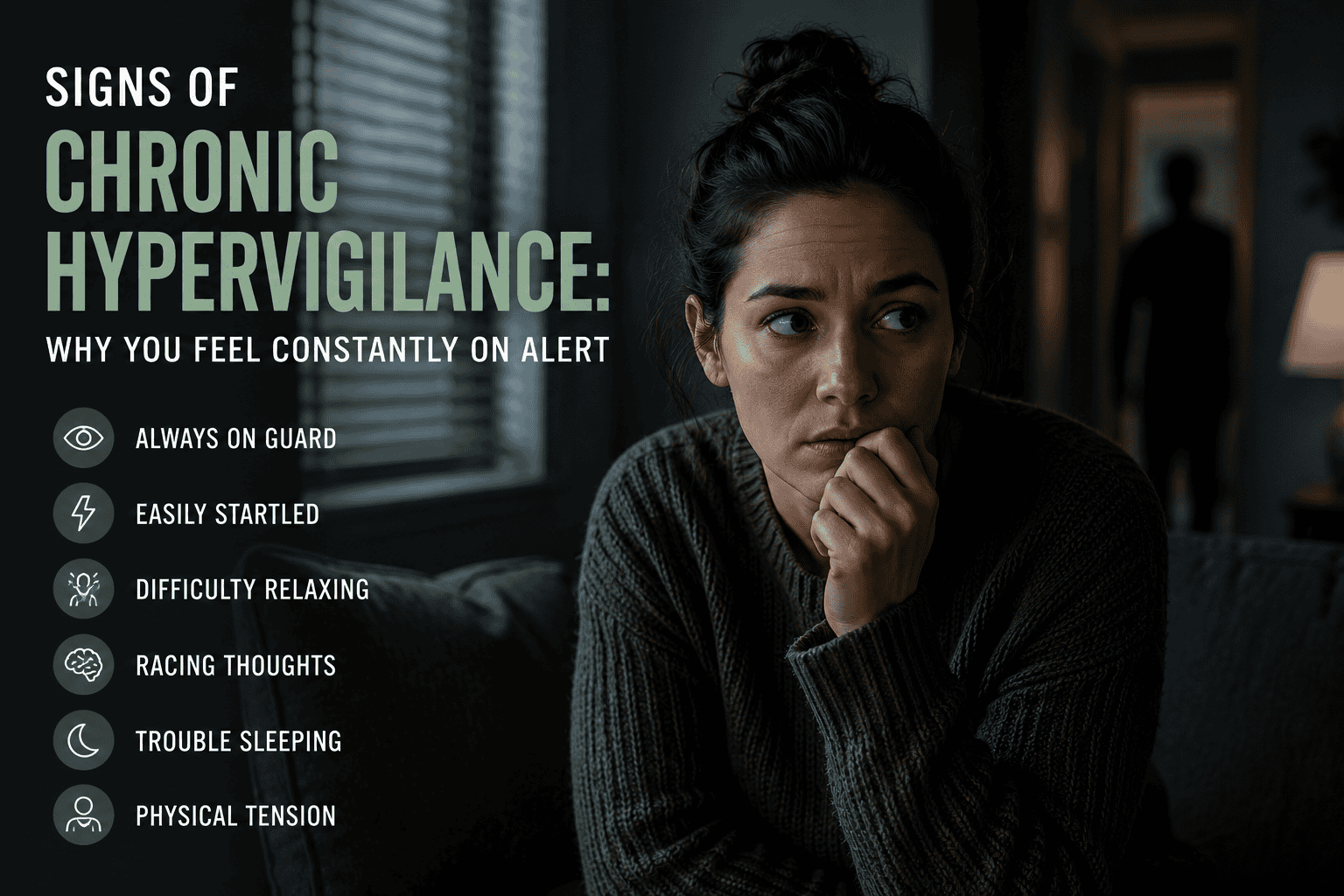
Signs of Chronic Hypervigilance: Why You Feel Constantly on Alert
Trauma Resource Center
Signs of Chronic Hypervigilance
Chronic hypervigilance can feel like living with an internal alarm system that rarely turns off. A person may scan for danger, feel easily startled, struggle to relax, read small changes in other people’s tone or facial expressions, or feel tense even when nothing is obviously wrong. Understanding hypervigilance can help make these reactions feel less confusing and open the door to better support.
Start Here
Hypervigilance Is More Than Being Careful
Hypervigilance is a state of heightened alertness. It can happen when the nervous system has learned that danger may appear suddenly, unpredictably, or without enough time to prepare. Instead of relaxing once a stressful situation has passed, the body may continue watching, listening, checking, and preparing.
For some people, hypervigilance is connected to trauma, chronic stress, emotionally unsafe relationships, childhood instability, violence, betrayal, medical trauma, immigration stress, or repeated experiences of being threatened or powerless. It can also develop when a person has spent a long time needing to monitor someone else’s mood, anger, substance use, criticism, or emotional unpredictability.
What Hypervigilance Feels Like
The Nervous System May Feel Like It Is Always Scanning
Hypervigilance can be difficult to explain because it is not always a conscious choice. A person may not think, “I am going to look for danger.” Instead, the body automatically tracks sounds, exits, facial expressions, silence, conflict, body language, or changes in the environment. This can happen before the person has time to think about it.
Someone experiencing chronic hypervigilance may feel unable to fully settle, even in safe places. They may sit where they can see the door, feel uneasy when someone walks behind them, notice every sound in the house at night, or feel tense when another person seems quiet or irritated. The mind and body may keep asking, “What is about to happen?”
Hypervigilance is often a protective response. The problem is not that the person is “too sensitive.” The problem is that the nervous system may still be operating from survival learning, even when the current situation does not require that level of alertness.
Common signs of chronic hypervigilance
- Constantly scanning the room, checking exits, or monitoring surroundings
- Feeling jumpy, easily startled, tense, or unable to relax
- Reading small changes in tone, facial expression, posture, or silence
- Feeling uneasy when things are calm because calm feels unfamiliar or unsafe
- Difficulty concentrating because attention keeps shifting toward possible threats
- Feeling responsible for preventing conflict, disappointment, anger, or rejection
- Needing reassurance, predictability, control, or a clear plan to feel safe
- Feeling exhausted from being emotionally “on duty” much of the time
Body-Based Signs
Hypervigilance Often Shows Up Physically
Because hypervigilance involves the nervous system, the symptoms are often felt in the body. Many people notice tension, sleep disruption, digestive discomfort, shallow breathing, headaches, fatigue, or feeling “wired but tired.”
Startle Response
Sudden noises, unexpected touch, footsteps, doors closing, or someone appearing unexpectedly may cause an intense reaction that feels bigger than the situation.
Physical Tension
The body may hold tension in the jaw, shoulders, chest, stomach, back, or hands because it is preparing to respond quickly if something goes wrong.
Sleep Problems
Hypervigilance can make it hard to fall asleep, stay asleep, sleep deeply, or feel rested because the body may not fully believe it is safe to power down.
Restlessness
Some people feel driven to keep moving, working, checking, cleaning, planning, or staying busy because stillness allows the body to notice discomfort.
Concentration Problems
Attention may become divided between the task in front of you and the background scan for danger, conflict, mistakes, rejection, or emotional shifts.
Exhaustion
Staying alert requires energy. Over time, hypervigilance can contribute to emotional fatigue, irritability, burnout, shutdown, or feeling depleted.
Emotional and Mental Signs
Chronic Hypervigilance Can Affect Mood, Thoughts, and Self-Trust
Hypervigilance does not only involve looking around for physical danger. Many people become emotionally hypervigilant. They monitor whether someone is upset, disappointed, distant, irritated, bored, critical, or about to withdraw. This is common when someone has lived through emotional unpredictability, trauma, attachment wounds, criticism, or relationships where safety depended on reading another person quickly.
Emotional hypervigilance may include:
- Overanalyzing text messages, facial expressions, pauses, or tone of voice
- Feeling anxious when someone seems quiet, delayed, distracted, or emotionally unavailable
- Assuming that conflict, rejection, criticism, or abandonment may be coming
- Feeling responsible for keeping everyone calm, pleased, or emotionally regulated
- Apologizing quickly, explaining yourself repeatedly, or trying to prevent disappointment
- Feeling unable to trust your own perception because you are always second-guessing
This kind of alertness can be especially painful because it may happen inside relationships that matter. A person may care deeply about others while also feeling constantly braced for disapproval, conflict, distance, or loss. Over time, this can make closeness feel both desired and threatening.
Emotional hypervigilance often begins as an intelligent survival strategy. If someone once had to read the room to stay safe, avoid punishment, prevent conflict, or protect themselves emotionally, the nervous system may continue using that strategy long after the original danger has passed.
Why reassurance may only help briefly
People with chronic hypervigilance may seek reassurance because the body is looking for evidence of safety. Reassurance can help in the moment, but if the nervous system remains activated, the relief may fade quickly. The mind may start scanning again: “Are you sure?” “What if something changed?” “What if I missed something?”
Therapy can help a person build a deeper sense of internal safety so reassurance is not the only way to feel calm. This often involves learning how to notice activation, understand triggers, regulate the body, and process unresolved fear or trauma responses.
Relationships
Hypervigilance Can Make Relationships Feel Unsafe Even When You Care
In relationships, hypervigilance may show up as watching for signs that someone is upset, withdrawing, judging, lying, leaving, or becoming angry. The person may feel like they must stay emotionally prepared at all times.
This can lead to overexplaining, people-pleasing, defensiveness, shutting down, needing frequent reassurance, avoiding hard conversations, or becoming emotionally flooded when conflict appears.
Relationship patterns connected to hypervigilance may include:
- Feeling anxious when someone’s mood changes
- Difficulty relaxing during silence or emotional distance
- Interpreting neutral cues as signs of rejection or danger
- Trying to prevent conflict before it happens
- Feeling responsible for another person’s emotions
- Becoming defensive because the body feels attacked
- Withdrawing because closeness feels too exposing
These patterns are not character flaws. They often reflect a nervous system that has learned to survive by noticing danger early. Therapy can help clients understand the pattern, communicate more clearly, and develop healthier ways of feeling safe with others.
Therapy and Healing
Therapy Can Help the Nervous System Learn Safety Again
Healing from chronic hypervigilance usually involves more than telling yourself to “calm down.” The body may need repeated experiences of safety, regulation, emotional support, and new learning. Therapy can help clients understand why the alarm system is activated and how to respond with more compassion and choice.
Therapy may help with:
- Recognizing triggers that activate scanning, fear, or emotional overmonitoring
- Learning grounding skills to help the body return to the present moment
- Reducing shame around trauma responses and survival patterns
- Improving sleep, boundaries, communication, and emotional regulation
- Processing unresolved trauma, fear, or negative beliefs when appropriate
- Building a stronger sense of safety that does not depend only on control or reassurance
Where EMDR therapy may fit
EMDR therapy may be helpful for some clients when hypervigilance is connected to trauma memories, painful beliefs, body-based fear, or specific triggers. EMDR can support the brain and body in processing distressing experiences so the nervous system does not react as strongly to reminders in the present.
EMDR is not about forcing someone to relive trauma before they are ready. A trauma-informed therapist will usually focus first on stabilization, coping skills, grounding, emotional regulation, and readiness. The goal is to help therapy feel safe, paced, and supportive.
When to Seek Help
Hypervigilance Becomes a Concern When It Starts Running Your Life
Occasional caution is normal. Chronic hypervigilance becomes more concerning when the body feels repeatedly unsafe, sleep is affected, relationships feel strained, or daily life becomes organized around preventing danger, conflict, rejection, or emotional overwhelm.
You Feel Constantly on Guard
You may feel watchful, tense, suspicious, easily startled, or unable to relax even when you are in a place that should feel safe.
Sleep Is Affected
You may have trouble falling asleep, wake easily, listen for sounds, have nightmares, or feel like your body never fully rests.
You Overread People
You may analyze tone, facial expressions, delayed replies, silence, or mood shifts because your body is trying to predict emotional danger.
Reassurance Does Not Last
You may feel calmer briefly after reassurance, but then your mind begins checking again for signs that something is wrong.
Relationships Feel Strained
Hypervigilance may lead to conflict avoidance, defensiveness, withdrawal, people-pleasing, emotional flooding, or fear of rejection.
You Feel Exhausted
Constant alertness can drain emotional and physical energy, leaving you tired, irritable, shut down, or overwhelmed.
Important Note
Hypervigilance Is Understandable — But You Do Not Have to Stay in Survival Mode
If hypervigilance developed after trauma, chronic stress, or emotionally unsafe experiences, it may have once helped you survive. But what once protected you can later become exhausting. Healing does not mean ignoring danger or forcing yourself to trust too quickly. It means helping the nervous system learn when alertness is needed and when it is safe to rest.
A trauma-informed therapist can help you understand your nervous system, identify triggers, build grounding skills, improve relationship patterns, and explore whether trauma therapy or EMDR may be appropriate for your needs.
Learning Center
Continue Learning About Trauma, Anxiety, and Nervous System Alertness
These related resources explain how trauma and anxiety can affect the body, emotions, sleep, relationships, memory, grounding, panic, and the nervous system’s sense of safety.
Understanding PTSD Symptoms
Learn how intrusive memories, avoidance, emotional numbing, hypervigilance, sleep disruption, and body-based stress responses may show up after trauma.
Hypervigilance & Chronic Fear
Understand why the nervous system may stay alert after trauma and how chronic fear can affect sleep, relationships, concentration, and daily functioning.
Why Anxiety Feels Physical
Understand how anxiety can affect the body through muscle tension, breathing changes, stomach discomfort, fatigue, and other stress responses.
Panic Symptoms Explained
Learn why panic can feel so physical and how nervous system activation may create racing heart, shortness of breath, dizziness, fear, or emotional overwhelm.
Trauma & Body-Based Symptoms
Learn how trauma may be experienced through the body, including tension, pain, panic sensations, fatigue, sleep disruption, and nervous system activation.
Calm Place & Grounding Techniques
Review grounding and stabilization skills that may help the nervous system feel steadier during anxiety, panic, emotional flooding, or trauma activation.
Survival Mode and Chronic Stress
Learn how long-term stress can train the nervous system to stay in survival mode, making daily life feel exhausting even when things appear stable.
Trauma Triggers and Emotional Flooding
Explore why emotional triggers can feel sudden and intense, and how therapy can help build regulation skills and reduce overwhelm.
Trauma and Relationship Difficulties
Understand how trauma can affect trust, closeness, conflict, attachment needs, and reactions to perceived rejection or emotional danger.
Start Counseling
Ready to Get Support for Hypervigilance or Trauma Symptoms?
If you feel constantly on alert, emotionally exhausted, easily startled, unable to relax, or stuck in survival mode, our counseling team can help you explore trauma-informed therapy options and begin building a stronger sense of safety.

