
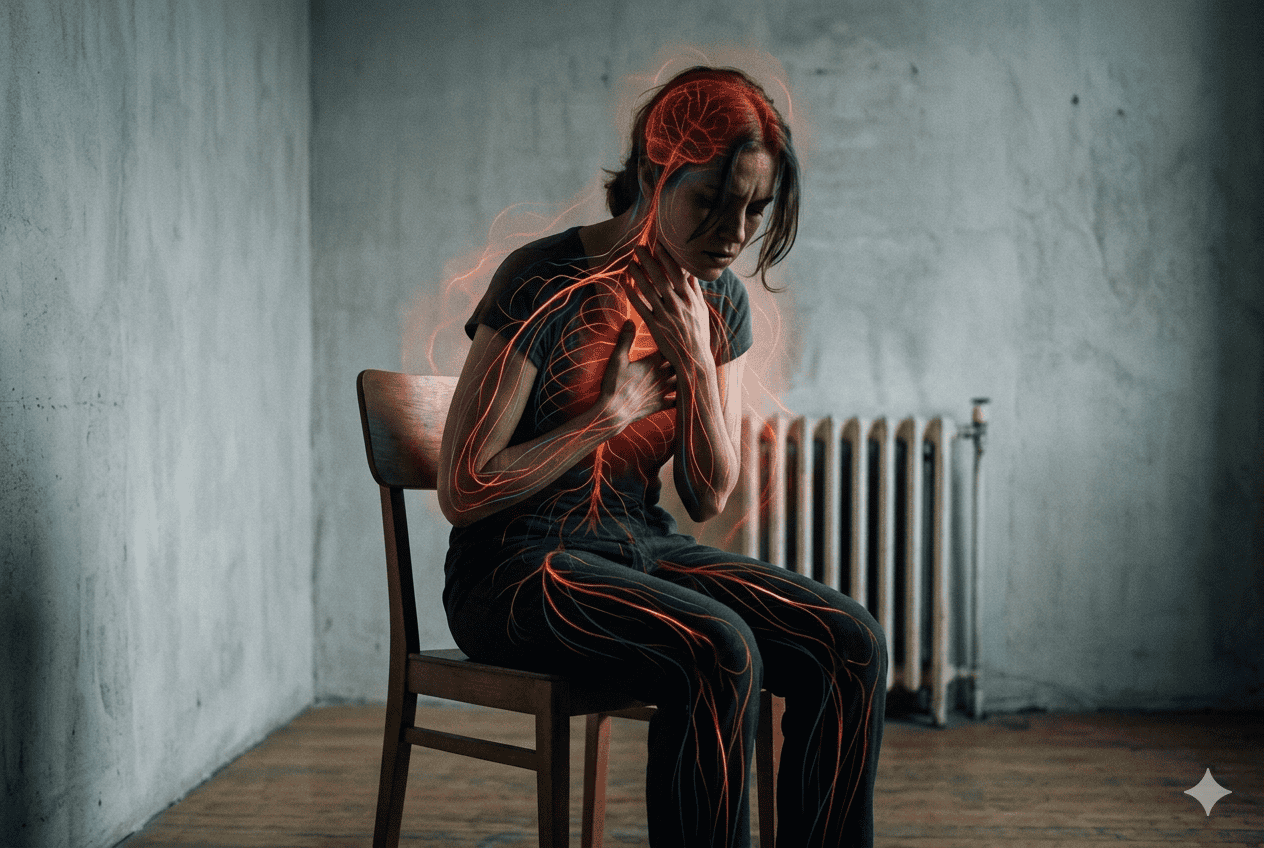
How Trauma Can Affect the Nervous System
Trauma Resource Center
How Trauma Can Affect the Nervous System
Trauma does not only affect thoughts or memories. It can affect the body’s alarm system, stress response, emotions, sleep, relationships, concentration, and sense of safety. Understanding how trauma affects the nervous system can help make symptoms feel less confusing and can give you a clearer path toward support, regulation, and healing.
Start Here
Trauma Symptoms Are Often the Nervous System Trying to Protect You
Many trauma symptoms are not signs of weakness, overreaction, or personal failure. They are often signs that the nervous system learned to stay prepared for danger. After painful, frightening, overwhelming, or chronically stressful experiences, the body may continue responding as if safety is uncertain — even when the threat has passed.
This can lead to anxiety, panic, irritability, emotional numbness, shutdown, difficulty trusting others, sleep problems, feeling disconnected, or becoming easily overwhelmed. Therapy can help you understand these responses and gradually build a greater sense of safety in your body and daily life.
The Body’s Alarm System
Trauma Can Teach the Nervous System to Stay on Alert
The nervous system is designed to help you survive. When it senses danger, it can quickly mobilize the body to respond. Your heart may beat faster, muscles may tense, breathing may change, digestion may slow, attention may narrow, and your body may prepare to fight, flee, freeze, submit, or disconnect.
This response can be helpful during real danger. The problem is that trauma can leave the alarm system overly sensitive. Instead of turning off once danger has passed, the nervous system may stay partially activated. This can make everyday stressors feel intense, urgent, or unsafe.
A trauma response is not always about what is happening in the present moment. Sometimes the body is reacting to a reminder, tone of voice, facial expression, smell, location, conflict, silence, or emotional state that feels similar to something painful from the past.
Why trauma symptoms can feel so physical
Trauma is often stored not only as a story, but also as body-based learning. A person may know logically that they are safe, while still feeling tense, panicked, frozen, nauseated, shaky, guarded, or emotionally flooded. This is why trauma recovery often involves more than simply “thinking differently.”
Effective trauma therapy often helps clients work with both the mind and body: understanding patterns, building coping skills, calming the nervous system, and processing unresolved distress at a pace that feels manageable.
Survival Responses
Fight, Flight, Freeze, Fawn, and Shutdown
Trauma responses can look very different from person to person. Some people feel anxious and alert. Others feel numb, detached, compliant, angry, restless, or unable to act.
Fight
Fight responses may show up as irritability, anger, defensiveness, emotional intensity, control, or feeling ready to confront a perceived threat.
Flight
Flight responses may look like anxiety, restlessness, overworking, avoidance, panic, racing thoughts, or an urgent need to escape discomfort.
Freeze
Freeze can feel like going blank, feeling stuck, difficulty speaking, indecision, numbness, or being unable to move forward even when you want to.
Fawn
Fawn responses may involve people-pleasing, avoiding conflict, over-apologizing, ignoring your own needs, or trying to stay safe by keeping others happy.
Shutdown
Shutdown may feel like exhaustion, emotional numbness, disconnection, low motivation, or wanting to withdraw from people and responsibilities.
Emotional Flooding
Flooding can happen when emotions rise faster than the nervous system can regulate, making it hard to think clearly, communicate, or calm down.
Common Trauma Symptoms
How Nervous System Dysregulation Can Show Up in Daily Life
Trauma symptoms are not always obvious. Some people have flashbacks or nightmares. Others appear high-functioning but live with constant tension, overthinking, irritability, exhaustion, or difficulty relaxing. Some people feel disconnected from their emotions and wonder why they cannot simply “snap out of it.”
Trauma may affect the body
- Muscle tension, headaches, stomach discomfort, nausea, or chronic tightness
- Racing heart, shallow breathing, trembling, sweating, or panic-like sensations
- Fatigue, low energy, or feeling physically drained after emotional stress
- Sleep problems, nightmares, restless sleep, or waking up already tense
- Feeling easily startled, jumpy, keyed up, or unable to fully relax
Trauma may affect emotions
- Anxiety, fear, dread, irritability, anger, guilt, shame, or sadness
- Emotional numbness or difficulty feeling joy, closeness, or comfort
- Sudden mood shifts that feel bigger than the current situation
- Feeling overwhelmed by conflict, criticism, disappointment, or uncertainty
- Difficulty identifying what you feel or what you need
Trauma may affect thoughts and concentration
- Overthinking, rumination, or mentally replaying conversations and events
- Difficulty focusing because the mind is scanning for problems or danger
- Negative self-beliefs such as “I am not safe,” “I am too much,” or “It was my fault”
- Memory gaps, confusion, or feeling disconnected from parts of your experience
- Expecting rejection, abandonment, conflict, or criticism even when things seem calm
Trauma symptoms can become especially confusing when life looks “normal” from the outside. A person may be working, parenting, helping others, and meeting responsibilities while internally feeling tense, unsafe, exhausted, or emotionally alone.
Relationships
Trauma Can Affect Trust, Closeness, and Communication
Trauma can shape the way a person experiences relationships. The nervous system may become sensitive to rejection, silence, conflict, criticism, emotional distance, or changes in another person’s tone. Even small relational cues can feel threatening when the body has learned to expect pain.
This can lead to withdrawing, people-pleasing, becoming defensive, shutting down, pursuing reassurance, avoiding vulnerability, or feeling emotionally flooded during conflict.
Relationship patterns connected to trauma may include:
- Difficulty trusting that others will stay emotionally safe or consistent
- Feeling responsible for other people’s emotions
- Fear of conflict, abandonment, rejection, or being misunderstood
- Feeling numb or detached during moments that should feel close
- Strong reactions to criticism, silence, anger, or perceived disapproval
- Difficulty asking for help, setting boundaries, or expressing needs
Trauma-informed therapy can help clients understand these patterns without shame. The goal is not to blame the past, but to recognize how survival strategies may still be operating and to develop healthier ways of feeling safe, connected, and grounded.
Healing and Regulation
How Therapy Can Help the Nervous System Recover From Trauma
Trauma recovery is often a gradual process. Many clients benefit from first learning how their nervous system responds to stress, then building skills to feel more grounded, and later processing unresolved memories or emotional triggers when appropriate.
Therapy can help clients move from simply surviving to better understanding themselves, recognizing triggers, building emotional regulation skills, improving relationships, and reducing the intensity of trauma-related responses.
Trauma-informed therapy may help with:
- Understanding why symptoms happen and reducing shame around trauma responses
- Learning grounding and calming skills for anxiety, panic, or emotional flooding
- Recognizing triggers and patterns that activate the nervous system
- Improving sleep, boundaries, communication, and self-compassion
- Processing painful memories or beliefs at a pace that feels safe
- Building a stronger sense of safety, choice, and emotional control
Where EMDR therapy may fit
EMDR therapy is one approach that may help people process distressing memories, body-based reactions, negative self-beliefs, and trauma-related triggers. EMDR does not require clients to describe every detail of a painful experience, and it is often used as part of a trauma-informed treatment plan.
For some clients, EMDR can help reduce the emotional intensity attached to past experiences so the body no longer reacts as strongly to reminders in the present. A therapist can help determine whether EMDR is appropriate based on symptoms, readiness, stability, and treatment goals.
When to Seek Help
You Do Not Have to Wait Until Symptoms Become Unmanageable
Therapy may be helpful when trauma symptoms are affecting your mood, body, sleep, relationships, work, parenting, school, concentration, or sense of self.
You Feel Constantly on Alert
You may feel tense, watchful, easily startled, unable to relax, or like your body is always preparing for something bad to happen.
Sleep Feels Difficult
Trauma can contribute to nightmares, restless sleep, trouble falling asleep, waking in panic, or feeling exhausted even after resting.
Anxiety Feels Physical
Panic-like sensations, chest tightness, stomach distress, racing heart, dizziness, and muscle tension can all be connected to nervous system activation.
You Feel Numb or Detached
Not all trauma looks like panic. Some people feel emotionally shut down, disconnected, unmotivated, or distant from themselves and others.
Relationships Feel Unsafe
Conflict, closeness, silence, criticism, or perceived rejection may trigger intense reactions, withdrawal, people-pleasing, or emotional flooding.
You Feel Stuck in Survival Mode
You may be functioning on the outside while feeling internally exhausted, overwhelmed, guarded, or unable to fully enjoy life.
Important Note
Trauma Therapy Should Move at a Safe and Supportive Pace
Trauma recovery does not mean forcing yourself to relive painful experiences before you are ready. A trauma-informed therapist will typically focus on safety, stabilization, coping skills, emotional regulation, and trust in the therapy process before deeper trauma processing begins.
If you feel overwhelmed by trauma symptoms, support is available. Therapy can help you better understand what is happening in your body and begin building tools for steadiness, connection, and healing.
Learning Center
Continue Learning About Trauma, Anxiety, and Nervous System Regulation
These related resources explain common trauma symptoms, emotional shutdown, body-based anxiety, panic activation, hypervigilance, grounding skills, EMDR therapy, and how trauma can affect memory and emotional regulation.
Understanding PTSD Symptoms
Learn how intrusive memories, avoidance, emotional numbing, hypervigilance, sleep disruption, and body-based stress responses may show up after trauma.
Hypervigilance & Chronic Fear
Understand why the nervous system may stay alert after trauma and how chronic fear can affect sleep, relationships, concentration, and daily functioning.
Emotional Numbing After Trauma
Explore why some trauma survivors feel disconnected, shut down, distant, or unable to fully experience emotions even when they care deeply.
Panic Symptoms Explained
Learn why panic can feel so physical and how nervous system activation may create racing heart, shortness of breath, dizziness, fear, or emotional overwhelm.
Why Anxiety Feels Physical
Understand how anxiety can affect the body through muscle tension, breathing changes, stomach discomfort, fatigue, and other stress responses.
Trauma & Body-Based Symptoms
Learn how trauma may be experienced through the body, including tension, pain, panic sensations, fatigue, sleep disruption, and nervous system activation.
Trauma Processing & Memory Networks
Explore how trauma memories can remain emotionally activated and why trauma therapy often focuses on helping the brain and body process distress more adaptively.
Calm Place & Grounding Techniques
Review grounding and stabilization skills that may help the nervous system feel steadier during anxiety, panic, emotional flooding, or trauma activation.
What Is EMDR Therapy?
Learn how EMDR therapy may support trauma processing, emotional regulation, nervous system stabilization, and reduced distress connected to painful experiences.
Start Counseling
Ready to Get Support for Trauma Symptoms?
If trauma, anxiety, emotional overwhelm, shutdown, hypervigilance, or relationship stress is affecting your daily life, our counseling team can help you explore trauma-informed therapy options and take the next step toward healing.

