Tag: Counseling

Why Am I Losing Interest in Things I Used to Enjoy? | Motivations Counseling

Depression Resources

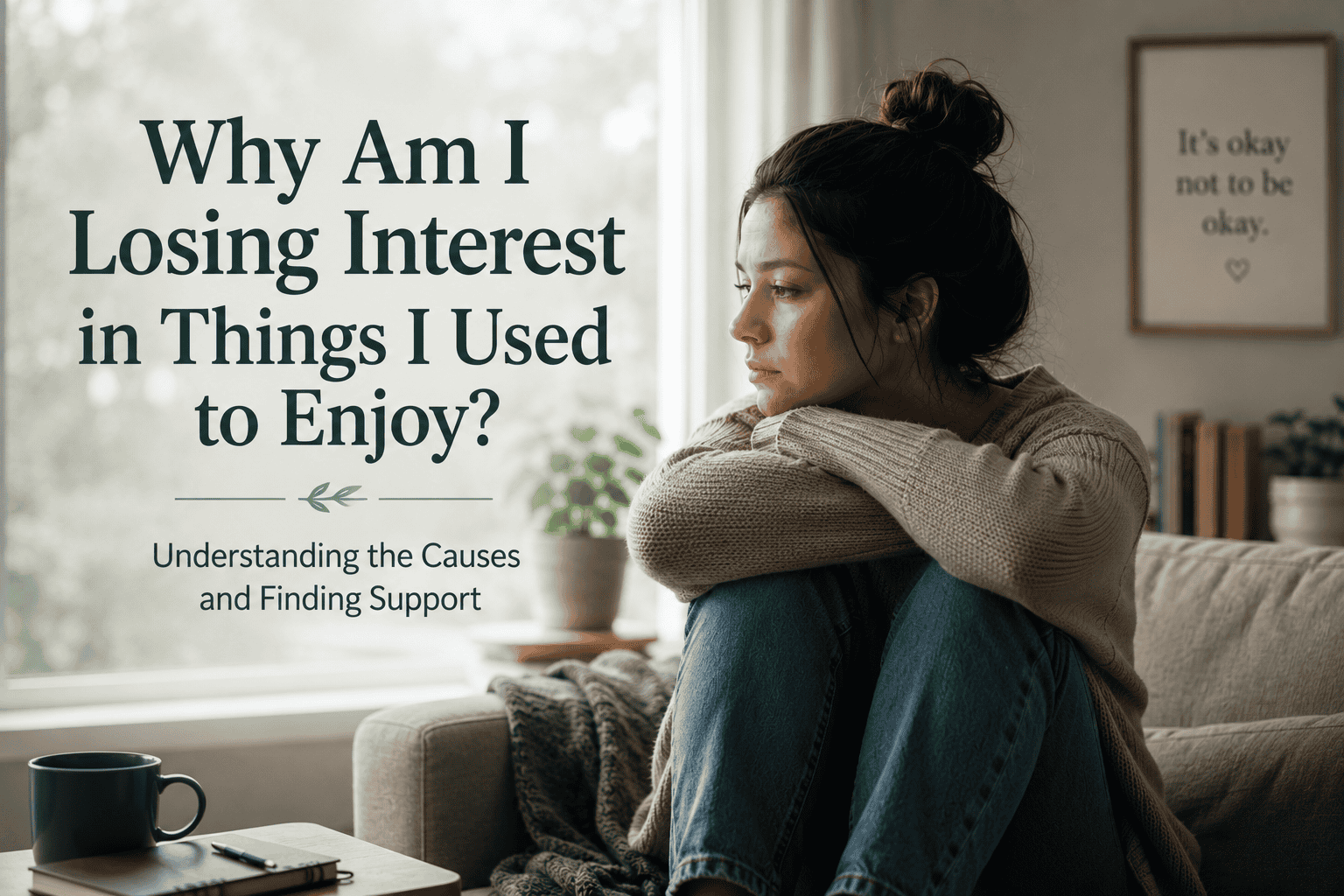
Why Am I Losing Interest in Things I Used to Enjoy?

Loss of interest can be connected to depression, burnout, grief, chronic stress, or emotional shutdown. This guide explains why enjoyable activities may start to feel flat, distant, or exhausting — and when counseling may help.

Start Here

Losing Interest Can Be a Sign Something Deeper Is Going On

It can be unsettling when activities, hobbies, relationships, goals, or routines that once felt meaningful begin to feel flat or unimportant. Some people describe it as feeling bored by everything. Others say they know they should care, but they cannot seem to feel the same emotional connection.

Loss of interest can happen for many reasons. It may be connected to depression, burnout, grief, chronic stress, trauma, emotional shutdown, anxiety, or simply being emotionally depleted for too long. The experience is often painful because it can make someone feel unlike themselves.

What Is Loss of Interest?

Loss of interest refers to reduced enjoyment, motivation, emotional connection, or desire to participate in activities that previously felt meaningful or pleasurable. In mental health, this may be connected to anhedonia, depression, burnout, grief, chronic stress, trauma responses, or emotional shutdown.

What It Feels Like

What Losing Interest Can Feel Like

Loss of interest does not always mean someone stops caring completely. Sometimes the interest is still there intellectually, but the emotional spark feels harder to access.

Everything Feels Flat

Activities that once felt enjoyable may feel dull, distant, or emotionally muted.

Enjoyment Takes Effort

Even fun activities may feel like another task when emotional energy is low.

Disconnection

You may feel disconnected from hobbies, people, goals, faith, creativity, or parts of yourself.

Avoiding Plans

You may cancel, withdraw, or avoid activities because they no longer feel worth the energy.

Guilt or Confusion

You may feel guilty for not enjoying things or confused about why you do not feel like yourself.

Searching for a Reason

You may wonder whether you are depressed, burned out, grieving, overwhelmed, or emotionally shut down.

Depression

Loss of Interest Can Be a Symptom of Depression

One common depression symptom is losing interest or pleasure in things that used to feel enjoyable. This may include hobbies, relationships, work, school, exercise, creativity, faith practices, intimacy, social activities, or future goals.

Depression can make the brain and body feel less responsive to reward, meaning activities may not bring the same emotional payoff. The person may still remember that something used to matter, but they may not feel the same spark, excitement, motivation, or connection.

Loss of interest related to depression may come with:

  • Low mood, sadness, emptiness, or emotional numbness
  • Fatigue or low energy
  • Sleep or appetite changes
  • Difficulty concentrating or making decisions
  • Feeling hopeless, guilty, or worthless
  • Withdrawing from people or responsibilities
  • Feeling like nothing sounds enjoyable

Loss of interest does not mean you are lazy or ungrateful. It may be a sign that depression is affecting motivation, emotional access, and the ability to feel pleasure.

Burnout

Burnout Can Drain Interest and Motivation

Burnout can make enjoyable things feel like more demands. When someone has been under too much stress for too long, the nervous system may prioritize survival over pleasure, creativity, play, or connection.

  • Hobbies may feel like obligations.
  • Social plans may feel draining.
  • Rest may feel insufficient.
  • Motivation may disappear after responsibilities are finished.

Important Reframe

You May Not Need More Discipline — You May Need Recovery

When burnout is involved, forcing yourself to do more may deepen the exhaustion. Recovery often requires rest, boundaries, support, reduced overload, and reconnecting with activities in a gentle, low-pressure way.

  • Burnout can make joy feel inaccessible.
  • Rest may need to be deeper than a short break.
  • Boundaries can help restore capacity.
  • Support may be part of recovery.

Burnout and depression can overlap. If loss of interest spreads beyond work or stress-related responsibilities into most areas of life, depression may also be part of the picture.

Grief

Grief Can Change What Feels Meaningful

After loss, the world may feel different. Activities that once felt joyful may now feel painful, empty, or disconnected from the life that existed before. This can happen after the death of a loved one, divorce, relationship loss, infertility, illness, job loss, relocation, identity changes, or any major life transition that carries grief.

Grief can reduce interest not because the person no longer cares, but because emotional energy is being used to adjust to loss. Some things may feel too painful because they remind the person of what changed. Others may feel meaningless for a while because life has not yet reorganized around the loss.

Grief-related loss of interest may include:

  • Avoiding activities connected to the loss
  • Feeling guilty enjoying things
  • Feeling disconnected from people who do not understand
  • Having less energy for hobbies or socializing
  • Feeling like life has lost color or meaning
  • Needing time to discover what matters now

Grief does not follow a simple timeline. Counseling can help when grief feels isolating, overwhelming, complicated, or connected to depression.

Chronic Stress

Chronic Stress Can Make Pleasure Feel Out of Reach

When the mind and body are under chronic stress, attention often narrows toward problem-solving, survival, planning, preventing mistakes, or managing responsibilities. In that state, enjoyment can feel less available. The nervous system may stay alert instead of relaxed enough to experience pleasure.

This can happen with work stress, caregiving, financial strain, family conflict, health concerns, immigration stress, parenting demands, relationship uncertainty, or long-term emotional overload.

Stress-related loss of interest may look like:

  • Feeling unable to relax into enjoyable moments
  • Being physically present but mentally preoccupied
  • Choosing distraction over genuine enjoyment
  • Feeling guilty when taking time for yourself
  • Feeling too tense or tired to engage
  • Having little room left for creativity or connection

Sometimes the first step is not finding a new hobby. It is reducing enough stress that the nervous system can begin to feel safe, present, and open to enjoyment again.

Emotional Shutdown

Emotional Shutdown Can Make Everything Feel Distant

Emotional shutdown can occur when the nervous system has been overwhelmed for too long. Instead of feeling intense emotions, a person may feel numb, flat, disconnected, or distant from themselves and others. This can make formerly enjoyable things feel unreachable.

Shutdown may be connected to trauma, chronic stress, depression, grief, anxiety, relationship pain, or repeated emotional overwhelm. It is often a protective response, not a conscious choice.

Shutdown may feel like:

  • Knowing something matters but not feeling it emotionally
  • Feeling detached from people or activities
  • Feeling like you are going through the motions
  • Having trouble accessing joy, sadness, excitement, or connection
  • Wanting to isolate or avoid stimulation
  • Feeling emotionally far away from yourself

When shutdown is involved, healing often begins with safety, pacing, grounding, and slowly reconnecting with the body, emotions, relationships, and meaning.

An Educational Framework

The Loss of Interest Cycle

Loss of interest can become self-reinforcing when disconnection leads to withdrawal, guilt, and fewer opportunities for meaningful experiences.

1. Energy Drops

Depression, burnout, stress, grief, or shutdown reduces emotional and physical capacity.

2. Enjoyment Fades

Activities that once felt meaningful begin to feel flat, distant, or like too much effort.

3. Avoidance Increases

You may stop making plans, cancel activities, or pull away from people and routines.

4. Guilt or Shame Grows

You may criticize yourself for not caring, not showing up, or not feeling like yourself.

5. Isolation Deepens

Fewer meaningful experiences can make life feel even more disconnected or empty.

6. The Pattern Repeats

The less connection and enjoyment you experience, the harder it may feel to reengage.

Rebuilding interest often starts small. The goal is not to force joy, but to create conditions where connection and meaning can gradually return.

What Helps

What Can Help When You Are Losing Interest

Support depends on what is contributing to the loss of interest. Depression, burnout, grief, chronic stress, and emotional shutdown may each need slightly different forms of care.

Identify the Pattern

Therapy can help clarify whether depression, burnout, grief, trauma, stress, or shutdown may be involved.

Start Small

Gentle, low-pressure steps are often more effective than forcing yourself back into everything at once.

Reduce Shame

Loss of interest is often a symptom or signal, not a personal failure.

Support Safety

If shutdown or trauma is involved, emotional safety and nervous system support may need to come first.

Reconnect With Support

Safe relationships, therapy, and honest conversations can reduce isolation and emotional distance.

Rebuild Meaning

Interest may return gradually as energy, safety, connection, values, and emotional capacity are restored.

When to Seek Help

When to Seek Counseling for Loss of Interest

It may be time to seek counseling when loss of interest persists, affects relationships or daily functioning, or comes with depression, hopelessness, numbness, grief, stress, burnout, anxiety, trauma symptoms, or emotional shutdown.

Consider counseling if you notice:

  • You no longer enjoy things that used to matter
  • You feel emotionally flat, numb, or disconnected
  • You are withdrawing from people, hobbies, or responsibilities
  • You feel guilty, ashamed, or confused about the change
  • You feel exhausted, burned out, grieving, or chronically stressed
  • You feel hopeless or unable to imagine things improving
  • You are going through the motions but not feeling present
  • You wonder whether depression may be involved

If loss of interest occurs with thoughts of death, self-harm, or suicide, seek immediate support. In the United States, call or text 988 for the Suicide & Crisis Lifeline, call 911, or go to the nearest emergency room.

Depression Counseling at Motivations Counseling

Therapy Can Help When You Do Not Feel Like Yourself

Motivations Counseling provides therapy for adults experiencing loss of interest, depression, burnout, grief, chronic stress, emotional shutdown, anxiety, trauma-related symptoms, relationship stress, low motivation, and difficulty feeling connected to life.

Our counseling team serves clients in Sugar Land, Katy, Richmond, Fort Bend County, West Houston, and through telehealth across Texas when clinically appropriate.

Counseling Support

Depression Counseling in Sugar Land, Katy, and Online Across Texas

If you are losing interest in things you used to enjoy, counseling can help you understand what may be contributing to the change and begin reconnecting with meaning at a manageable pace.

  • Individual counseling for depression and loss of interest
  • Support for burnout, grief, chronic stress, and emotional shutdown
  • Trauma-informed counseling when disconnection connects to painful experiences
  • Help with low motivation, emotional numbness, and reduced enjoyment
  • In-person options in Sugar Land and Katy when available
  • Telehealth counseling across Texas when clinically appropriate
Call or Text: (281) 858-3001

Frequently Asked Questions

Common Questions About Losing Interest in Things You Used to Enjoy

Why am I losing interest in things I used to enjoy?

Loss of interest may be connected to depression, burnout, grief, chronic stress, trauma, emotional shutdown, anxiety, or feeling emotionally depleted for too long.

Is losing interest a sign of depression?

Yes, loss of interest or pleasure can be a symptom of depression, especially when it occurs with low mood, fatigue, sleep changes, emotional numbness, hopelessness, or difficulty functioning.

What is anhedonia?

Anhedonia refers to reduced ability to feel pleasure or interest in activities that once felt enjoyable. It is often associated with depression but may also appear with stress, trauma, grief, or emotional shutdown.

Can burnout cause loss of interest?

Yes. Burnout can make enjoyable activities feel like additional demands when the nervous system and body are depleted from prolonged stress or overload.

Can grief make me stop enjoying things?

Grief can change what feels meaningful. After a major loss, activities may feel painful, empty, or disconnected from the life that existed before.

Can trauma cause emotional shutdown?

Trauma can contribute to emotional shutdown, numbness, and disconnection. When the nervous system feels overwhelmed, it may reduce emotional access as a protective response.

What helps when nothing feels enjoyable?

Helpful steps may include identifying the underlying cause, reducing stress, addressing depression or grief, rebuilding support, starting with small low-pressure activities, and seeking counseling when symptoms persist.

When should I seek counseling?

Consider counseling when loss of interest persists, affects relationships or daily functioning, or comes with numbness, hopelessness, grief, burnout, trauma symptoms, chronic stress, or depression.

Susan Baker, M.Ed., NCC, LPC-S, Licensed Professional Counselor Supervisor in Texas

Article Author

Written by a Licensed Texas Mental Health Professional

This article was written for Motivations Counseling by Susan Baker, M.Ed., NCC, LPC-S, a Texas Licensed Professional Counselor Supervisor and clinical leader at Motivations Counseling.

Susan Baker, M.Ed., NCC, LPC-S
Texas Licensed Professional Counselor Supervisor
EMDR Therapist & EMDRIA Member
Texas LPC License #73957

Susan Baker is the Clinical Director of Motivations Counseling and provides trauma-informed counseling, EMDR therapy, anxiety treatment, depression counseling, couples counseling, immigration psychological evaluations, and mental health assessment services. Motivations Counseling serves clients from offices in Sugar Land and Katy, Texas, with telehealth services available statewide for Texas residents.

Take the Next Step

Depression Counseling in Sugar Land, Katy, and Online Across Texas

If you are losing interest in things you used to enjoy, counseling can help you understand what may be contributing to the change and begin reconnecting with life in a manageable way.

×

Depression and Trauma: How Trauma Can Shape Depression | Motivations Counseling

Depression & Trauma Resources

Depression and Trauma: Understanding the Connection Between Emotional Pain and Hopelessness

Trauma can contribute to numbness, hopelessness, shutdown, low self-worth, and difficulty feeling safe or connected. This guide explains how trauma and depression can overlap, why symptoms may persist long after painful experiences, and how trauma-informed counseling can help.

Start Here

Trauma Can Shape the Way Depression Feels

Depression after trauma can feel different from ordinary sadness. Some people feel emotionally numb, shut down, disconnected, or unable to feel hope. Others feel exhausted, unsafe, easily overwhelmed, ashamed, or trapped in a sense that something is wrong with them. Trauma can change how the brain, body, and nervous system respond to stress, relationships, vulnerability, and emotional pain.

Trauma-related depression may develop after a single overwhelming event, repeated exposure to distress, childhood emotional neglect, abuse, loss, violence, medical trauma, relationship trauma, immigration trauma, accidents, or long periods of instability. The connection is not always obvious at first because depression may appear long after the traumatic experience or after years of trying to function through it.

What Is Trauma-Related Depression?

Trauma-related depression refers to depressive symptoms that are influenced by past or ongoing trauma. These symptoms may include emotional numbness, hopelessness, shutdown, low self-worth, fatigue, isolation, loss of interest, difficulty trusting others, difficulty feeling safe, or a sense of disconnection from oneself, relationships, or life.

Nervous System Response

Trauma Can Keep the Body in Survival Mode

Trauma affects more than memory. It can influence how safe the body feels, how easily emotions become overwhelming, and how the nervous system responds to stress. When the body has learned that danger may return, it may stay prepared for threat even when life is calmer now.

  • Fight may look like anger, irritability, or defensiveness.
  • Flight may look like anxiety, restlessness, or avoidance.
  • Freeze may look like feeling stuck, numb, or unable to act.
  • Shutdown may look like depression, exhaustion, or emotional collapse.

Important Reframe

Depression May Be the Nervous System Trying to Protect You

When overwhelm has been too intense for too long, the nervous system may shift into shutdown. This can feel like depression: low energy, numbness, disconnection, hopelessness, difficulty thinking clearly, and a desire to withdraw from the world.

  • Shutdown is not laziness.
  • Numbness is not a lack of caring.
  • Withdrawal may be a protection response.
  • Healing often requires safety before processing.

Trauma-informed therapy focuses on pacing, stabilization, safety, and choice. The goal is not to force someone to relive painful experiences before they are ready, but to help the nervous system begin to feel safer and more supported.

How Trauma Contributes

How Trauma Can Contribute to Depression

Trauma can affect beliefs, emotions, relationships, the body, and the sense of self. After trauma, a person may begin to feel unsafe in the world, disconnected from others, ashamed of their reactions, or uncertain whether life can improve. Over time, these patterns can contribute to depressive symptoms.

Depression may also develop when the nervous system has been carrying too much for too long. Constant hypervigilance, fear, grief, emotional suppression, or trying to function after painful experiences can drain emotional and physical energy. Eventually, the person may feel like they cannot keep going in the same way.

Trauma can contribute to depression through:

  • Emotional numbness or shutdown
  • Low self-worth or shame
  • Loss of trust in others
  • Difficulty feeling safe
  • Hopelessness about the future
  • Isolation or withdrawal
  • Chronic stress and nervous system exhaustion
  • Beliefs such as “I am not safe,” “I am alone,” or “something is wrong with me”

Trauma-related depression often makes sense when viewed as a response to overwhelm, loss of safety, and emotional injury rather than a personal weakness.

Signs and Symptoms

Signs Trauma May Be Affecting Depression

Trauma-related depression may include familiar depression symptoms, but it often carries an added layer of fear, shame, disconnection, emotional numbness, or nervous system survival responses.

Emotional Numbness

You may feel disconnected from emotions, people, memories, or parts of yourself.

Shutdown or Withdrawal

You may isolate, avoid conversations, or feel unable to respond emotionally.

Low Self-Worth

Trauma can create shame, self-blame, or the belief that you are damaged or not enough.

Difficulty Feeling Safe

Even calm situations may feel uncertain, tense, or emotionally unsafe.

Hopelessness

The future may feel closed off, heavy, or difficult to imagine improving.

Disconnection

Relationships, joy, purpose, or identity may feel distant or hard to access.

Childhood Trauma

Depression After Childhood Trauma

Childhood trauma can affect how a person learns to see themselves, relationships, emotions, safety, and needs. When a child grows up with abuse, neglect, criticism, instability, emotional unavailability, bullying, abandonment, family conflict, or chronic fear, the nervous system may adapt in ways that help the child survive but create pain later in life.

Adults with childhood trauma histories may struggle with depression that is closely connected to shame, perfectionism, emotional numbness, people-pleasing, difficulty trusting others, fear of rejection, or feeling responsible for everyone else. They may not always recognize these patterns as trauma-related because the experiences may have been normalized for years.

Childhood trauma may contribute to depression through:

  • Believing your needs do not matter
  • Feeling unworthy of care or attention
  • Difficulty trusting emotional safety
  • Learning to suppress feelings to avoid conflict
  • Feeling responsible for other people’s moods
  • Carrying shame or self-blame into adulthood
  • Struggling to know what healthy connection feels like

Healing from childhood trauma often involves helping the adult self understand that the survival strategies that once helped may now be keeping depression, disconnection, or shame in place.

Adult Trauma

Depression After Adult Trauma

Trauma in adulthood can also contribute to depression. Relationship betrayal, abuse, assault, accidents, medical crises, immigration stress, grief, job loss, violence, caregiving trauma, divorce, legal stress, or sudden life changes can alter a person’s sense of safety and stability.

After adult trauma, a person may feel like life has been divided into “before” and “after.” They may struggle to feel like themselves, trust others, make plans, experience joy, or feel safe in their body. Depression may develop when the person feels overwhelmed by what happened, isolated in their pain, or unsure how to rebuild.

Adult trauma may contribute to depression through:

  • Loss of safety or stability
  • Loss of identity, trust, or confidence
  • Ongoing fear, grief, or uncertainty
  • Relationship disconnection or betrayal trauma
  • Medical, legal, financial, or immigration-related stress
  • Feeling powerless, trapped, or unable to move forward
  • Difficulty integrating what happened into the larger story of life

Adult trauma can be especially isolating when others expect someone to “move on” before the nervous system and emotional self have had enough support to process what happened.

Emotional Shutdown

Why Depression Can Feel Like Emotional Shutdown

Emotional shutdown can happen when the nervous system has been overwhelmed and no longer feels able to fight, flee, explain, fix, or cope. Instead of intense emotion, the person may feel numb, blank, distant, exhausted, or disconnected from themselves and others.

This shutdown can look like depression. The person may stop caring about things that once mattered, avoid people, lose motivation, feel tired all the time, or struggle to experience pleasure. They may feel guilty for being disconnected, but the numbness may actually be a protective response.

Shutdown may feel like:

  • Feeling emotionally blank or numb
  • Wanting to withdraw from everyone
  • Not feeling joy, sadness, or connection clearly
  • Difficulty making decisions or taking action
  • Feeling like life is happening at a distance
  • Having low motivation even when you care intellectually
  • Feeling exhausted by ordinary emotional demands

Trauma-informed care often begins by helping the nervous system feel safer before asking someone to access painful memories or emotions.

Relationships and Safety

Trauma-Related Depression Can Affect Relationships

Trauma can affect how safe a person feels with others. If past experiences involved betrayal, abandonment, violence, criticism, emotional neglect, abuse, or unpredictability, closeness may feel complicated. A person may want connection but also feel guarded, numb, anxious, or afraid of being hurt again.

Depression can make this harder. Low energy, hopelessness, irritability, shame, or emotional numbness may lead to withdrawal. Loved ones may interpret the distance as rejection, while the person experiencing depression may feel misunderstood or unable to explain what is happening.

Relationship patterns may include:

  • Wanting closeness but feeling overwhelmed by vulnerability
  • Withdrawing when emotions feel intense
  • Difficulty trusting reassurance or support
  • Feeling like a burden
  • Feeling disconnected from partners, friends, or family
  • Expecting rejection, criticism, or abandonment
  • Feeling numb during moments that should feel meaningful

Therapy can help clients understand how trauma affects attachment, trust, emotional safety, and the ability to receive support.

An Educational Framework

The Trauma-Depression Cycle

Trauma-related depression can become self-reinforcing when overwhelm, shame, withdrawal, and disconnection continue without support.

1. Safety Is Disrupted

Trauma changes how the body, mind, or relationships experience safety and control.

2. The Nervous System Adapts

The body may shift into hypervigilance, avoidance, freeze, or shutdown to survive.

3. Numbness or Hopelessness Grows

Emotional shutdown, sadness, exhaustion, or low self-worth may begin to feel normal.

4. Withdrawal Increases

The person may isolate, avoid support, or feel unable to explain what is happening.

5. Shame Deepens

The person may blame themselves for symptoms that are actually connected to trauma survival responses.

6. The Pattern Repeats

Depression and trauma responses reinforce each other until safety, support, and processing become possible.

Breaking the cycle often requires more than positive thinking. It may require trauma-informed support that works with the nervous system, emotions, beliefs, relationships, and past experiences together.

What Helps

What Helps Trauma-Related Depression

Trauma-related depression often improves through support that addresses both depression symptoms and the trauma patterns underneath them. Healing may include emotional safety, nervous system regulation, relationship support, trauma processing, and rebuilding a more compassionate sense of self.

Build Safety First

Stabilization, grounding, and emotional safety help prepare the nervous system for deeper work.

Support the Nervous System

Breathing, grounding, movement, sleep support, and sensory regulation can help reduce shutdown or overwhelm.

Reduce Shame

Understanding symptoms as trauma responses can reduce self-blame and create room for compassion.

Strengthen Support

Safe relationships and therapy can help counter isolation, disconnection, and the belief that no one understands.

Consider EMDR Therapy

EMDR may help some clients process traumatic memories and reduce the emotional charge of triggers when clinically appropriate.

Reconnect With Meaning

Therapy can help clients rebuild identity, values, connection, purpose, and a sense of possibility after trauma.

When to Seek Help

When to Seek Counseling for Depression and Trauma

It may be time to seek counseling when trauma-related depression affects sleep, relationships, work, parenting, emotional regulation, self-worth, motivation, concentration, physical comfort, or your ability to feel safe and connected. Support can help you understand what is happening and begin healing at a manageable pace.

Consider counseling if you notice:

  • You feel numb, shut down, disconnected, or emotionally flat
  • You feel hopeless, ashamed, or unable to imagine things improving
  • You avoid people, places, emotions, or memories connected to pain
  • You feel unsafe even when there is no clear present danger
  • You struggle with low self-worth or self-blame
  • You feel stuck in survival mode
  • You have intrusive memories, nightmares, panic, or hypervigilance
  • You feel like trauma changed who you are

If depression includes thoughts of death, self-harm, or suicide, seek immediate support. In the United States, call or text 988 for the Suicide & Crisis Lifeline, call 911, or go to the nearest emergency room.

Trauma-Informed Depression Counseling at Motivations Counseling

Therapy Can Help When Trauma and Depression Are Connected

Motivations Counseling provides trauma-informed counseling for adults experiencing depression, numbness, hopelessness, shutdown, anxiety, emotional disconnection, low self-worth, grief, relationship stress, hypervigilance, avoidance, and trauma-related symptoms.

Our counseling team serves clients in Sugar Land, Katy, Richmond, Fort Bend County, West Houston, and through telehealth across Texas when clinically appropriate. EMDR therapy may also be considered when clinically appropriate and when the client has enough stability and support for trauma processing.

Counseling Support

Trauma-Informed Depression Counseling in Sugar Land, Katy, and Online Across Texas

If trauma has contributed to depression, shutdown, numbness, hopelessness, or difficulty feeling safe and connected, counseling can help you understand the pattern and begin healing at a manageable pace.

  • Individual counseling for depression and trauma-related symptoms
  • Support for emotional numbness, hopelessness, shutdown, and low self-worth
  • Trauma-informed counseling focused on safety, pacing, and nervous system regulation
  • EMDR therapy when clinically appropriate
  • In-person options in Sugar Land and Katy when available
  • Telehealth counseling across Texas when clinically appropriate
Call or Text: (281) 858-3001

Frequently Asked Questions

Common Questions About Depression and Trauma

Can trauma cause depression?

Trauma can contribute to depression by affecting safety, self-worth, trust, emotional regulation, nervous system responses, and the ability to feel connected or hopeful.

Why does trauma make me feel numb?

Numbness may be a nervous system shutdown response. When emotions or stress feel overwhelming, the body may protect itself by reducing emotional access, which can feel like disconnection or depression.

What does trauma-related depression feel like?

Trauma-related depression may feel like numbness, hopelessness, low self-worth, emotional shutdown, isolation, exhaustion, difficulty trusting others, or difficulty feeling safe and connected.

Can childhood trauma cause depression in adulthood?

Childhood trauma can contribute to depression later in life by shaping beliefs about safety, self-worth, attachment, emotional expression, and whether support feels trustworthy.

Can adult trauma cause depression?

Yes. Adult trauma such as abuse, betrayal, assault, accidents, medical trauma, immigration stress, grief, or major instability can contribute to depression symptoms.

Can EMDR therapy help trauma-related depression?

EMDR therapy may help some clients process traumatic memories and reduce the intensity of trauma-related triggers when it is clinically appropriate. A therapist can help determine whether EMDR is a good fit.

What helps depression after trauma?

Trauma-related depression often improves through trauma-informed counseling, emotional safety, nervous system regulation, shame reduction, supportive relationships, trauma processing when appropriate, and practical support for daily functioning.

When should I seek counseling?

Consider counseling when numbness, hopelessness, shutdown, low self-worth, isolation, intrusive memories, hypervigilance, avoidance, or difficulty feeling safe begins affecting daily life, relationships, work, or emotional well-being.

Susan Baker, M.Ed., NCC, LPC-S, Licensed Professional Counselor Supervisor in Texas

Article Author

Written by a Licensed Texas Mental Health Professional

This article was written for Motivations Counseling by Susan Baker, M.Ed., NCC, LPC-S, a Texas Licensed Professional Counselor Supervisor and clinical leader at Motivations Counseling.

Susan Baker, M.Ed., NCC, LPC-S
Texas Licensed Professional Counselor Supervisor
EMDR Therapist & EMDRIA Member
Texas LPC License #73957

Susan Baker is the Clinical Director of Motivations Counseling and provides trauma-informed counseling, EMDR therapy, anxiety treatment, depression counseling, couples counseling, immigration psychological evaluations, and mental health assessment services. Motivations Counseling serves clients from offices in Sugar Land and Katy, Texas, with telehealth services available statewide for Texas residents.

Take the Next Step

Trauma-Informed Depression Counseling in Sugar Land, Katy, and Online Across Texas

If trauma has contributed to numbness, hopelessness, shutdown, low self-worth, or difficulty feeling safe and connected, counseling can help you understand the pattern and begin healing at a manageable pace.

×

Burnout vs. Depression: How to Tell the Difference | Motivations Counseling

Depression & Stress Resources

Burnout vs. Depression: How to Tell the Difference

Burnout and depression can both involve exhaustion, low motivation, irritability, mental fog, and feeling emotionally drained. But they may have different patterns, causes, and treatment needs. This guide explains how burnout and depression can overlap, how they may differ, and when counseling may help.

Start Here

Burnout and Depression Can Look Similar, but They Are Not Always the Same

Burnout and depression can both make someone feel exhausted, unmotivated, overwhelmed, emotionally drained, irritable, or disconnected. Because the symptoms can overlap, many people wonder whether they are burned out, depressed, or experiencing both.

Burnout is often connected to prolonged stress, overload, caregiving, workplace pressure, emotional labor, or feeling trapped in responsibilities without enough recovery. Depression may involve a broader pattern of low mood, loss of interest, hopelessness, guilt, sleep changes, appetite changes, low energy, concentration problems, and difficulty feeling pleasure across multiple areas of life.

What Is the Difference Between Burnout and Depression?

Burnout is often a stress-related state of emotional, mental, and physical exhaustion connected to prolonged demands or insufficient recovery. Depression is a mental health condition that may affect mood, motivation, energy, sleep, appetite, concentration, self-worth, and the ability to feel interest or pleasure. Burnout and depression can overlap, and burnout may sometimes contribute to depression if support and recovery do not happen.

Side-by-Side Comparison

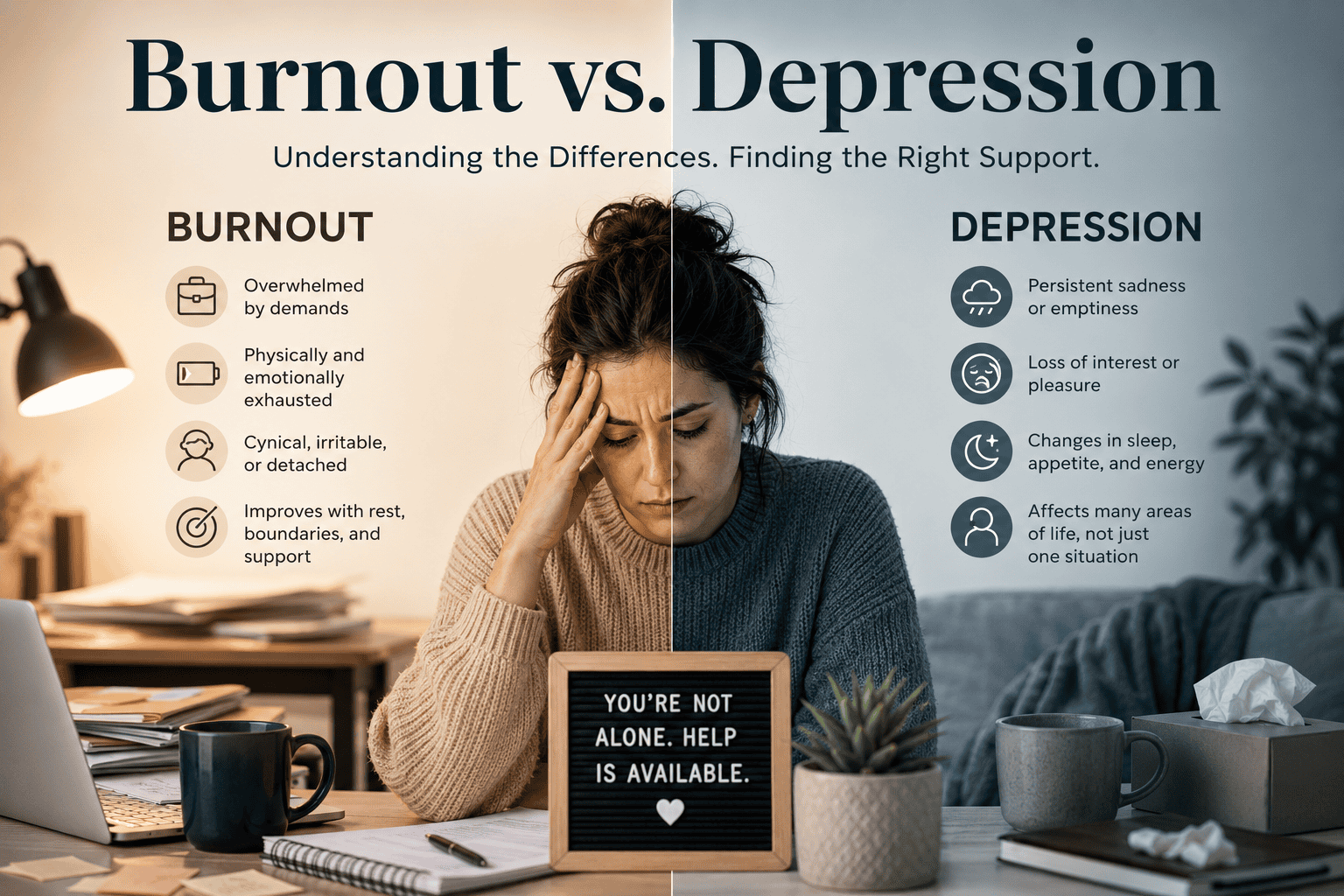
Burnout vs. Depression at a Glance

This comparison can help clarify the pattern, but it is not a diagnosis. A therapist or medical provider can help determine what may be happening in your specific situation.

Burnout

Burnout is often tied to prolonged stress, overload, responsibility, or lack of recovery.

  • Often connected to work, caregiving, school, parenting, or chronic stress
  • May improve with rest, boundaries, support, or reduced demands
  • Often includes emotional exhaustion and resentment
  • May feel better when away from the stressor
  • Can include cynicism, irritability, and feeling ineffective
  • May become depression if the pattern continues without relief

Depression

Depression may affect mood, motivation, pleasure, self-worth, sleep, energy, and functioning across life areas.

  • May not be limited to one stressor or role
  • Often includes loss of interest or pleasure
  • May involve hopelessness, guilt, worthlessness, or emotional numbness
  • May persist even during rest or time away
  • Can affect sleep, appetite, concentration, and daily functioning
  • May require counseling, medical support, lifestyle changes, or combined care

Many people experience both. Chronic burnout can increase vulnerability to depression, and depression can make ordinary responsibilities feel like burnout.

Shared Symptoms

How Burnout and Depression Can Feel Similar

Burnout and depression can both reduce energy, motivation, patience, focus, and emotional capacity. This is why it can be hard to tell them apart without looking at the broader pattern.

Exhaustion

Both burnout and depression can make everyday responsibilities feel heavier and harder to sustain.

Mental Fog

Concentration, memory, decision-making, and processing speed may become more difficult.

Irritability

Emotional bandwidth may feel low, making small frustrations feel harder to handle.

Withdrawal

You may pull away from people, activities, or responsibilities because everything feels draining.

Low Motivation

Starting tasks may feel difficult, even when you know what needs to be done.

Sleep Problems

Stress, worry, low mood, or nervous system activation can interfere with restful sleep.

Key Differences

Key Differences Between Burnout and Depression

One important difference is where the symptoms appear and what seems to improve them. Burnout is often more closely tied to a specific context, such as work, school, caregiving, parenting overload, or chronic stress. Depression may feel more global, affecting the person’s mood, identity, relationships, sleep, appetite, concentration, and sense of hope across many settings.

Burnout may improve when the person gets meaningful rest, support, boundaries, a change in workload, or distance from the stressor. Depression may not lift as easily with rest alone, especially when symptoms include hopelessness, loss of pleasure, emotional numbness, guilt, or thoughts of death.

Questions that may help clarify the pattern:

  • Do I feel better when I am away from the stressful role or environment?
  • Do I still feel empty, hopeless, or disconnected even during rest?
  • Is the exhaustion mainly tied to work, caregiving, school, or chronic demands?
  • Have I lost interest or pleasure in most areas of life?
  • Do I feel resentful and depleted, or deeply sad and hopeless?
  • Are sleep, appetite, concentration, and self-worth significantly affected?

These questions are not a substitute for professional assessment. They can, however, help you notice whether the pattern seems stress-based, depression-based, or both.

Burnout Patterns

Burnout Often Centers Around Prolonged Stress and Overload

Burnout often develops when demands remain high for too long without enough recovery, support, control, or meaning. It can happen in demanding jobs, caregiving roles, parenting, school, ministry, helping professions, leadership roles, or emotionally intense family situations.

  • Feeling drained by a specific role or responsibility
  • Feeling trapped, resentful, or emotionally depleted
  • Reduced sense of effectiveness
  • Needing distance from the stressor
  • Difficulty recovering even after short breaks

Important Reframe

Burnout Is Not Just Needing a Vacation

Burnout is often a sign that a person’s system has been under too much demand for too long. A short break may help temporarily, but deeper recovery often requires changes in boundaries, workload, support, expectations, or emotional patterns.

  • Rest matters, but so does reducing overload.
  • Boundaries may be part of recovery.
  • Support is often necessary.
  • Burnout can worsen when ignored.

Depression Patterns

Depression Often Affects More Than One Area of Life

Depression may feel less tied to one specific stressor and more like a change in the person’s overall emotional state, energy, thinking, motivation, and ability to experience pleasure. Someone may feel sad, numb, empty, guilty, disconnected, hopeless, or unable to enjoy things even when they are away from work or responsibilities.

Depression can also affect the body and mind. Sleep may increase or decrease. Appetite may change. Concentration may become harder. Tasks may feel overwhelming. The person may withdraw, feel like a burden, or lose hope that things can improve.

Depression may include:

  • Persistent sadness, emptiness, or emotional numbness
  • Loss of interest or pleasure
  • Hopelessness, guilt, or worthlessness
  • Sleep or appetite changes
  • Low energy and low motivation
  • Difficulty concentrating or making decisions
  • Social withdrawal or isolation
  • Thoughts of death, self-harm, or suicide

If depression includes thoughts of death, self-harm, or suicide, seek immediate support. In the United States, call or text 988 for the Suicide & Crisis Lifeline, call 911, or go to the nearest emergency room.

When Both Are Present

Can Burnout Become Depression?

Burnout and depression can overlap. A person who has been emotionally depleted for months or years may begin to feel hopeless, numb, disconnected, or unable to recover. When stress becomes chronic and there is little relief, depression symptoms may become more likely.

Depression can also make burnout worse. When someone is depressed, ordinary responsibilities may require more effort, recovery may take longer, and stress may feel harder to manage. In this way, burnout and depression can reinforce one another.

Burnout and depression may overlap when:

  • Rest no longer feels restorative
  • Exhaustion spreads beyond one role or setting
  • There is loss of interest in things that used to matter
  • The person feels hopeless, numb, or emotionally flat
  • Work stress begins affecting relationships, sleep, and identity
  • The person cannot imagine things improving

If you are unsure whether you are burned out, depressed, or both, counseling can help clarify the pattern and identify next steps.

An Educational Framework

The Stress-Burnout-Depression Cycle

Burnout and depression can become connected when chronic stress keeps draining emotional and physical resources.

1. Demands Stay High

Work, caregiving, parenting, school, or family responsibilities continue requiring more energy than is available.

2. Recovery Shrinks

Rest, support, sleep, connection, and personal time become limited or ineffective.

3. Burnout Builds

Exhaustion, resentment, irritability, cynicism, and reduced motivation become more noticeable.

4. Mood Drops

Emotional numbness, sadness, disconnection, hopelessness, or loss of interest may begin to increase.

5. Isolation Grows

The person may withdraw, avoid support, or feel too depleted to explain what is happening.

6. The Pattern Repeats

Stress continues, symptoms deepen, and it becomes harder to know where burnout ends and depression begins.

Breaking the cycle usually requires more than pushing harder. It often requires support, rest, boundaries, emotional care, and realistic changes to the demands being carried.

What Helps

What Helps Burnout and Depression

The right support depends on the pattern. Burnout often requires recovery, boundaries, workload changes, and support. Depression may require counseling, medical consultation, emotional processing, behavioral support, and treatment for underlying symptoms.

Clarify the Pattern

Identify whether symptoms are tied to one stressor, multiple areas of life, depression symptoms, or a combination.

Reduce Overload

Burnout often improves when demands become more realistic and recovery becomes possible.

Address Depression Symptoms

Depression may need direct care for mood, motivation, self-worth, hopelessness, sleep, and emotional numbness.

Let Support In

Therapy, trusted relationships, medical care, and practical support can reduce isolation and emotional load.

Support Rest and Sleep

Restorative sleep and actual recovery time are important for both burnout and depression.

Reconnect With Meaning

Counseling can help clients reconnect with values, identity, boundaries, relationships, and a more sustainable life rhythm.

When to Seek Help

When It May Be More Than Burnout

It may be time to seek counseling when exhaustion, low motivation, emotional numbness, sadness, irritability, or hopelessness are lasting longer than expected, affecting multiple areas of life, or not improving with rest. Support can help you understand whether burnout, depression, anxiety, trauma, grief, or chronic stress may be involved.

Consider counseling if you notice:

  • Rest does not seem to restore your energy
  • You feel emotionally numb, empty, or hopeless
  • You have lost interest in things that used to matter
  • You are withdrawing from people or avoiding responsibilities
  • You feel trapped, resentful, or unable to recover
  • You are experiencing sleep, appetite, or concentration changes
  • Your self-worth has dropped or guilt has increased
  • You wonder whether you are burned out, depressed, or both

If symptoms include thoughts of death, self-harm, or suicide, seek immediate support. In the United States, call or text 988 for the Suicide & Crisis Lifeline, call 911, or go to the nearest emergency room.

Counseling at Motivations Counseling

Therapy Can Help Clarify Whether You Are Burned Out, Depressed, or Both

Motivations Counseling provides therapy for adults experiencing burnout, depression, anxiety, chronic stress, emotional exhaustion, low motivation, mental fog, relationship stress, trauma-related symptoms, and difficulty functioning. Counseling can help clients better understand the pattern and begin building more realistic support.

Our counseling team serves clients in Sugar Land, Katy, Richmond, Fort Bend County, West Houston, and through telehealth across Texas when clinically appropriate.

Counseling Support

Depression and Burnout Counseling in Sugar Land, Katy, and Online Across Texas

If you feel exhausted, unmotivated, emotionally numb, resentful, or unable to recover, counseling can help you understand what is happening and identify healthier next steps.

  • Individual counseling for burnout, depression, and emotional exhaustion
  • Support for low motivation, mental fog, irritability, and overwhelm
  • Help with boundaries, stress patterns, perfectionism, and self-criticism
  • Trauma-informed counseling when burnout or depression connects to painful experiences
  • In-person options in Sugar Land and Katy when available
  • Telehealth counseling across Texas when clinically appropriate
Call or Text: (281) 858-3001

Frequently Asked Questions

Common Questions About Burnout vs. Depression

What is the difference between burnout and depression?

Burnout is often connected to prolonged stress, overload, or lack of recovery in a specific role or environment. Depression may affect mood, motivation, sleep, appetite, self-worth, concentration, and the ability to feel pleasure across multiple areas of life.

Can burnout turn into depression?

Burnout can contribute to depression when stress continues without enough recovery, support, or change. Chronic exhaustion, hopelessness, isolation, and loss of interest may signal that depression is also present.

How do I know if I am burned out or depressed?

It may help to notice whether symptoms improve when you are away from the stressor. Burnout may feel more tied to a role or responsibility, while depression may persist across settings and include sadness, numbness, hopelessness, loss of pleasure, or changes in self-worth.

Can burnout and depression happen at the same time?

Yes. Burnout and depression can overlap. Chronic stress can increase vulnerability to depression, and depression can make everyday responsibilities feel more overwhelming and exhausting.

Does rest fix burnout?

Rest can help, but burnout often requires more than a short break. Recovery may involve boundaries, reduced demands, support, workload changes, emotional care, and a more sustainable rhythm.

Does rest fix depression?

Rest may support depression recovery, but depression often needs direct care. Counseling, medical consultation, behavioral support, emotional processing, and social connection may all be important depending on the person’s symptoms.

When should I seek counseling?

Consider counseling when exhaustion, numbness, low motivation, sadness, irritability, hopelessness, or mental fog persists, spreads across life areas, affects relationships or functioning, or does not improve with rest.

Should I see a medical provider?

If fatigue, sleep changes, appetite changes, concentration problems, or mood symptoms are significant, sudden, severe, or worsening, it may be helpful to consult a medical provider to rule out medical causes and discuss treatment options.

Susan Baker, M.Ed., NCC, LPC-S, Licensed Professional Counselor Supervisor in Texas

Article Author

Written by a Licensed Texas Mental Health Professional

This article was written for Motivations Counseling by Susan Baker, M.Ed., NCC, LPC-S, a Texas Licensed Professional Counselor Supervisor and clinical leader at Motivations Counseling.

Susan Baker, M.Ed., NCC, LPC-S
Texas Licensed Professional Counselor Supervisor
EMDR Therapist & EMDRIA Member
Texas LPC License #73957

Susan Baker is the Clinical Director of Motivations Counseling and provides trauma-informed counseling, EMDR therapy, anxiety treatment, depression counseling, couples counseling, immigration psychological evaluations, and mental health assessment services. Motivations Counseling serves clients from offices in Sugar Land and Katy, Texas, with telehealth services available statewide for Texas residents.

Take the Next Step

Burnout and Depression Counseling in Sugar Land, Katy, and Online Across Texas

If you are exhausted, unmotivated, emotionally numb, or unsure whether you are burned out, depressed, or both, counseling can help you understand the pattern and begin building support.

×

Why Depression Causes Mental Fog: Concentration, Memory & Clear Thinking | Motivations Counseling

Depression Resources

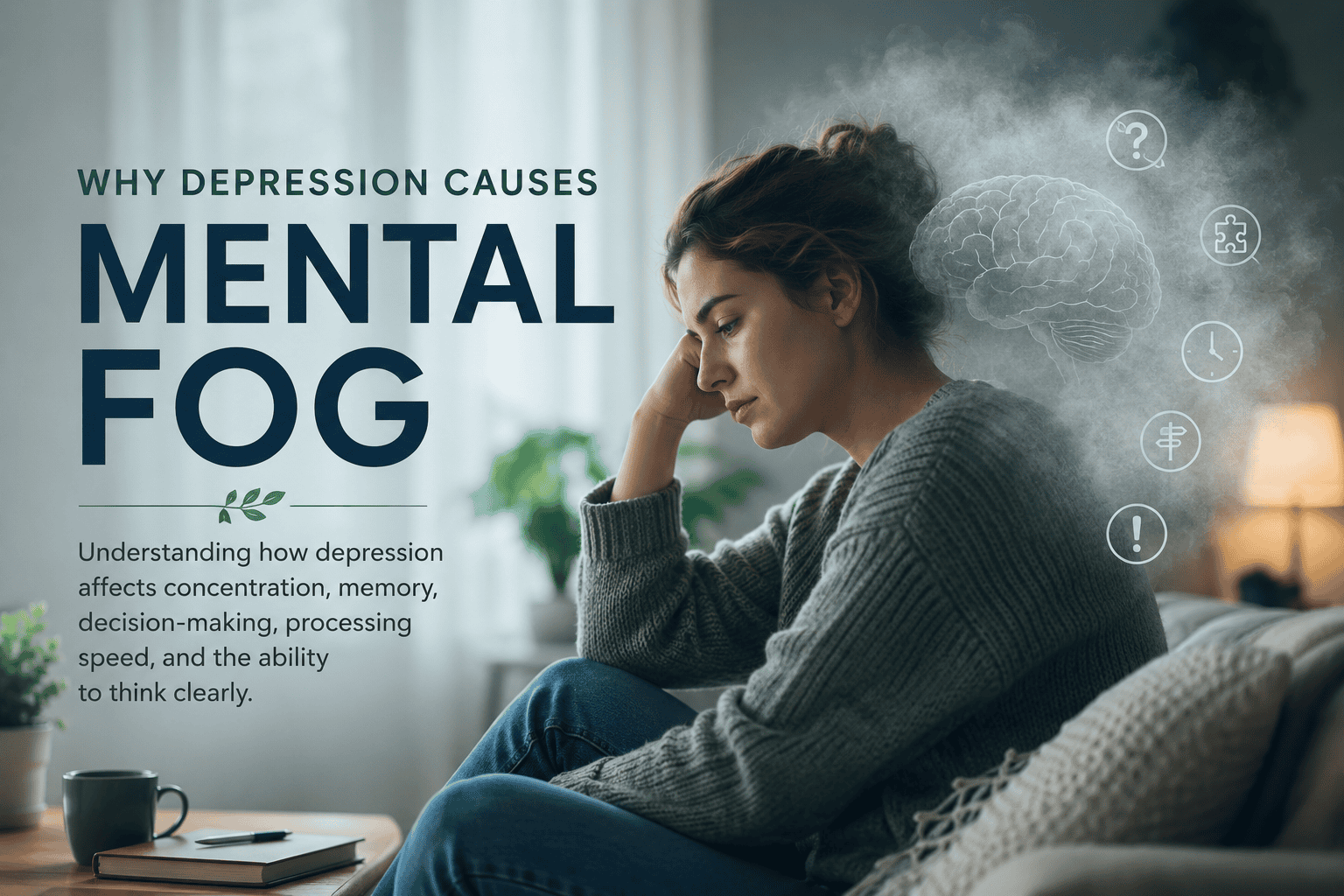
Why Depression Causes Mental Fog

Depression can affect concentration, memory, decision-making, processing speed, motivation, and the ability to think clearly. This guide explains why mental fog can happen with depression, what it may feel like, and how counseling can help people understand and manage the pattern.

Start Here

Mental Fog With Depression Is Real

Depression is often described as sadness, hopelessness, low motivation, or emotional heaviness. But for many people, one of the most frustrating symptoms is mental fog. It may feel harder to focus, remember details, organize thoughts, make decisions, follow conversations, or complete tasks that used to feel manageable.

This does not mean someone is lazy, careless, unintelligent, or not trying hard enough. Depression can affect the way the brain processes information, manages attention, uses energy, responds to stress, and makes decisions. When emotional pain and mental fatigue are high, thinking clearly can become much harder.

What Is Mental Fog in Depression?

Mental fog in depression refers to difficulty thinking clearly, focusing, remembering information, making decisions, processing information quickly, or staying mentally organized. It may feel like the mind is slowed down, cloudy, overloaded, disconnected, or harder to access.

What It Feels Like

What Depression-Related Mental Fog Can Feel Like

Mental fog can affect daily functioning in quiet but significant ways. Some people notice it at work or school, while others notice it in conversations, parenting, household tasks, relationships, or simple everyday decisions.

Cloudy Thinking

Your thoughts may feel slow, unclear, scattered, or harder to organize than usual.

Poor Concentration

Reading, working, listening, or finishing tasks may require more effort and feel easier to lose.

Memory Gaps

You may forget appointments, lose track of details, repeat questions, or struggle to recall information.

Decision Fatigue

Even small choices may feel overwhelming, stressful, or harder than they should.

Slower Processing

It may take longer to understand information, respond to questions, or move from one task to another.

Mental Exhaustion

Thinking itself may feel tiring, especially when depression is also affecting sleep, motivation, and energy.

Why It Happens

Why Depression Can Make Thinking Feel Harder

Depression affects more than mood. It can influence attention, motivation, sleep, energy, stress response, self-talk, and the ability to mentally organize information. When the brain is managing emotional heaviness, fatigue, worry, guilt, shame, or hopelessness, there may be less mental capacity available for focus and problem-solving.

Mental fog can also become worse when depression disrupts sleep, reduces activity, increases isolation, or creates a cycle of self-criticism. The person may notice they are not functioning like themselves, then feel guilty or discouraged, which can make concentration and motivation even harder.

Depression may affect thinking by contributing to:

  • Low mental energy
  • Reduced motivation and initiation
  • Sleep disruption or oversleeping
  • Negative self-talk and rumination
  • Difficulty filtering distractions
  • Slowed information processing
  • Stress, anxiety, or emotional overload
  • Reduced confidence in decisions

Mental fog is often one part of the depression picture. It can improve as depression symptoms are addressed, daily structure increases, sleep becomes steadier, and support systems become stronger.

Concentration

Depression Can Make It Hard to Stay Focused

Concentration requires mental energy, emotional availability, and the ability to filter distractions. Depression can interfere with all three. A person may read the same paragraph repeatedly, start tasks but not finish them, lose track of conversations, or feel unable to stay mentally present.

  • Work tasks may take longer.
  • School assignments may feel harder to start.
  • Conversations may feel difficult to follow.
  • Household responsibilities may feel mentally overwhelming.

Important Reframe

Trouble Focusing Is Not a Character Flaw

When depression affects concentration, people may blame themselves for being unproductive, irresponsible, or unmotivated. In reality, the brain may be operating with less available energy and more emotional load than usual.

  • Difficulty focusing does not mean you are not trying.
  • Low productivity does not mean you are lazy.
  • Needing smaller steps does not mean you are failing.
  • Support can help make tasks feel more manageable.

One helpful goal is to reduce shame around concentration problems. When the symptom is understood clearly, it becomes easier to build realistic strategies instead of relying on self-criticism.

Memory

Why Depression Can Affect Memory

Depression can make memory feel unreliable. Someone may forget what they planned to do, lose track of where they placed things, miss details from conversations, or struggle to recall information when they need it. This can be especially frustrating for people who are usually organized or high functioning.

Memory problems during depression may be connected to attention. If the brain is tired, distracted, emotionally overwhelmed, or focused on negative thoughts, information may not be fully encoded in the first place. Later, the person may feel like their memory is failing when the problem began with reduced attention and mental availability.

Depression-related memory issues may include:

  • Forgetting appointments or tasks
  • Misplacing items more often
  • Difficulty remembering details from conversations
  • Needing repeated reminders
  • Feeling mentally disorganized
  • Struggling to recall words, plans, or next steps

If memory changes are sudden, severe, worsening, or medically concerning, it is important to consult a medical provider. Counseling can support depression-related patterns, but medical causes should be evaluated when appropriate.

Decision-Making

Depression Can Make Decisions Feel Overwhelming

Decision-making requires energy, confidence, flexibility, and the ability to imagine possible outcomes. Depression can make even ordinary choices feel heavy. A person may second-guess themselves, avoid decisions, feel paralyzed, or worry that they will make the wrong choice.

This can happen with major life decisions, but it can also happen with simple choices such as what to eat, what task to start, whether to return a message, or how to organize the day. When depression is present, the brain may experience choices as pressure rather than as manageable steps.

Decision fatigue may look like:

  • Putting off choices because they feel too hard
  • Feeling stuck between options
  • Needing reassurance before deciding
  • Feeling guilty no matter what you choose
  • Overthinking small decisions
  • Avoiding tasks that require planning or prioritizing

Therapy can help clients reduce decision pressure, identify realistic next steps, and separate depression-driven thoughts from values-based choices.

Processing Speed

Depression Can Make the Mind Feel Slowed Down

Some people describe depression-related mental fog as feeling like their mind is moving through mud. It may take longer to respond, understand information, switch tasks, complete work, or find the right words. This can feel embarrassing or discouraging, especially when others do not understand what is happening internally.

Slower processing can be connected to low energy, disrupted sleep, emotional overload, stress, medication effects, grief, anxiety, trauma, or the depressive episode itself. The person may still be capable and intelligent, but their access to mental clarity may feel reduced.

Slowed thinking may include:

  • Taking longer to answer questions
  • Difficulty switching between tasks
  • Feeling mentally delayed or disconnected
  • Struggling to organize information quickly
  • Finding it harder to problem-solve
  • Feeling exhausted after mentally demanding tasks

When processing speed is affected by depression, pacing matters. Smaller steps, fewer competing demands, realistic expectations, and support can help reduce overwhelm.

An Educational Framework

The Depression-Fog Cycle

Mental fog can become self-reinforcing. Understanding the cycle can reduce shame and help identify where support and change can begin.

1. Depression Lowers Mental Energy

Mood, sleep, motivation, and emotional weight reduce the brain’s available capacity.

2. Focus Becomes Harder

Tasks, conversations, planning, reading, and follow-through may require more effort.

3. Responsibilities Pile Up

Unfinished tasks can create more stress, guilt, pressure, and discouragement.

4. Self-Criticism Increases

The person may think, “What is wrong with me?” or “I should be able to do this.”

5. Energy Drops Further

Shame, stress, and overwhelm can make the fog feel even heavier.

6. The Pattern Repeats

Depression, mental fog, avoidance, and guilt can reinforce one another.

Breaking the cycle often begins with compassion, structure, realistic expectations, support, and small steps that reduce overwhelm rather than increase shame.

What Helps

What Can Help Mental Fog From Depression

Depression-related mental fog often improves through a combination of emotional support, symptom treatment, daily structure, realistic pacing, sleep support, self-compassion, and practical strategies for memory, focus, and decision-making.

Use Smaller Steps

Break tasks into very small actions so the brain does not have to hold too much at once.

Create External Structure

Calendars, reminders, lists, routines, and visual cues can reduce the burden on memory.

Lower Decision Pressure

Simplifying choices and planning ahead can reduce decision fatigue.

Support Sleep

Depression and sleep problems often affect each other. Improving sleep rhythm may help mental clarity.

Reduce Shame

Self-criticism can worsen depression. Compassionate accountability is often more effective than blame.

Seek Support

Therapy can help address depression symptoms, thought patterns, stress, grief, trauma, and daily functioning.

When to Seek Help

When to Seek Counseling for Depression and Mental Fog

It may be time to seek counseling when mental fog is interfering with work, school, relationships, parenting, household responsibilities, emotional regulation, sleep, motivation, or daily functioning. Therapy can help you understand what is happening and begin building support around both the emotional and cognitive effects of depression.

Consider counseling if you notice:

  • You feel mentally foggy, slowed down, or disconnected
  • You are forgetting tasks, appointments, or important details
  • Simple decisions feel overwhelming
  • You are struggling to concentrate at work, school, or home
  • You feel guilty, ashamed, or frustrated about productivity
  • You feel emotionally numb, hopeless, tearful, or withdrawn
  • Your sleep, appetite, motivation, or relationships have changed

If depression includes thoughts of death, self-harm, or suicide, seek immediate support. In the United States, call or text 988 for the Suicide & Crisis Lifeline, call 911, or go to the nearest emergency room.

Depression Counseling at Motivations Counseling

Therapy Can Help When Depression Makes Thinking Feel Hard

Motivations Counseling provides depression counseling for adults experiencing low mood, loss of motivation, emotional heaviness, mental fog, concentration problems, low energy, sleep changes, grief, stress, anxiety, trauma-related symptoms, and difficulty functioning.

Our counseling team serves clients in Sugar Land, Katy, Richmond, Fort Bend County, West Houston, and through telehealth across Texas when clinically appropriate.

Counseling Support

Depression Counseling in Sugar Land, Katy, and Online Across Texas

If depression has made your thinking feel foggy, slow, scattered, or harder to trust, counseling can help you understand the pattern and begin taking manageable next steps.

  • Individual counseling for depression and emotional overwhelm
  • Support for low motivation, mental fog, and concentration problems
  • Help with shame, self-criticism, avoidance, and daily functioning
  • Trauma-informed counseling when depression connects to painful experiences
  • In-person options in Sugar Land and Katy when available
  • Telehealth counseling across Texas when clinically appropriate
Call or Text: (281) 858-3001

Frequently Asked Questions

Common Questions About Depression and Mental Fog

Can depression cause mental fog?

Yes. Depression can affect concentration, memory, processing speed, motivation, decision-making, and the ability to think clearly.

Why does depression make it hard to focus?

Depression can reduce mental energy, increase emotional overload, disrupt sleep, and make it harder for the brain to filter distractions or stay engaged with tasks.

Can depression affect memory?

Depression can affect memory, especially when attention, sleep, stress, and emotional energy are also disrupted. Some people forget details because information was not fully absorbed in the first place.

Why do simple decisions feel hard when I am depressed?

Depression can lower energy and confidence, increase self-doubt, and make choices feel heavier. Even small decisions may feel overwhelming when the brain is already overloaded.

Does mental fog mean something is wrong with my intelligence?

No. Mental fog does not mean someone is unintelligent. It often reflects the effect depression has on energy, attention, processing, motivation, and emotional capacity.

Can therapy help with depression-related mental fog?

Therapy can help by addressing depression symptoms, self-criticism, avoidance, stress, grief, trauma, daily structure, and practical coping strategies that support clearer functioning.

Should I see a doctor for mental fog?

If mental fog is sudden, severe, worsening, or accompanied by concerning medical symptoms, it is important to consult a medical provider. Mental fog can have emotional, medical, sleep-related, medication-related, or other causes.

When should I seek counseling for depression?

Consider counseling when depression, low motivation, mental fog, sleep changes, hopelessness, emotional numbness, or difficulty functioning interferes with daily life, work, school, relationships, or your ability to care for yourself.

Susan Baker, M.Ed., NCC, LPC-S, Licensed Professional Counselor Supervisor in Texas

Article Author

Written by a Licensed Texas Mental Health Professional

This article was written for Motivations Counseling by Susan Baker, M.Ed., NCC, LPC-S, a Texas Licensed Professional Counselor Supervisor and clinical leader at Motivations Counseling.

Susan Baker, M.Ed., NCC, LPC-S
Texas Licensed Professional Counselor Supervisor
EMDR Therapist & EMDRIA Member
Texas LPC License #73957

Susan Baker is the Clinical Director of Motivations Counseling and provides trauma-informed counseling, EMDR therapy, anxiety treatment, depression counseling, couples counseling, immigration psychological evaluations, and mental health assessment services. Motivations Counseling serves clients from offices in Sugar Land and Katy, Texas, with telehealth services available statewide for Texas residents.

Take the Next Step

Depression Counseling in Sugar Land, Katy, and Online Across Texas

If depression has made your thinking feel foggy, slow, scattered, or harder to trust, counseling can help you understand what is happening and begin taking manageable next steps.

×