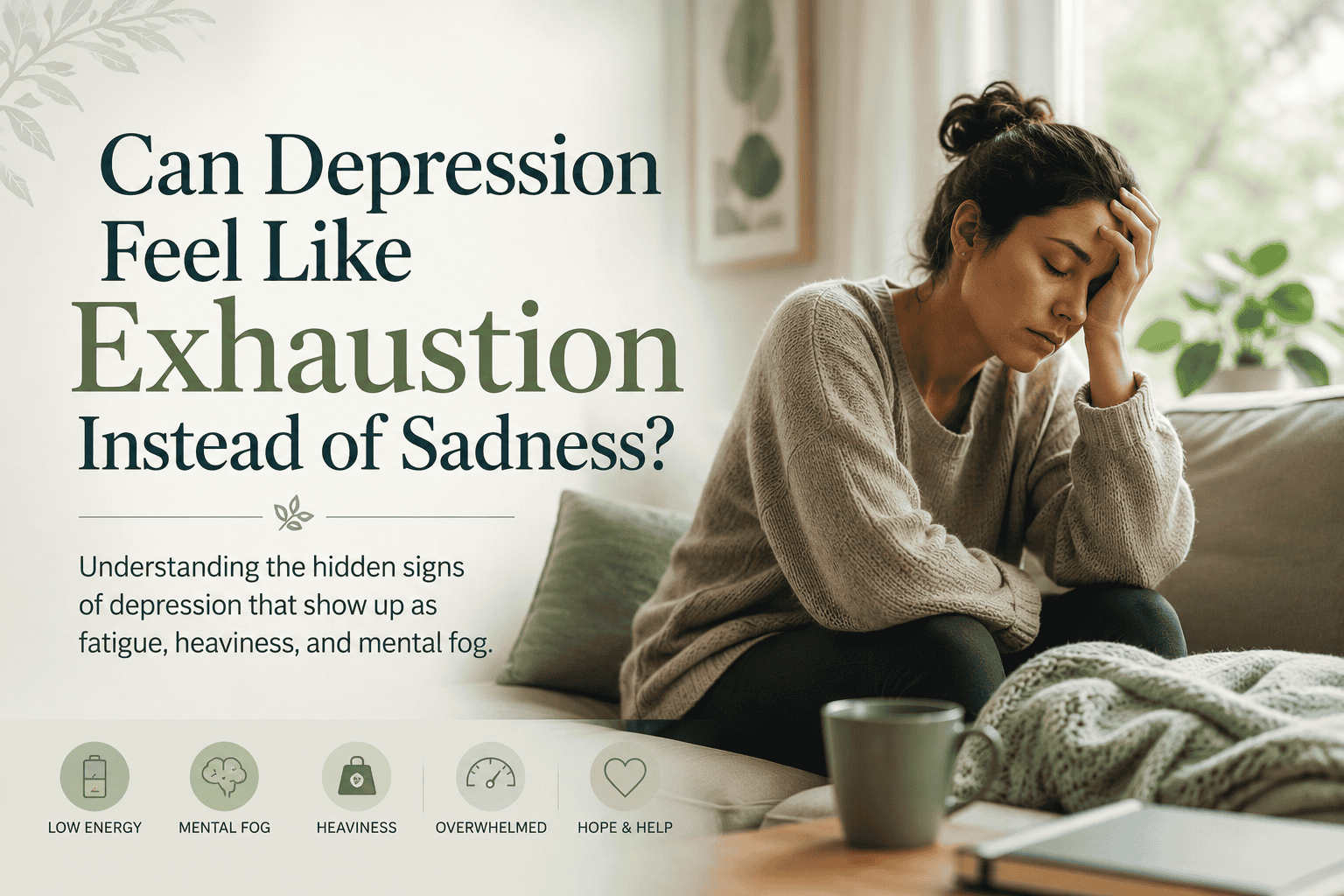

Why Depression Causes Mental Fog: Concentration, Memory & Clear Thinking | Motivations Counseling
Depression Resources
Why Depression Causes Mental Fog
Depression can affect concentration, memory, decision-making, processing speed, motivation, and the ability to think clearly. This guide explains why mental fog can happen with depression, what it may feel like, and how counseling can help people understand and manage the pattern.
Start Here
Mental Fog With Depression Is Real
Depression is often described as sadness, hopelessness, low motivation, or emotional heaviness. But for many people, one of the most frustrating symptoms is mental fog. It may feel harder to focus, remember details, organize thoughts, make decisions, follow conversations, or complete tasks that used to feel manageable.
This does not mean someone is lazy, careless, unintelligent, or not trying hard enough. Depression can affect the way the brain processes information, manages attention, uses energy, responds to stress, and makes decisions. When emotional pain and mental fatigue are high, thinking clearly can become much harder.
What Is Mental Fog in Depression?
Mental fog in depression refers to difficulty thinking clearly, focusing, remembering information, making decisions, processing information quickly, or staying mentally organized. It may feel like the mind is slowed down, cloudy, overloaded, disconnected, or harder to access.
What It Feels Like
What Depression-Related Mental Fog Can Feel Like
Mental fog can affect daily functioning in quiet but significant ways. Some people notice it at work or school, while others notice it in conversations, parenting, household tasks, relationships, or simple everyday decisions.
Cloudy Thinking
Your thoughts may feel slow, unclear, scattered, or harder to organize than usual.
Poor Concentration
Reading, working, listening, or finishing tasks may require more effort and feel easier to lose.
Memory Gaps
You may forget appointments, lose track of details, repeat questions, or struggle to recall information.
Decision Fatigue
Even small choices may feel overwhelming, stressful, or harder than they should.
Slower Processing
It may take longer to understand information, respond to questions, or move from one task to another.
Mental Exhaustion
Thinking itself may feel tiring, especially when depression is also affecting sleep, motivation, and energy.
Why It Happens
Why Depression Can Make Thinking Feel Harder
Depression affects more than mood. It can influence attention, motivation, sleep, energy, stress response, self-talk, and the ability to mentally organize information. When the brain is managing emotional heaviness, fatigue, worry, guilt, shame, or hopelessness, there may be less mental capacity available for focus and problem-solving.
Mental fog can also become worse when depression disrupts sleep, reduces activity, increases isolation, or creates a cycle of self-criticism. The person may notice they are not functioning like themselves, then feel guilty or discouraged, which can make concentration and motivation even harder.
Depression may affect thinking by contributing to:
- Low mental energy
- Reduced motivation and initiation
- Sleep disruption or oversleeping
- Negative self-talk and rumination
- Difficulty filtering distractions
- Slowed information processing
- Stress, anxiety, or emotional overload
- Reduced confidence in decisions
Mental fog is often one part of the depression picture. It can improve as depression symptoms are addressed, daily structure increases, sleep becomes steadier, and support systems become stronger.
Concentration
Depression Can Make It Hard to Stay Focused
Concentration requires mental energy, emotional availability, and the ability to filter distractions. Depression can interfere with all three. A person may read the same paragraph repeatedly, start tasks but not finish them, lose track of conversations, or feel unable to stay mentally present.
- Work tasks may take longer.
- School assignments may feel harder to start.
- Conversations may feel difficult to follow.
- Household responsibilities may feel mentally overwhelming.
Important Reframe
Trouble Focusing Is Not a Character Flaw
When depression affects concentration, people may blame themselves for being unproductive, irresponsible, or unmotivated. In reality, the brain may be operating with less available energy and more emotional load than usual.
- Difficulty focusing does not mean you are not trying.
- Low productivity does not mean you are lazy.
- Needing smaller steps does not mean you are failing.
- Support can help make tasks feel more manageable.
One helpful goal is to reduce shame around concentration problems. When the symptom is understood clearly, it becomes easier to build realistic strategies instead of relying on self-criticism.
Memory
Why Depression Can Affect Memory
Depression can make memory feel unreliable. Someone may forget what they planned to do, lose track of where they placed things, miss details from conversations, or struggle to recall information when they need it. This can be especially frustrating for people who are usually organized or high functioning.
Memory problems during depression may be connected to attention. If the brain is tired, distracted, emotionally overwhelmed, or focused on negative thoughts, information may not be fully encoded in the first place. Later, the person may feel like their memory is failing when the problem began with reduced attention and mental availability.
Depression-related memory issues may include:
- Forgetting appointments or tasks
- Misplacing items more often
- Difficulty remembering details from conversations
- Needing repeated reminders
- Feeling mentally disorganized
- Struggling to recall words, plans, or next steps
If memory changes are sudden, severe, worsening, or medically concerning, it is important to consult a medical provider. Counseling can support depression-related patterns, but medical causes should be evaluated when appropriate.
Decision-Making
Depression Can Make Decisions Feel Overwhelming
Decision-making requires energy, confidence, flexibility, and the ability to imagine possible outcomes. Depression can make even ordinary choices feel heavy. A person may second-guess themselves, avoid decisions, feel paralyzed, or worry that they will make the wrong choice.
This can happen with major life decisions, but it can also happen with simple choices such as what to eat, what task to start, whether to return a message, or how to organize the day. When depression is present, the brain may experience choices as pressure rather than as manageable steps.
Decision fatigue may look like:
- Putting off choices because they feel too hard
- Feeling stuck between options
- Needing reassurance before deciding
- Feeling guilty no matter what you choose
- Overthinking small decisions
- Avoiding tasks that require planning or prioritizing
Therapy can help clients reduce decision pressure, identify realistic next steps, and separate depression-driven thoughts from values-based choices.
Processing Speed
Depression Can Make the Mind Feel Slowed Down
Some people describe depression-related mental fog as feeling like their mind is moving through mud. It may take longer to respond, understand information, switch tasks, complete work, or find the right words. This can feel embarrassing or discouraging, especially when others do not understand what is happening internally.
Slower processing can be connected to low energy, disrupted sleep, emotional overload, stress, medication effects, grief, anxiety, trauma, or the depressive episode itself. The person may still be capable and intelligent, but their access to mental clarity may feel reduced.
Slowed thinking may include:
- Taking longer to answer questions
- Difficulty switching between tasks
- Feeling mentally delayed or disconnected
- Struggling to organize information quickly
- Finding it harder to problem-solve
- Feeling exhausted after mentally demanding tasks
When processing speed is affected by depression, pacing matters. Smaller steps, fewer competing demands, realistic expectations, and support can help reduce overwhelm.
An Educational Framework
The Depression-Fog Cycle
Mental fog can become self-reinforcing. Understanding the cycle can reduce shame and help identify where support and change can begin.
1. Depression Lowers Mental Energy
Mood, sleep, motivation, and emotional weight reduce the brain’s available capacity.
2. Focus Becomes Harder
Tasks, conversations, planning, reading, and follow-through may require more effort.
3. Responsibilities Pile Up
Unfinished tasks can create more stress, guilt, pressure, and discouragement.
4. Self-Criticism Increases
The person may think, “What is wrong with me?” or “I should be able to do this.”
5. Energy Drops Further
Shame, stress, and overwhelm can make the fog feel even heavier.
6. The Pattern Repeats
Depression, mental fog, avoidance, and guilt can reinforce one another.
Breaking the cycle often begins with compassion, structure, realistic expectations, support, and small steps that reduce overwhelm rather than increase shame.
What Helps
What Can Help Mental Fog From Depression
Depression-related mental fog often improves through a combination of emotional support, symptom treatment, daily structure, realistic pacing, sleep support, self-compassion, and practical strategies for memory, focus, and decision-making.
Use Smaller Steps
Break tasks into very small actions so the brain does not have to hold too much at once.
Create External Structure
Calendars, reminders, lists, routines, and visual cues can reduce the burden on memory.
Lower Decision Pressure
Simplifying choices and planning ahead can reduce decision fatigue.
Support Sleep
Depression and sleep problems often affect each other. Improving sleep rhythm may help mental clarity.
Reduce Shame
Self-criticism can worsen depression. Compassionate accountability is often more effective than blame.
Seek Support
Therapy can help address depression symptoms, thought patterns, stress, grief, trauma, and daily functioning.
When to Seek Help
When to Seek Counseling for Depression and Mental Fog
It may be time to seek counseling when mental fog is interfering with work, school, relationships, parenting, household responsibilities, emotional regulation, sleep, motivation, or daily functioning. Therapy can help you understand what is happening and begin building support around both the emotional and cognitive effects of depression.
Consider counseling if you notice:
- You feel mentally foggy, slowed down, or disconnected
- You are forgetting tasks, appointments, or important details
- Simple decisions feel overwhelming
- You are struggling to concentrate at work, school, or home
- You feel guilty, ashamed, or frustrated about productivity
- You feel emotionally numb, hopeless, tearful, or withdrawn
- Your sleep, appetite, motivation, or relationships have changed
If depression includes thoughts of death, self-harm, or suicide, seek immediate support. In the United States, call or text 988 for the Suicide & Crisis Lifeline, call 911, or go to the nearest emergency room.
Depression Counseling at Motivations Counseling
Therapy Can Help When Depression Makes Thinking Feel Hard
Motivations Counseling provides depression counseling for adults experiencing low mood, loss of motivation, emotional heaviness, mental fog, concentration problems, low energy, sleep changes, grief, stress, anxiety, trauma-related symptoms, and difficulty functioning.
Our counseling team serves clients in Sugar Land, Katy, Richmond, Fort Bend County, West Houston, and through telehealth across Texas when clinically appropriate.
Counseling Support
Depression Counseling in Sugar Land, Katy, and Online Across Texas
If depression has made your thinking feel foggy, slow, scattered, or harder to trust, counseling can help you understand the pattern and begin taking manageable next steps.
- Individual counseling for depression and emotional overwhelm
- Support for low motivation, mental fog, and concentration problems
- Help with shame, self-criticism, avoidance, and daily functioning
- Trauma-informed counseling when depression connects to painful experiences
- In-person options in Sugar Land and Katy when available
- Telehealth counseling across Texas when clinically appropriate
Therapy Learning Center
Continue Learning About Depression, Anxiety, and Mental Health
These related resources can help adults better understand depression symptoms, exhaustion, sleep problems, anxiety, trauma, emotional disconnection, and counseling support.
Signs of Depression in Adults
Learn how depression may show up emotionally, physically, cognitively, and relationally.
Read article →Can Depression Feel Like Exhaustion?
Understand why depression can feel like deep fatigue, heaviness, and reduced capacity.
Read article →Anxiety and Sleep Problems
Learn how anxious thoughts and nervous system activation can affect sleep and rest.
Read article →Racing Thoughts and Overthinking
Explore how repetitive thinking can affect focus, calm, sleep, and emotional regulation.
Read article →Emotional Disconnection
Learn why numbness, shutdown, and emotional distance can happen during stress or depression.
Read article →Counseling Resource Center
Explore resources on anxiety, depression, trauma, EMDR, relationships, teen counseling, and emotional health.
Explore Resource Center →Frequently Asked Questions
Common Questions About Depression and Mental Fog
Can depression cause mental fog?
Yes. Depression can affect concentration, memory, processing speed, motivation, decision-making, and the ability to think clearly.
Why does depression make it hard to focus?
Depression can reduce mental energy, increase emotional overload, disrupt sleep, and make it harder for the brain to filter distractions or stay engaged with tasks.
Can depression affect memory?
Depression can affect memory, especially when attention, sleep, stress, and emotional energy are also disrupted. Some people forget details because information was not fully absorbed in the first place.
Why do simple decisions feel hard when I am depressed?
Depression can lower energy and confidence, increase self-doubt, and make choices feel heavier. Even small decisions may feel overwhelming when the brain is already overloaded.
Does mental fog mean something is wrong with my intelligence?
No. Mental fog does not mean someone is unintelligent. It often reflects the effect depression has on energy, attention, processing, motivation, and emotional capacity.
Can therapy help with depression-related mental fog?
Therapy can help by addressing depression symptoms, self-criticism, avoidance, stress, grief, trauma, daily structure, and practical coping strategies that support clearer functioning.
Should I see a doctor for mental fog?
If mental fog is sudden, severe, worsening, or accompanied by concerning medical symptoms, it is important to consult a medical provider. Mental fog can have emotional, medical, sleep-related, medication-related, or other causes.
When should I seek counseling for depression?
Consider counseling when depression, low motivation, mental fog, sleep changes, hopelessness, emotional numbness, or difficulty functioning interferes with daily life, work, school, relationships, or your ability to care for yourself.

Take the Next Step
Depression Counseling in Sugar Land, Katy, and Online Across Texas
If depression has made your thinking feel foggy, slow, scattered, or harder to trust, counseling can help you understand what is happening and begin taking manageable next steps.