Tag: Emotional Exhaustion

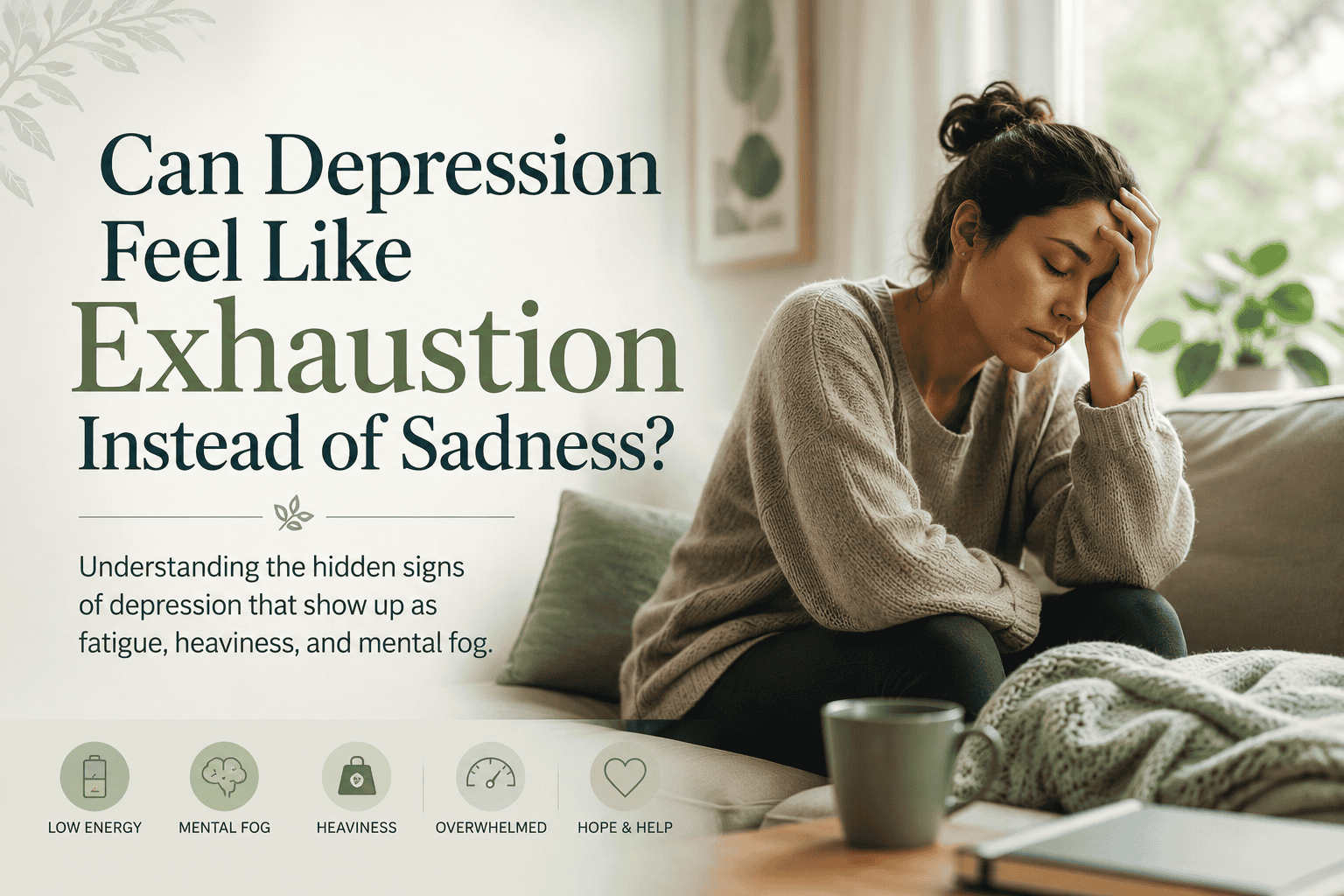
Can Depression Feel Like Exhaustion Instead of Sadness?

Depression & Mental Health Resources

Can Depression Feel Like Exhaustion Instead of Sadness?

Depression does not always feel like obvious sadness. For many adults, it can feel more like heaviness, low energy, mental fog, emotional shutdown, and difficulty keeping up with life. This guide explains how depression-related exhaustion can show up and when counseling may help.

Start Here

Depression Can Feel Like Exhaustion Instead of Sadness

Many people picture depression as crying, sadness, or obvious emotional pain. While those symptoms can happen, depression can also feel like being physically and emotionally drained. Some adults describe it as heaviness, numbness, mental fog, low motivation, or feeling like every task takes more effort than it should.

When depression feels like exhaustion, a person may still go to work, care for others, and appear functional on the outside. Internally, they may feel like they are pushing through each day with very little energy left.

Depression and Fatigue

Depression Exhaustion: What It Can Feel Like

Depression-related exhaustion can affect the body, thoughts, emotions, motivation, and relationships. It is often more than ordinary tiredness.

Low Energy

Feeling drained even after sleep, needing more effort to complete basic tasks, or feeling like your body is running on empty.

Emotional Heaviness

Feeling weighed down, slowed down, or emotionally heavy without always being able to explain why.

Mental Fog

Having trouble focusing, remembering details, making decisions, or staying mentally present.

Difficulty Keeping Up

Feeling behind on chores, work, parenting, messages, appointments, or responsibilities that used to feel manageable.

Less Interest

Losing interest in hobbies, relationships, intimacy, social plans, or routines that usually help you feel connected.

Sleep That Does Not Restore

Sleeping more but still feeling tired, waking during the night, or feeling unrested even after a full night of sleep.

Not Always Obvious Sadness

Depression Without Sadness Can Still Be Depression

Some adults do not identify with the word “sad.” They may feel numb, tired, disconnected, irritable, flat, or simply unable to keep going at their usual pace. Because sadness is not always the main symptom, depression can be missed or minimized.

Depression without obvious sadness may be especially confusing for people who are used to being responsible, productive, or emotionally composed. They may think they are just tired, lazy, burned out, or not trying hard enough.

Depression may feel more like:

  • Dragging yourself through the day
  • Feeling emotionally flat or disconnected
  • Having no energy for things you care about
  • Needing more time alone but not feeling better afterward
  • Feeling overwhelmed by normal responsibilities
  • Feeling like you are functioning, but barely

Depression can be present even when a person is still working, parenting, smiling, helping others, or appearing “fine” on the outside.

Daily Functioning

Why Depression Can Make Life Feel Hard to Keep Up With

Depression can make ordinary responsibilities feel unusually difficult. A person may still care about their work, family, home, or relationships, but feel unable to consistently follow through.

This can create guilt and self-criticism. The person may wonder why they cannot just “get it together,” when the real issue may be depression affecting energy, focus, motivation, and emotional capacity.

Common Pattern

Depression Can Look Like Falling Behind

When depression feels like exhaustion, the signs may show up in everyday routines before they are recognized as a mental health concern.

  • Texts, emails, and calls go unanswered.
  • Laundry, dishes, bills, or paperwork pile up.
  • Appointments or deadlines become harder to manage.
  • Work takes longer and feels more mentally draining.
  • Social plans feel exhausting instead of refreshing.

Mental Fog and Focus

Depression Fatigue Can Affect Concentration and Decision-Making

Depression-related exhaustion is not only physical. It can also affect the way a person thinks. Mental fog can make conversations harder to follow, tasks harder to finish, and decisions harder to make.

Even small choices may feel overwhelming. A person may avoid decisions, procrastinate, or shut down because their mind feels overloaded.

Mental fog may include:

  • Trouble concentrating or staying on task
  • Forgetfulness or difficulty tracking details
  • Feeling mentally slow or overwhelmed
  • Difficulty making decisions
  • Reading or working without retaining information
  • Feeling disconnected during conversations

Body Signals

Depression Can Show Up as Physical Heaviness and Low Energy

Some adults notice depression first in their body. They may feel heavy, tense, slowed down, restless, or physically depleted. Sleep may change, appetite may shift, and the body may feel like it is carrying more than usual.

These body-based symptoms can make depression harder to identify because the person may assume the problem is only stress, poor sleep, overwork, or not enough discipline.

Physical signs may include:

  • Feeling tired even after rest
  • Sleeping too much or struggling to sleep
  • Moving or speaking more slowly than usual
  • Feeling restless, tense, or unable to relax
  • Changes in appetite or weight
  • Headaches, stomach discomfort, or body aches that worsen with stress

If exhaustion is new, severe, or medically concerning, it is also important to speak with a medical provider to rule out physical health causes.

Burnout or Depression?

Burnout and Depression Can Overlap

Burnout is often connected to prolonged stress, overwork, caregiving demands, or emotional overload. Depression can include similar exhaustion, but may also involve deeper hopelessness, loss of interest, self-criticism, withdrawal, sleep or appetite changes, and difficulty feeling pleasure.

Sometimes burnout and depression occur together. A person may begin with chronic stress and eventually experience symptoms that look and feel more like depression.

Clinical Clues

When Exhaustion May Be More Than Burnout

Exhaustion may be more concerning when rest does not help, symptoms persist, or the person begins to lose interest, withdraw, feel hopeless, or struggle to function across multiple areas of life.

  • Rest does not restore energy.
  • Enjoyment and connection feel muted.
  • Basic responsibilities feel overwhelming.
  • Self-criticism or hopelessness increases.
  • Symptoms continue even when stress decreases.

When to Seek Help

When to Seek Therapy for Depression Exhaustion

It may be time to reach out when exhaustion, heaviness, low motivation, or mental fog lasts more than a couple of weeks, keeps returning, or begins interfering with work, parenting, relationships, sleep, self-care, or your ability to feel like yourself.

Therapy can help you slow down the self-blame cycle, understand what may be contributing to the exhaustion, identify realistic coping steps, and rebuild support in a way that feels manageable.

Consider counseling if you notice:

  • Persistent exhaustion that does not improve with rest
  • Loss of interest, numbness, or emotional disconnection
  • Difficulty keeping up with daily responsibilities
  • Mental fog, poor concentration, or decision fatigue
  • Increased isolation, irritability, or hopelessness
  • Thoughts of death, self-harm, or not wanting to be here

If depression includes thoughts of death, self-harm, or suicide, seek immediate support. In the United States, call or text 988 for the Suicide & Crisis Lifeline, call 911, or go to the nearest emergency room.

Depression Counseling at Motivations Counseling

Therapy Can Help When Depression Feels Like Exhaustion

Motivations Counseling provides therapy for adults experiencing depression, emotional exhaustion, anxiety, stress, trauma-related symptoms, relationship strain, and life transitions. Counseling may focus on understanding symptoms, reducing shame, improving coping skills, rebuilding routines, and taking realistic steps toward emotional and daily functioning.

Our counseling team serves clients in Sugar Land, Katy, Richmond, Fort Bend County, West Houston, and through telehealth across Texas when clinically appropriate.

Counseling Support

Depression Counseling in Sugar Land, Katy, and Online Across Texas

If depression feels like exhaustion, heaviness, mental fog, or difficulty keeping up, counseling can help you better understand what is happening and begin taking manageable next steps.

  • Individual counseling for adults
  • Support for depression, anxiety, trauma, stress, and emotional exhaustion
  • In-person options in Sugar Land and Katy when available
  • Telehealth counseling across Texas when clinically appropriate
  • Trauma-informed and relationship-informed care
Call or Text: (281) 858-3001

Frequently Asked Questions

Common Questions About Depression, Exhaustion, and Low Energy

Can depression feel like exhaustion instead of sadness?

Yes. Depression can feel like low energy, heaviness, mental fog, numbness, reduced motivation, and difficulty keeping up with life instead of obvious sadness.

Why does depression make me feel so tired?

Depression can affect sleep, motivation, concentration, body energy, emotional capacity, and the nervous system. Many people feel exhausted even when they are trying hard to function.

Can depression cause mental fog?

Yes. Depression may make it harder to concentrate, remember details, make decisions, follow conversations, or complete tasks.

How do I know if it is burnout or depression?

Burnout and depression can overlap. Depression may be more likely when exhaustion persists, rest does not help, enjoyment decreases, hopelessness increases, or symptoms affect multiple areas of life.

Can someone be depressed and still function?

Yes. Some adults continue working, parenting, and helping others while privately feeling depleted, disconnected, overwhelmed, or emotionally numb.

When should I seek therapy for depression exhaustion?

Consider therapy when exhaustion, low motivation, mental fog, or emotional heaviness lasts more than a couple of weeks, keeps returning, or interferes with work, relationships, sleep, self-care, or daily life.

What should I do if I am having thoughts of suicide?

If you are in immediate danger or may hurt yourself, call 911 or go to the nearest emergency room. In the United States, you can call or text 988 for the Suicide & Crisis Lifeline.

Susan Baker, M.Ed., NCC, LPC-S, Licensed Professional Counselor Supervisor in Texas

Article Author

Written by a Licensed Texas Mental Health Professional

This article was written for Motivations Counseling by Susan Baker, M.Ed., NCC, LPC-S, a Texas Licensed Professional Counselor Supervisor and clinical leader at Motivations Counseling.

Susan Baker, M.Ed., NCC, LPC-S
Texas Licensed Professional Counselor Supervisor
EMDR Therapist & EMDRIA Member
Texas LPC License #73957

Susan Baker is the Clinical Director of Motivations Counseling and provides trauma-informed counseling, EMDR therapy, depression counseling, anxiety treatment, immigration psychological evaluations, and mental health assessment services. Motivations Counseling serves clients from offices in Sugar Land and Katy, Texas, with telehealth services available statewide for Texas residents.

Take the Next Step

Depression Counseling in Sugar Land, Katy, and Online Across Texas

If depression feels like exhaustion, low energy, mental fog, or difficulty keeping up, counseling can help you understand what is happening and begin taking manageable steps toward support.

×

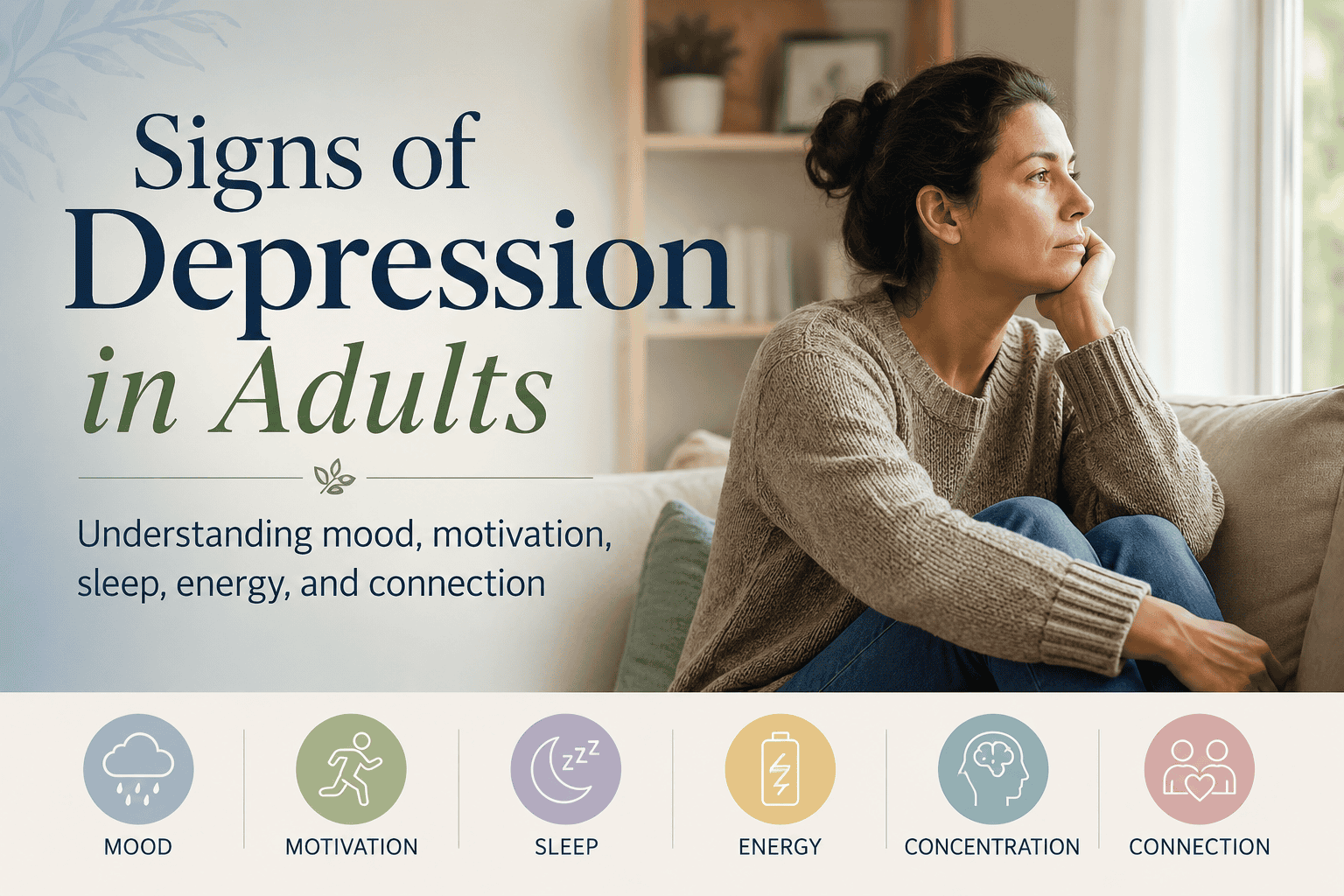
Signs of Depression in Adults

Depression & Mental Health Resources

Signs of Depression in Adults

Depression can affect more than mood. It may show up through changes in motivation, sleep, energy, appetite, concentration, self-worth, relationships, and daily functioning. This guide explains common signs of depression in adults and when it may be time to reach out for support.

Start Here

Depression Is More Than Feeling Sad

Everyone has difficult days, periods of stress, or times when they feel discouraged. Depression is different because symptoms may last longer, feel harder to move through, and begin interfering with work, school, relationships, parenting, health, or everyday responsibilities.

Some adults recognize depression as sadness or hopelessness. Others notice that they feel numb, disconnected, exhausted, irritable, unmotivated, or unable to enjoy things that used to matter. Depression can also show up physically through changes in sleep, appetite, energy, pain, or body tension.

View Depression Resources

Common Signs

Adult Depression Symptoms: What to Look For

Depression does not look exactly the same for every person. These are common areas where adults may begin to notice changes.

Persistent Low Mood

Feeling sad, empty, tearful, hopeless, emotionally heavy, or unable to feel joy for much of the day.

Loss of Energy

Feeling exhausted even after rest, having trouble starting tasks, or feeling like ordinary responsibilities take too much effort.

Loss of Interest

Pulling away from hobbies, relationships, activities, intimacy, or parts of life that previously felt meaningful.

Sleep Changes

Sleeping too much, waking during the night, waking too early, struggling to fall asleep, or feeling unrested.

Appetite Changes

Eating much more or much less than usual, losing interest in food, or noticing weight changes connected to mood.

Concentration Problems

Difficulty focusing, remembering details, making decisions, following through, or staying mentally present.

Symptoms of Depression in Adults Can Vary

Symptoms of depression in adults do not always appear the same. Some people experience sadness and hopelessness, while others notice irritability, fatigue, emotional numbness, sleep problems, difficulty concentrating, or withdrawal from relationships.

Mood and Emotional Signs

Signs of Clinical Depression in Adults

Many adults expect depression to feel like crying or sadness. That can happen, but depression may also feel like emotional numbness, irritability, discouragement, guilt, shame, or a sense that nothing will improve.

Some people become quieter and more withdrawn. Others become more easily frustrated, impatient, or reactive. For some adults, depression feels less like sadness and more like being disconnected from themselves, their relationships, or their usual sense of purpose.

Emotional signs may include:

  • Feeling sad, empty, hopeless, or emotionally flat
  • Feeling unusually irritable, angry, or easily overwhelmed
  • Feeling guilty, worthless, ashamed, or like a burden
  • Feeling disconnected from people who matter
  • Feeling unable to enjoy things that used to feel good
  • Feeling like life is harder than it should be

Depression is not a character flaw or a lack of willpower. It is a real mental health condition that can affect emotions, thoughts, the body, relationships, and daily functioning.

Motivation and Functioning

Depression Can Make Ordinary Tasks Feel Overwhelming

One of the most common signs of depression in adults is a noticeable drop in motivation. Tasks that once felt normal may begin to feel heavy, confusing, or impossible to start.

This can affect work, parenting, school, chores, bills, hygiene, communication, and decision-making. The person may care deeply, but still feel stuck or unable to follow through.

Often Misunderstood

Depression Can Look Like Laziness From the Outside

Adults with depression are sometimes misunderstood as lazy, careless, negative, or unmotivated. In reality, depression can interfere with energy, concentration, hope, self-confidence, and the ability to begin or complete tasks.

  • Unopened mail may pile up.
  • Texts and calls may go unanswered.
  • Basic routines may feel harder to maintain.
  • Work performance may decline.
  • Important decisions may feel paralyzing.

Sleep, Energy, Appetite, and the Body

Depression Often Shows Up Physically

Depression can affect the body as much as the mind. Some adults first notice that they are sleeping differently, feeling exhausted, eating differently, moving slower, or experiencing more physical discomfort.

Physical changes are sometimes easier to notice than emotional changes. A person may not say, “I am depressed,” but may say, “I am tired all the time,” “I cannot get out of bed,” “I do not feel hungry,” or “My body feels heavy.”

Physical signs may include:

  • Sleeping much more or much less than usual
  • Waking up tired even after a full night of sleep
  • Feeling physically slowed down or restless
  • Low energy, fatigue, or heaviness in the body
  • Changes in appetite or weight
  • Headaches, stomach problems, body aches, or tension that worsen with stress

Thinking and Concentration

Depression Can Affect Focus, Memory, and Decision-Making

Depression can make thinking feel slower or heavier. Adults may have difficulty concentrating at work, remembering appointments, reading, following conversations, finishing tasks, or making even small decisions.

This can create a painful cycle. The more someone falls behind, the more guilt or shame they may feel. That guilt can increase avoidance, which makes depression feel even more overwhelming.

Cognitive signs may include:

  • Trouble focusing or staying mentally present
  • Difficulty making decisions
  • Forgetfulness or mental fog
  • Negative self-talk or harsh self-criticism
  • Feeling hopeless about the future
  • Difficulty imagining that things can improve

If depression includes thoughts of death, self-harm, or suicide, seek immediate support. In the United States, call or text 988 for the Suicide & Crisis Lifeline, call 911, or go to the nearest emergency room.

Relationships and Connection

Depression Can Lead to Withdrawal

Adults with depression may stop answering messages, cancel plans, avoid family, lose interest in intimacy, or feel emotionally far away even when they are physically present.

Withdrawal is often not about not caring. It may be a sign that the person feels depleted, ashamed, overwhelmed, or unsure how to explain what is happening.

What Loved Ones May Notice

Depression May Be Visible to Others First

Family members, partners, friends, or coworkers may notice changes before the person identifies them as depression.

  • Less communication or emotional availability
  • More irritability or conflict
  • Less interest in activities or connection
  • More time alone or in bed
  • Difficulty keeping up with responsibilities

When to Seek Help

When to Seek Therapy for Depression

It may be time to seek professional support when symptoms last for more than a couple of weeks, keep returning, or begin interfering with your ability to function, connect, work, parent, sleep, care for yourself, or feel like yourself.

Therapy can help you understand what is happening, reduce shame, identify patterns, build coping strategies, and begin taking manageable steps toward feeling more stable and connected.

Consider reaching out if you notice:

  • Depressed mood, numbness, or hopelessness that does not lift
  • Loss of interest in relationships, activities, or responsibilities
  • Sleep, appetite, or energy changes that affect daily life
  • Difficulty concentrating, making decisions, or completing tasks
  • Increased irritability, isolation, or emotional shutdown
  • Thoughts of death, self-harm, or not wanting to be here

Depression Counseling at Motivations Counseling

Therapy Can Help You Understand Depression and Take the Next Step

Motivations Counseling provides therapy for adults experiencing depression, anxiety, stress, trauma-related symptoms, relationship distress, emotional exhaustion, and life transitions. Counseling may focus on understanding symptoms, improving coping skills, identifying stuck patterns, rebuilding connection, and taking realistic steps toward daily functioning.

Our counseling team serves clients in Sugar Land, Katy, Richmond, Fort Bend County, West Houston, and through telehealth across Texas when clinically appropriate.

Counseling Support

Depression Counseling in Sugar Land, Katy, and Online Across Texas

If you are noticing signs of depression, you do not have to wait until everything feels unmanageable before reaching out.

  • Individual counseling for adults
  • Support for depression, anxiety, trauma, stress, and relationship strain
  • In-person options in Sugar Land and Katy when available
  • Telehealth counseling across Texas when clinically appropriate
  • Trauma-informed and relationship-informed care
Call or Text: (281) 858-3001

Frequently Asked Questions

Common Questions About Signs of Depression in Adults

What are common signs of depression in adults?

Common signs include persistent sadness, numbness, irritability, loss of interest, low motivation, sleep changes, appetite changes, fatigue, concentration problems, guilt, hopelessness, and withdrawal from relationships or responsibilities.

Can depression show up as irritability instead of sadness?

Yes. Some adults experience depression as irritability, anger, impatience, emotional shutdown, or feeling easily overwhelmed rather than obvious sadness.

Can depression affect sleep and energy?

Yes. Depression may cause insomnia, early-morning waking, sleeping too much, low energy, fatigue, or feeling physically slowed down.

Can depression affect concentration?

Yes. Adults with depression may have difficulty focusing, remembering details, making decisions, completing tasks, or staying mentally present.

When should someone seek therapy for depression?

Consider therapy when symptoms last more than a couple of weeks, interfere with daily life, affect relationships or work, or include hopelessness, withdrawal, or thoughts of self-harm.

Is depression treatable?

Yes. Many people improve with appropriate support, which may include therapy, lifestyle changes, support systems, medical evaluation, medication when appropriate, or a combination of care.

What should I do if I am having thoughts of suicide?

If you are in immediate danger or may hurt yourself, call 911 or go to the nearest emergency room. In the United States, you can call or text 988 for the Suicide & Crisis Lifeline.

Susan Baker, M.Ed., NCC, LPC-S

Article Author

Written by a Licensed Texas Mental Health Professional

This article was written for Motivations Counseling by Susan Baker, M.Ed., NCC, LPC-S, a Texas Licensed Professional Counselor Supervisor and clinical leader at Motivations Counseling.

Susan Baker, M.Ed., NCC, LPC-S
Texas Licensed Professional Counselor Supervisor
EMDR Therapist & EMDRIA Member
Texas LPC License #73957

Susan Baker is the Clinical Director of Motivations Counseling and provides trauma-informed counseling, EMDR therapy, depression counseling, anxiety treatment, immigration psychological evaluations, and mental health assessment services. Motivations Counseling serves clients from offices in Sugar Land and Katy, Texas, with telehealth services available statewide for Texas residents.

Take the Next Step

Depression Counseling in Sugar Land, Katy, and Online Across Texas

If depression is affecting your mood, motivation, sleep, energy, concentration, or relationships, counseling can help you understand what is happening and begin taking manageable steps toward support.

×

Survival Mode and Chronic Stress: Why You Feel Exhausted Even When Life Seems Fine

Trauma Resource Center

Survival Mode and Chronic Stress: Why You Feel Exhausted Even When Life Seems Fine

Survival mode is what can happen when the nervous system spends too much time preparing for pressure, conflict, loss, danger, rejection, or overwhelm. Even when life looks manageable from the outside, chronic stress can leave the body feeling tense, guarded, restless, irritable, numb, or completely drained. Understanding survival mode can help you recognize why rest may not feel restful — and why healing often begins with helping the nervous system feel safe again.

Start Here

Survival Mode Is the Nervous System Trying to Keep You Going

“Survival mode” is not a formal diagnosis, but it is a useful way to describe what many people experience when chronic stress, trauma, instability, emotional pressure, or prolonged uncertainty keeps the body in a state of readiness. The nervous system may act as if there is always something to manage, prevent, scan for, fix, or survive.

This can look different from person to person. Some people become anxious, overproductive, controlling, irritable, or hypervigilant. Others become numb, detached, exhausted, avoidant, or emotionally shut down. Many people alternate between both patterns: pushing through until they crash, then feeling guilty because they cannot keep functioning at the same pace.

What Survival Mode Means

Chronic Stress Can Train the Body to Prioritize Survival Over Rest

The nervous system is designed to respond quickly when something feels threatening or overwhelming. In the short term, this can be protective. The body may release stress hormones, increase alertness, tighten muscles, narrow attention, and prepare to fight, flee, freeze, please, or shut down. These responses are not weaknesses. They are survival strategies.

The difficulty begins when the stress response becomes the default setting. If a person experiences long-term pressure, unresolved trauma, unpredictable relationships, financial strain, caregiving demands, work overload, family conflict, immigration stress, chronic illness, grief, or emotional instability, the body may learn that it cannot fully stand down. Even calm moments can feel unfamiliar or unsafe.

Survival mode often creates a mismatch between the outside and the inside. From the outside, a person may appear responsible, capable, productive, or “fine.” Inside, they may feel tense, exhausted, disconnected, easily overwhelmed, or unable to stop bracing for the next problem.

The difference between ordinary stress and survival mode

Ordinary stress usually rises in response to a specific demand and gradually settles when the demand passes. Survival mode feels more persistent. The body may remain activated even after work is finished, the conflict is over, the children are asleep, the appointment is complete, or the immediate problem has been solved.

In survival mode, rest may feel undeserved, unsafe, or impossible. The mind may continue scanning for what has been missed. The body may feel restless, tense, or heavy. The person may know logically that they should relax, but the nervous system may not yet believe that relaxing is safe.

Common survival mode patterns

  • Feeling like you must keep going no matter how exhausted you are
  • Difficulty slowing down without guilt, anxiety, or restlessness
  • Staying busy to avoid feeling emotions, memories, or body tension
  • Feeling numb, detached, or disconnected after long periods of stress
  • Overreacting to small problems because the body is already overloaded
  • Feeling unable to trust calm moments because something might go wrong
  • Having trouble knowing what you need because you are focused on surviving

Physical Signs

Survival Mode Often Shows Up in the Body First

Chronic stress is not only mental. When the nervous system remains activated, the body may carry the stress through tension, fatigue, sleep disruption, stomach discomfort, headaches, panic sensations, or feeling “wired and tired” at the same time.

Body Tension

The jaw, shoulders, chest, stomach, back, or hands may stay tight because the body is bracing for pressure, conflict, disappointment, or sudden demands.

Constant Fatigue

Survival mode uses energy. Even if you are getting through the day, your body may feel depleted from staying alert, emotionally guarded, or mentally overloaded.

Sleep Disruption

Stress activation can make it hard to fall asleep, stay asleep, sleep deeply, or wake feeling rested because the nervous system may still be monitoring for problems.

Startle or Panic Sensations

Racing heart, shallow breathing, dizziness, sweating, trembling, or sudden fear may appear when the body interprets stress as danger.

Restlessness

Stillness can feel uncomfortable when the body is used to motion, problem-solving, checking, preparing, or staying one step ahead.

Shutdown

When activation becomes too much, the body may protect itself through numbness, heaviness, disconnection, low motivation, or emotional withdrawal.

Emotional and Mental Signs

Survival Mode Can Affect Mood, Thinking, and Self-Trust

When the nervous system is focused on survival, the brain often prioritizes threat detection over reflection, creativity, connection, or long-term planning. This can make a person feel reactive, distracted, irritable, emotionally numb, or unable to think clearly under pressure.

Emotional signs of survival mode may include:

  • Irritability, impatience, or feeling easily annoyed by small things
  • Anxiety, dread, or a sense that something bad is about to happen
  • Emotional numbness or feeling disconnected from joy, closeness, or comfort
  • Difficulty crying, difficulty stopping crying, or feeling emotionally flooded
  • Guilt when resting, asking for help, setting limits, or saying no
  • Feeling like you are failing even when you are doing a lot
  • Feeling responsible for keeping everyone else okay

Mental signs of survival mode may include:

  • Overthinking, rumination, or replaying conversations
  • Difficulty making decisions because everything feels high-stakes
  • Scanning for mistakes, conflict, rejection, or signs that something is wrong
  • Trouble concentrating because attention keeps shifting toward possible problems
  • Feeling unable to imagine a calmer future because the present feels consuming
  • Becoming overly focused on control, planning, or preventing disappointment

Survival mode can make a person appear “high functioning” while internally feeling overwhelmed. The ability to keep going does not mean the nervous system is healthy, rested, or emotionally supported.

Why self-care may not be enough

Self-care can be helpful, but survival mode often requires more than taking a bath, going for a walk, or telling yourself to relax. If the body has learned that safety depends on constant effort, control, or readiness, calming strategies may only help briefly unless the deeper nervous system pattern is also addressed.

This is why therapy may focus not only on coping skills, but also on understanding triggers, emotional learning, relationship patterns, unresolved trauma, boundaries, and the beliefs that keep a person pushing past their limits.

Relationships

Survival Mode Can Shape How You Connect With Other People

Chronic stress can make relationships feel more difficult because the nervous system may interpret silence, conflict, criticism, disappointment, distance, or unmet needs as threats. A person may become defensive, withdrawn, people-pleasing, overly responsible, or emotionally flooded.

These patterns often make sense when viewed through a survival lens. If connection has ever felt unsafe, unpredictable, or conditional, the body may try to protect itself by monitoring, controlling, avoiding, or shutting down.

Relationship patterns connected to survival mode may include:

  • Feeling responsible for other people’s emotions
  • Difficulty asking for help because you are used to handling things alone
  • Withdrawing when overwhelmed, even from people you care about
  • Becoming defensive because your body feels attacked or blamed
  • People-pleasing to prevent conflict, disappointment, or rejection
  • Feeling anxious when others are quiet, upset, distant, or unavailable
  • Having difficulty feeling close because your nervous system is braced

Therapy can help clients recognize these patterns without shame. The goal is not to blame the past or label a person as broken, but to understand how survival strategies may still be operating and to build healthier ways of feeling safe, connected, and emotionally supported.

Why Rest Can Feel Hard

Rest May Not Feel Restful When the Nervous System Still Feels Responsible for Everything

Many people in survival mode are confused by how hard it is to rest. They may finally have a quiet moment, but instead of feeling peaceful, they feel anxious, guilty, restless, sad, numb, or uncomfortable. The body may be so accustomed to pressure that calmness feels unfamiliar.

Rest can also create space for feelings that were pushed aside during busy or stressful periods. When a person stops moving, the body may begin to notice grief, fear, anger, loneliness, exhaustion, or unresolved memories. This does not mean rest is bad. It means the nervous system may need support learning how to slow down safely.

Signs that rest does not feel safe yet

  • You feel guilty when you are not productive
  • You become restless or anxious when things are quiet
  • You stay busy to avoid thinking or feeling
  • You only rest when your body forces you to stop
  • You feel emotionally heavy after periods of calm
  • You have difficulty receiving support without feeling like a burden

Learning to rest is sometimes part of trauma recovery. For some people, slowing down is not simply a schedule change — it is nervous system retraining.

Why “just relax” usually does not work

When the body is in survival mode, relaxation is not only a decision. It is a physiological shift. A person may know they are safe, but their body may still be responding to old learning, current stress, or unresolved fear. This is why compassion is important. The goal is not to force calm, but to help the nervous system gradually experience safety in a more reliable way.

Therapy and Recovery

Therapy Can Help You Move From Surviving Toward Feeling More Steady

Therapy for chronic stress and survival mode often begins with understanding what the nervous system is doing. Many clients feel relief when they realize their symptoms are not random, weak, or irrational. They are often understandable responses to prolonged stress, unresolved trauma, emotional overload, or repeated experiences of needing to stay strong.

Therapy may help with:

  • Recognizing the signs that your nervous system is becoming activated
  • Understanding triggers that move you into fight, flight, freeze, fawn, or shutdown
  • Developing grounding and regulation skills that work with the body, not against it
  • Improving boundaries, self-compassion, communication, and rest
  • Reducing shame around exhaustion, irritability, numbness, or overwhelm
  • Processing unresolved stress or trauma when appropriate and clinically safe
  • Building a life that is not organized only around coping, preventing, or pushing through

Where EMDR therapy may fit

EMDR therapy may be helpful when survival mode is connected to unresolved trauma, painful memories, negative self-beliefs, body-based fear, or specific triggers. EMDR can help the brain and body process distressing experiences so present-day reminders do not produce the same level of activation.

EMDR is not about forcing someone into painful memories before they are ready. A trauma-informed therapist will usually focus on stabilization, coping skills, emotional regulation, grounding, and readiness before deeper processing begins. For many clients, the first step is learning how to feel more present and supported.

Important Note

Survival Mode May Have Helped You Get Through — But It Was Not Meant to Be Permanent

If survival mode has helped you function through difficult seasons, it deserves compassion. Your body may have learned to stay strong, alert, productive, careful, or emotionally protected for understandable reasons. At the same time, a nervous system cannot remain in high-alert or shutdown forever without cost.

Support can help you begin shifting from constant coping toward more steadiness, connection, and rest. Healing does not mean becoming careless or ignoring real responsibilities. It means helping your body learn that you do not have to live braced for impact every moment of the day.

Learning Center

Continue Learning About Trauma, Chronic Stress, and Nervous System Recovery

These related resources explain trauma symptoms, chronic alertness, emotional shutdown, body-based anxiety, panic activation, grounding skills, EMDR therapy, and how stress can affect the nervous system over time.

How Trauma Can Affect the Nervous System

Learn how trauma can affect the body’s alarm system, emotions, sleep, relationships, concentration, and sense of safety.

Signs of Chronic Hypervigilance

Understand why the nervous system may stay alert after stress or trauma and how chronic scanning can affect sleep, relationships, and daily functioning.

Understanding PTSD Symptoms

Learn how intrusive memories, avoidance, emotional numbing, hypervigilance, sleep disruption, and body-based stress responses may show up after trauma.

Emotional Numbing After Trauma

Explore why some trauma survivors feel disconnected, shut down, distant, or unable to fully experience emotions even when they care deeply.

Why Anxiety Feels Physical

Understand how anxiety can affect the body through muscle tension, breathing changes, stomach discomfort, fatigue, and other stress responses.

Panic Symptoms Explained

Learn why panic can feel so physical and how nervous system activation may create racing heart, shortness of breath, dizziness, fear, or emotional overwhelm.

Trauma & Body-Based Symptoms

Learn how trauma may be experienced through the body, including tension, pain, panic sensations, fatigue, sleep disruption, and nervous system activation.

Calm Place & Grounding Techniques

Review grounding and stabilization skills that may help the nervous system feel steadier during anxiety, panic, emotional flooding, or trauma activation.

What Is EMDR Therapy?

Learn how EMDR therapy may support trauma processing, emotional regulation, nervous system stabilization, and reduced distress connected to painful experiences.

Trauma Triggers and Emotional Flooding

Explore why emotional triggers can feel sudden and intense, and how therapy can help build regulation skills and reduce overwhelm.

Trauma and Relationship Difficulties

Understand how trauma can affect trust, closeness, conflict, attachment needs, and reactions to perceived rejection or emotional danger.

Understanding Fight, Flight, Freeze & Fawn

Learn how survival responses can shape anxiety, shutdown, people-pleasing, anger, avoidance, and emotional overwhelm.

Start Counseling

Ready to Get Support for Chronic Stress or Survival Mode?

If you feel exhausted, tense, emotionally overwhelmed, numb, restless, or stuck in survival mode, our counseling team can help you explore trauma-informed therapy options and begin building a stronger sense of safety, steadiness, and support.

×