
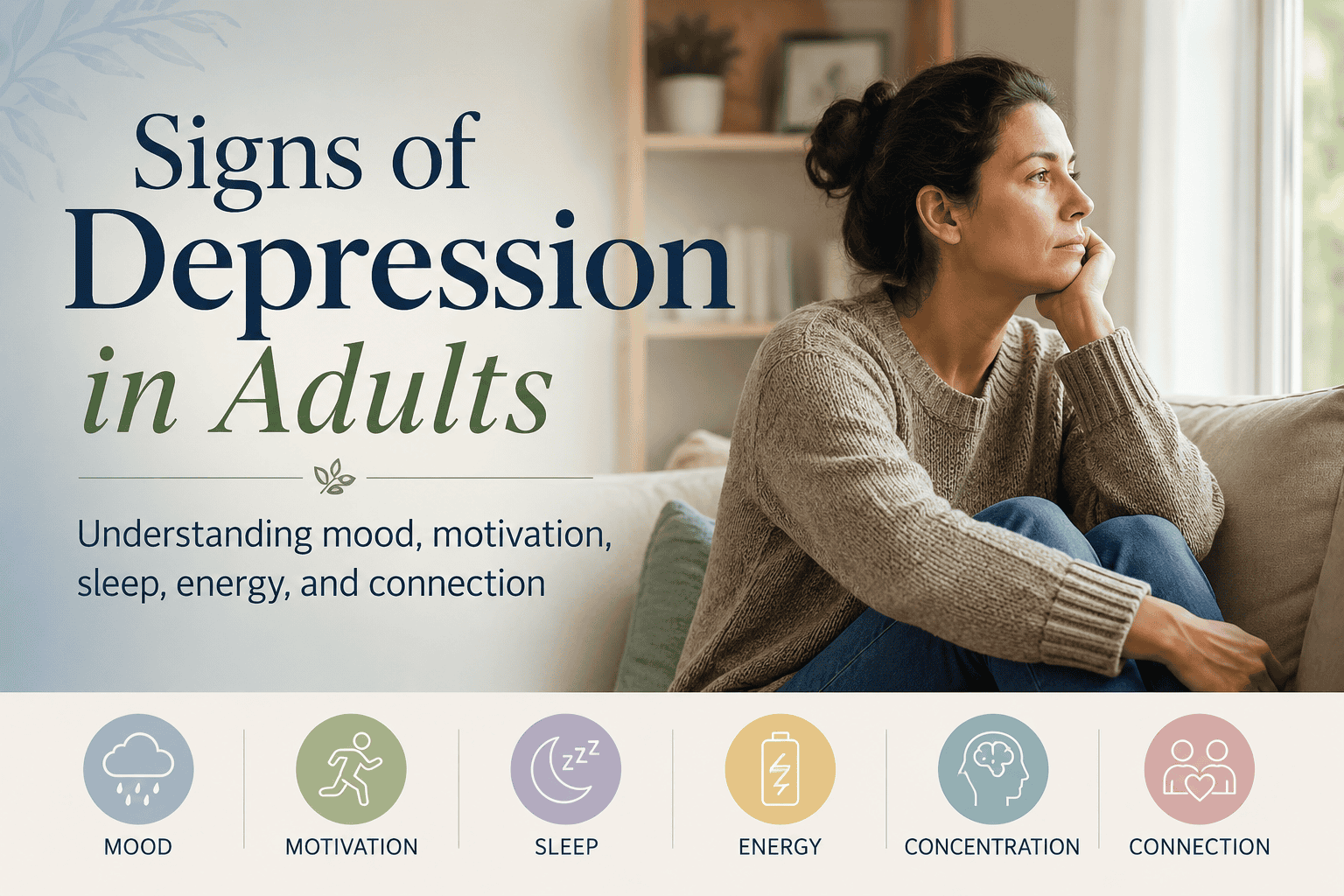
Signs of Depression in Adults
Depression & Mental Health Resources
Signs of Depression in Adults
Depression can affect more than mood. It may show up through changes in motivation, sleep, energy, appetite, concentration, self-worth, relationships, and daily functioning. This guide explains common signs of depression in adults and when it may be time to reach out for support.
Start Here
Depression Is More Than Feeling Sad
Everyone has difficult days, periods of stress, or times when they feel discouraged. Depression is different because symptoms may last longer, feel harder to move through, and begin interfering with work, school, relationships, parenting, health, or everyday responsibilities.
Some adults recognize depression as sadness or hopelessness. Others notice that they feel numb, disconnected, exhausted, irritable, unmotivated, or unable to enjoy things that used to matter. Depression can also show up physically through changes in sleep, appetite, energy, pain, or body tension.
Common Signs
Adult Depression Symptoms: What to Look For
Depression does not look exactly the same for every person. These are common areas where adults may begin to notice changes.
Persistent Low Mood
Feeling sad, empty, tearful, hopeless, emotionally heavy, or unable to feel joy for much of the day.
Loss of Energy
Feeling exhausted even after rest, having trouble starting tasks, or feeling like ordinary responsibilities take too much effort.
Loss of Interest
Pulling away from hobbies, relationships, activities, intimacy, or parts of life that previously felt meaningful.
Sleep Changes
Sleeping too much, waking during the night, waking too early, struggling to fall asleep, or feeling unrested.
Appetite Changes
Eating much more or much less than usual, losing interest in food, or noticing weight changes connected to mood.
Concentration Problems
Difficulty focusing, remembering details, making decisions, following through, or staying mentally present.
Symptoms of Depression in Adults Can Vary
Symptoms of depression in adults do not always appear the same. Some people experience sadness and hopelessness, while others notice irritability, fatigue, emotional numbness, sleep problems, difficulty concentrating, or withdrawal from relationships.
Mood and Emotional Signs
Signs of Clinical Depression in Adults
Many adults expect depression to feel like crying or sadness. That can happen, but depression may also feel like emotional numbness, irritability, discouragement, guilt, shame, or a sense that nothing will improve.
Some people become quieter and more withdrawn. Others become more easily frustrated, impatient, or reactive. For some adults, depression feels less like sadness and more like being disconnected from themselves, their relationships, or their usual sense of purpose.
Emotional signs may include:
- Feeling sad, empty, hopeless, or emotionally flat
- Feeling unusually irritable, angry, or easily overwhelmed
- Feeling guilty, worthless, ashamed, or like a burden
- Feeling disconnected from people who matter
- Feeling unable to enjoy things that used to feel good
- Feeling like life is harder than it should be
Depression is not a character flaw or a lack of willpower. It is a real mental health condition that can affect emotions, thoughts, the body, relationships, and daily functioning.
Motivation and Functioning
Depression Can Make Ordinary Tasks Feel Overwhelming
One of the most common signs of depression in adults is a noticeable drop in motivation. Tasks that once felt normal may begin to feel heavy, confusing, or impossible to start.
This can affect work, parenting, school, chores, bills, hygiene, communication, and decision-making. The person may care deeply, but still feel stuck or unable to follow through.
Often Misunderstood
Depression Can Look Like Laziness From the Outside
Adults with depression are sometimes misunderstood as lazy, careless, negative, or unmotivated. In reality, depression can interfere with energy, concentration, hope, self-confidence, and the ability to begin or complete tasks.
- Unopened mail may pile up.
- Texts and calls may go unanswered.
- Basic routines may feel harder to maintain.
- Work performance may decline.
- Important decisions may feel paralyzing.
Sleep, Energy, Appetite, and the Body
Depression Often Shows Up Physically
Depression can affect the body as much as the mind. Some adults first notice that they are sleeping differently, feeling exhausted, eating differently, moving slower, or experiencing more physical discomfort.
Physical changes are sometimes easier to notice than emotional changes. A person may not say, “I am depressed,” but may say, “I am tired all the time,” “I cannot get out of bed,” “I do not feel hungry,” or “My body feels heavy.”
Physical signs may include:
- Sleeping much more or much less than usual
- Waking up tired even after a full night of sleep
- Feeling physically slowed down or restless
- Low energy, fatigue, or heaviness in the body
- Changes in appetite or weight
- Headaches, stomach problems, body aches, or tension that worsen with stress
Thinking and Concentration
Depression Can Affect Focus, Memory, and Decision-Making
Depression can make thinking feel slower or heavier. Adults may have difficulty concentrating at work, remembering appointments, reading, following conversations, finishing tasks, or making even small decisions.
This can create a painful cycle. The more someone falls behind, the more guilt or shame they may feel. That guilt can increase avoidance, which makes depression feel even more overwhelming.
Cognitive signs may include:
- Trouble focusing or staying mentally present
- Difficulty making decisions
- Forgetfulness or mental fog
- Negative self-talk or harsh self-criticism
- Feeling hopeless about the future
- Difficulty imagining that things can improve
If depression includes thoughts of death, self-harm, or suicide, seek immediate support. In the United States, call or text 988 for the Suicide & Crisis Lifeline, call 911, or go to the nearest emergency room.
Relationships and Connection
Depression Can Lead to Withdrawal
Adults with depression may stop answering messages, cancel plans, avoid family, lose interest in intimacy, or feel emotionally far away even when they are physically present.
Withdrawal is often not about not caring. It may be a sign that the person feels depleted, ashamed, overwhelmed, or unsure how to explain what is happening.
What Loved Ones May Notice
Depression May Be Visible to Others First
Family members, partners, friends, or coworkers may notice changes before the person identifies them as depression.
- Less communication or emotional availability
- More irritability or conflict
- Less interest in activities or connection
- More time alone or in bed
- Difficulty keeping up with responsibilities
When to Seek Help
When to Seek Therapy for Depression
It may be time to seek professional support when symptoms last for more than a couple of weeks, keep returning, or begin interfering with your ability to function, connect, work, parent, sleep, care for yourself, or feel like yourself.
Therapy can help you understand what is happening, reduce shame, identify patterns, build coping strategies, and begin taking manageable steps toward feeling more stable and connected.
Consider reaching out if you notice:
- Depressed mood, numbness, or hopelessness that does not lift
- Loss of interest in relationships, activities, or responsibilities
- Sleep, appetite, or energy changes that affect daily life
- Difficulty concentrating, making decisions, or completing tasks
- Increased irritability, isolation, or emotional shutdown
- Thoughts of death, self-harm, or not wanting to be here
Depression Counseling at Motivations Counseling
Therapy Can Help You Understand Depression and Take the Next Step
Motivations Counseling provides therapy for adults experiencing depression, anxiety, stress, trauma-related symptoms, relationship distress, emotional exhaustion, and life transitions. Counseling may focus on understanding symptoms, improving coping skills, identifying stuck patterns, rebuilding connection, and taking realistic steps toward daily functioning.
Our counseling team serves clients in Sugar Land, Katy, Richmond, Fort Bend County, West Houston, and through telehealth across Texas when clinically appropriate.
Counseling Support
Depression Counseling in Sugar Land, Katy, and Online Across Texas
If you are noticing signs of depression, you do not have to wait until everything feels unmanageable before reaching out.
- Individual counseling for adults
- Support for depression, anxiety, trauma, stress, and relationship strain
- In-person options in Sugar Land and Katy when available
- Telehealth counseling across Texas when clinically appropriate
- Trauma-informed and relationship-informed care
For a closer look at what counseling may involve, read How Therapy Helps Depression.
Therapy Learning Center
Continue Learning About Depression, Anxiety, Trauma, and Relationships
These related resources can help adults better understand symptoms, emotional patterns, nervous system stress, and when counseling may help.
Depression Counseling
Learn how therapy can support adults experiencing depression, emotional exhaustion, low motivation, and loss of interest.
View service →High-Functioning Anxiety
Understand how anxiety can hide behind productivity, overthinking, perfectionism, and emotional fatigue.
Read article →Survival Mode and Chronic Stress
Learn how long-term stress can affect emotions, sleep, focus, relationships, and the nervous system.
Read article →Signs of Chronic Hypervigilance
Explore how trauma and chronic stress can keep the nervous system on alert even when life appears calm.
Read article →Emotional Safety in Relationships
Learn why emotional safety matters for connection, communication, repair, and trust.
Read article →Trauma & Mental Health Resource Center
Explore resources on depression, anxiety, trauma, EMDR, relationships, teen counseling, and emotional health.
Explore Resource Center →Frequently Asked Questions
Common Questions About Signs of Depression in Adults
What are common signs of depression in adults?
Common signs include persistent sadness, numbness, irritability, loss of interest, low motivation, sleep changes, appetite changes, fatigue, concentration problems, guilt, hopelessness, and withdrawal from relationships or responsibilities.
Can depression show up as irritability instead of sadness?
Yes. Some adults experience depression as irritability, anger, impatience, emotional shutdown, or feeling easily overwhelmed rather than obvious sadness.
Can depression affect sleep and energy?
Yes. Depression may cause insomnia, early-morning waking, sleeping too much, low energy, fatigue, or feeling physically slowed down.
Can depression affect concentration?
Yes. Adults with depression may have difficulty focusing, remembering details, making decisions, completing tasks, or staying mentally present.
When should someone seek therapy for depression?
Consider therapy when symptoms last more than a couple of weeks, interfere with daily life, affect relationships or work, or include hopelessness, withdrawal, or thoughts of self-harm.
Is depression treatable?
Yes. Many people improve with appropriate support, which may include therapy, lifestyle changes, support systems, medical evaluation, medication when appropriate, or a combination of care.
What should I do if I am having thoughts of suicide?
If you are in immediate danger or may hurt yourself, call 911 or go to the nearest emergency room. In the United States, you can call or text 988 for the Suicide & Crisis Lifeline.

Take the Next Step
Depression Counseling in Sugar Land, Katy, and Online Across Texas
If depression is affecting your mood, motivation, sleep, energy, concentration, or relationships, counseling can help you understand what is happening and begin taking manageable steps toward support.

