
Articles

A woman stands on a dimly lit, crowded subway platform, looking over her shoulder with an expression of intense alertness and anxiety as a train approaches. The image captures the essence of hypervigilance and a heightened stress response in a public environment.

Hypervigilance & Chronic Fear

Trauma & PTSD

Hypervigilance & Chronic Fear

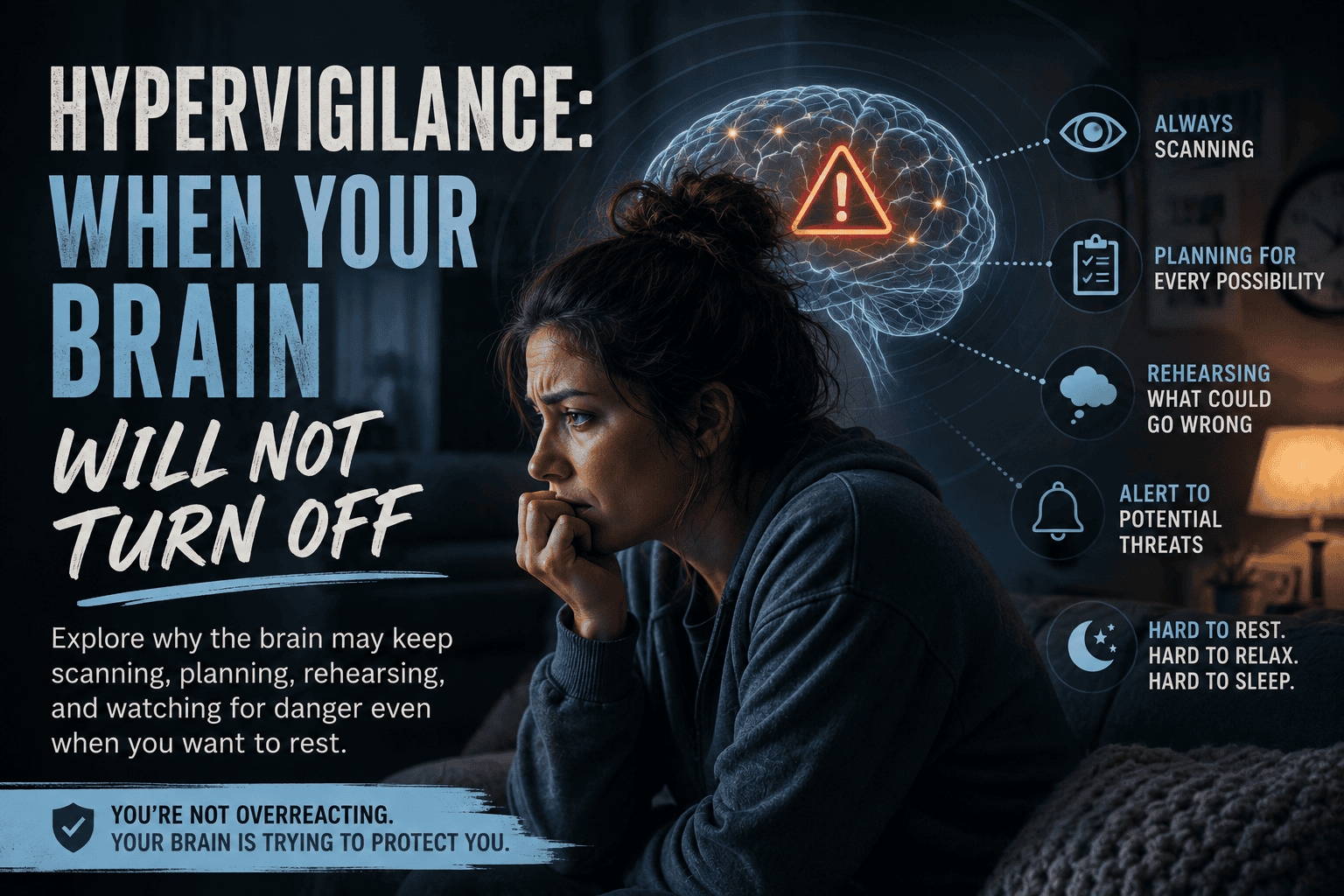
Hypervigilance is a trauma-related stress response where the mind and body remain on alert for possible danger. It can affect sleep, concentration, relationships, emotional regulation, and daily functioning.

What Is Hypervigilance?

Hypervigilance means being persistently alert, watchful, or on guard for possible threats. It is often connected to trauma, chronic stress, anxiety, PTSD, abuse, violence, persecution, crime victimization, unsafe environments, or prolonged uncertainty.

For many trauma survivors, hypervigilance is not a choice. It is the nervous system’s attempt to stay prepared after experiencing danger or repeated fear. Even when the person is no longer in immediate danger, the body may continue responding as if safety is uncertain.

Common Signs of Hypervigilance

  • Feeling constantly on edge or unable to relax
  • Scanning the environment for danger
  • Sitting near exits or avoiding crowded places
  • Being easily startled by sounds, movement, or unexpected touch
  • Difficulty sleeping or staying asleep
  • Feeling tense, restless, irritable, or emotionally reactive
  • Difficulty concentrating because the mind is monitoring for threats
  • Feeling unsafe even in familiar places

Why Chronic Fear Affects the Nervous System

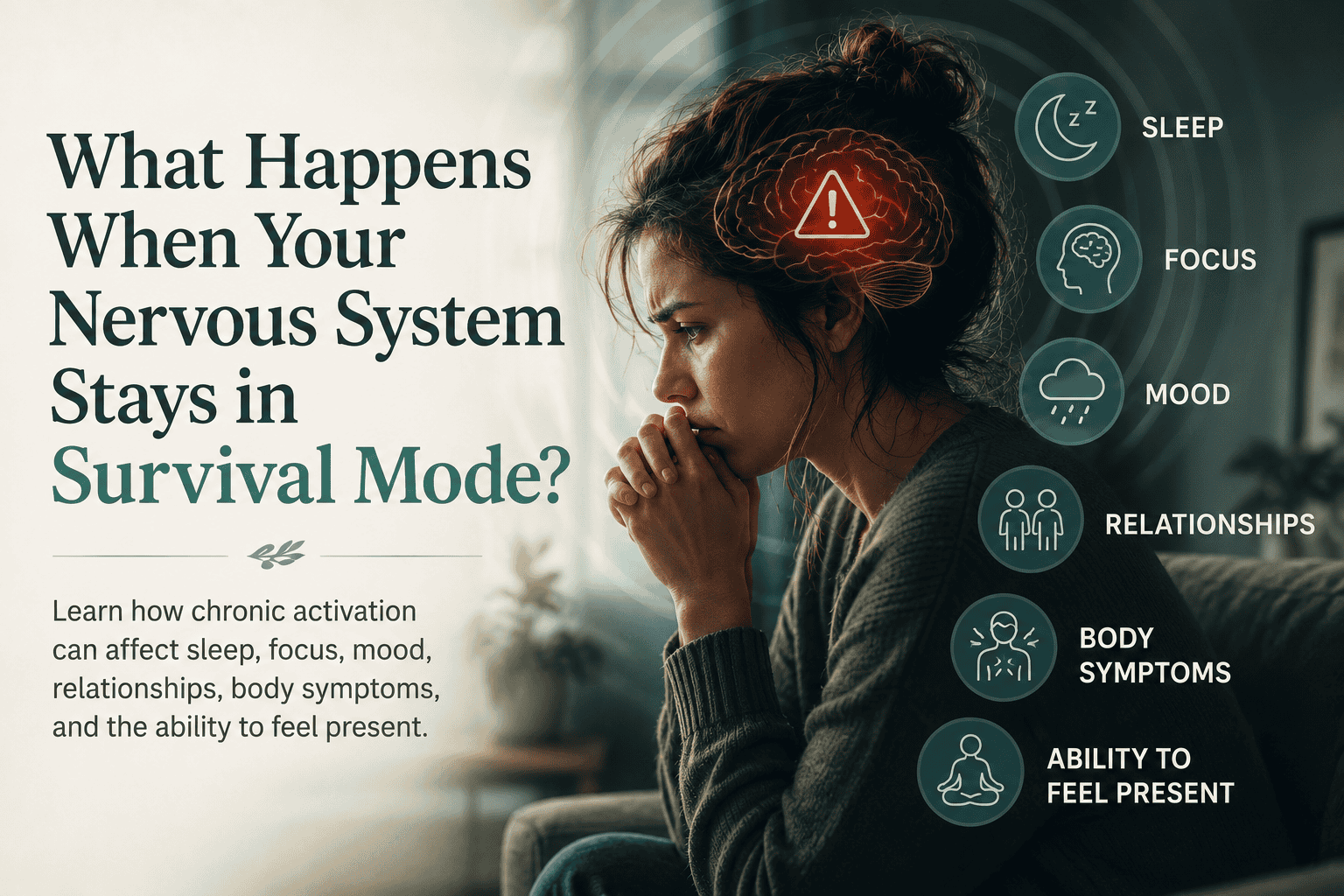
When a person experiences trauma or prolonged fear, the nervous system may become conditioned to expect danger. The brain and body may remain in a heightened state of readiness, sometimes described as fight, flight, freeze, or fawn responses.

This can lead to physical symptoms such as muscle tension, headaches, stomach discomfort, rapid heartbeat, shallow breathing, fatigue, sleep disruption, and a sense of internal restlessness.

Hypervigilance After Trauma

Hypervigilance is common after experiences involving threat, control, abuse, violence, or instability. A person who has learned that danger can happen suddenly may begin watching closely for warning signs, changes in tone, facial expressions, body language, exits, unfamiliar people, or possible conflict.

In some cases, this response helped the person survive. Over time, however, remaining constantly alert can become exhausting and may interfere with emotional health, relationships, parenting, work, and sleep.

How Hypervigilance Can Affect Daily Life

Hypervigilance may appear in subtle ways. A person may avoid social events, feel anxious while driving, struggle in public places, become overwhelmed by noise, or have difficulty trusting others. They may also feel responsible for monitoring everyone’s mood or preventing conflict.

This can create emotional fatigue. The person may seem controlling, distant, irritable, or guarded, when internally they may be trying to feel safe.

Hypervigilance and Immigration-Related Stress

Hypervigilance may be especially relevant in immigration-related psychological evaluations when a person has experienced trauma, family separation, domestic violence, crime victimization, persecution, threats, unsafe conditions, or chronic fear about removal or legal uncertainty.

Immigration stress can keep the nervous system activated for long periods of time. Legal deadlines, court hearings, immigration notices, fear of separation, financial pressure, and uncertainty about the future may intensify symptoms.

A trauma-informed evaluation may explore how chronic fear and hypervigilance affect sleep, relationships, concentration, parenting, employment, daily routines, and emotional functioning.

Hypervigilance Is Often Misunderstood

People experiencing hypervigilance may be told they are “overreacting,” “too sensitive,” “paranoid,” or “unable to let things go.” These labels can be harmful and inaccurate.

Hypervigilance is often the nervous system trying to prevent future harm. Understanding this response through a trauma-informed lens can reduce shame and help identify appropriate support.

What Can Help?

Support for hypervigilance often focuses on helping the nervous system recognize safety, reduce activation, and increase emotional regulation. This may include trauma-informed counseling, grounding skills, breathing strategies, EMDR therapy, body-based regulation tools, improved sleep routines, and safe relational support.

Healing does not mean ignoring real concerns. It means helping the mind and body distinguish between present danger and trauma reminders, so the person can respond with more flexibility and less constant fear.

Key Takeaways

  • Hypervigilance is a trauma-related response involving persistent alertness and difficulty feeling safe.
  • Chronic fear can affect the nervous system, sleep, concentration, relationships, and daily functioning.
  • Hypervigilance may be relevant in immigration evaluations when trauma, abuse, victimization, persecution, or legal uncertainty are part of the person’s experience.
  • Trauma-informed support can help reduce nervous system activation and improve emotional regulation.

Questions About Immigration Psychological Evaluations?

Motivations Counseling provides trauma-informed immigration psychological evaluations for clients located in Texas, with attorney coordination available when authorized.

Schedule Consultation

Call today to schedule an immigration psychological evaluation or to get answers to your questions about our services.

How to reach us...

   (281) 858-3001
     admin@motivationscounseling.com
     Contact Us

Trauma & PTSD

Trauma & PTSD

Understanding PTSD Symptoms

PTSD symptoms can affect the mind, body, emotions, relationships, sleep, concentration, and daily functioning. Understanding common trauma responses can help individuals, families, attorneys, and support systems recognize when trauma may be affecting emotional health.

What Is PTSD?

Post-traumatic stress disorder, often called PTSD, is a mental health condition that can develop after a person experiences, witnesses, or is exposed to a traumatic event. Trauma may involve actual or threatened death, serious injury, sexual violence, abuse, persecution, domestic violence, crime victimization, sudden loss, or other frightening and overwhelming experiences.

PTSD does not look the same for everyone. Some people experience vivid memories and nightmares, while others feel emotionally numb, detached, anxious, irritable, or constantly on guard. Symptoms may begin soon after the event, or they may become more noticeable later when the person is under stress or reminded of what happened.

Clinically, PTSD symptoms are commonly understood in several broad areas: intrusive symptoms, avoidance, negative changes in mood and thinking, and changes in arousal or reactivity. These categories are reflected in major clinical descriptions of PTSD, including resources from the National Institute of Mental Health and the National Center for PTSD.

Intrusive Memories and Re-Experiencing Symptoms

Intrusive symptoms occur when the traumatic experience continues to interrupt the person’s present life. These symptoms can feel involuntary, unwanted, and difficult to control.

  • Unwanted memories of the traumatic experience
  • Nightmares or distressing dreams
  • Flashbacks or moments of feeling as if the trauma is happening again
  • Strong emotional distress when reminded of the event
  • Physical reactions to reminders, such as racing heart, nausea, sweating, shaking, or shortness of breath

Intrusive memories are not simply “thinking about the past.” For many trauma survivors, reminders can activate the nervous system as if danger is present again. This may happen when seeing a certain location, hearing a voice, smelling something familiar, receiving legal paperwork, discussing the event, or encountering a person or situation connected to the trauma.

Avoidance Symptoms

Avoidance is one of the most common trauma responses. A person may avoid talking about what happened, thinking about it, going near certain places, interacting with certain people, or engaging in activities that bring up reminders.

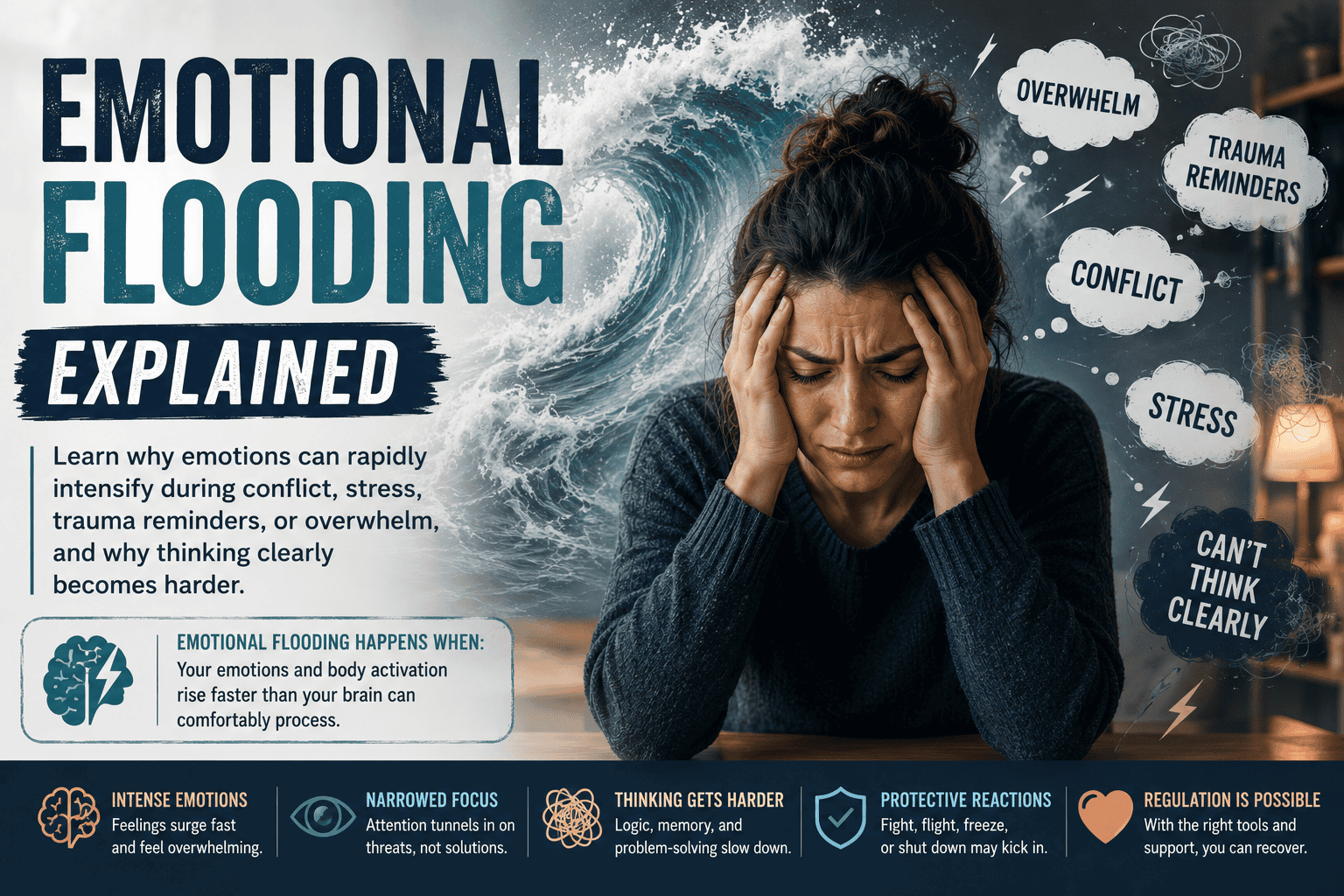
Avoidance can be misunderstood by others. Family members may think the person “does not care,” “does not want help,” or “should be over it.” In reality, avoidance is often the nervous system’s attempt to prevent emotional flooding.

  • Avoiding conversations about the trauma
  • Avoiding people, places, or situations connected to the event
  • Keeping busy to avoid painful memories
  • Minimizing what happened
  • Difficulty completing paperwork or legal declarations because the details feel overwhelming

Emotional Numbing and Changes in Mood

PTSD can also affect the way a person feels, connects, and experiences emotions. Some trauma survivors do not feel constantly upset; instead, they feel emotionally shut down.

Emotional numbing may include difficulty feeling joy, love, safety, closeness, or hope. A person may withdraw from relationships, feel disconnected from family, or describe feeling like they are “just surviving” rather than fully living.

  • Feeling emotionally detached from others
  • Loss of interest in activities once enjoyed
  • Persistent guilt, shame, fear, anger, or sadness
  • Negative beliefs about oneself, others, or the world
  • Difficulty trusting others
  • Feeling unable to experience positive emotions

In immigration-related matters, emotional numbing may be especially important to understand because a person may underreport symptoms. They may appear calm while describing painful experiences, not because the events were insignificant, but because emotional shutdown has become a coping mechanism.

Hypervigilance and Feeling Constantly on Guard

Hypervigilance means the body and mind remain alert for possible danger, even when the person is no longer in the original traumatic situation. This can create a constant sense of tension, scanning, suspicion, or readiness to react.

  • Feeling tense, alert, or on edge
  • Being easily startled
  • Checking surroundings frequently
  • Difficulty relaxing or sleeping
  • Irritability or anger outbursts
  • Difficulty concentrating
  • Feeling unsafe even in familiar environments

Hypervigilance can affect relationships, parenting, work, driving, sleep, and daily decision-making. A trauma survivor may sit near exits, avoid crowds, become distressed by loud noises, or feel uncomfortable when someone stands too close.

Physical Symptoms of PTSD

PTSD is not only emotional. Trauma can also affect the body. When the nervous system remains activated, a person may experience physical symptoms that feel confusing or frightening.

  • Chest tightness or racing heart
  • Muscle tension
  • Headaches
  • Stomach discomfort
  • Fatigue
  • Sleep problems
  • Shaking, sweating, or shortness of breath
  • Feeling disconnected from the body or surroundings

Physical symptoms should always be taken seriously. Medical evaluation may be appropriate when symptoms are new, severe, one-sided, sudden, or concerning. At the same time, many trauma survivors experience body-based stress responses that are connected to anxiety, panic, or trauma reminders.

PTSD Symptoms May Fluctuate

PTSD symptoms are not always constant. A person may function well on some days and struggle significantly on others. Symptoms may increase around court dates, immigration deadlines, family separation, anniversaries of traumatic events, conflict, financial stress, or reminders of past harm.

This fluctuation does not mean the symptoms are exaggerated or inconsistent. Trauma symptoms often vary depending on stress level, perceived safety, sleep, social support, and exposure to reminders.

Why Some Trauma Survivors Minimize Symptoms

Many trauma survivors minimize what they have experienced. This may happen because of shame, fear, cultural expectations, distrust, emotional numbing, or a long history of needing to stay strong for survival.

Some individuals may say, “I am fine,” even while experiencing nightmares, panic, sleep disruption, intrusive thoughts, and emotional distress. Others may not recognize their symptoms as trauma-related because they have lived with them for so long.

This is one reason trauma-informed assessment is important. A careful evaluation does not rely only on whether a person uses clinical words like “PTSD.” Instead, the evaluator explores symptoms, history, functioning, coping patterns, and the emotional meaning of the person’s experiences.

PTSD and Immigration Psychological Evaluations

PTSD symptoms may be relevant in immigration psychological evaluations when trauma, hardship, fear, family separation, abuse, victimization, persecution, or chronic stress are part of the person’s immigration-related history.

A trauma-informed immigration evaluation may explore how symptoms affect daily functioning, relationships, parenting, work, school, sleep, emotional regulation, decision-making, and the person’s ability to feel safe. The purpose is not to exaggerate symptoms or reach legal conclusions, but to provide clinically grounded documentation of emotional and psychological impact.

PTSD symptoms may be discussed in evaluations involving VAWA, U-Visa, T-Visa, asylum, hardship waivers, cancellation of removal, and other immigration-related matters when clinically relevant.

When to Seek Support

A person may benefit from professional support when trauma symptoms interfere with sleep, relationships, work, parenting, concentration, emotional stability, or daily life. Trauma-focused counseling, EMDR therapy, cognitive behavioral approaches, grounding skills, and other evidence-based treatments may help reduce symptoms and improve functioning.

If someone is experiencing thoughts of self-harm, feeling unable to stay safe, or is in immediate danger, emergency support should be contacted right away.

Key Takeaways

  • PTSD symptoms can include intrusive memories, avoidance, emotional numbing, hypervigilance, and physical stress responses.
  • Trauma symptoms may fluctuate and may become stronger around reminders, legal stress, or family separation.
  • Some trauma survivors minimize symptoms or appear emotionally calm because numbing and avoidance can be part of PTSD.
  • Trauma-informed immigration evaluations focus on clinical accuracy, emotional impact, and functional impairment without making legal conclusions.

Questions About Immigration Psychological Evaluations?

Motivations Counseling provides trauma-informed immigration psychological evaluations for clients located in Texas, with attorney coordination available when authorized.

Schedule Consultation
Call today to schedule an immigration psychological evaluation or to get answers to your questions about our services.

How to reach us...

   (281) 858-3001
     admin@motivationscounseling.com
     Contact Us

Emotional Support Animals: Benefits, Qualifications, and the Importance of a Legitimate Evaluation

Emotional Support Animals (ESAs) can play a meaningful role in the lives of individuals living with psychological or emotional disabilities. When appropriately recommended by a qualified mental health professional, an ESA may help reduce symptoms, improve daily functioning, and provide a consistent source of comfort and stability.

However, as awareness of ESAs has grown, so has confusion—and unfortunately, misuse. Understanding what an ESA is, who qualifies, and why a legitimate clinical evaluation matters is essential for both individuals seeking support and professionals working in this space.

What Is an Emotional Support Animal?

An Emotional Support Animal is a companion animal that provides therapeutic benefit to an individual with a diagnosed mental or emotional condition. Unlike service animals, ESAs are not required to be trained to perform specific tasks. Instead, their presence alone can help alleviate symptoms associated with certain conditions.

Common conditions that may support the need for an ESA include:

  • Anxiety disorders
  • Depression
  • Post-traumatic stress disorder (PTSD)
  • Panic disorders
  • Certain adjustment disorders

It is important to note that simply wanting the companionship of a pet does not qualify someone for an ESA. The need must be directly connected to a recognized psychological condition that substantially impacts daily functioning.

How Emotional Support Animals Can Help

For individuals with qualifying conditions, ESAs can provide several meaningful benefits:

1. Emotional Regulation

Animals can help reduce feelings of anxiety, panic, or emotional overwhelm by providing a calming and grounding presence.

2. Reduction in Isolation

Individuals experiencing depression or trauma-related conditions often withdraw socially. An ESA can provide companionship and reduce feelings of loneliness.

3. Routine and Structure

Caring for an animal introduces daily routines, which can be especially beneficial for individuals struggling with motivation, depression, or disorganization.

4. Increased Sense of Safety

For some individuals, particularly those with trauma histories, the presence of an animal can create a sense of security in their environment.

5. Improved Overall Functioning

When symptoms are reduced, individuals may find it easier to engage in work, relationships, and daily responsibilities.

Who Qualifies for an ESA?

Qualification for an ESA is not based on preference—it is based on clinical necessity.

A licensed mental health professional must determine that:

  • The individual has a diagnosable mental or emotional condition, and
  • The presence of an emotional support animal alleviates one or more symptoms of that condition.

This determination requires a thoughtful, individualized clinical assessment. There is no legitimate “one-size-fits-all” approval.

Why a Legitimate Evaluation Matters

With the rise of online “instant ESA letters,” many individuals are misled into believing that a short questionnaire or quick payment is sufficient. These services often fail to meet clinical and legal standards.

A legitimate ESA evaluation should include:

A Comprehensive Clinical Assessment

A qualified therapist will review mental health history, current symptoms, functional impairment, and the role an ESA would play in treatment.

Diagnostic Clarity

The clinician must be able to support the presence of a diagnosable condition using appropriate clinical criteria.

Clinical Justification

The recommendation for an ESA should clearly connect the individual’s symptoms to the therapeutic benefit provided by the animal.

Ethical Responsibility

A reputable provider will not approve every request. In some cases, they may determine that an ESA is not clinically appropriate and instead recommend alternative supports or treatment.

The Risks of Unverified ESA Letters

Obtaining an ESA letter from an unqualified or unethical source can lead to:

  • Rejection by housing providers or institutions
  • Legal complications
  • Lack of proper clinical support
  • Missed opportunities for appropriate treatment

Most importantly, it undermines the integrity of legitimate ESA recommendations and can create barriers for individuals who truly need them.

Working With a Qualified Professional

When seeking an ESA evaluation, it is important to work with a licensed mental health professional who:

  • Conducts a thorough and individualized assessment
  • Provides honest, unbiased clinical opinions
  • Is available to answer questions or provide documentation if needed
  • Prioritizes your overall mental health—not just the outcome of the evaluation

A thoughtful evaluation process not only ensures compliance with applicable guidelines but also supports better long-term outcomes for the individual.

A Balanced and Ethical Approach

Emotional Support Animals can be incredibly helpful when clinically appropriate. At the same time, they are not the right solution for everyone

An ethical approach means:

  • Recommending ESAs only when clinically justified
  • Ensuring individuals receive appropriate care and guidance
  • Maintaining the credibility of ESA designations

Final Thoughts

For individuals living with emotional or psychological challenges, the right support can make a significant difference. In some cases, an Emotional Support Animal may be part of that support system.

The key is ensuring that the process is grounded in sound clinical judgment, ethical practice, and a genuine focus on the individual’s well-being.

If you are considering an ESA, seeking a qualified professional for a comprehensive evaluation is the most important first step.

Call today to schedule an ESA evaluation or to get answers to your questions about our services.

How to reach us...

   (281) 858-3001
     admin@motivationscounseling.com
     Contact Us

Finding the Right Therapist in Sugar Land, TX: A Practical Guide

Looking for a therapist can feel overwhelming, especially when you are already dealing with stress, anxiety, relationship problems, grief, parenting challenges, or burnout. Many people in Sugar Land begin the search knowing they need support, but are unsure how to choose a therapist who is actually a good fit.

The truth is that finding the right therapist is not just about choosing the closest office or the first name that appears online. It is about finding a licensed professional who understands your concerns, communicates well, and offers an approach that feels comfortable and appropriate for your needs.

This guide explains what to look for when choosing a therapist in Sugar Land, TX, what questions to ask, and how to make a confident decision for yourself, your child, or your family.

Why the Right Therapist Fit Matters

Therapy is personal. Even a highly qualified therapist may not be the right fit for every person. The best therapeutic relationship is one in which you feel respected, understood, and safe enough to be honest. That connection often matters just as much as the specific techniques a therapist uses.

When the fit is good, people are usually more comfortable opening up, more likely to stay consistent with sessions, and more likely to make meaningful progress over time. When the fit is poor, therapy may feel frustrating, impersonal, or unhelpful even if the therapist is skilled.

Start With the Problem You Want Help With

Before choosing a therapist, it helps to get clear on what is bringing you in. You do not need a perfect explanation, but it is useful to know the main issues you want help addressing.

You may be looking for support with:

  • Anxiety, panic, or constant overthinking
  • Depression, low motivation, or emotional exhaustion
  • Marriage or relationship problems
  • Teen or child behavioral concerns
  • Family conflict
  • Trauma or difficult past experiences
  • Stress related to work, caregiving, or life transitions
  • Grief and loss
  • Anger, irritability, or emotional regulation problems

Some therapists work broadly with everyday stress, while others focus more heavily on trauma, couples counseling, children, teens, or specific mental health conditions. Knowing your starting point makes it easier to narrow the search.

Look for the Right Type of Experience

Not all therapists do the same kind of work. A therapist may be excellent with adults experiencing anxiety but not specialize in play therapy for children or marriage counseling for couples. It is reasonable to look for someone whose experience matches your needs.

As you review therapists in Sugar Land, pay attention to whether they mention experience in the areas most relevant to you. This might include

  • Individual counseling for anxiety or depression
  • Marriage counseling or couples therapy
  • Child counseling or teen therapy
  • Family therapy
  • Trauma-informed therapy
  • Support for parenting or co-parenting challenges
  • Faith-sensitive counseling, if that matters to you

You do not need to find someone who lists every issue you have ever experienced. You do want someone who seems familiar with the central problem you are seeking help for now.

Make Sure the Therapist Is Properly Licensed

When searching for a therapist in Texas, make sure the provider is properly licensed or working under appropriate supervision if they are an associate. Common mental health licenses may include LPC, LMFT, LCSW, psychologist, or psychiatrist, depending on the type of service being offered

Licensure matters because it indicates the professional has met state requirements for education, training, and ethical practice. It is also reasonable to look for a practice that clearly explains who you will be seeing and what credentials they hold.

Read Beyond the Buzzwords

Many therapy websites use similar phrases such as “safe space,” “compassionate care,” or “client-centered approach.” Those qualities are important, but they do not tell you much by themselves. Try to read for specifics.

A more helpful therapist profile usually gives you a sense of:

  • Who they work with
  • What concerns they treat most often
  • What therapy with them is actually like
  • Whether they are more direct, supportive, structured, or insight-oriented
  • Whether they provide practical tools in addition to emotional support

If everything sounds vague, polished, or interchangeable, it may be harder to know whether that therapist is truly the right match.

Consider Personality and Communication Style

Some people want a therapist who is warm and gently supportive. Others prefer someone more direct, structured, and practical. Neither style is inherently better. What matters is which style helps you feel comfortable and understood.

As you review a therapist’s website or speak with the office, ask yourself:

  • Does this therapist sound approachable?
  • Do I feel like they understand the kinds of concerns I have?
  • Would I feel comfortable talking honestly with this person?
  • Do I want someone more nurturing, more challenging, or a balance of both?

Good therapy requires honesty, and honesty is easier when the therapist’s style fits your personality.

Think About Practical Fit Too

A therapist can be clinically excellent and still be a poor practical fit. Sometimes therapy stops not because it is unhelpful, but because the scheduling, cost, location, or format does not work well for real life.

When comparing therapists in Sugar Land, consider:

  • Office location and drive time
  • Availability after work or school
  • Whether virtual therapy is offered
  • Session fees and insurance or private-pay structure
  • Cancellation policies
  • How easy it is to schedule and communicate with the office

Consistency matters in therapy, so practical barriers are worth taking seriously from the beginning.

Questions to Ask Before Booking

You do not need to interview a therapist aggressively, but asking a few thoughtful questions can help you make a better choice. Consider asking

  • Do you have experience helping people with this type of concern?
  • What is your general approach to therapy?
  • Do you work with children, teens, adults, couples, or families?
  • What can I expect in the first session?
  • How often do clients typically come in at the beginning?
  • Do you offer in-person counseling in Sugar Land, virtual sessions, or both?
  • What are your fees and policies?

You are not looking for perfect answers. You are looking for clarity, professionalism, and a sense that the therapist or office understands what you are asking.

What to Expect in the First Session

The first therapy session is usually more focused on understanding your concerns than solving everything immediately. A therapist will often ask about what brought you in, how long the problem has been going on, what stressors are affecting you, what you have tried so far, and what you hope will improve.

This session is also your chance to evaluate the fit. Notice whether you feel heard, whether the therapist seems thoughtful and organized, and whether their responses feel grounded rather than generic.

You do not have to decide after five minutes whether this is the perfect therapist for life. But after the first one or two sessions, you should begin to get a sense of whether the relationship feels productive and comfortable.

Signs a Therapist May Be a Good Fit

  • You feel listened to rather than rushed
  • The therapist seems to understand your main concerns
  • You feel emotionally safe, even if the conversation is difficult
  • The therapist communicates clearly and professionally
  • Their approach feels relevant to your needs
  • You leave with a sense of direction or meaningful reflection

Signs You May Need a Different Therapist

  • You consistently feel misunderstood
  • The sessions feel too generic or disconnected from your goals
  • You do not feel comfortable being honest
  • The therapist seems unfamiliar with the kind of issue you need help with
  • Scheduling, communication, or professionalism are ongoing problems

Not every mismatch means someone is a bad therapist. Sometimes it simply means the fit is not right for you.

Therapy in Sugar Land, TX: In-Person and Online Options

Many people in Sugar Land prefer in-person counseling because they value face-to-face connection and a dedicated place away from daily distractions. Others prefer virtual therapy for convenience, easier scheduling, or reduced travel time. Both options can be effective depending on your needs and preferences.

If you are balancing work, parenting, commuting, or school schedules, it may help to choose a practice that offers flexible options so therapy remains realistic and sustainable.

Choosing a Therapist for a Child or Teen

If you are seeking counseling for a child or teenager, fit matters just as much, if not more. Children and teens often engage better when they feel comfortable with the therapist’s personality and style. Parents should also look for someone who communicates clearly about goals, progress, and what role the parent will play in the process.

It is worth asking whether the therapist has specific experience with your child’s age group and presenting concerns, whether that involves anxiety, school refusal, emotional regulation, family stress, behavioral problems, or social challenges.

Final Thoughts: Do Not Wait for a Crisis

Many people wait until things feel unbearable before reaching out for therapy. But counseling does not have to be a last resort. It can be a practical, proactive way to get support, gain clarity, and make life feel more manageable before problems grow more severe.

If you are searching for the right therapist in Sugar Land, TX, focus on finding someone with relevant experience, a style that feels comfortable, and a process that fits your real life. The goal is not to find a perfect therapist on paper. It is to find a therapist you can actually work with in a meaningful way.

Call today to schedule a counseling session or to get answers to your questions about our services.

How to reach us...

   (281) 858-3001
     admin@motivationscounseling.com
     Contact Us

What Makes a Strong Immigration Psychological Evaluation? A Clinical Guide for Attorneys and Applicants

Immigration Psychological Evaluations

What Makes a Strong Immigration Psychological Evaluation?

Immigration psychological evaluations can provide clinically grounded documentation of mental health symptoms, functional impairment, and the emotional impact of immigration-related stressors. A strong evaluation is structured, evidence-based, trauma-informed, and clearly written so that attorneys and adjudicators can understand the clinical findings without confusion or overstatement.

The Role of an Immigration Psychological Evaluation

An immigration psychological evaluation is a clinical assessment that documents psychological symptoms, diagnoses when appropriate, and the ways emotional symptoms affect daily functioning. The evaluation may also describe the anticipated emotional and practical consequences of immigration outcomes such as family separation, relocation, or prolonged legal uncertainty.

These evaluations are not approval letters and do not guarantee legal outcomes. Their purpose is to provide a clinically grounded picture of emotional functioning using professional standards, objective documentation, and trauma-informed assessment.

Who Conducts Immigration Psychological Evaluations?

Immigration psychological evaluations are typically conducted by licensed mental health professionals such as psychologists or licensed professional counselors with experience assessing trauma, anxiety, depression, PTSD symptoms, and stress-related conditions.

Strong evaluations commonly reflect:

  • Appropriate licensure in the state where services are provided
  • Training in evidence-based assessment and trauma-informed care
  • Experience with immigration-related clinical documentation
  • Clear professional boundaries between clinical opinions and legal conclusions
  • Structured and organized report writing

It is also helpful when the evaluator understands how to communicate findings in a format attorneys can use effectively, including concise summaries, organized sections, and plain-language descriptions of symptoms and functioning.

Core Components of a Strong Immigration Psychological Evaluation

1. Thorough Clinical Interview

A strong evaluation begins with a detailed clinical interview exploring presenting concerns, emotional symptoms, trauma exposure, mental health history, treatment history, medical background as relevant, and current stressors.

The goal is to understand what symptoms are present, how long they have occurred, and how they affect functioning across important areas of life.

2. Psychosocial and Family History

Immigration-related matters often involve complex family systems, caregiving responsibilities, trauma exposure, loss, instability, and chronic stress. A strong evaluation documents relevant background information while remaining clinically focused and avoiding unnecessary speculation.

3. Standardized Screening Measures

Many strong evaluations incorporate validated clinical screening tools when appropriate. These measures do not replace clinical judgment, but they can strengthen clarity and provide additional support for clinical impressions.

Screening tools may assess:

  • Depression symptoms
  • Anxiety symptoms
  • Post-traumatic stress symptoms
  • Functional impairment
  • Sleep disruption and stress-related reactions

4. Mental Status Examination

The mental status examination documents observable findings during the interview, including mood, affect, orientation, thought processes, cognition, insight, judgment, and behavioral presentation.

A strong mental status examination is concise, factual, and consistent with the symptoms described throughout the evaluation.

5. Diagnostic Impressions

When clinically appropriate, evaluations may include diagnostic impressions related to anxiety disorders, depressive disorders, trauma-related disorders, or other mental health conditions.

Strong evaluations avoid overstatement and connect diagnoses to documented symptoms and clinical reasoning.

6. Functional Impact

One of the most important components of an immigration psychological evaluation is documenting how symptoms affect daily life and functioning.

This may include effects on:

  • Work performance and stability
  • Parenting and caregiving responsibilities
  • Relationships and communication
  • Sleep, appetite, energy, and concentration
  • Self-care and medical adherence
  • Community support and social functioning

Strong evaluations connect symptoms to real-world functioning and explain why immigration-related stressors may be clinically significant.

7. Objective Clinical Summary

A strong evaluation concludes with a focused and objective clinical summary highlighting major symptoms, clinical impressions, and functional consequences using clear, understandable language.

How Evaluations Differ by Immigration Case Type

While the clinical foundation remains consistent, immigration psychological evaluations may focus on different emotional themes depending on the immigration matter.

I-601 / I-601A Hardship Waiver Evaluations

These evaluations often focus on the emotional and functional impact of potential family separation or relocation, including hardship-related stress, emotional destabilization, caregiving concerns, and mental health symptoms affecting qualifying relatives.

Cancellation of Removal Evaluations

These evaluations commonly address prolonged uncertainty, emotional hardship, family disruption, caregiving stress, and the psychological impact of separation.

I-246 Stay of Removal Evaluations

These evaluations frequently document acute stress responses, fear, sleep disruption, panic symptoms, and emotional destabilization associated with imminent removal concerns.

VAWA Psychological Evaluations

VAWA evaluations often include trauma-informed assessment of abuse-related stress, coercive control, trauma symptoms, emotional safety concerns, and long-term psychological impact.

U-Visa Psychological Evaluations

U-Visa evaluations commonly explore trauma symptoms following victimization, including hypervigilance, intrusive memories, emotional numbing, anxiety, avoidance, and changes in daily functioning.

T-Visa Psychological Evaluations

T-Visa evaluations often focus on complex trauma responses, chronic stress, fear, emotional dysregulation, and the effects of exploitation on safety, trust, and daily functioning.

I-130 Psychological Evaluations

These evaluations may address emotional hardship, family stability, separation-related stress, anxiety, depression, and the psychological impact of prolonged uncertainty.

Common Misconceptions About Immigration Evaluations

“A Psychological Evaluation Guarantees Approval”

No evaluation can guarantee a legal outcome. The role of the evaluation is to provide clinically grounded documentation of symptoms, functioning, emotional impact, and clinical impressions.

“An Immigration Evaluation Is Just a Therapy Letter”

Immigration evaluations are structured assessment services that differ from therapy documentation. They typically involve formal interviews, assessment components, clinical analysis, and organized report writing.

“The Evaluator Should Make Legal Conclusions”

Strong evaluations avoid legal conclusions. Instead, they provide clinical findings that attorneys may integrate into the broader legal strategy.

Ethical and Professional Standards

High-quality immigration psychological evaluations reflect ethical practice, professional boundaries, and trauma-informed interviewing principles.

  • Informed consent and explanation of the evaluation purpose
  • Objective and clinically independent reporting
  • Trauma-informed interviewing practices
  • Confidentiality and professional documentation standards
  • Accurate reporting based on clinical findings

Choosing an Immigration Evaluation Provider in Texas

When selecting an immigration evaluation provider, it may be helpful to consider:

  • Texas licensure and authorization to practice
  • Experience with the relevant immigration case type
  • Trauma-informed assessment experience
  • Structured evaluation and reporting process
  • Communication expectations and attorney coordination
  • Telehealth availability throughout Texas

A strong provider communicates clearly, maintains professional objectivity, and avoids unrealistic promises about legal outcomes.

Key Takeaways

  • Strong immigration psychological evaluations are structured, objective, and trauma-informed.
  • High-quality evaluations clearly connect emotional symptoms to daily functioning and hardship-related impact.
  • Different immigration case types may involve different clinical themes and symptom patterns.
  • Trauma-informed assessment, ethical practice, and professional documentation standards are important components of a strong evaluation.
  • Immigration psychological evaluations provide clinical documentation but do not guarantee legal outcomes.

Immigration Psychological Evaluations in Texas

Motivations Counseling provides trauma-informed immigration psychological evaluations for clients throughout Texas via telehealth, with in-person availability in Sugar Land and Katy.

Evaluations are available for hardship waivers, VAWA, U-Visa, T-Visa, cancellation of removal, Stay of Removal matters, Petition for Alien Relative cases, and other immigration-related concerns.

Explore Immigration Evaluation Services

Need to schedule a consultation?

Fill out a brief form and a member of our staff will contact you right away.

Schedule Consultation

How to reach us...

   (281) 858-3001
     admin@motivationscounseling.com
     Contact Us

When Do I Need an Evaluation for VAWA?

When Do I Need an Evaluation for VAWA?


If you’re applying for immigration protection under the Violence Against Women Act (VAWA), you may have heard that a psychological evaluation can strengthen your petition. But what exactly is this evaluation? Who needs one? And when should you get it?

This post explains when and why a VAWA psychological evaluation may be needed, what it involves, and how it can support your immigration journey.


What Is VAWA?

The Violence Against Women Act (VAWA) allows certain immigrants—regardless of gender—to apply for lawful status in the U.S. if they have experienced abuse by a:

  • U.S. citizen or lawful permanent resident spouse
  • Parent
  • Or adult child

VAWA allows you to self-petition for lawful status and includes work authorization, protection from deportation, and eventually, permanent residency.


What Is a VAWA Psychological Evaluation?

A VAWA psychological evaluation is a clinical report prepared by a licensed mental health professional. It documents:

  • The abuse you experienced
  • How it has affected your mental health
  • The emotional, psychological, and functional impact of the relationship

When Should You Get a VAWA Evaluation?

1. When Your Immigration Attorney Recommends It

Many VAWA cases benefit from expert documentation of abuse—especially when there is:

  • Little or no police documentation
  • Emotional or psychological abuse (vs. physical only)
  • Difficulty proving the relationship was abusive

2. When You Have No Restraining Order or Police Report

If you didn’t report the abuse or obtain a protective order, your psychological evaluation can:

  • Explain why you didn’t report (e.g., fear, dependency)
  • Describe the trauma and control patterns
  • Show the emotional toll

3. When the Abuse Was Emotional, Verbal, or Psychological

VAWA covers more than just physical abuse. Psychological evaluations highlight the severity of:

  • Verbal threats
  • Emotional manipulation
  • Isolation or intimidation

4. Before Submitting Your I-360 Petition

Having your evaluation ready when you file allows attorneys to incorporate it into your legal brief and can prevent delays.

5. When You Are Struggling Emotionally

Even if not legally required, get an evaluation if you’re experiencing:

  • Depression, anxiety, or trauma
  • Sleep or concentration problems
  • Panic attacks or nightmares

What Does the Evaluation Involve?

Typically includes:

  • 1–2 clinical interviews
  • Assessment questionnaires
  • Discussion of abuse and symptoms
  • 10–20 page written report with diagnosis and professional opinion

How Long Does It Take?

  • Standard: 5–7 business days
  • Expedited: 48–72 hours (additional fee)

What Does It Cost?

  • $650 per evaluation
  • $150 for interpreter services (if needed). No cost if you bring your own.
  • $300 for expedited report

Do Immigration Officers Use These Reports?

Yes. Officers are trained to review psychological evaluations as supportive evidence. A strong evaluation can fill in gaps and increase approval odds.


Final Thoughts

A VAWA psychological evaluation helps tell your story with clarity and clinical credibility. It supports both your legal case and emotional healing.


Need Help with a VAWA Evaluation?

Motivations Counseling offers:

  • Fast, trauma-informed VAWA evaluations
  • Licensed bilingual clinicians
  • 48-hour expedited options
  • In-person or telehealth across Texas

Call today to schedule an appointment with one of our therapists offering Sugar Land or Katy counseling services or ask for a free 10-minute consultation.


How to reach us...

   (281) 858-3001
     admin@motivationscounseling.com
     Contact Us

Therapy and Support Groups in Katy, Texas | Mental Health Blog

Finding Strength in Community: How Therapy and Support Groups Are Changing Lives in Katy, Texas


Katy, Texas, is more than just a fast-growing suburb west of Houston — it’s a tight-knit community with strong family values, diverse cultural roots, and a growing awareness of the importance of mental health. As life becomes increasingly hectic, more Katy residents are turning to therapy and support groups to find balance and healing.

1. Why Therapy Matters in Katy

Many people in Katy come from hardworking families and close communities. But the pressure to “have it all together” can be overwhelming — especially for parents juggling work and family, teens facing academic and social pressures, and professionals under high stress.

Therapy provides a safe space to:

  • Address anxiety, depression, or burnout
  • Work through relationship or family issues
  • Develop healthy coping strategies
  • Heal from trauma or major life changes

2. The Rise of Support Groups in Katy

Community-based support groups are gaining traction in Katy. These groups offer connection and empathy for people facing similar struggles — a powerful reminder that you’re not alone. Mental health support in Katy matters!

Popular types of support groups include:

  • Grief and loss support
  • Postpartum depression and anxiety support
  • Parenting and family support circles
  • Teen self-esteem and anxiety groups
  • Faith-based support communities

3. A Unique Blend: Therapy with a Local Touch

Local therapists in Katy offer culturally competent care that reflects the community’s diversity — whether serving multi-generational families, bilingual households, or newcomers to Texas. This local insight helps people feel seen and supported.

4. How to Get Started

If you're considering therapy or a support group in Katy, here’s how to take the first step:

  • Look for local counseling centers offering free consultations
  • Check availability for in-person or virtual sessions
  • Search for Spanish-speaking or culturally matched therapists
  • Explore Facebook groups, churches, or community centers for support group info

Conclusion

Mental health isn’t just a trend — it’s essential to personal and community well-being. In Katy, Texas, therapy and support groups are helping individuals and families build resilience, find hope, and grow stronger together.

Call today to schedule an appointment with one of our therapists offering Katy counseling services or ask for a free 10-minute consultation.

How to reach us...

   (281) 858-3001
     admin@motivationscounseling.com
     Contact Us

EMDR Fingers

EMDR Therapy at Motivations Counseling | Mental Health Blog

Heal from the Past. Find Peace in the Present.

If you’ve been carrying the weight of trauma, anxiety, or painful memories, EMDR therapy may offer the relief you’ve been searching for.

At Motivations Counseling, we specialize in EMDR (Eye Movement Desensitization and Reprocessing), a powerful, evidence-based approach that helps people process and heal from emotional wounds—without needing to relive every detail of the experience.

What Is EMDR Therapy?

EMDR is a structured therapy method that uses bilateral stimulation (like guided eye movements) to help the brain reprocess distressing memories. It’s most commonly used for trauma and PTSD, but it’s also highly effective for:

  • Anxiety and panic attacks
  • Depression
  • Childhood trauma and abuse
  • Grief and loss
  • Phobias
  • Relationship issues
  • Performance anxiety

During an EMDR session, you’ll focus briefly on a difficult memory while your therapist guides you through sets of bilateral stimulation. This process helps the brain “unstick” from the emotional charge of past experiences and file them away as neutral memories—reducing their power to impact your present life.

Why Choose EMDR?

EMDR works differently from traditional talk therapy. You don’t have to explain every detail of your trauma or rehash painful stories. Instead, EMDR helps your brain do the work of healing, often more quickly than other methods.

Benefits of EMDR therapy can include:

  • A sense of relief and closure from past trauma
  • Reduced anxiety, depression, and emotional reactivity
  • Improved self-esteem and personal insight
  • Greater emotional regulation and resilience

Many clients begin to feel a noticeable shift after just a few sessions.

EMDR at Motivations Counseling

At Motivations Counseling, we take EMDR seriously—because we’ve seen how life-changing it can be.

When you choose us for EMDR therapy, you’re working with licensed professionals who are specially trained in EMDR protocols. We combine clinical expertise with compassion, helping you feel supported every step of the way.

What you can expect:

  • Trained EMDR Therapists – Our team includes EMDR-trained clinicians who use this approach regularly with great success.
  • Individualized Care – EMDR is tailored to your unique experiences and goals.
  • Safe, Supportive Environment – We foster a space where you can feel calm, heard, and empowered.
  • In-Person and Virtual Sessions – Access EMDR therapy from the comfort of your home or at our welcoming office.

Is EMDR Right for You?

Whether you’re dealing with long-standing trauma or recent emotional distress, EMDR could be the key to moving forward.

We're here to help you:

  • Reclaim your sense of safety
  • Reduce emotional triggers
  • Build a stronger, more grounded self

Ready to Get Started?

You don’t have to keep reliving the past. EMDR therapy can help you heal and move forward—and we’d be honored to guide you on that journey.

Call today to schedule an appointment or a free 10-minute consultation.

How to reach us...

   (281) 858-3001
     admin@motivationscounseling.com
     Contact Us

Hardship Waiver Psychological Evaluation

What is a hardship waiver psychological evaluation?

A psychological evaluation for a hardship waiver (I-601 or I-601A) is a formal mental health assessment used to support immigration petitions where a U.S. citizen or lawful permanent resident would suffer extreme hardship if their relative is denied entry or removed from the U.S.

These evaluations are conducted by licensed mental health professionals and are often submitted with immigration applications to strengthen the evidence of emotional, psychological, financial, and medical hardship.

Why does USCIS require this kind of evaluation?

USCIS wants to see documented evidence that the U.S. citizen or green card holder would experience “extreme hardship” — beyond the normal emotional distress of being separated from a loved one.

A licensed therapist or psychologist can provide clinical insight into the depth of suffering a qualifying relative would face.

Who needs the evaluation — the applicant or their relative?

The psychological evaluation is typically conducted with the qualifying relative — the U.S. citizen or lawful permanent resident — not the immigrant seeking the waiver.

That relative is often:

  • spouse
  • A parent
  • A child (if over a certain age)

What does the evaluation include?

Our evaluations typically cover:

  • Clinical interview with the qualifying relative
  • Assessment of emotional, psychological, and physical health
  • Impact of separation or relocation
  • Review of medical, academic, and legal records (if applicable)
  • Diagnosis (if warranted)
  • Professional opinion on the likelihood and severity of hardship

The final report is compliant with USCIS standards and usually ready within 4-5 days. We can have one ready within 48-hours for an added fee.

How much does a hardship waiver evaluation cost?

An evaluation conducted in English or with a Spanish-speaking therapist costs $650. If you need support for a language other than Spanish or a Spanish-speaking therapist is unavailable then we will provide an interpreter for an extra fee. There is no additional cost if you bring your own interpreter. Reports are delivered within 4-5 days; however, we offer expedited report delivery for an added fee of $300.

Can you do the evaluation online?

Yes! We offer secure telehealth evaluations across Texas and other eligible states. All sessions are HIPAA-compliant, private, and effective — just like in-person assessments.

How do I schedule an evaluation?

You can request an appointment through our Contact Us form or call us directly at (281) 858-3001. We'll guide you through the process and answer any questions.

Conclusion

A psychological evaluation can play a critical role in the success of your I-601 or I-601A hardship waiver. It gives USCIS professional evidence that your family would suffer beyond what’s typical if you're denied relief.

If you're facing immigration challenges and need support, we’re here to help.


Motivations Counseling provides compassionate, trauma-informed psychological evaluations for immigration cases across Texas. Our licensed therapists specialize in detailed, USCIS-compliant reports for a wide range of petitions, including:

  • VAWA (Violence Against Women Act)
  • U-Visa & T-Visa
  • I-601/I-601A Hardship Waivers
  • Cancellation of Removal
  • Adjustment of Status and other humanitarian relief

We offer secure telehealth appointments, fast turnaround times, and bilingual services to ensure every client receives the support and documentation they need. We are committed to delivering professional, evidence-based reports for attorneys and families navigating the immigration process.

Whether you're working with an attorney or seeking help on your own, we're here to help you move forward with strength and clarity.

Call today to schedule an appointment or a free 10-minute consultation.

How to reach us...

   (281) 858-3001
     admin@motivationscounseling.com
     Contact Us

8 Signs You Need Marriage Counseling

Has your marriage changed? Do you feel like there is something missing? Perhaps you find yourself sometimes longing for the days when you were both happy and in love.

We often think of marriage counseling as a last resort--when things are so bad that divorce is the next best solution. Many people also associate divorce with major life issues and changes: infidelity, abandonment, abuse, or addictions.

What if I told you that you need to consider the possibility of counseling well before any of those things were to happen?

Here are 8 prominent signs that indicate you need marriage counseling:

1. You hardly speak to one another. Many relationship challenges center around communications: things left said or unsaid without resolution. A trained therapist can help facilitate new ways for you to communicate effectively.

2. You bicker and argue constantly, especially about trivial matters, leaving everything completely unresolved. Negative communication is just as bad as no communication at all. When your partner leaves you feeling judged or disregarded, things can escalate into emotional abuse.

3. There is a lack of candor in your relationship: you hide things from one another. We all need some privacy in our lives but when you and your partner find yourselves keeping secrets from one another, it is a clear sign that something is wrong.

4. You no longer feel an emotional or physical connection. A healthy marriage means sharing personal feelings, understanding, affirmation, and caring. When these things go, the relationship is in serious trouble.

5. You go to someone else to have your emotional needs met. It is not uncommon to turn to friends and family occasionally for emotional support, but when you find that your spouse is unable or unwilling to provide support, or you avoid going to them for support, then it is time to consider getting some professional help.

6. There is no physical or sexual intimacy in your relationship. Intimacy is paramount to maintain a healthy marriage. A therapist can help you to explore and rekindle the physical chemistry and rediscovery the love and friendship that was once there in the relationship.

7. You find yourself sexually attracted to other people, or you worry that your spouse may be. Relationships where a spouse has had an affair are very difficult (but not impossible) to repair. Trust is a foundation in the relationship that, when lost, takes time to rebuild. Fantasizing about having an affair is a sign that you desire something different. It's also a sign that there is a major problem in your marriage that you need to resolve now to avoid being unfaithful.

8. You have experienced a life-changing event, grief, or trauma which has left you feeling stuck. Trauma and grief are conditions that do not simply pass with time--you need to address them together with a trained therapist who can help you deal with the emotional scars the tragedy has left behind.

Marriage counseling can help you to gain insight into your relationship, resolve conflicts, and improve your relationship satisfaction. It can help you resolve relationship roadblocks before they become impasses.

According to renowned marriage expert, Dr. John Gottman, less than 5% of divorcing couples seek marriage counseling. It's way better to address problems in the marriage early before divorce becomes your final destination.

Source: 8 Signs You Need Marriage Counseling – Motivations Counseling – Medium

Motivations Counseling offers marriage and couples counseling services to clients in Sugar Land, Katy, Richmond, Missouri City and Houston, Texas. Our therapists use various therapy modalities for couples counseling, including the Gottman Method and Emotionally-Focused Therapy (EFT).

Call today to schedule a free consultation with a marriage and family therapist.

How to reach us...

   (281) 858-3001
     admin@motivationscounseling.com
     Contact Us