
When Anxiety Becomes Avoidance: Why Short-Term Relief Can Keep Anxiety Strong | Motivations Counseling
Anxiety Resources
When Anxiety Becomes Avoidance: Why Short-Term Relief Can Keep Anxiety Strong
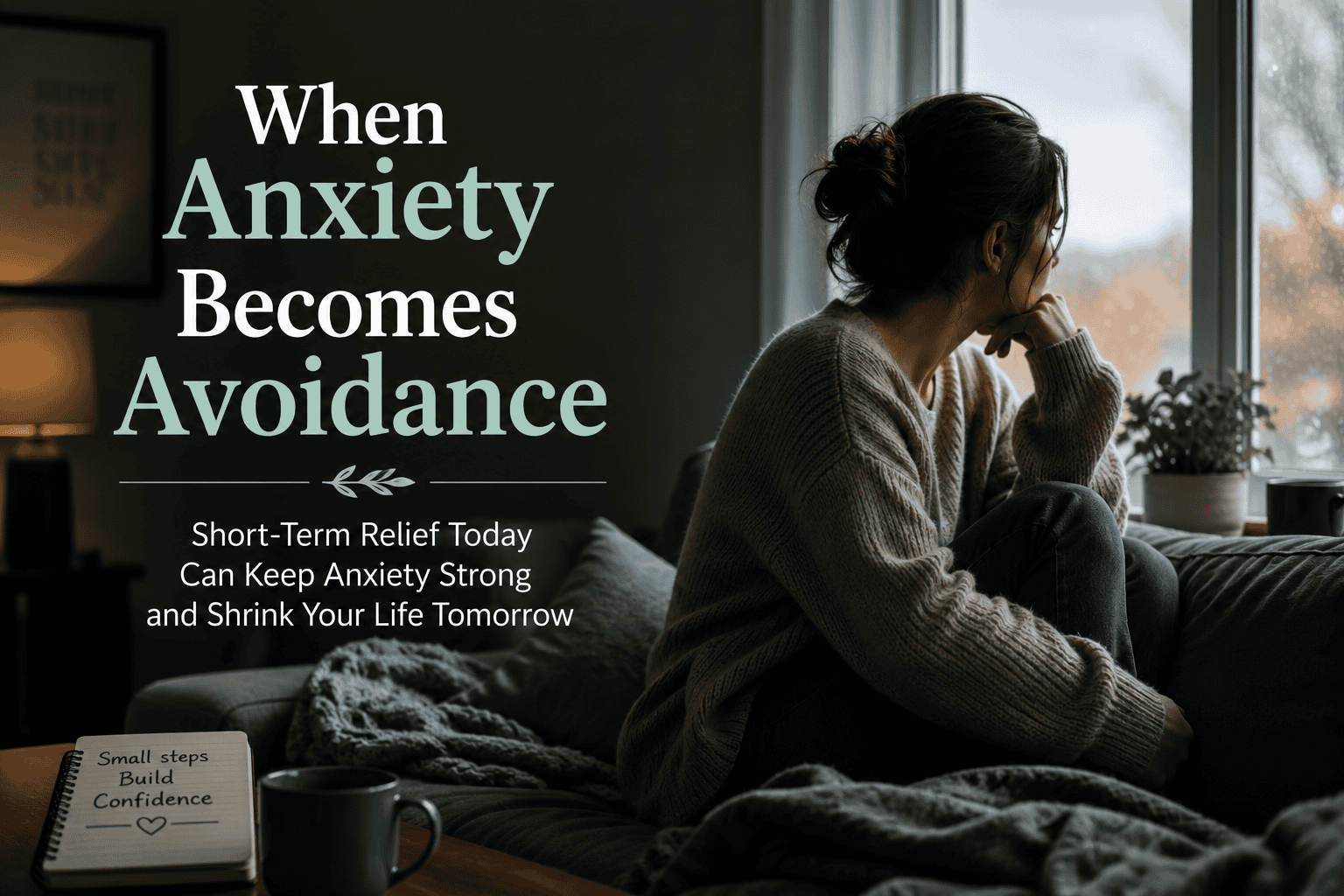
Avoidance can bring short-term relief while keeping anxiety stronger over time and shrinking daily life. This guide explains why avoidance feels protective, how it can become a cycle, and how counseling can help you rebuild confidence at a manageable pace.
Start Here
Avoidance Can Make Anxiety Feel Better Temporarily
Avoidance is one of the most common ways people try to manage anxiety. When something feels uncomfortable, uncertain, overwhelming, or threatening, avoiding it can bring immediate relief. The body calms down, the pressure decreases, and the person may feel safer for the moment.
The problem is that avoidance often teaches the brain that the avoided situation was truly dangerous. Over time, anxiety may become stronger, confidence may shrink, and daily life may become more restricted. What began as self-protection can slowly become a pattern that keeps anxiety in charge.
What Is Anxiety-Related Avoidance?
Anxiety-related avoidance refers to staying away from situations, conversations, places, decisions, sensations, responsibilities, or emotions because they trigger fear, discomfort, uncertainty, panic symptoms, shame, or overwhelm. Avoidance may reduce anxiety in the short term while reinforcing anxiety over time.
What It Feels Like
What Anxiety Avoidance Can Feel Like
Avoidance is not always obvious. Sometimes it looks like procrastination, over-preparing, staying busy, canceling plans, asking for reassurance, or quietly organizing life around anxiety.
Canceling or Delaying
You may put off appointments, conversations, tasks, or plans because they feel too uncomfortable.
Changing Your Route
You may structure life around avoiding certain places, people, sensations, or situations.
Seeking Reassurance
You may repeatedly ask for certainty, approval, or confirmation before taking action.
Over-Preparing
Preparation can become avoidance when you keep planning instead of moving forward.
Pulling Back
You may avoid social situations, conflict, decisions, or responsibilities to prevent anxiety from rising.
Life Gets Smaller
The more you avoid, the fewer places, choices, and experiences may feel manageable.
Short-Term Relief
Why Avoidance Feels Helpful at First
Avoidance works in the short term because it lowers anxiety quickly. If a situation triggers fear or discomfort, leaving, canceling, postponing, or avoiding may bring an immediate sense of relief. The nervous system may interpret that relief as safety.
This relief can make avoidance feel like the right choice, especially when anxiety feels intense. The person may think, “I feel better now, so avoiding must have protected me.” But the relief comes from escaping the anxiety trigger, not from learning that the situation can be handled.
Avoidance may feel helpful because it:
- Reduces anxiety quickly
- Prevents uncomfortable body sensations
- Avoids uncertainty or possible rejection
- Stops panic from escalating in the moment
- Protects against embarrassment, conflict, or failure
- Gives a temporary sense of control
Short-term relief is real. The challenge is that repeated avoidance often makes anxiety more powerful in the long term.
Long-Term Cost
Avoidance Can Keep Anxiety Strong Over Time
Anxiety often grows when the brain never has a chance to learn that a situation can be tolerated, handled, or survived. Each time avoidance brings relief, the brain may strengthen the belief that the avoided situation is dangerous.
- The anxiety trigger feels more threatening.
- Confidence decreases.
- Daily life becomes more restricted.
- Avoidance becomes harder to interrupt.
Important Reframe
Avoidance Is Usually Protection, Not Laziness
Many people feel ashamed of avoidance. They may call themselves lazy, weak, dramatic, or irresponsible. In reality, avoidance is often the nervous system trying to reduce perceived threat.
- Understanding the pattern reduces shame.
- Avoidance can be changed gradually.
- Small steps matter.
- Support can make change feel safer.
The goal is not to force yourself into overwhelming situations. The goal is to build enough safety, support, and confidence to approach anxiety in manageable steps.
Common Patterns
Common Ways Anxiety Becomes Avoidance
Avoidance can show up in many areas of life. Sometimes it is obvious, such as refusing to go somewhere. Other times it is subtle, such as overthinking, over-researching, over-apologizing, or waiting until you feel completely ready.
Anxiety-related avoidance may include:
- Avoiding phone calls, emails, texts, or difficult conversations
- Putting off appointments, paperwork, work tasks, or decisions
- Avoiding driving, crowds, stores, restaurants, elevators, or unfamiliar places
- Canceling plans because of worry or physical anxiety symptoms
- Avoiding conflict by staying silent or people-pleasing
- Over-preparing instead of acting
- Seeking repeated reassurance before making choices
- Avoiding feelings, memories, or body sensations that feel uncomfortable
Avoidance becomes more concerning when it begins shaping decisions, limiting relationships, interfering with responsibilities, or shrinking daily life.
Relationships
Anxiety Avoidance Can Affect Relationships
Avoidance can influence communication, conflict, intimacy, reassurance needs, and emotional closeness. A person may avoid saying what they need because they fear conflict. They may avoid difficult conversations because they worry about rejection. They may avoid vulnerability because closeness feels uncertain or unsafe.
Over time, avoidance can create distance. Loved ones may feel shut out, confused, or responsible for reducing anxiety. The person with anxiety may feel guilty, dependent, resentful, or stuck between wanting connection and fearing discomfort.
Relationship avoidance may look like:
- Avoiding conflict or difficult topics
- Withdrawing when emotions feel intense
- People-pleasing to prevent disapproval
- Seeking reassurance repeatedly
- Avoiding vulnerability or emotional honesty
- Canceling plans or avoiding social gatherings
Therapy can help clients communicate needs more directly, tolerate emotional discomfort, and build connection without letting anxiety control the relationship.
Trauma and Avoidance
Avoidance Can Also Be Connected to Trauma
Avoidance is common after trauma. The nervous system may try to protect the person from reminders, sensations, memories, people, places, or situations that feel linked to danger. This can make avoidance feel necessary, even when the current situation is not the same as the past.
Trauma-related avoidance may need a slower, more trauma-informed approach. Pushing too quickly can increase shutdown, panic, or emotional overwhelm. Therapy often begins with safety, grounding, coping skills, and pacing before deeper processing.
Trauma-related avoidance may include:
- Avoiding places, people, or reminders connected to trauma
- Avoiding emotions, memories, or body sensations
- Feeling numb or shut down when stress rises
- Using busyness to avoid quiet or reflection
- Avoiding closeness because trust feels unsafe
- Feeling anxious without knowing why a situation feels threatening
When avoidance is trauma-related, the goal is not to force exposure. The goal is to help the nervous system build safety and choice.
An Educational Framework
The Anxiety-Avoidance Cycle
Avoidance can become self-reinforcing because it lowers anxiety quickly while keeping fear stronger over time.
1. Anxiety Rises
A situation, thought, sensation, memory, task, or conversation triggers fear or discomfort.
2. Avoidance Happens
The person cancels, delays, leaves, reassures, distracts, over-prepares, or avoids the trigger.
3. Relief Arrives
Anxiety drops temporarily, which makes avoidance feel like it worked.
4. Fear Is Reinforced
The brain learns that the situation must have been dangerous because avoiding brought relief.
5. Life Shrinks
More situations begin to feel difficult, and confidence decreases.
6. The Pattern Repeats
Avoidance becomes the default response, and anxiety stays in control.
Breaking the cycle usually means approaching avoided situations gradually, with support, pacing, coping skills, and realistic steps.
What Helps
What Can Help When Anxiety Becomes Avoidance
Reducing avoidance does not mean forcing yourself into overwhelming situations. It means helping your nervous system learn that discomfort can be tolerated, choices can be made, and life can expand again.
Name the Avoidance Pattern
Identifying what you avoid and what relief you get can help clarify the cycle.
Start Smaller
Choose steps that are challenging enough to build confidence but not so large that they overwhelm you.
Support the Body
Grounding, breathing, movement, and nervous system regulation can help anxiety become more tolerable.
Reduce Shame
Avoidance is often a protective response. Shame makes it harder to change.
Reconnect With Values
Values can help guide small steps toward the life anxiety has been shrinking.
Get Support
Therapy can help with anxiety, avoidance, panic symptoms, trauma responses, and confidence-building.
When to Seek Help
When to Seek Counseling for Anxiety and Avoidance
It may be time to seek counseling when avoidance begins affecting relationships, work, school, parenting, health appointments, driving, social life, decision-making, communication, or daily functioning.
Consider counseling if you notice:
- You avoid situations because anxiety feels too intense
- You cancel plans, delay tasks, or avoid conversations
- Your daily life feels smaller than it used to
- You rely on reassurance, escape, or over-preparation to feel okay
- You avoid places, sensations, memories, or emotions connected to trauma
- You feel ashamed of avoidance but cannot seem to stop
- Your anxiety improves briefly, then returns stronger
- You want support rebuilding confidence gradually
If anxiety includes panic symptoms, trauma triggers, depression, thoughts of self-harm, or safety concerns, professional support can help determine the safest next step.
Anxiety Counseling at Motivations Counseling
Therapy Can Help You Break the Anxiety-Avoidance Cycle
Motivations Counseling provides anxiety counseling for adults experiencing avoidance, worry, panic symptoms, overthinking, perfectionism, reassurance-seeking, stress, emotional overwhelm, trauma responses, and difficulty feeling calm or confident.
Our counseling team serves clients in Sugar Land, Katy, Richmond, Fort Bend County, West Houston, and through telehealth across Texas when clinically appropriate.
Counseling Support
Anxiety Counseling in Sugar Land, Katy, and Online Across Texas
If avoidance is bringing short-term relief while making your life feel smaller, counseling can help you understand the pattern and rebuild confidence in manageable steps.
- Individual counseling for anxiety and avoidance
- Support for panic symptoms, worry, overthinking, and reassurance-seeking
- Help with difficult conversations, decisions, social anxiety, and life stress
- Trauma-informed counseling when avoidance connects to painful experiences
- In-person options in Sugar Land and Katy when available
- Telehealth counseling across Texas when clinically appropriate
Therapy Learning Center
Continue Learning About Anxiety, Avoidance, Trauma, and Relationships
These related resources can help adults better understand anxiety symptoms, avoidance, overthinking, nervous system activation, trauma responses, sleep problems, and relationship patterns.
Why Do I Feel Anxious All the Time?
Learn why anxiety can feel constant and how stress, uncertainty, and nervous system activation may contribute.
Read article →Racing Thoughts and Overthinking
Explore how repetitive thinking can affect focus, calm, sleep, and emotional regulation.
Read article →Anxiety After Trauma
Learn why trauma can leave the nervous system on alert and increase anxiety, panic, or avoidance.
Read article →Anxiety and Sleep Problems
Learn how anxious thoughts and nervous system activation can affect sleep and rest.
Read article →How Anxiety Affects Relationships
Learn how anxiety can affect reassurance needs, avoidance, communication, trust, and connection.
Read article →Counseling Resource Center
Explore resources on anxiety, depression, trauma, EMDR, relationships, teen counseling, and emotional health.
Explore Resource Center →Frequently Asked Questions
Common Questions About Anxiety and Avoidance
Can anxiety cause avoidance?
Yes. Anxiety can cause people to avoid situations, conversations, places, decisions, sensations, responsibilities, or emotions that feel uncomfortable, uncertain, or overwhelming.
Why does avoidance make anxiety worse?
Avoidance can make anxiety worse because it teaches the brain that the avoided situation is dangerous. Although avoidance lowers anxiety in the short term, it can reinforce fear and reduce confidence over time.
What are examples of anxiety avoidance?
Examples include canceling plans, avoiding phone calls, delaying appointments, avoiding difficult conversations, seeking repeated reassurance, avoiding driving or crowds, over-preparing, or avoiding emotions and memories.
Is avoidance always bad?
Avoidance is not always bad. Sometimes stepping away is protective or necessary. It becomes a problem when it repeatedly limits life, increases fear, reduces confidence, or keeps anxiety in control.
Can trauma cause avoidance?
Yes. Trauma can lead to avoidance of reminders, sensations, emotions, places, people, or memories connected to past danger. Trauma-related avoidance often needs a slower, trauma-informed approach.
How can therapy help with avoidance?
Therapy can help identify the avoidance cycle, reduce shame, build coping skills, support nervous system regulation, and help clients take gradual steps toward situations they have been avoiding.
Should I force myself to face my anxiety?
Forcing yourself too quickly can sometimes increase overwhelm. A more helpful approach is often gradual, supported, and paced so the nervous system can build confidence without feeling flooded.
When should I seek counseling?
Consider counseling when avoidance affects relationships, work, school, daily routines, social life, communication, decision-making, or your ability to live the way you want.

Take the Next Step
Anxiety Counseling in Sugar Land, Katy, and Online Across Texas
If anxiety has led to avoidance, canceled plans, delayed decisions, reduced confidence, or a smaller daily life, counseling can help you understand the pattern and begin taking manageable steps forward.

