Why Do I Want to Be Left Alone All the Time?
Depression, Burnout & Emotional Health Resources
Why Do I Want to Be Left Alone All the Time?
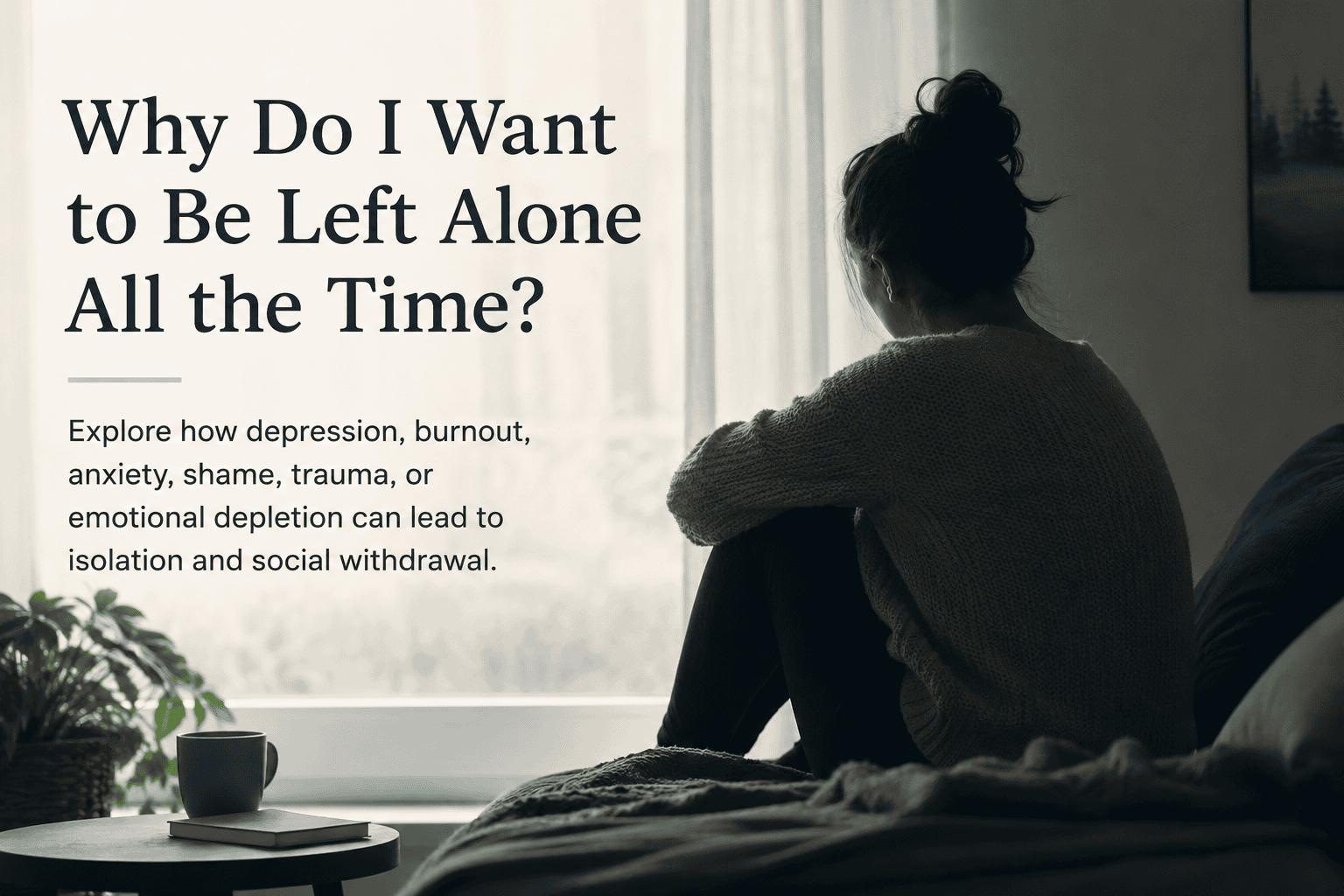
Wanting to be left alone can sometimes be a normal need for rest and quiet. But when isolation becomes constant, painful, or hard to change, it may be connected to depression, burnout, anxiety, shame, trauma, or emotional depletion.
Start Here
Wanting Space Can Be a Signal, Not a Character Flaw
Many people feel confused or guilty when they want to be left alone all the time. You may love your family, care about your friends, and still feel irritated, overwhelmed, numb, or exhausted when someone needs something from you.
Social withdrawal can happen when the mind and body feel overloaded. Depression may make connection feel too effortful. Burnout may make every request feel like too much. Anxiety may make interaction feel tense or unsafe. Shame may make you want to hide. Trauma may teach the nervous system that being alone feels safer than being seen.
Important: This article is educational and is not a diagnosis. If withdrawal is connected to thoughts of self-harm, feeling unsafe, or not wanting to live, seek immediate support by calling 988, 911, or going to the nearest emergency room.
Understanding the Pattern
Is It Normal to Want to Be Alone?
Yes. Time alone can be healthy. Many people need solitude to recover from stress, think clearly, regulate emotions, pray, reflect, create, or simply rest. Needing quiet does not automatically mean something is wrong.
The concern usually begins when being alone stops feeling restorative and starts becoming a place of hiding, shutdown, numbness, avoidance, or disconnection. You may notice that you pull away even when part of you wants support, or that isolation gives temporary relief while loneliness, guilt, or emotional heaviness increases over time.
Healthy alone time may feel like:
- Choosing quiet because it helps you recharge
- Feeling more grounded after rest
- Still being able to reconnect when you want to
- Using solitude for reflection, creativity, prayer, or recovery
- Feeling peaceful rather than trapped, numb, or ashamed
Concerning withdrawal may feel like:
- Avoiding calls, texts, responsibilities, or relationships for long periods
- Feeling irritated or panicked when others need emotional energy from you
- Wanting to disappear, hide, or shut everything out
- Feeling lonely but unable to reach out
- Losing interest in people or activities that used to matter
- Feeling ashamed, numb, hopeless, or emotionally exhausted
Depression and Isolation
Depression Can Make Connection Feel Like Too Much Work
Depression does not always look like crying or obvious sadness. For many people, depression feels like heaviness, low motivation, emotional numbness, irritability, exhaustion, or difficulty keeping up with normal life.
When depression is present, social interaction may feel draining rather than supportive. Responding to messages, making conversation, explaining how you feel, or pretending to be okay can require energy you do not feel you have.
Depression-related withdrawal may include:
- Not wanting to talk, even to people you care about
- Feeling emotionally flat or disconnected
- Canceling plans because getting ready feels overwhelming
- Feeling guilty for not being more available
- Believing you are a burden or that others are better off without you
- Losing interest in activities, friendships, or family time
Depression can create a painful loop: you withdraw because you feel depleted, then isolation may increase loneliness, shame, and hopelessness. Therapy can help interrupt this loop without forcing you to “just be social” before you are ready.
Burnout and Overload
Burnout Can Make Every Interaction Feel Like Another Demand
Burnout often develops after prolonged stress, responsibility, caregiving, work pressure, emotional labor, or the feeling that too many people need too much from you. When burnout builds, even loving relationships can begin to feel like one more obligation.
You may not dislike people. You may simply feel like you have no emotional capacity left. Being alone may become the only time no one is asking, needing, interrupting, evaluating, or expecting something from you.
Burnout-related isolation may sound like:
- “I just need everyone to stop needing me.”
- “I cannot answer one more message.”
- “Even small requests feel overwhelming.”
- “I want quiet, but I still do not feel rested.”
- “I feel guilty, but I have nothing left to give.”
Anxiety and Avoidance
Anxiety Can Make Social Interaction Feel Unsafe or Exhausting
Anxiety can make ordinary interactions feel loaded with pressure. You may worry about saying the wrong thing, disappointing someone, being judged, dealing with conflict, or not having enough energy to manage the conversation.
Avoiding people can bring short-term relief. But over time, avoidance may make connection feel even harder. The longer you avoid a conversation, text, event, or relationship, the more anxiety may build around returning to it.
Anxiety-related withdrawal may include:
- Avoiding texts because you do not know what to say
- Feeling tense before social events or family interactions
- Replaying conversations afterward
- Feeling afraid of being judged, misunderstood, or rejected
- Needing solitude after even brief social interaction
- Withdrawing to avoid conflict, pressure, or emotional discomfort
Shame and Hiding
Shame Can Make You Want to Disappear
Shame is different from ordinary guilt. Guilt often says, “I did something wrong.” Shame says, “Something is wrong with me.” When shame is strong, being seen by others can feel exposing, even when no one is criticizing you.
Some people withdraw because they feel embarrassed about how they are doing. Others pull away because they believe they should be stronger, more productive, happier, more available, or easier to love.
Shame-related isolation may include thoughts like:
- “I do not want anyone to see me like this.”
- “I should be handling this better.”
- “I am too much for people.”
- “I have already disappointed everyone.”
- “If people knew how I really felt, they would judge me.”
Shame often grows in silence. Counseling can provide a private, nonjudgmental place to name what has been happening without having to perform, explain perfectly, or pretend everything is fine.
Trauma and Emotional Safety
Trauma Can Teach the Nervous System That Alone Feels Safer
For some people, wanting to be left alone is connected to past experiences where relationships felt unsafe, unpredictable, critical, invasive, or emotionally overwhelming. The nervous system may learn that distance equals protection.
Trauma-related withdrawal is not always a conscious choice. It can feel like shutdown, numbness, irritability, freezing, or a strong urge to escape. Even kind attention may feel uncomfortable if your body associates closeness with danger, pressure, or loss of control.
Trauma-related withdrawal may show up as:
- Feeling emotionally numb or detached from others
- Wanting to isolate after conflict, criticism, or reminders of the past
- Feeling safer when no one is asking questions
- Becoming irritable when someone gets too close emotionally
- Difficulty trusting support, even when it is available
- Needing control over space, time, and contact
Emotional Depletion
Sometimes You Are Not Antisocial — You Are Emotionally Depleted
Emotional depletion can happen when you have been carrying too much for too long. You may be functioning on the outside while feeling empty, overstimulated, resentful, numb, or disconnected on the inside.
When emotional reserves are low, connection can feel costly. You may need rest, but also need support. You may want people to care, but not want to answer questions. You may feel lonely, but still feel relieved when plans are canceled.
When Isolation Needs More Support
Consider reaching out for counseling or additional support if isolation is lasting for weeks, interfering with work or relationships, increasing hopelessness, affecting sleep or appetite, or making it hard to complete basic responsibilities.
Seek urgent help if withdrawal is connected to thoughts of self-harm, feeling unsafe, or believing others would be better off without you.
Gentle Starting Points
What Can Help When You Want to Isolate?
The goal is not to force yourself into constant social contact. The goal is to understand what your withdrawal is protecting you from and begin taking small, realistic steps toward support.
Name the Depletion
Instead of judging yourself as rude, lazy, or distant, ask whether you are tired, depressed, anxious, ashamed, overstimulated, or emotionally overloaded.
Use Low-Energy Communication
A simple text such as “I care about you, but I am really depleted right now” can preserve connection without requiring a long conversation.
Take One Small Step
Instead of forcing yourself into a major social event, consider one manageable step: a short walk, one reply, one appointment, or one honest conversation.
Protect Real Rest
Scrolling alone for hours may not restore you. Real rest may include sleep, quiet, boundaries, reduced demands, nourishment, or time away from stimulation.
Let Safe People Know
When possible, choose one safe person who can know you are struggling. You do not have to explain everything to everyone.
Consider Counseling
Therapy can help you understand whether withdrawal is connected to depression, burnout, anxiety, trauma, grief, shame, or relationship stress.
How Counseling Can Help
Therapy Can Help You Understand the Need to Pull Away
Counseling does not require you to become instantly open, social, or emotionally available. A therapist can help you slow down and understand what your withdrawal is doing for you. Is it protecting you from overwhelm? Avoiding conflict? Hiding shame? Managing depression? Trying to recover from burnout? Responding to trauma?
At Motivations Counseling, therapy is collaborative and paced. Your therapist can help you identify emotional patterns, strengthen boundaries, rebuild energy, process painful experiences when appropriate, and reconnect with life in ways that feel realistic rather than forced.
Therapy may help with:
- Depression, low motivation, emotional numbness, and withdrawal
- Burnout, caregiving fatigue, and chronic stress
- Anxiety, avoidance, overthinking, and social pressure
- Shame, self-criticism, and fear of being judged
- Trauma responses, shutdown, emotional safety, and trust
- Relationship stress, boundaries, communication, and reconnection
Therapy Learning Center
Continue Learning About Depression, Burnout, Anxiety, Trauma, and Emotional Withdrawal
These related resources can help you better understand isolation, emotional exhaustion, nervous system responses, anxiety, depression, and when counseling may help.
Can Depression Feel Like Exhaustion?
Learn how depression can appear as heaviness, low energy, emotional numbness, and difficulty keeping up.
Read article →Emotional Disconnection
Learn why numbness, shutdown, and emotional distance can happen during stress, trauma, or depression.
Read article →Survival Mode and Chronic Stress
Learn how long-term stress can affect emotions, sleep, focus, relationships, and the nervous system.
Read article →Why Do I Feel Anxious All the Time?
Understand why anxiety may feel constant and how worry, stress, and avoidance can keep symptoms going.
Read article →Signs a Teen May Be Depressed
Understand how depression may show up as irritability, withdrawal, sleep changes, and low motivation.
Read article →Burnout vs. Depression
Burnout and depression can both involve exhaustion and low motivation, but they may have different patterns and causes.
Read article →Full Resource Center
Explore the Full Counseling Resource Center
Our Counseling Resource Center includes educational articles on anxiety, depression, trauma, EMDR therapy, relationships, teen counseling, emotional overwhelm, nervous system responses, and practical ways to understand mental health symptoms.
Frequently Asked Questions
Common Questions About Wanting to Be Left Alone
Why do I want to be left alone all the time?
Wanting to be left alone all the time may be connected to depression, burnout, anxiety, shame, trauma, emotional depletion, grief, overstimulation, or chronic stress. Sometimes isolation is the mind and body’s attempt to reduce demands and protect limited emotional energy.
Is wanting to be alone a sign of depression?
It can be. Depression may cause social withdrawal, low motivation, emotional numbness, irritability, exhaustion, and loss of interest in people or activities. However, wanting alone time can also be related to burnout, anxiety, trauma, or a healthy need for rest.
Why do I get irritated when people want to talk to me?
Irritation can happen when your emotional capacity is low. If you are burned out, depressed, anxious, overstimulated, or carrying too much responsibility, even caring interaction may feel like another demand.
Can trauma make me want to isolate?
Yes. Trauma can make closeness, attention, conflict, questions, or emotional vulnerability feel unsafe. Some people withdraw because being alone feels more predictable and less overwhelming than being emotionally seen.
How do I stop isolating myself?
Start gently. Identify what isolation is protecting you from, reduce unnecessary demands, communicate with one safe person, take small steps toward connection, and consider counseling if withdrawal feels persistent, painful, or hard to change.
When should I seek counseling for social withdrawal?
Consider counseling when isolation lasts for weeks, affects relationships or responsibilities, increases loneliness or shame, is connected to depression or anxiety, or makes it difficult to function. Seek urgent help if withdrawal is connected to thoughts of self-harm or not wanting to live.

Take the Next Step
Counseling for Depression, Burnout, Anxiety, Trauma, and Social Withdrawal
If you keep wanting to be left alone and you are not sure why, counseling can help you understand what is happening and begin taking manageable steps toward support.