My Partner Shuts Down During Conflict: What Can Help?
Couples Counseling & EFT Resource Center
My Partner Shuts Down During Conflict
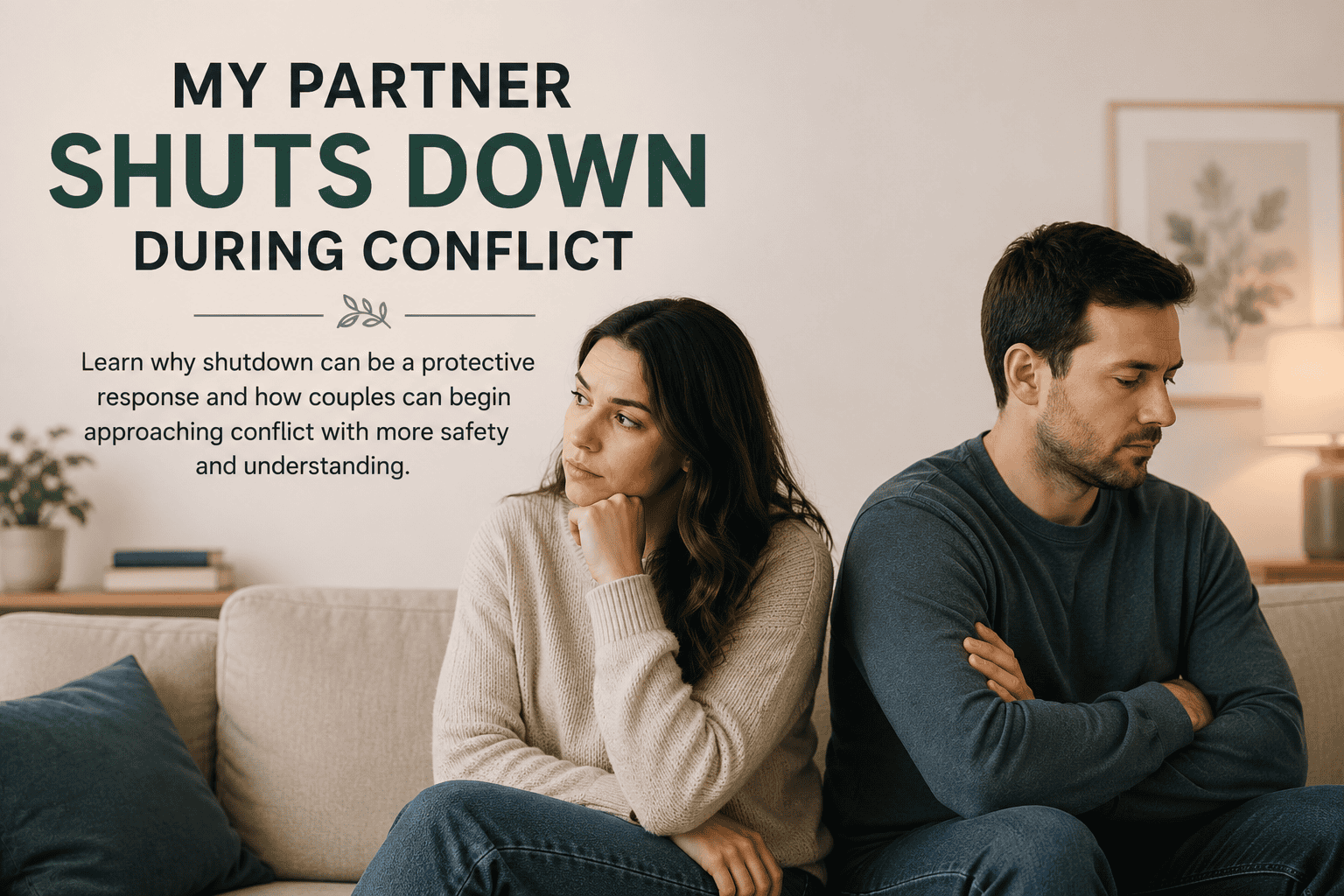
When a partner becomes quiet, distant, blank, or unable to continue during conflict, the silence can feel rejecting, uncaring, or impossible to understand. Shutdown is often a protective response to emotional overload, fear, shame, helplessness, or the expectation that nothing they say will make the conversation safer. Understanding the response does not mean ignoring its impact. Couples may need a clearer way to pause, regulate, communicate, and reliably return.
Start Here
Shutdown Is Often Protection, but the Disconnection Still Needs Repair
A person who shuts down may not be choosing silence in a calm, deliberate way. Their body may be moving into a state of overwhelm in which thinking, speaking, listening, and staying emotionally present become much harder. They may feel flooded by criticism, urgency, anger, shame, conflict memories, or the fear that any response will make things worse.
The other partner may experience that withdrawal as abandonment at the exact moment they are asking for reassurance, accountability, or connection. They may speak more forcefully, repeat the question, follow the partner from room to room, or demand an immediate answer. The increased pressure can make shutdown more likely, creating a painful cycle in which both people feel alone and misunderstood.
Understanding why shutdown occurs is not the same as accepting endless avoidance. A healthy pause includes communication, a plan to regulate, and a reliable return to the unresolved concern.
Recognizing Shutdown
Withdrawal Can Be Quiet, Physical, Emotional, or Cognitive
Partners do not always use the word “shutdown” in the same way. It can involve silence, leaving, emotional numbness, difficulty finding words, or appearing calm while feeling intensely overwhelmed inside.
Going Silent
The partner stops answering, gives one-word responses, or says “I do not know” because words feel unavailable or unsafe.
Leaving the Conversation
They walk away, go to another room, leave the home, or end a call without a clear plan for returning.
Feeling Numb or Blank
They may report feeling nothing, losing track of the discussion, or becoming mentally foggy and disconnected.
Avoiding Eye Contact
Looking away, covering the face, staring at the floor, or focusing on a device may reduce the intensity of the interaction.
Becoming Emotionally Unreachable
The person may appear detached, flat, cold, or indifferent even while experiencing fear, shame, or distress internally.
Refusing the Topic
They may repeatedly delay, change the subject, or insist that talking will only create another argument.
Why Partners Shut Down
The Response Often Develops From Overwhelm, Learning, and Self-Protection
Shutdown is rarely explained by one cause. Temperament, attachment experiences, family conflict patterns, trauma, neurodivergence, current stress, shame, and the couple’s interaction cycle may all influence the response.
Emotional Flooding
The intensity becomes greater than the person’s current ability to think clearly, listen accurately, or respond constructively.
Fear of Making It Worse
Past conversations may have taught the person that speaking leads to escalation, criticism, misunderstanding, or regret.
Shame or Inadequacy
The concern may be heard as proof that they are failing, unlovable, disappointing, or incapable of getting the relationship right.
Family Learning
They may have grown up in a home where conflict was explosive, unsafe, ignored, or resolved by silence and distance.
Trauma Responses
Raised voices, anger, closeness, confrontation, or feeling trapped may activate freeze, collapse, appeasement, or dissociation.
Stress and Limited Capacity
Exhaustion, illness, work pressure, caregiving, poor sleep, or sensory overload may reduce the capacity for conflict.
The Nervous System
Shutdown May Follow a Fight, Flight, Freeze, or Collapse Response
During intense conflict, the nervous system may interpret emotional danger as though immediate protection is required. Heart rate, muscle tension, attention, and breathing can change. Some people become louder or more urgent. Others become quiet, immobilized, numb, sleepy, detached, or unable to organize language.
Once a person is highly activated or shut down, asking them to explain themselves perfectly may exceed what their brain can do in that moment. Regulation usually needs to come before productive problem-solving.
Possible signs of flooding include:
- Racing heart, heat, shaking, tightness, or shallow breathing
- Difficulty remembering what was just said
- Feeling trapped, cornered, numb, unreal, or far away
- An urgent need to escape, stop talking, or make the conflict end
- Assuming the worst meaning behind the partner’s words
Regulation Before Resolution
A Paused Brain Cannot Be Forced Into a Productive Conversation
Continuing to press for answers after one partner has become overwhelmed may increase fear and disconnection. However, disappearing without explanation can intensify the other partner’s fear of abandonment. The goal is not to choose between pressure and avoidance. It is to create a structured pause that protects both people.
A useful pause communicates: “I am overwhelmed, I care about this, and I will return at a specific time.” The return is what separates regulation from indefinite avoidance.
The Pursue-Withdraw Cycle
The More One Partner Presses, the More the Other May Disappear
The visible problem may look like one person talking too much and the other refusing to talk. Underneath, both partners may be protecting the relationship in opposite ways: one seeks immediate engagement to restore connection, while the other seeks distance to prevent escalation or failure.
One partner raises hurt, disappointment, fear, or an unmet need.
The other hears criticism, failure, danger, or an impossible demand.
They become quiet, defensive, blank, distracted, or physically distant.
The first partner repeats, pursues, raises intensity, or demands a response.
The withdrawing partner feels more trapped and becomes less available.
One feels abandoned; the other feels attacked, inadequate, or unsafe.
The cycle—not either partner alone—is often the immediate enemy. Naming it can help couples shift from “You are the problem” to “We are getting pulled into the pattern again.”
Protective Withdrawal
Shutdown Can Be Involuntary or Partly Automatic
Protective shutdown may involve genuine overwhelm, limited language, emotional flooding, freeze responses, or fear of escalation. The person may still care deeply and want repair, but lack the ability to remain engaged at that intensity.
Signs of a protective pause may include:
- Naming that they are overwhelmed
- Reassuring the partner that the concern matters
- Requesting a specific amount of time
- Using the pause to regulate rather than retaliate
- Returning when promised and continuing the conversation
Stonewalling or Punitive Silence
Silence Can Also Be Used to Control, Punish, or Avoid Accountability
Not every withdrawal is a nervous-system response. Silence may become harmful when it is used deliberately to frighten, punish, gain leverage, make the other person beg for contact, or prevent any discussion of repeated harm.
Concerning patterns may include:
- Refusing to communicate for long periods as punishment
- Leaving without regard for safety or practical responsibilities
- Never returning to important concerns
- Mocking the partner for wanting communication
- Using silence to avoid accountability for betrayal, abuse, or broken agreements
During the Conflict
Slow the Interaction Before Trying to Solve the Entire Problem
When shutdown begins, the immediate goal is to reduce threat while preserving connection and responsibility. A shorter, clearer interaction is often more effective than repeating every detail of the concern.
Name What Is Happening
“I think we are both becoming overwhelmed. I do not want us to keep hurting each other.”
Lower the Intensity
Reduce volume, speed, interruptions, accusations, and the number of issues being discussed at once.
Use One Clear Concern
Focus on the current issue rather than adding every past disappointment or global statement about the relationship.
Reassure the Bond
“I am bringing this up because you matter to me. I want us to understand each other, not win.”
Agree on a Pause
Choose a realistic return time instead of ending with “later,” “not now,” or an undefined disappearance.
Return as Promised
Following through teaches both nervous systems that pausing does not mean abandonment or permanent avoidance.
Create a Pause-and-Return Plan
A Break Works Best When Both Partners Know What Will Happen Next
Couples can create a plan before the next conflict so neither person has to invent it while overwhelmed. The plan should respect the withdrawing partner’s need to regulate and the pursuing partner’s need to know the relationship has not been abandoned.
A helpful plan may include:
- A phrase either partner can use to request a pause
- A brief statement of reassurance and responsibility
- A specific return time, often within the same day when possible
- A method for reconnecting if the conflict occurred by phone or text
- Agreement that neither partner will pursue, threaten, insult, or disappear during the break
- Regulation activities that reduce activation rather than increase resentment
- A plan to reschedule if either person remains too overwhelmed at the first return time
Possible pause request: “I am becoming overwhelmed and I do not want to say something harmful or disappear. I need 30 minutes. I care about this, and I will come back at 7:30 so we can continue.”
Possible response: “I am scared the conversation will never happen, but I can give you 30 minutes if we agree to return at 7:30.”
Possible return: “Thank you for giving me space. I am ready to hear the main thing you need me to understand.”
A break should be long enough for activation to decrease but not so vague that it becomes another form of abandonment. The exact timing may vary depending on safety, schedules, and the intensity of the conflict.
For the Partner Who Shuts Down
Communicate the Need for Space Without Disappearing
You may not be able to continue the full conversation while overwhelmed, but even a short statement can reduce your partner’s fear and help you remain accountable to the relationship.
Helpful practices may include:
- Notice early body signals before complete shutdown
- Say that you are overwhelmed rather than saying nothing
- Reassure your partner that the concern matters
- Request a specific pause and offer a return time
- Use the break to regulate, not rehearse blame
- Return when promised, even if you still need a slower pace
- Practice naming one feeling, one fear, and one need
For the Partner Who Pursues
Protect the Conversation From Becoming More Threatening
Your urgency may come from feeling alone, dismissed, or afraid the issue will never be addressed. Those needs matter. At the same time, increasing intensity after shutdown begins often makes emotional availability less likely.
Helpful practices may include:
- State the main concern in one or two sentences
- Avoid following, blocking exits, repeated texting, or demanding immediate answers
- Ask for a clear return time rather than refusing all pauses
- Use the break to regulate your own abandonment fear or anger
- Save additional concerns for later rather than stacking issues
- Notice and acknowledge genuine attempts to return and engage
- Maintain boundaries if pauses repeatedly become avoidance
Build Emotional Safety
Partners Stay More Present When Conflict Feels Difficult but Not Dangerous
Emotional safety does not require avoiding disagreement. It means that both partners can express concerns, needs, and boundaries without expecting humiliation, intimidation, contempt, retaliation, or abandonment.
Listen for Meaning
Try to understand the fear, hurt, or need beneath the words before preparing a defense.
Reduce Contempt
Mocking, eye-rolling, name-calling, disgust, and character attacks make openness and regulation less available.
Make Conflict Predictable
Use agreed timeouts, return times, and limits so conflict does not feel endless or impossible to escape.
Respect Boundaries
Neither partner should be forced to continue while flooded, physically blocked from leaving, or punished for asking for space.
Use Softer Openings
Describe the situation, feeling, and need without leading with blame or a conclusion about the partner’s character.
Follow Repair With Change
Apologies become safer when they are followed by different behavior, clearer agreements, and consistent follow-through.
After the Conflict
Talk About the Pattern When Both Partners Are Regulated
The best time to understand shutdown is usually not during complete shutdown. Later, couples can discuss what each person noticed, what the behavior meant to them, and what might make the next conflict safer.
Questions for the partner who shut down:
- What did you notice in your body before words became difficult?
- What did you fear would happen if the conversation continued?
- What did you need but not know how to ask for?
- What reassurance could you offer before taking a pause?
- What would help you return more reliably?
Questions for the partner who felt abandoned:
- What did the silence or withdrawal mean to you in that moment?
- What fear or unmet need increased your urgency?
- What specific reassurance would make a pause more tolerable?
- How could you raise the concern with less intensity?
- What boundary is needed if the issue is repeatedly avoided?
Repair is not deciding which partner’s coping response is more justified. It is understanding how both responses affect the bond and creating a safer pattern together.
Attachment and Conflict
Shutdown May Protect Against Rejection, Failure, Engulfment, or Emotional Exposure
Attachment patterns can influence how partners respond when the relationship feels uncertain. One person may move toward the conflict to restore closeness, while the other moves away to protect autonomy, reduce shame, or regain emotional control.
Anxious Pursuit
Distance may activate fear of abandonment, creating urgency for immediate reassurance, answers, and emotional contact.
Avoidant Withdrawal
Conflict may activate fear of criticism, dependence, failure, or loss of control, making distance feel protective.
Fearful or Mixed Responses
A partner may want closeness intensely and then shut down when emotional exposure feels dangerous.
Secure Conflict
Partners can pause without abandoning, express needs directly, respect boundaries, and return for repair.
Experience Shapes the Pattern
Family conflict, betrayal, trauma, invalidation, and past relationships may change how confrontation is interpreted.
Patterns Can Change
Repeated experiences of safe engagement, predictable pauses, and successful repair can support greater security.
How Emotionally Focused Therapy Helps
EFT Helps Couples Understand the Vulnerability Beneath Pursuit and Shutdown
Emotionally Focused Therapy does not treat the pursuing partner as “too needy” or the withdrawing partner as uncaring. It helps couples identify the negative interaction cycle and understand how each protective response unintentionally intensifies the other partner’s fear.
EFT may help couples:
- Recognize early signs of emotional flooding, shutdown, pursuit, and escalation
- Understand the attachment fears beneath anger, silence, criticism, or withdrawal
- Help the withdrawing partner communicate overwhelm without disappearing
- Help the pursuing partner express hurt and need without increasing threat
- Create reliable pause-and-return agreements
- Practice new experiences of reaching, responding, and repairing
- Strengthen emotional accessibility, responsiveness, engagement, and trust
When Shutdown Persists
One Partner Cannot Maintain the Conversation Alone
A partner can lower intensity, communicate more clearly, and respect reasonable pauses, but they cannot force emotional engagement. If important concerns are never revisited, the relationship may accumulate resentment, loneliness, mistrust, and unresolved practical problems.
Individual or couples counseling may help clarify whether the pattern reflects overwhelm, avoidance, depression, trauma, substance use, neurodivergence, relationship injury, or unwillingness to participate in repair.
Safety Comes First
Withdrawal Is Different From Escaping Intimidation or Abuse
A person may need to leave a conversation because there are threats, physical aggression, blocked exits, property damage, stalking, coercive control, or fear of retaliation. In those circumstances, the priority is safety rather than improving communication within the moment.
Standard conjoint couples therapy may be unsafe when one partner cannot speak freely. A qualified clinician may recommend individual support, specialized services, or safety planning before relationship work.
Therapist Spotlight
Work With Carolina Román for EFT-Focused Couples Counseling
At Motivations Counseling, Carolina Román, LMFT works with couples using an attachment-focused approach that helps partners understand shutdown, emotional flooding, pursuit, withdrawal, unresolved hurt, and negative conflict cycles.
Her couples work emphasizes emotional safety and the relationship pattern rather than treating one partner as the sole problem. She helps couples slow protective reactions, communicate the vulnerability underneath them, and practice clearer ways of pausing, returning, listening, responding, and repairing.
Carolina serves clients through Motivations Counseling’s Houston-area couples counseling services and through telehealth across Texas when clinically appropriate.
Free Relationship Resource
Take the Free Relationship Attachment Style Quiz
Attachment patterns may influence how partners respond to conflict, seek reassurance, tolerate emotional intensity, request space, and protect themselves when connection feels uncertain. The free Relationship Attachment Style Quiz can help individuals and couples reflect on patterns associated with secure, anxious, avoidant, mixed, or fearful-avoidant attachment.
- No name, email address, phone number, or other identifying information is required
- Immediate educational feedback is provided
- The quiz can be completed by one or both partners
- Results are for self-reflection and are not a diagnosis or formal psychological assessment
Partners may receive different results. The goal is not to label either person, but to create language for discussing closeness, reassurance, independence, emotional safety, conflict, and the need for space.
Couples Counseling Learning Center
Continue Learning About Conflict, Withdrawal, Attachment, and Repair
These articles explore the relationship patterns that often contribute to shutdown and emotional disconnection.
The Pursuer-Withdrawer Cycle
Learn why one partner may seek more engagement while the other pulls away under emotional pressure.
Read article →When Communication Breaks Down
Explore defensiveness, criticism, silence, escalation, and misunderstanding during relationship conflict.
Read article →Why Couples Get Stuck in the Same Arguments
Understand why familiar conflicts repeat even when both partners want a different outcome.
Read article →Emotional Safety in Relationships
Learn what helps partners express concerns and vulnerability without expecting punishment or humiliation.
Read article →Attachment Styles in Relationships
Explore how attachment patterns may influence reassurance, independence, conflict, and emotional distance.
Read article →Why Do I Feel Lonely in My Relationship?
Understand how emotional disconnection and protective distance can create loneliness while partnered.
Read article →Emotionally Focused Therapy for Couples
Learn how EFT helps couples identify negative cycles and strengthen emotional responsiveness and repair.
Read guide →Frequently Asked Questions
Common Questions When a Partner Shuts Down During Conflict
Why does my partner shut down during arguments?
A partner may shut down because they feel emotionally flooded, ashamed, criticized, trapped, afraid of escalation, or unable to organize their thoughts. Family learning, attachment patterns, trauma, stress, and the couple’s conflict cycle may also contribute.
Does shutting down mean my partner does not care?
Not necessarily. Some people withdraw because they care and fear making the conflict worse, failing their partner, or being unable to respond correctly. The impact can still feel lonely and rejecting, so the pattern needs communication and repair.
What should I do when my partner goes silent?
Lower the intensity, name that the conversation appears overwhelming, and ask whether a structured pause would help. Request a specific time to return so the concern is not abandoned. Avoid following, cornering, insulting, or demanding immediate answers.
How long should a conflict timeout last?
There is no single required length. The pause should be long enough for activation to decrease and short enough that it does not become indefinite avoidance. Couples may begin with 20 to 60 minutes and agree on a specific return time that fits the situation.
What if my partner never returns to the conversation?
Repeatedly requesting breaks without returning is avoidance rather than effective regulation. Discuss the pattern during a calm time, establish a clear return agreement, and consider couples counseling if important concerns remain chronically unresolved.
Is shutting down the same as stonewalling?
The terms may overlap, but the meaning and intent can differ. Shutdown may reflect involuntary overwhelm, while stonewalling can also describe a repeated refusal to engage or silence used to punish, control, or avoid accountability. Behavior after the pause matters.
Can trauma cause someone to shut down during conflict?
Yes. Conflict cues such as raised voices, anger, closeness, confrontation, or feeling trapped may activate freeze, collapse, appeasement, dissociation, or an urgent need to escape. Trauma-informed treatment should emphasize safety, choice, and pacing.
Can attachment styles contribute to shutdown?
Yes. Avoidant patterns may increase emotional withdrawal or self-reliance under pressure, while anxious patterns may increase pursuit and urgency. Fearful or mixed patterns may involve wanting closeness and then withdrawing when vulnerability feels unsafe.
Can couples counseling help with shutdown during conflict?
Couples counseling may help partners identify the cycle, recognize flooding earlier, create reliable pause-and-return plans, communicate underlying fears and needs, and practice safer ways of engaging and repairing.
When is couples therapy not the right first step?
Standard conjoint couples therapy may be unsafe when there is active violence, coercive control, credible threats, stalking, intimidation, blocked exits, or fear of retaliation. A qualified clinician should assess safety and recommend appropriate support.

Couples Counseling in Sugar Land, Katy & Online Across Texas
Conflict Does Not Have to End in Pursuit, Silence, or Emotional Distance
If one partner becomes overwhelmed and shuts down while the other feels abandoned and pushes harder, couples counseling can provide a structured space to understand the pattern, create safer pauses, communicate underlying needs, and practice more reliable ways of returning and repairing.