Tag: Couples Communication

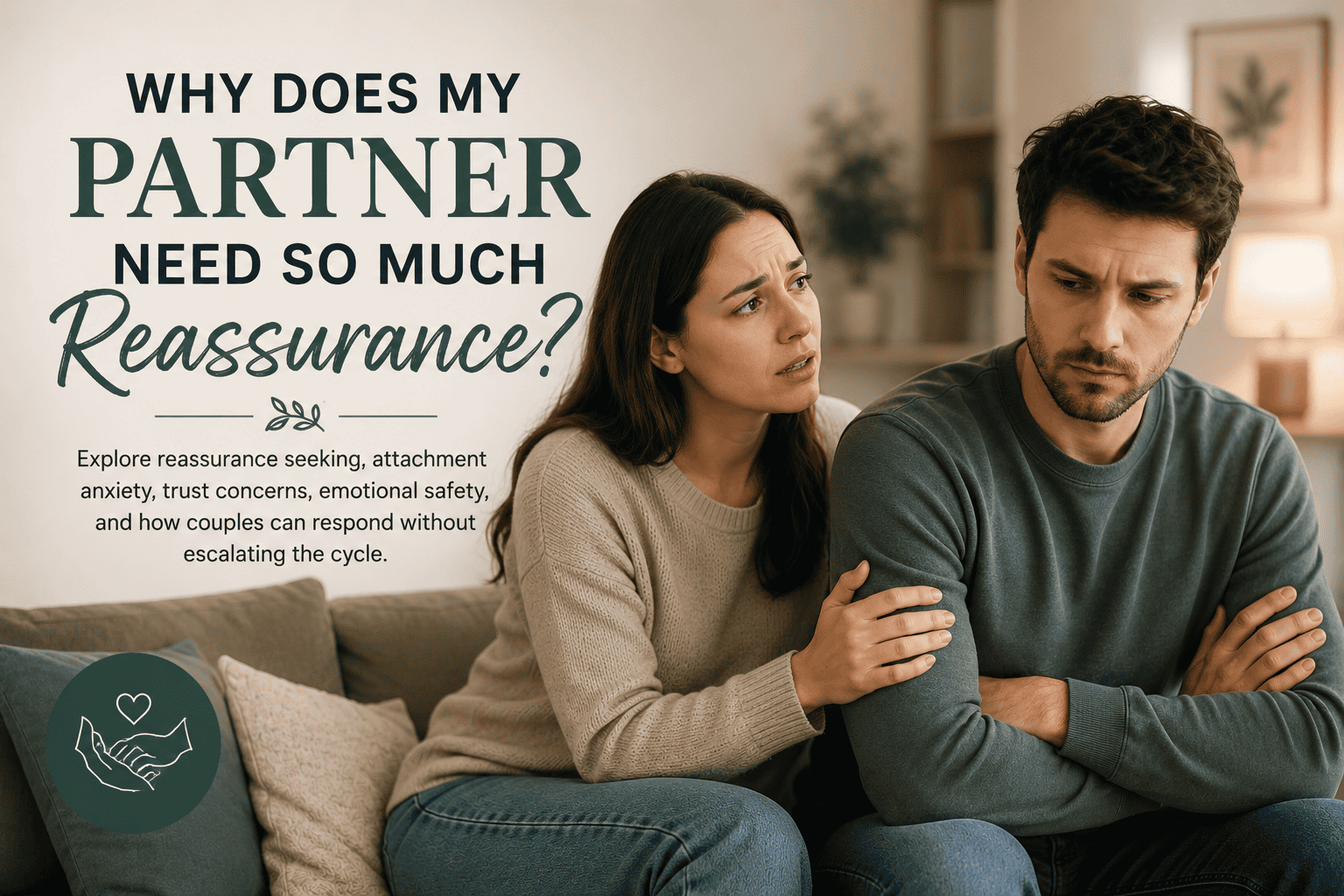
Why Does My Partner Need So Much Reassurance?

Couples Counseling & EFT Resource Center

Why Does My Partner Need So Much Reassurance?

Reassurance can be a healthy part of a close relationship. Partners naturally want to know that they matter, that the bond is secure, and that conflict does not mean abandonment. Reassurance becomes exhausting, however, when relief lasts only a few minutes, the same questions return repeatedly, or one partner feels responsible for constantly proving love, loyalty, or safety. This pattern may involve attachment anxiety, unresolved hurt, current trust concerns, emotional inconsistency, or a cycle in which both partners become increasingly reactive.

Start Here

Reassurance Seeking Is Often an Attempt to Restore Safety

A reassurance-seeking partner is often trying to answer an emotionally urgent question: “Are we okay?” The visible question may be about a text message, facial expression, delayed response, past relationship, social event, or disagreement. Beneath it may be fear of rejection, betrayal, inadequacy, abandonment, or emotional disconnection.

Reassurance may bring temporary relief, but when the underlying fear remains unresolved, the nervous system begins searching again for certainty. The partner may ask the same question in a slightly different way, monitor tone or behavior, request more details, or interpret ordinary distance as evidence that something is wrong. The other partner may become frustrated, defensive, withdrawn, or less emotionally available—responses that can unintentionally confirm the original fear.

Frequent reassurance seeking is not always irrational. If there is current deception, inconsistent behavior, broken agreements, unexplained distance, or unresolved betrayal, the relationship may need greater honesty and accountability—not simply fewer questions.

Recognizing the Pattern

Reassurance Seeking Can Take Many Forms

Some requests are direct and vulnerable. Others appear as repeated questions, checking, testing, conflict, or attempts to eliminate uncertainty. Understanding the form helps couples respond to the need without reinforcing an exhausting cycle.

Repeated Questions

“Do you still love me?” “Are you mad?” or “Are you sure we are okay?” may return even after a clear answer has been given.

Looking for Hidden Meaning

A neutral tone, delayed text, brief response, or distracted expression may be examined for signs of rejection or dishonesty.

Checking and Monitoring

The partner may repeatedly check messages, online activity, location, schedules, or interactions to reduce uncertainty.

Urgent Need for Contact

Temporary distance may create a strong need for immediate replies, physical closeness, repeated affection, or confirmation that the bond is intact.

Testing the Relationship

A partner may withdraw, threaten to leave, become cold, or ask impossible questions to see whether the other person will pursue and prove their care.

Revisiting Old Injuries

Past conflicts, betrayals, or moments of disconnection may be brought up repeatedly because the emotional meaning still feels unresolved.

Why Reassurance Feels Necessary

The Need May Come From the Past, the Present, or Both

Reassurance seeking is not caused by one personality type. It may reflect attachment learning, relationship history, self-doubt, trauma, current instability, or a pattern created between the partners over time.

Early Attachment Learning

Inconsistent comfort, unpredictable caregiving, emotional absence, or separation may make closeness feel uncertain even in adulthood.

Past Betrayal or Abandonment

Infidelity, sudden breakups, deception, rejection, or emotional abandonment can increase alertness to signs that the injury may happen again.

Trauma and Hypervigilance

A nervous system shaped by threat may search intensely for changes in tone, distance, anger, secrecy, or loss of control.

Low Self-Worth

A person who expects to be unwanted, replaceable, or not enough may struggle to believe reassurance even when it is sincere.

Inconsistent Relationship Signals

Warmth followed by withdrawal, mixed messages, unreliable follow-through, or unpredictable availability can make reassurance feel continually necessary.

The Couple’s Interaction Cycle

One partner seeks more certainty while the other feels pressured and retreats, creating more fear and even stronger reassurance seeking.

Attachment Anxiety

Closeness May Feel Essential and Uncertain at the Same Time

A partner with anxious attachment patterns may be highly sensitive to changes in connection. They may notice distance quickly, seek reassurance urgently, and have difficulty settling until the relationship feels emotionally restored. Their distress is often less about wanting attention and more about fearing that the bond is weakening or disappearing.

Attachment anxiety may involve:

  • Strong sensitivity to delayed responses, changed tone, or reduced affection
  • Difficulty believing that conflict can occur without threatening the relationship
  • Fear that a partner’s independence means rejection or loss of interest
  • Repeated comparison with former partners, friends, coworkers, or social media contacts
  • Urgency to resolve uncertainty immediately
  • Temporary relief that fades quickly after reassurance is received

Avoid Oversimplifying

Not Every Concern Is “Just Anxiety”

Attachment language should not be used to dismiss legitimate questions. If a partner has been deceptive, emotionally inconsistent, unavailable, dismissive, or unwilling to honor relationship agreements, reassurance seeking may be a response to real instability.

Couples need to examine both the internal fear and the external relationship environment. One partner may need help tolerating uncertainty while the other needs to become more honest, predictable, responsive, or accountable.

Trust and Emotional Safety

Reassurance Cannot Substitute for Trustworthy Behavior

Words such as “You can trust me” may provide comfort, but trust develops through patterns that make the relationship more predictable. When words and actions repeatedly conflict, requests for reassurance often increase because the partner is trying to resolve evidence that does not fit together.

Trust is strengthened when partners:

  • Communicate proactively rather than waiting to be questioned
  • Follow through on agreements and acknowledge when they cannot
  • Tell the truth even when honesty is uncomfortable
  • Respond to concerns without ridicule, contempt, or deliberate confusion
  • Maintain appropriate boundaries with former partners, friends, coworkers, and online contacts
  • Repair hurt instead of demanding that it be forgotten
  • Remain reasonably consistent during closeness, conflict, and ordinary daily life

Reassurance is most believable when it is supported by behavior. A warm statement, clear plan, and consistent follow-through usually provide more security than repeated promises without change.

The Reassurance Cycle

Short-Term Relief Can Keep the Fear Returning

The cycle often makes sense from both perspectives. One partner tries to remove uncertainty; the other tries to escape pressure. Each response unintentionally increases the other person’s distress.

1. Trigger

A delayed reply, conflict, changed tone, social interaction, or memory of past hurt creates uncertainty.

2. Fear

The partner imagines rejection, betrayal, loss of love, anger, or abandonment.

3. Reassurance Request

Questions, checking, pursuit, testing, or demands for proof increase.

4. Temporary Relief

An answer reduces distress briefly, but the deeper fear remains unprocessed.

5. Partner Fatigue

The other partner becomes defensive, irritated, distant, or less willing to engage.

6. Renewed Alarm

The distance is interpreted as confirmation that the relationship is unsafe, and the cycle begins again.

For the Partner Receiving the Questions

Warmth and Clarity Usually Work Better Than Debate

Repeated reassurance can feel exhausting, especially when no answer seems to last. A compassionate response does not require answering indefinitely, surrendering privacy, or proving innocence on demand. It begins by responding to the emotion before deciding what practical information is reasonable.

Hear the Fear Beneath the Question

Respond to the concern—“You seem afraid that my distance means I am leaving”—instead of debating every detail immediately.

Offer Clear, Specific Reassurance

A grounded answer such as “I am upset about the issue, but I am committed to us” may be more useful than a vague “Everything is fine.”

Match Words With Behavior

Follow through on plans, communicate changes, and avoid secrecy so reassurance has evidence behind it.

Slow the Urgency

When the conversation becomes repetitive, agree to pause and revisit it at a specific time rather than escalating or disappearing.

Avoid Mocking or Shaming

Labels such as “needy,” “crazy,” or “obsessive” increase shame and make honest vulnerability less likely.

Set a Kind Limit

Acknowledge the fear, answer once clearly, and explain what you can discuss now and what needs a calmer conversation later.

Instead of: “I already answered you. Nothing I say is ever enough.”

Try: “I hear that you are still afraid. My answer has not changed, and I do not want us to keep repeating the same question tonight. I can sit with you for ten minutes, and tomorrow we can talk about what makes this fear return.”

Healthy Reassurance

Connection Can Include Comfort, Information, and Choice

Healthy reassurance is responsive without becoming compulsory. It may include affection, honest answers, clear plans, accountability, and reminders that conflict does not erase the bond. Both partners retain dignity, privacy, and the ability to say what they can reasonably provide.

Examples include:

  • “I love you, and I am still committed even though we disagree.”
  • “I will text when I arrive and let you know if the plan changes.”
  • “I understand why this reminds you of what happened before.”
  • “I can answer your question, but I cannot participate in repeated accusations.”
  • “Let us identify what would help rebuild trust over time.”

When Reassurance Becomes Control

Fear Does Not Remove the Need for Boundaries

Reassurance seeking can become harmful when it turns into surveillance, forced access to private communication, isolation from friends or family, threats, interrogation, repeated accusations, punishment, or demands that one partner organize their entire life around preventing anxiety.

A partner can be compassionate about fear while still declining coercive or controlling behavior. If boundaries lead to threats, intimidation, stalking, or retaliation, safety assessment and individual support may be necessary.

For the Reassurance-Seeking Partner

Internal Reassurance Can Support—Not Replace—Relationship Security

Learning to regulate does not mean pretending that needs do not matter. It means creating enough steadiness to ask directly, evaluate evidence, tolerate reasonable uncertainty, and avoid using repeated questions as the only path to relief.

Name the Primary Fear

Replace “Why did you take so long?” with “The delay activated a fear that I am not important or that something is being hidden.”

Regulate Before Checking Again

Slow breathing, movement, grounding, sensory orientation, or a short pause may reduce the urgency to seek another answer immediately.

Separate Facts From Predictions

Write down what is known, what is assumed, and what evidence supports or contradicts the feared conclusion.

Make One Direct Request

Ask clearly for reassurance, information, affection, or a plan rather than testing, hinting, accusing, or repeating the same question.

Build a Wider Base of Security

Friendships, meaningful activity, competence, rest, and self-respect reduce the pressure for one relationship to regulate every emotion.

Explore the Original Wound

Individual counseling may help address betrayal trauma, abandonment fears, shame, obsessive doubt, or earlier attachment experiences.

Self-soothing should not be used to tolerate ongoing dishonesty or neglect. Internal regulation helps a person make clearer decisions about the relationship; it does not require them to ignore evidence that trust is being damaged.

A Better Conversation

Talk About the Pattern When Neither Partner Is in Crisis

Couples are more likely to change the reassurance cycle when they discuss it during a calm period. The purpose is not to decide who is too needy or too distant. It is to understand what triggers the cycle, what each person experiences, and what a more secure response would look like.

Questions to explore together:

  • What situations most often activate the need for reassurance?
  • What fear appears beneath the repeated question?
  • What does the receiving partner feel when reassurance is requested?
  • Which forms of reassurance are genuinely helpful and which create only brief relief?
  • Are there current behaviors that make trust difficult?
  • What information, affection, boundaries, or follow-through would increase security?
  • How can either partner signal that the cycle is beginning without blame?
  • When should the couple pause, and when will they reliably return?

Reassurance-seeking partner: “When you become quiet after work, I start telling myself that you are pulling away. I know I ask repeatedly because I am trying to make the fear stop.”

Other partner: “When I am asked the same question many times, I feel accused and want to withdraw. I can tell you directly when I need quiet and reassure you that I will reconnect after dinner.”

Shared plan: “We will use one clear reassurance statement, identify whether more information is actually needed, and revisit the deeper fear during our weekly check-in.”

Attachment Patterns

Different Protection Strategies Can Intensify Each Other

Attachment patterns are not fixed labels. They describe common ways people seek closeness, manage fear, and protect themselves when the relationship feels uncertain.

Anxious Patterns

May involve heightened sensitivity to distance, repeated reassurance seeking, fear of rejection, and urgency to restore connection.

Avoidant Patterns

May involve minimizing emotional needs, valuing self-reliance, withdrawing under pressure, or experiencing reassurance requests as control.

Fearful or Mixed Patterns

May involve seeking intense closeness and then distrusting, testing, or withdrawing from the connection once vulnerability increases.

Secure Functioning

Includes direct requests, honest answers, boundaries, consistency, repair, and the ability to tolerate some temporary uncertainty.

Patterns Can Be Relationship-Specific

A person may feel secure in one relationship and anxious in another depending on trust, responsiveness, betrayal, and current circumstances.

Security Can Grow

Repeated experiences of reliability, emotional responsiveness, self-regulation, and repair may support greater attachment security over time.

When the Pattern Persists

One Partner Cannot Create Security Alone

One person can practice self-regulation and make clearer requests, but relationship security also depends on how the other person behaves. Chronic dishonesty, emotional disappearance, contempt, broken agreements, or refusal to repair may keep the relationship unstable regardless of how much internal work the anxious partner does.

Similarly, one partner cannot provide enough reassurance to eliminate every fear. Lasting change usually requires the reassurance-seeking partner to build tolerance for uncertainty and the other partner to become reliably responsive and trustworthy.

Safety and Coercion

Fear Does Not Justify Surveillance, Threats, or Control

Demanding passwords, tracking a partner without consent, isolating them from support, threatening self-harm or retaliation, blocking exits, stalking, or using accusations to control behavior goes beyond ordinary reassurance seeking. These patterns require careful safety assessment and may make standard conjoint couples therapy inappropriate.

Individual support, specialized domestic violence resources, safety planning, trauma treatment, or psychiatric care may be needed before or alongside relationship work.

Therapist Spotlight

Work With Carolina Román for EFT-Focused Couples Counseling

At Motivations Counseling, Carolina Román, LMFT works with couples using an attachment-focused approach that helps partners understand reassurance seeking, emotional withdrawal, trust injuries, blocked vulnerability, and recurring cycles of pursuit and distance.

Her couples work emphasizes emotional safety and the relationship pattern rather than labeling one partner as needy or the other as uncaring. She helps couples slow automatic reactions, identify the fears beneath them, and practice more direct, responsive ways of reaching, reassuring, setting boundaries, and repairing.

Carolina serves clients through Motivations Counseling’s Houston-area couples counseling services and through telehealth across Texas when clinically appropriate.

Learn More About Carolina Román

Frequently Asked Questions

Common Questions About Reassurance Seeking

Why does my partner need constant reassurance?

Frequent reassurance seeking may be connected to attachment anxiety, previous betrayal or abandonment, trauma, low self-worth, current relationship inconsistency, or fear that conflict means the relationship is ending. The pattern often continues because reassurance provides only temporary relief.

Is reassurance seeking a sign of anxious attachment?

It can be, but not always. Anxious attachment may increase sensitivity to distance and the need for confirmation. Reassurance seeking can also reflect current dishonesty, unresolved betrayal, obsessive doubt, trauma, depression, or other emotional concerns.

How should I respond when my partner asks for reassurance repeatedly?

Acknowledge the fear, give a clear and honest response, and avoid mocking or shaming. If the question continues, set a kind limit and suggest discussing the underlying fear during a calmer conversation rather than repeating the same answer indefinitely.

Should I stop reassuring my partner?

Usually the goal is not to eliminate reassurance. Healthy partners comfort one another. The goal is to combine reassurance with trustworthy behavior, direct communication, boundaries, and skills that help the anxious partner tolerate some uncertainty.

What if reassurance never feels like enough?

When relief fades quickly, the couple may need to address the deeper fear instead of continuing the same question-and-answer cycle. Individual or couples counseling may help identify attachment wounds, trust concerns, trauma responses, or obsessive patterns.

Can current relationship behavior cause reassurance seeking?

Yes. Secrecy, inconsistent communication, broken agreements, emotional withdrawal, mixed messages, or unresolved betrayal can make reassurance feel necessary. In those situations, the relationship may require accountability and behavioral change as well as anxiety management.

When does reassurance seeking become controlling?

It may become controlling when fear is used to justify surveillance, forced access to private communication, isolation, threats, interrogation, punishment, or demands that remove the other partner’s autonomy. Compassion and firm boundaries may both be necessary.

Can couples counseling help with reassurance seeking?

Couples counseling may help partners understand the cycle, communicate the underlying attachment fears, rebuild trust, set reasonable boundaries, and create more consistent ways of reaching for and responding to connection.

Can individual therapy help the partner who seeks reassurance?

Individual therapy may help with self-regulation, self-worth, attachment wounds, betrayal trauma, obsessive doubt, abandonment fears, and the ability to evaluate relationship concerns without relying only on repeated reassurance.

When is couples therapy not the right first step?

Standard conjoint couples therapy may be unsafe when there is violence, coercive control, stalking, credible threats, intimidation, fear of retaliation, or severe instability that prevents honest participation. A qualified clinician should assess safety and recommend appropriate support.

Susan Baker, M.Ed., NCC, LPC-S, Licensed Professional Counselor Supervisor in Texas

Article Author

Written by a Licensed Texas Mental Health Professional

This article was written for Motivations Counseling by Susan Baker, M.Ed., NCC, LPC-S, a Texas Licensed Professional Counselor Supervisor and Clinical Director of Motivations Counseling.

Motivations Counseling provides couples counseling, trauma-informed therapy, EMDR therapy, anxiety treatment, depression counseling, and mental health assessment services. The practice serves clients from offices in Sugar Land and Katy, Texas, with telehealth services available statewide when clinically appropriate.

Couples Counseling in Sugar Land, Katy & Online Across Texas

Reassurance Does Not Have to Become an Endless Cycle

If one partner repeatedly seeks certainty while the other feels pressured, defensive, or emotionally distant, couples counseling can provide a structured space to understand the fear beneath the pattern, strengthen trust, create healthier boundaries, and practice more secure ways of reaching and responding.
×

My Partner Shuts Down During Conflict: What Can Help?

Couples Counseling & EFT Resource Center

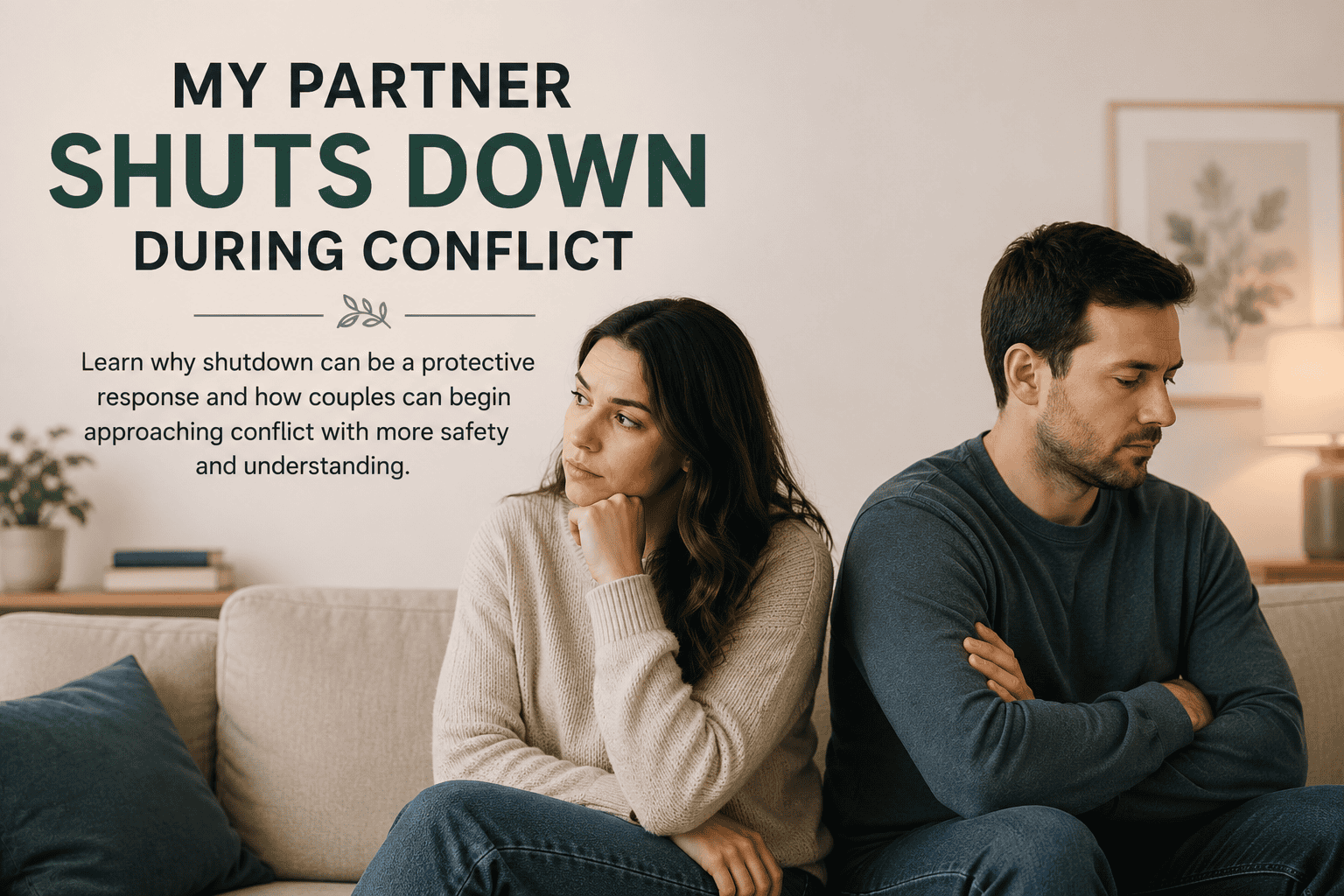
My Partner Shuts Down During Conflict

When a partner becomes quiet, distant, blank, or unable to continue during conflict, the silence can feel rejecting, uncaring, or impossible to understand. Shutdown is often a protective response to emotional overload, fear, shame, helplessness, or the expectation that nothing they say will make the conversation safer. Understanding the response does not mean ignoring its impact. Couples may need a clearer way to pause, regulate, communicate, and reliably return.

Start Here

Shutdown Is Often Protection, but the Disconnection Still Needs Repair

A person who shuts down may not be choosing silence in a calm, deliberate way. Their body may be moving into a state of overwhelm in which thinking, speaking, listening, and staying emotionally present become much harder. They may feel flooded by criticism, urgency, anger, shame, conflict memories, or the fear that any response will make things worse.

The other partner may experience that withdrawal as abandonment at the exact moment they are asking for reassurance, accountability, or connection. They may speak more forcefully, repeat the question, follow the partner from room to room, or demand an immediate answer. The increased pressure can make shutdown more likely, creating a painful cycle in which both people feel alone and misunderstood.

Understanding why shutdown occurs is not the same as accepting endless avoidance. A healthy pause includes communication, a plan to regulate, and a reliable return to the unresolved concern.

Recognizing Shutdown

Withdrawal Can Be Quiet, Physical, Emotional, or Cognitive

Partners do not always use the word “shutdown” in the same way. It can involve silence, leaving, emotional numbness, difficulty finding words, or appearing calm while feeling intensely overwhelmed inside.

Going Silent

The partner stops answering, gives one-word responses, or says “I do not know” because words feel unavailable or unsafe.

Leaving the Conversation

They walk away, go to another room, leave the home, or end a call without a clear plan for returning.

Feeling Numb or Blank

They may report feeling nothing, losing track of the discussion, or becoming mentally foggy and disconnected.

Avoiding Eye Contact

Looking away, covering the face, staring at the floor, or focusing on a device may reduce the intensity of the interaction.

Becoming Emotionally Unreachable

The person may appear detached, flat, cold, or indifferent even while experiencing fear, shame, or distress internally.

Refusing the Topic

They may repeatedly delay, change the subject, or insist that talking will only create another argument.

Why Partners Shut Down

The Response Often Develops From Overwhelm, Learning, and Self-Protection

Shutdown is rarely explained by one cause. Temperament, attachment experiences, family conflict patterns, trauma, neurodivergence, current stress, shame, and the couple’s interaction cycle may all influence the response.

Emotional Flooding

The intensity becomes greater than the person’s current ability to think clearly, listen accurately, or respond constructively.

Fear of Making It Worse

Past conversations may have taught the person that speaking leads to escalation, criticism, misunderstanding, or regret.

Shame or Inadequacy

The concern may be heard as proof that they are failing, unlovable, disappointing, or incapable of getting the relationship right.

Family Learning

They may have grown up in a home where conflict was explosive, unsafe, ignored, or resolved by silence and distance.

Trauma Responses

Raised voices, anger, closeness, confrontation, or feeling trapped may activate freeze, collapse, appeasement, or dissociation.

Stress and Limited Capacity

Exhaustion, illness, work pressure, caregiving, poor sleep, or sensory overload may reduce the capacity for conflict.

The Nervous System

Shutdown May Follow a Fight, Flight, Freeze, or Collapse Response

During intense conflict, the nervous system may interpret emotional danger as though immediate protection is required. Heart rate, muscle tension, attention, and breathing can change. Some people become louder or more urgent. Others become quiet, immobilized, numb, sleepy, detached, or unable to organize language.

Once a person is highly activated or shut down, asking them to explain themselves perfectly may exceed what their brain can do in that moment. Regulation usually needs to come before productive problem-solving.

Possible signs of flooding include:

  • Racing heart, heat, shaking, tightness, or shallow breathing
  • Difficulty remembering what was just said
  • Feeling trapped, cornered, numb, unreal, or far away
  • An urgent need to escape, stop talking, or make the conflict end
  • Assuming the worst meaning behind the partner’s words

Regulation Before Resolution

A Paused Brain Cannot Be Forced Into a Productive Conversation

Continuing to press for answers after one partner has become overwhelmed may increase fear and disconnection. However, disappearing without explanation can intensify the other partner’s fear of abandonment. The goal is not to choose between pressure and avoidance. It is to create a structured pause that protects both people.

A useful pause communicates: “I am overwhelmed, I care about this, and I will return at a specific time.” The return is what separates regulation from indefinite avoidance.

The Pursue-Withdraw Cycle

The More One Partner Presses, the More the Other May Disappear

The visible problem may look like one person talking too much and the other refusing to talk. Underneath, both partners may be protecting the relationship in opposite ways: one seeks immediate engagement to restore connection, while the other seeks distance to prevent escalation or failure.

1. A Concern Appears

One partner raises hurt, disappointment, fear, or an unmet need.

2. Threat Is Felt

The other hears criticism, failure, danger, or an impossible demand.

3. Withdrawal Begins

They become quiet, defensive, blank, distracted, or physically distant.

4. Urgency Increases

The first partner repeats, pursues, raises intensity, or demands a response.

5. Shutdown Deepens

The withdrawing partner feels more trapped and becomes less available.

6. Both Feel Alone

One feels abandoned; the other feels attacked, inadequate, or unsafe.

The cycle—not either partner alone—is often the immediate enemy. Naming it can help couples shift from “You are the problem” to “We are getting pulled into the pattern again.”

Protective Withdrawal

Shutdown Can Be Involuntary or Partly Automatic

Protective shutdown may involve genuine overwhelm, limited language, emotional flooding, freeze responses, or fear of escalation. The person may still care deeply and want repair, but lack the ability to remain engaged at that intensity.

Signs of a protective pause may include:

  • Naming that they are overwhelmed
  • Reassuring the partner that the concern matters
  • Requesting a specific amount of time
  • Using the pause to regulate rather than retaliate
  • Returning when promised and continuing the conversation

Stonewalling or Punitive Silence

Silence Can Also Be Used to Control, Punish, or Avoid Accountability

Not every withdrawal is a nervous-system response. Silence may become harmful when it is used deliberately to frighten, punish, gain leverage, make the other person beg for contact, or prevent any discussion of repeated harm.

Concerning patterns may include:

  • Refusing to communicate for long periods as punishment
  • Leaving without regard for safety or practical responsibilities
  • Never returning to important concerns
  • Mocking the partner for wanting communication
  • Using silence to avoid accountability for betrayal, abuse, or broken agreements

During the Conflict

Slow the Interaction Before Trying to Solve the Entire Problem

When shutdown begins, the immediate goal is to reduce threat while preserving connection and responsibility. A shorter, clearer interaction is often more effective than repeating every detail of the concern.

Name What Is Happening

“I think we are both becoming overwhelmed. I do not want us to keep hurting each other.”

Lower the Intensity

Reduce volume, speed, interruptions, accusations, and the number of issues being discussed at once.

Use One Clear Concern

Focus on the current issue rather than adding every past disappointment or global statement about the relationship.

Reassure the Bond

“I am bringing this up because you matter to me. I want us to understand each other, not win.”

Agree on a Pause

Choose a realistic return time instead of ending with “later,” “not now,” or an undefined disappearance.

Return as Promised

Following through teaches both nervous systems that pausing does not mean abandonment or permanent avoidance.

Create a Pause-and-Return Plan

A Break Works Best When Both Partners Know What Will Happen Next

Couples can create a plan before the next conflict so neither person has to invent it while overwhelmed. The plan should respect the withdrawing partner’s need to regulate and the pursuing partner’s need to know the relationship has not been abandoned.

A helpful plan may include:

  • A phrase either partner can use to request a pause
  • A brief statement of reassurance and responsibility
  • A specific return time, often within the same day when possible
  • A method for reconnecting if the conflict occurred by phone or text
  • Agreement that neither partner will pursue, threaten, insult, or disappear during the break
  • Regulation activities that reduce activation rather than increase resentment
  • A plan to reschedule if either person remains too overwhelmed at the first return time

Possible pause request: “I am becoming overwhelmed and I do not want to say something harmful or disappear. I need 30 minutes. I care about this, and I will come back at 7:30 so we can continue.”

Possible response: “I am scared the conversation will never happen, but I can give you 30 minutes if we agree to return at 7:30.”

Possible return: “Thank you for giving me space. I am ready to hear the main thing you need me to understand.”

A break should be long enough for activation to decrease but not so vague that it becomes another form of abandonment. The exact timing may vary depending on safety, schedules, and the intensity of the conflict.

For the Partner Who Shuts Down

Communicate the Need for Space Without Disappearing

You may not be able to continue the full conversation while overwhelmed, but even a short statement can reduce your partner’s fear and help you remain accountable to the relationship.

Helpful practices may include:

  • Notice early body signals before complete shutdown
  • Say that you are overwhelmed rather than saying nothing
  • Reassure your partner that the concern matters
  • Request a specific pause and offer a return time
  • Use the break to regulate, not rehearse blame
  • Return when promised, even if you still need a slower pace
  • Practice naming one feeling, one fear, and one need

For the Partner Who Pursues

Protect the Conversation From Becoming More Threatening

Your urgency may come from feeling alone, dismissed, or afraid the issue will never be addressed. Those needs matter. At the same time, increasing intensity after shutdown begins often makes emotional availability less likely.

Helpful practices may include:

  • State the main concern in one or two sentences
  • Avoid following, blocking exits, repeated texting, or demanding immediate answers
  • Ask for a clear return time rather than refusing all pauses
  • Use the break to regulate your own abandonment fear or anger
  • Save additional concerns for later rather than stacking issues
  • Notice and acknowledge genuine attempts to return and engage
  • Maintain boundaries if pauses repeatedly become avoidance

Build Emotional Safety

Partners Stay More Present When Conflict Feels Difficult but Not Dangerous

Emotional safety does not require avoiding disagreement. It means that both partners can express concerns, needs, and boundaries without expecting humiliation, intimidation, contempt, retaliation, or abandonment.

Listen for Meaning

Try to understand the fear, hurt, or need beneath the words before preparing a defense.

Reduce Contempt

Mocking, eye-rolling, name-calling, disgust, and character attacks make openness and regulation less available.

Make Conflict Predictable

Use agreed timeouts, return times, and limits so conflict does not feel endless or impossible to escape.

Respect Boundaries

Neither partner should be forced to continue while flooded, physically blocked from leaving, or punished for asking for space.

Use Softer Openings

Describe the situation, feeling, and need without leading with blame or a conclusion about the partner’s character.

Follow Repair With Change

Apologies become safer when they are followed by different behavior, clearer agreements, and consistent follow-through.

After the Conflict

Talk About the Pattern When Both Partners Are Regulated

The best time to understand shutdown is usually not during complete shutdown. Later, couples can discuss what each person noticed, what the behavior meant to them, and what might make the next conflict safer.

Questions for the partner who shut down:

  • What did you notice in your body before words became difficult?
  • What did you fear would happen if the conversation continued?
  • What did you need but not know how to ask for?
  • What reassurance could you offer before taking a pause?
  • What would help you return more reliably?

Questions for the partner who felt abandoned:

  • What did the silence or withdrawal mean to you in that moment?
  • What fear or unmet need increased your urgency?
  • What specific reassurance would make a pause more tolerable?
  • How could you raise the concern with less intensity?
  • What boundary is needed if the issue is repeatedly avoided?

Repair is not deciding which partner’s coping response is more justified. It is understanding how both responses affect the bond and creating a safer pattern together.

Attachment and Conflict

Shutdown May Protect Against Rejection, Failure, Engulfment, or Emotional Exposure

Attachment patterns can influence how partners respond when the relationship feels uncertain. One person may move toward the conflict to restore closeness, while the other moves away to protect autonomy, reduce shame, or regain emotional control.

Anxious Pursuit

Distance may activate fear of abandonment, creating urgency for immediate reassurance, answers, and emotional contact.

Avoidant Withdrawal

Conflict may activate fear of criticism, dependence, failure, or loss of control, making distance feel protective.

Fearful or Mixed Responses

A partner may want closeness intensely and then shut down when emotional exposure feels dangerous.

Secure Conflict

Partners can pause without abandoning, express needs directly, respect boundaries, and return for repair.

Experience Shapes the Pattern

Family conflict, betrayal, trauma, invalidation, and past relationships may change how confrontation is interpreted.

Patterns Can Change

Repeated experiences of safe engagement, predictable pauses, and successful repair can support greater security.

When Shutdown Persists

One Partner Cannot Maintain the Conversation Alone

A partner can lower intensity, communicate more clearly, and respect reasonable pauses, but they cannot force emotional engagement. If important concerns are never revisited, the relationship may accumulate resentment, loneliness, mistrust, and unresolved practical problems.

Individual or couples counseling may help clarify whether the pattern reflects overwhelm, avoidance, depression, trauma, substance use, neurodivergence, relationship injury, or unwillingness to participate in repair.

Safety Comes First

Withdrawal Is Different From Escaping Intimidation or Abuse

A person may need to leave a conversation because there are threats, physical aggression, blocked exits, property damage, stalking, coercive control, or fear of retaliation. In those circumstances, the priority is safety rather than improving communication within the moment.

Standard conjoint couples therapy may be unsafe when one partner cannot speak freely. A qualified clinician may recommend individual support, specialized services, or safety planning before relationship work.

Therapist Spotlight

Work With Carolina Román for EFT-Focused Couples Counseling

At Motivations Counseling, Carolina Román, LMFT works with couples using an attachment-focused approach that helps partners understand shutdown, emotional flooding, pursuit, withdrawal, unresolved hurt, and negative conflict cycles.

Her couples work emphasizes emotional safety and the relationship pattern rather than treating one partner as the sole problem. She helps couples slow protective reactions, communicate the vulnerability underneath them, and practice clearer ways of pausing, returning, listening, responding, and repairing.

Carolina serves clients through Motivations Counseling’s Houston-area couples counseling services and through telehealth across Texas when clinically appropriate.

Learn More About Carolina Román

Frequently Asked Questions

Common Questions When a Partner Shuts Down During Conflict

Why does my partner shut down during arguments?

A partner may shut down because they feel emotionally flooded, ashamed, criticized, trapped, afraid of escalation, or unable to organize their thoughts. Family learning, attachment patterns, trauma, stress, and the couple’s conflict cycle may also contribute.

Does shutting down mean my partner does not care?

Not necessarily. Some people withdraw because they care and fear making the conflict worse, failing their partner, or being unable to respond correctly. The impact can still feel lonely and rejecting, so the pattern needs communication and repair.

What should I do when my partner goes silent?

Lower the intensity, name that the conversation appears overwhelming, and ask whether a structured pause would help. Request a specific time to return so the concern is not abandoned. Avoid following, cornering, insulting, or demanding immediate answers.

How long should a conflict timeout last?

There is no single required length. The pause should be long enough for activation to decrease and short enough that it does not become indefinite avoidance. Couples may begin with 20 to 60 minutes and agree on a specific return time that fits the situation.

What if my partner never returns to the conversation?

Repeatedly requesting breaks without returning is avoidance rather than effective regulation. Discuss the pattern during a calm time, establish a clear return agreement, and consider couples counseling if important concerns remain chronically unresolved.

Is shutting down the same as stonewalling?

The terms may overlap, but the meaning and intent can differ. Shutdown may reflect involuntary overwhelm, while stonewalling can also describe a repeated refusal to engage or silence used to punish, control, or avoid accountability. Behavior after the pause matters.

Can trauma cause someone to shut down during conflict?

Yes. Conflict cues such as raised voices, anger, closeness, confrontation, or feeling trapped may activate freeze, collapse, appeasement, dissociation, or an urgent need to escape. Trauma-informed treatment should emphasize safety, choice, and pacing.

Can attachment styles contribute to shutdown?

Yes. Avoidant patterns may increase emotional withdrawal or self-reliance under pressure, while anxious patterns may increase pursuit and urgency. Fearful or mixed patterns may involve wanting closeness and then withdrawing when vulnerability feels unsafe.

Can couples counseling help with shutdown during conflict?

Couples counseling may help partners identify the cycle, recognize flooding earlier, create reliable pause-and-return plans, communicate underlying fears and needs, and practice safer ways of engaging and repairing.

When is couples therapy not the right first step?

Standard conjoint couples therapy may be unsafe when there is active violence, coercive control, credible threats, stalking, intimidation, blocked exits, or fear of retaliation. A qualified clinician should assess safety and recommend appropriate support.

Susan Baker, M.Ed., NCC, LPC-S, Licensed Professional Counselor Supervisor in Texas

Article Author

Written by a Licensed Texas Mental Health Professional

This article was written for Motivations Counseling by Susan Baker, M.Ed., NCC, LPC-S, a Texas Licensed Professional Counselor Supervisor and Clinical Director of Motivations Counseling.

Motivations Counseling provides couples counseling, trauma-informed therapy, EMDR therapy, anxiety treatment, depression counseling, and mental health assessment services. The practice serves clients from offices in Sugar Land and Katy, Texas, with telehealth services available statewide when clinically appropriate.

Couples Counseling in Sugar Land, Katy & Online Across Texas

Conflict Does Not Have to End in Pursuit, Silence, or Emotional Distance

If one partner becomes overwhelmed and shuts down while the other feels abandoned and pushes harder, couples counseling can provide a structured space to understand the pattern, create safer pauses, communicate underlying needs, and practice more reliable ways of returning and repairing.

×

Why Do I Feel Lonely in My Relationship?

Couples Counseling & EFT Resource Center

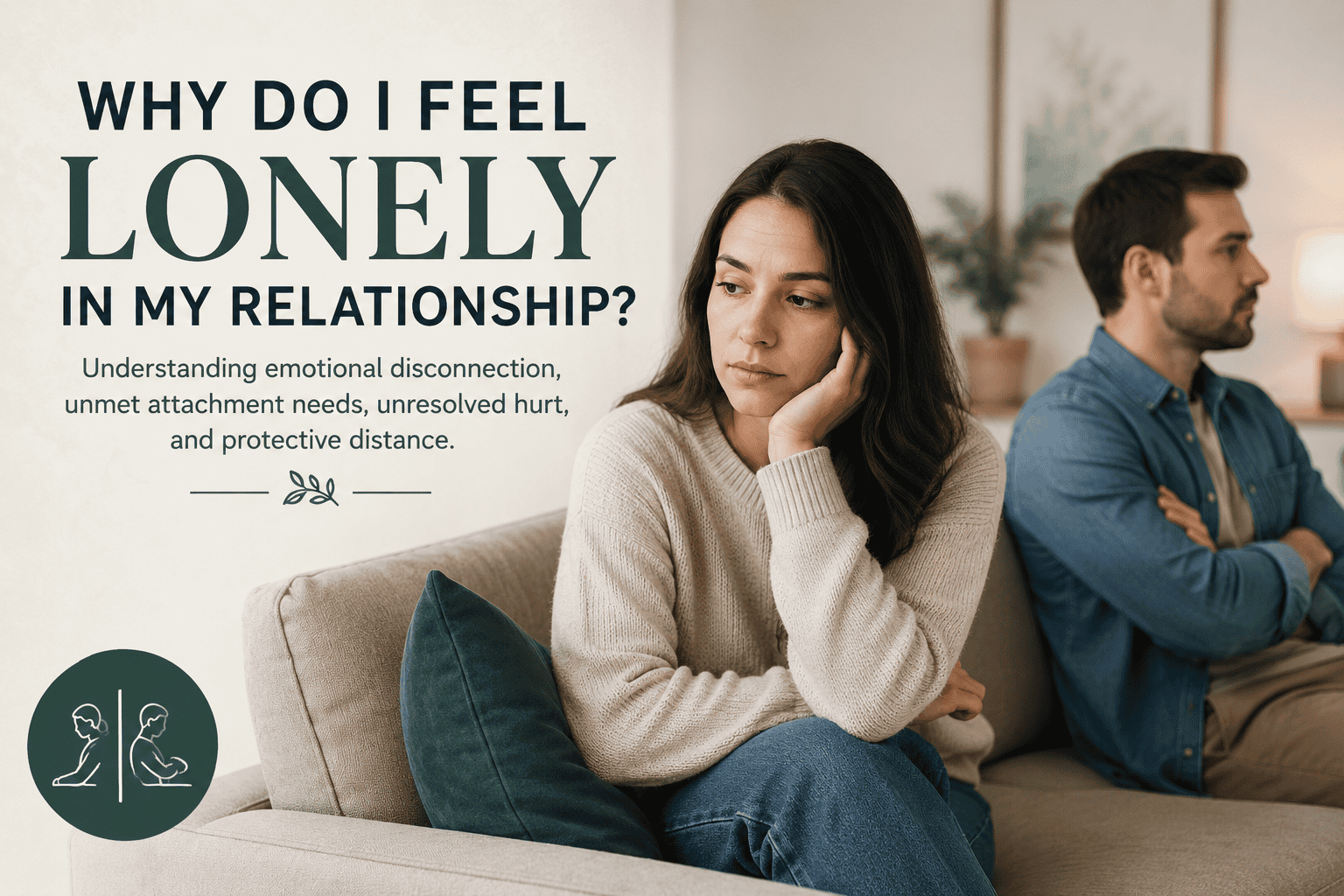
Why Do I Feel Lonely in My Relationship?

Feeling lonely while partnered can be confusing because companionship and emotional connection are not the same thing. A couple may share a home, responsibilities, routines, children, affection, or years of history while one or both partners still feel emotionally alone. Relationship loneliness may be connected to emotional disconnection, unmet attachment needs, unresolved hurt, communication patterns, chronic stress, or protective distance that once helped a person feel safer.

Start Here

Relationship Loneliness Often Means the Emotional Bond Feels Difficult to Reach

Loneliness in a relationship does not necessarily mean that love is gone or that the relationship must end. It may mean that important emotional needs are not being noticed, expressed, understood, or responded to in a way that creates a felt sense of connection.

Some people describe this experience as living beside their partner rather than with them. Others feel lonely mainly during conflict, stress, illness, parenting challenges, sexual disconnection, or moments when they most need comfort. The feeling may be constant, intermittent, or activated by a familiar relationship pattern.

Feeling lonely is information, not proof that either partner is uncaring. It can signal a need for more emotional availability, clearer communication, repair, practical support, boundaries, or a different way of reaching for connection.

Recognizing Relationship Loneliness

You Can Feel Lonely Even When You Spend a Great Deal of Time Together

Emotional loneliness is less about physical proximity and more about whether a person feels seen, known, important, supported, and able to reach their partner when connection matters.

Conversations Stay on the Surface

Most communication centers on schedules, children, bills, chores, or tasks rather than feelings, hopes, fears, or personal experiences.

You Feel Unseen

Your partner may know what happened during your day but seem less aware of how those experiences affected you emotionally.

You Stop Reaching

After repeated disappointment, you may share less, ask for less, or decide it feels safer not to need anything.

You Feel Alone Beside Them

Time together may still feel emotionally empty because attention, curiosity, responsiveness, or affection is limited.

Support Feels Unavailable

You may hesitate to turn toward your partner during stress because you expect advice, dismissal, irritation, silence, or defensiveness.

You Miss Who You Used to Be Together

The relationship may still function, but warmth, playfulness, affection, friendship, or shared meaning feels harder to access.

Why Loneliness Develops

Emotional Distance Usually Grows Through Repeated Interactions and Unmet Needs

Relationship loneliness rarely has only one cause. Several patterns may interact until partners no longer feel confident that reaching for each other will lead to comfort, understanding, or repair.

Emotional Disconnection

Partners may care deeply but struggle to remain emotionally accessible, responsive, and engaged with one another.

Unmet Attachment Needs

Needs for reassurance, comfort, closeness, reliability, autonomy, or emotional presence may remain unspoken or misunderstood.

Unresolved Hurt

Betrayal, repeated disappointment, harsh conflict, abandonment during distress, or broken promises may reduce emotional openness.

Protective Distance

Withdrawal, self-reliance, emotional numbing, humor, overworking, or avoidance may protect against rejection or overwhelm.

Chronic Stress and Depletion

Parenting, work, caregiving, illness, financial pressure, grief, and poor sleep can reduce emotional capacity.

A Negative Interaction Cycle

One partner may pursue connection while the other withdraws, causing both people to feel increasingly alone and misunderstood.

Attachment Needs

Loneliness Can Reflect a Need to Know That Your Partner Is Emotionally Available

Attachment needs are the relational needs that help people feel secure in an important bond. They may include knowing that a partner will notice distress, respond with care, remain emotionally present, return after conflict, respect boundaries, and communicate that the relationship matters.

Common attachment questions include:

  • Can I reach you when I need you?
  • Do my feelings matter to you?
  • Will you stay emotionally present when things are difficult?
  • Can I depend on you without losing myself?
  • Will you respect my need for space and still return?
  • Are we on the same team?

Needs May Look Different

Partners Can Experience Connection in Different Ways

One partner may feel connected through conversation and reassurance, while another experiences connection through shared activity, practical help, touch, humor, or quiet companionship. Differences are not automatically incompatibility, but they can create loneliness when each partner offers connection mainly in the form they would prefer to receive it.

Naming what helps each person feel emotionally close can reduce guessing, resentment, and the belief that a partner should simply know what is needed.

Protective Distance

Sometimes the Behaviors That Create Loneliness Began as Attempts to Stay Safe

People often distance themselves for understandable reasons. A person may have learned that expressing needs leads to criticism, that conflict becomes overwhelming, that dependence creates vulnerability, or that important feelings are likely to be dismissed. Withdrawal can reduce immediate distress even while increasing long-term loneliness.

Protective distance may include:

  • Keeping conversations practical and avoiding emotional subjects
  • Using work, parenting, screens, hobbies, substances, or constant activity to stay occupied
  • Saying “I am fine” when hurt, disappointed, or afraid
  • Becoming highly self-reliant and rarely asking for help
  • Shutting down during conflict or leaving without a plan to return
  • Using sarcasm, criticism, or anger to cover sadness, fear, or longing
  • Assuming that needing reassurance is weak, demanding, or unsafe

Protective behaviors are not character flaws. They may have developed for a reason. Change becomes more possible when partners understand what the behavior is protecting and build safer alternatives rather than demanding immediate openness.

Unresolved Relationship Hurt

Closeness Becomes Difficult When Important Injuries Have Not Been Repaired

A couple may try to move forward after betrayal, secrecy, criticism, emotional abandonment, broken promises, or a painful conflict without fully understanding the impact. Daily life resumes, but the injured partner may remain guarded, watchful, resentful, or uncertain about whether vulnerability is safe.

Repair may require:

  • Honest acknowledgment of what happened
  • Responsibility without minimizing or shifting blame
  • Understanding the emotional impact
  • Clear boundaries and changed behavior
  • Appropriate transparency
  • Patience and consistent follow-through

Distance Can Be Protective

The Hurt Partner Should Not Be Pressured to Reconnect Quickly

Emotional or physical closeness should not be used as proof of forgiveness. A partner may need time, information, boundaries, emotional processing, and repeated evidence of reliability before the relationship feels safer.

Ongoing deception, an active affair, intimidation, repeated boundary violations, or refusal to take responsibility may prevent trust and emotional connection from being rebuilt.

Communication and Loneliness

Partners May Talk Often Without Feeling Emotionally Understood

Communication creates connection when partners can share meaning, emotion, and need—not only information. Certain responses may unintentionally leave a person feeling more alone even when the other partner is trying to help.

Immediate Problem-Solving

Advice may feel dismissive when a partner first needs empathy, comfort, or help feeling understood.

Defensiveness

A concern may become a debate about intent, facts, or fairness before the emotional impact is acknowledged.

Shutdown or Silence

Withdrawal may help one partner regulate but can feel like abandonment when there is no reassurance or plan to return.

Minimizing

Statements such as “It is not a big deal” or “You are overthinking” can make emotional experience feel invalid.

Assuming Instead of Asking

Partners may rely on old explanations rather than staying curious about what the other person currently feels or needs.

Poor Timing

Important conversations may repeatedly happen when one or both partners are exhausted, distracted, rushed, or emotionally flooded.

The Loneliness Cycle

The More Alone Partners Feel, the More Their Protective Reactions May Push Them Apart

Couples often become trapped in a self-reinforcing cycle. Each person's reaction makes sense from inside their own experience, but the pattern creates the very distance both partners fear.

1. Disconnection

One partner notices distance, limited attention, or reduced emotional availability.

2. Meaning

The distance may be interpreted as rejection, lack of love, criticism, pressure, or inevitable conflict.

3. Protection

One partner pursues, criticizes, protests, shuts down, withdraws, appeases, or becomes highly self-reliant.

4. Partner Reaction

The other partner feels pressured, unimportant, blamed, overwhelmed, or unable to respond successfully.

5. More Distance

Communication narrows, emotional safety decreases, and both partners feel less understood.

6. Loneliness Deepens

Each person sees the cycle as evidence that reaching out is dangerous, pointless, or likely to fail.

The cycle—not either partner—is often the central relationship problem. Identifying the pattern can reduce blame and help partners notice the fear, hurt, longing, or overwhelm beneath their protective reactions.

Talking About Loneliness

Lead With Your Experience and a Clear Request Rather Than a Global Judgment

Statements such as “You never care,” “We are basically roommates,” or “You make me feel completely alone” may express real pain, but they can also invite defensiveness. Softer language can make the underlying loneliness easier to hear.

Possible conversation starters:

  • “I have been feeling emotionally alone lately, and I miss feeling close to you.”
  • “I know we spend time together, but I do not feel like we have been emotionally connecting.”
  • “When I share something difficult and we move immediately into solutions, I feel less understood. Could you listen first?”
  • “I have stopped bringing things up because I expect us to argue or shut down. I want to find a safer way to talk.”
  • “I need reassurance that we are okay before we solve the problem.”
  • “What helps you feel close to me, and what makes closeness harder?”
  • “Could we protect twenty minutes this week to talk without phones or other tasks?”

Instead of: “You are never there for me.”

Try: “When I was upset yesterday and we did not return to the conversation, I felt alone. I would like us to check back in tonight.”

A request is more actionable than a test. Asking for ten minutes of listening, a return time after a break, a weekly check-in, or a reassuring response gives the partner a clearer opportunity to respond.

Rebuilding Connection

Small, Repeated Experiences of Responsiveness Can Reduce Emotional Loneliness

Reconnection usually develops through ordinary interactions that communicate attention, reliability, warmth, interest, and care. The goal is not constant closeness but a stronger expectation that partners can find each other again.

Use Emotional Check-Ins

Ask what felt heavy, meaningful, stressful, encouraging, or lonely rather than discussing only events and tasks.

Protect Attention

Create brief periods without phones, television, work, chores, or multitasking so emotional contact has room to develop.

Listen Before Solving

Ask whether the partner wants empathy, advice, practical help, reassurance, or space before deciding how to respond.

Notice What Is Working

Specific appreciation can help partners feel seen and can strengthen positive interactions that otherwise go unrecognized.

Return After Disconnection

Repair grows when partners acknowledge hurt, clarify misunderstandings, apologize, and try the conversation again.

Create Shared Experiences

Time together can include conversation, affection, play, novelty, shared interests, or quiet companionship that both partners enjoy.

Individual Reflection

Understanding Your Own Needs Can Make Connection Easier to Request

Relationship loneliness is relational, but individual awareness still matters. A person may benefit from identifying what connection means to them, which situations activate loneliness, what they tend to assume, and how they protect themselves when they expect disappointment.

Questions to consider:

  • When do I feel most alone in this relationship?
  • What response am I hoping for in those moments?
  • Do I communicate the need directly or expect my partner to infer it?
  • Do I pursue, criticize, withdraw, appease, or become self-reliant when I feel disconnected?
  • What past experiences may influence how I interpret distance?
  • Which needs can be met through friendship, community, interests, spirituality, or individual support?

A Relationship Cannot Meet Every Need

Healthy Connection Includes Partnership, Individuality, and Community

A partner can be an important source of emotional support without becoming the only source. Friendships, family, community, meaningful activities, spiritual life, rest, and personal interests may all protect against isolation and help a person remain connected to a broader sense of self.

This does not mean ignoring chronic relationship loneliness. It means approaching connection as both a relational and individual responsibility rather than asking one person to meet every emotional need.

Connection Requires Reciprocity

One Partner Cannot Create Emotional Availability for Both People

One person can make clearer requests, listen more carefully, take responsibility, and work on their own protective patterns. However, a safe emotional bond requires some willingness from both partners. Repeated contempt, deception, punishment, refusal to repair, or persistent emotional unavailability may limit what one person can rebuild alone.

When Loneliness Exists With Fear

Safety Must Come Before Vulnerability

Active violence, coercive control, credible threats, stalking, surveillance, intimidation, or fear of retaliation require careful safety assessment. Standard conjoint couples therapy may be unsafe when one partner cannot speak freely or when disclosures could lead to punishment.

A qualified clinician may recommend individual support, specialized services, safety planning, substance-use treatment, or psychiatric stabilization before or alongside relationship work.

Therapist Spotlight

Work With Carolina Román for EFT-Focused Couples Counseling

At Motivations Counseling, Carolina Román, LMFT works with couples using an attachment-focused approach that helps partners understand emotional loneliness, negative interaction cycles, blocked vulnerability, and difficulty reaching one another during stress or conflict.

Her couples work emphasizes emotional safety, responsiveness, and the relationship pattern rather than treating one partner as the sole problem. She helps couples slow protective reactions and practice new ways of reaching, listening, responding, and repairing.

Carolina serves clients through Motivations Counseling’s Houston-area couples counseling services and through telehealth across Texas when clinically appropriate.

Learn More About Carolina Román

Frequently Asked Questions

Common Questions About Feeling Lonely in a Relationship

Why do I feel lonely even though I am in a relationship?

You may feel lonely when emotional needs for attention, understanding, reassurance, affection, support, or responsiveness are not being met consistently. Physical proximity and relationship status do not automatically create emotional connection.

Does feeling lonely mean I no longer love my partner?

Not necessarily. People can love their partners and still feel emotionally disconnected, unseen, unsupported, or unsure how to reach one another. Loneliness may signal that the relationship bond needs attention rather than proving that love is gone.

Can both partners feel lonely at the same time?

Yes. One partner may feel lonely because they are not receiving enough reassurance or emotional engagement, while the other feels lonely because they experience criticism, pressure, or little room to express themselves safely. Both may be reacting to the same negative cycle in different ways.

How do I tell my partner that I feel lonely?

Choose a calmer time and describe your experience without making a global judgment about your partner's character. Name a specific situation, the feeling it created, and a realistic request such as listening for ten minutes, scheduling a check-in, or returning to an unresolved conversation.

Can emotional intimacy return after a long period of distance?

It may be possible when both partners are willing to understand the pattern, create greater emotional safety, communicate more honestly, repair hurt, and follow through consistently. The pace depends on the relationship history and the seriousness of unresolved injuries.

Can attachment styles contribute to relationship loneliness?

Yes. Anxious patterns may increase sensitivity to distance and reassurance seeking, while avoidant patterns may increase self-reliance, emotional withdrawal, or discomfort with dependence. Attachment patterns are not fixed diagnoses and can change.

What if my partner does not think there is a problem?

Focus on your lived experience and specific changes you are requesting rather than trying to prove that the relationship is objectively lonely. If your concerns are repeatedly dismissed or mocked, individual counseling may help you clarify your needs, boundaries, and available choices.

Can couples counseling help with relationship loneliness?

Couples counseling may help partners identify the cycle that creates distance, understand unmet attachment needs, communicate vulnerable emotions more safely, repair unresolved hurt, and practice more responsive ways of connecting.

Should I work on loneliness individually or as a couple?

Either or both may be appropriate. Couples work can address the relationship cycle, while individual counseling may help with depression, anxiety, trauma, grief, self-worth, social isolation, or protective patterns that also affect loneliness.

When is couples therapy not the right first step?

Standard conjoint couples therapy may be unsafe when there is active violence, coercive control, credible threats, stalking, intimidation, or fear of retaliation. A qualified clinician should assess safety and determine whether individual support, specialized services, or safety planning should come first.

Susan Baker, M.Ed., NCC, LPC-S, Licensed Professional Counselor Supervisor in Texas

Article Author

Written by a Licensed Texas Mental Health Professional

This article was written for Motivations Counseling by Susan Baker, M.Ed., NCC, LPC-S, a Texas Licensed Professional Counselor Supervisor and Clinical Director of Motivations Counseling.

Motivations Counseling provides couples counseling, trauma-informed therapy, EMDR therapy, anxiety treatment, depression counseling, and mental health assessment services. The practice serves clients from offices in Sugar Land and Katy, Texas, with telehealth services available statewide when clinically appropriate.

Couples Counseling in Sugar Land, Katy & Online Across Texas

You Do Not Have to Keep Feeling Emotionally Alone in Your Relationship

If you and your partner care about each other but struggle to feel emotionally connected, couples counseling can provide a structured space to understand the pattern, communicate unmet needs, address unresolved hurt, and practice new ways of reaching and responding.

×

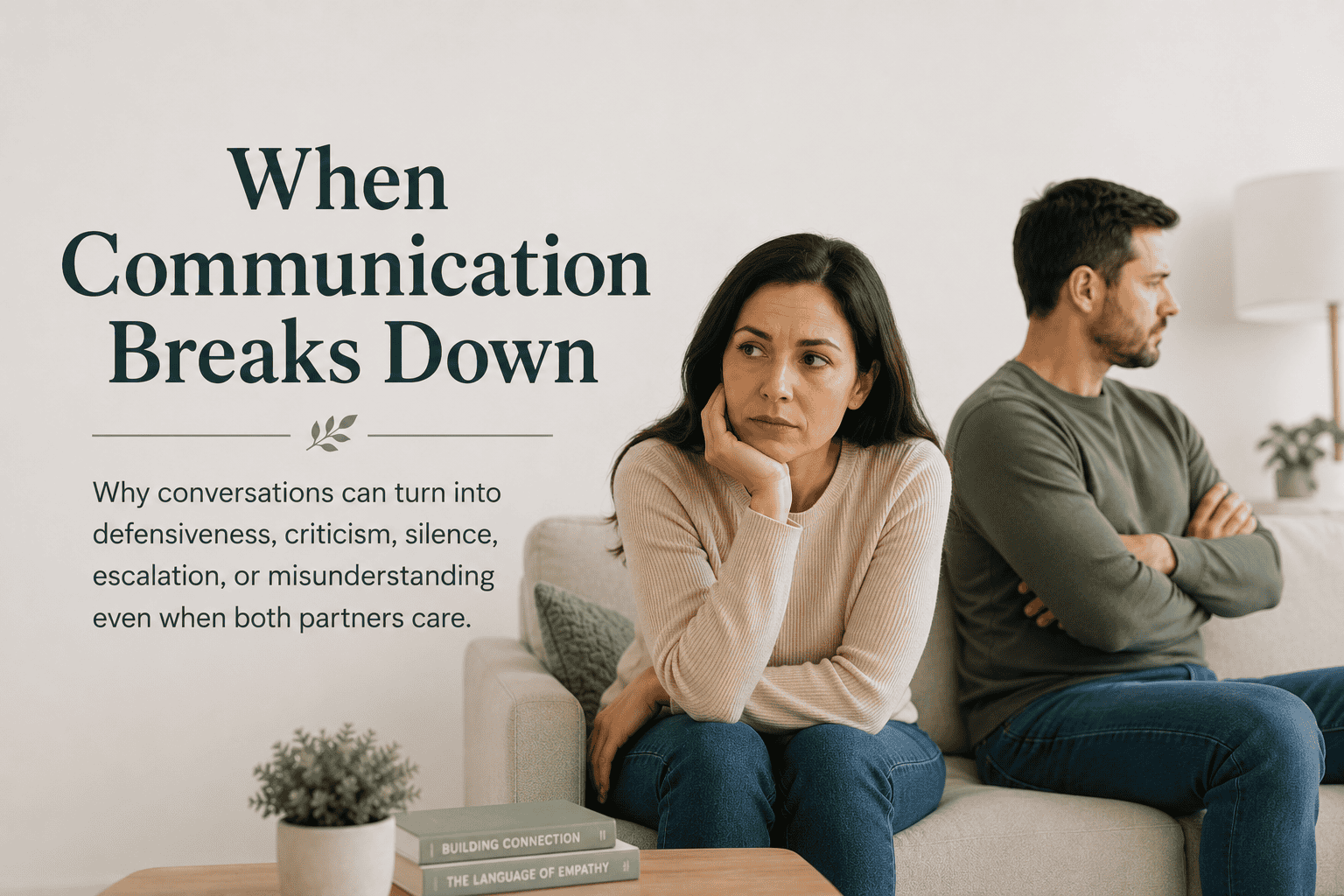
When Communication Breaks Down in a Relationship

Couples Counseling & EFT Resource Center

When Communication Breaks Down in a Relationship

Communication can break down even when both partners care deeply and genuinely want the relationship to work. A practical conversation may quickly turn into criticism, defensiveness, silence, escalation, or misunderstanding when either person feels blamed, dismissed, controlled, rejected, or emotionally unsafe. The problem is often not a lack of communication. It is the protective pattern that takes over when the conversation begins to feel threatening.

Start Here

Caring About Each Other Does Not Automatically Make Difficult Conversations Feel Safe

Partners may enter a conversation with good intentions and still leave feeling criticized, ignored, controlled, or misunderstood. One person may be trying to solve the problem while the other needs emotional acknowledgment first. One may want to talk immediately while the other needs time to organize thoughts. One may hear a request while the other hears an accusation.

Once the nervous system becomes activated, each partner may respond to the emotional meaning of the conversation rather than only to the words. The discussion can shift from “How do we solve this?” to “Do I matter?” “Am I safe with you?” “Am I failing?” or “Will you listen to me?”

Communication problems are often relationship-pattern problems. Better wording can help, but lasting change may also require understanding the fear, hurt, shame, loneliness, and attachment needs beneath the words.

Why Conversations Go Off Track

Communication Breaks Down When Protection Becomes More Urgent Than Connection

A partner may defend, criticize, withdraw, explain, correct, attack, appease, or shut down because the conversation feels emotionally risky—not because the relationship is unimportant.

Perceived Threat

Tone, timing, facial expression, or wording may be interpreted as rejection, criticism, abandonment, control, or disrespect.

Different Meanings

The same words can carry different meanings based on history, attachment, culture, expectations, and prior conflict.

Emotional Flooding

High activation can reduce listening, memory, empathy, flexible thinking, and access to calm language.

Unresolved History

Old hurts, betrayals, repeated disappointments, or failed repairs can make the current issue feel much larger.

Stress and Depletion

Fatigue, work, parenting, illness, grief, financial pressure, and lack of privacy reduce communication capacity.

Negative Cycles

Repeated patterns teach each partner to anticipate the other’s reaction before the conversation has fully begun.

The Breakdown Sequence

The Conversation Usually Changes Before Either Partner Realizes It

A communication breakdown often begins with a small trigger that becomes connected to a larger relationship meaning. That meaning activates emotion and a protective response. The other partner reacts to the protection, and the original concern is replaced by a conflict about tone, intention, fairness, or whether the conversation should continue.

A common sequence includes:

  • Trigger: A question, correction, delayed reply, distracted response, missed task, or sensitive topic
  • Interpretation: “You do not care,” “I am being blamed,” “I am failing,” or “You are trying to control me”
  • Emotion: Hurt, fear, shame, loneliness, anger, helplessness, frustration, or dread
  • Protection: Criticism, defense, explaining, silence, withdrawal, escalation, sarcasm, or appeasing
  • Partner reaction: The protection is experienced as rejection, attack, indifference, or proof that talking is unsafe
  • Breakdown: Both partners leave feeling less understood and more prepared to protect themselves next time

The same sequence can repeat across different topics. A couple may believe they have many separate communication problems when one emotional pattern is appearing in many situations.

Criticism

A Complaint Can Become a Statement About the Partner’s Character

A complaint identifies a specific concern. Criticism often communicates that the partner is selfish, lazy, uncaring, irresponsible, controlling, or fundamentally flawed. Even when the concern is valid, character-based language makes it harder for the other person to remain open.

  • “You never think about anyone but yourself.”
  • “You always ruin everything.”
  • “I cannot depend on you for anything.”
  • “You clearly do not care.”

What May Be Underneath

Criticism Is Often a Protest Against Disconnection

The criticizing partner may feel ignored, unsupported, lonely, overburdened, unimportant, or afraid that the issue will never change. The deeper message may be: “Please notice me,” “Please take this seriously,” or “I need to know we are a team.”

Understanding the need underneath criticism does not make contempt, humiliation, or verbal abuse acceptable. Concerns still need to be expressed with specificity, respect, and responsibility.

Defensiveness

Self-Protection Can Make the Other Partner Feel Unheard

Defensiveness may include explaining intent, correcting details, denying impact, counterattacking, shifting blame, or listing the other partner’s mistakes. The defensive partner may be trying to avoid shame, unfair blame, or the feeling that they are a bad partner.

  • “That is not what happened.”
  • “You do the same thing.”
  • “I only reacted because you started it.”
  • “Nothing I do is ever good enough for you.”

Impact Before Intent

Intent Matters, but It Does Not Erase the Partner’s Experience

A more productive response may begin with acknowledging impact before explaining intention: “I understand why that felt dismissive. I did not intend to ignore you, but I can see that I did not respond.”

Accountability does not require agreeing with every detail or accepting unfair accusations. It means identifying the part that is accurate without immediately turning the conversation into self-defense.

Silence, Withdrawal, and Shutdown

Quiet Does Not Always Mean Calm or Indifference

A partner may become silent because they are emotionally flooded, ashamed, confused, afraid of escalation, or unable to organize thoughts. The other partner may experience the silence as abandonment, punishment, or lack of care.

Loss of Words

Activation may make it difficult to identify feelings, remember details, or form a clear response.

Fear of Making It Worse

The partner may believe that any answer will be wrong or will lead to a larger argument.

Need for Distance

Leaving may be an attempt to regulate, but disappearing without explanation can intensify the other partner’s alarm.

A Structured Pause

Space is more reassuring when the partner names the need, gives a return time, and comes back as promised.

Avoidance

Some partners repeatedly postpone topics because vulnerability, conflict, or accountability feels unsafe.

Emotional Numbing

Shutdown can feel like going blank, detached, exhausted, or unable to remain emotionally engaged.

Escalation and Emotional Flooding

The More Urgent the Conversation Feels, the Less Productive It May Become

Escalation can involve louder voices, faster speech, interruptions, repeated accusations, following the partner, bringing in old conflicts, threatening the relationship, or demanding immediate resolution. The person escalating may be trying to make the seriousness of the issue understood.

Intensity can make the other partner more defensive, frightened, confused, or shut down. Both people may lose access to empathy, context, and the ability to distinguish the current concern from older pain.

Signs that a pause may be needed include:

  • Repeating the same statements without new understanding
  • Difficulty remembering what the partner just said
  • Shaking, racing heart, numbness, dizziness, or feeling trapped
  • Personal attacks, contempt, threats, or escalating volume
  • An urge to send harmful messages or make major decisions immediately
  • Either partner becoming unable to speak or remain oriented

A pause should protect the relationship from further harm, not punish the other partner. It works best with reassurance, a clear time frame, and an agreement to return to one manageable issue.

Assumptions and Misinterpretation

Partners Often Respond to the Meaning They Heard, Not the Words That Were Said

A request for help may be heard as criticism. A request for space may be heard as abandonment. A question may be heard as interrogation. A practical suggestion may be heard as control. A neutral facial expression may be read as contempt or indifference.

Interpretations may be shaped by the current relationship, earlier experiences, attachment patterns, trauma, culture, family communication, and unresolved conflicts.

Check the Meaning

Curiosity Can Slow Down Automatic Conclusions

  • “What did you hear me saying?”
  • “What did that mean to you?”
  • “I noticed your expression changed. What happened inside?”
  • “Are you asking for reassurance, a solution, or help understanding?”
  • “I may be making an assumption. Can I check it with you?”
  • “What is the main thing you need me to understand?”

Attachment and Communication

Attachment Patterns May Shape What Partners Need During Difficult Conversations

Attachment style does not determine behavior, but it can influence sensitivity to distance, criticism, dependence, emotional intensity, and uncertainty about the bond.

Anxious Patterns

May increase reassurance seeking, urgency, sensitivity to tone, and fear that distance means rejection.

Avoidant Patterns

May increase self-reliance, discomfort with intensity, minimizing needs, or withdrawal under pressure.

Mixed Patterns

A partner may want closeness and fear it at the same time, moving between pursuit, shutdown, and guardedness.

Secure Communication

Includes asking directly, tolerating difference, taking accountable pauses, returning, listening, and repairing.

Relationship History

Trust injuries, repeated invalidation, abandonment, or betrayal can change how safe communication feels.

Patterns Can Change

Responsiveness, boundaries, accountability, and repair can build greater security over time.

Stress Load

Communication Capacity Changes With Sleep, Health, Work, Parenting, and Grief

A couple may communicate relatively well under ordinary conditions and struggle during chronic stress. Exhaustion, pain, caregiving, financial strain, pregnancy, infertility, work pressure, illness, and lack of privacy can reduce patience and make neutral events feel more threatening.

Improving communication may require more than better wording. The couple may also need rest, practical support, clearer responsibilities, medical care, boundaries, or reduced demands.

Trauma Responses

Current Conversations Can Activate Earlier Experiences

A raised voice, silence, sudden movement, criticism, emotional distance, or feeling trapped may trigger trauma-related fear, hypervigilance, shutdown, appeasing, or strong protective reactions. The partner may respond to both the current interaction and the earlier experience it resembles.

Trauma-informed couples work should build safety and stabilization rather than pressuring immediate disclosure or vulnerability. Individual trauma treatment may also be appropriate.

Texting, Email, and Digital Conflict

Written Communication Removes Tone, Timing, and Immediate Repair

Texting can help with logistics or brief reassurance, but emotionally charged topics are easy to misread. Partners may send long messages, respond defensively to one sentence, interpret delayed replies as rejection, or continue arguing when both are too activated to think clearly.

Digital communication may become unhelpful when:

  • Messages become increasingly long, rapid, or accusatory
  • One partner repeatedly demands an immediate response
  • Each sentence is analyzed for hidden meaning
  • Screenshots are shared to recruit support against the partner
  • Threats, insults, monitoring, or repeated contact violate boundaries
  • The conflict continues late at night or during work, driving, or childcare

A useful message may be: “This matters to me, and I do not think texting is helping us understand each other. Can we talk at 7:00 tonight after we have both had time to settle?”

Repair Attempts

Healthy Communication Is Not the Absence of Conflict—It Is the Ability to Repair

Repair attempts are words or actions that reduce harm, clarify intention, restore respect, and help the couple return to connection or problem-solving.

Pause the Pattern

“We are getting pulled into the same cycle. I want to slow down before we hurt each other.”

Reassure the Bond

“I am upset, but I care about you and want us to understand each other.”

Reflect the Message

“What I hear is that you felt alone when I did not respond. Is that right?”

Take Responsibility

“My tone was harsh, and I understand why you became defensive. I am sorry.”

Set a Return Time

“I need thirty minutes to settle. I will come back at 8:00 so we can continue.”

Return to One Issue

“Let us focus on what happened tonight rather than every past argument.”

Practical Communication Shifts

Better Conversations Usually Require More Safety, Clarity, and Regulation

Before the conversation:

  • Choose a time when neither partner is exhausted, rushing, intoxicated, or responsible for immediate tasks
  • Identify the main concern and the outcome you hope for
  • Decide whether you need listening, reassurance, problem-solving, or a specific agreement
  • Consider whether the topic is better discussed in person than by text

During the conversation:

  • Describe a specific behavior rather than attacking character
  • Name the feeling and relationship meaning underneath the concern
  • Make one clear request
  • Check what the partner heard before repeating the point more forcefully
  • Acknowledge impact before explaining intent
  • Pause when either partner is too flooded to remain respectful and oriented

After the conversation:

  • Confirm what was understood or agreed
  • Follow through on specific commitments
  • Return to unresolved concerns rather than hoping they disappear
  • Repair hurtful tone, withdrawal, defensiveness, or escalation
  • Notice what helped the conversation go differently

Communication skills are most effective when both partners are willing to use them. One person cannot create a safe, reciprocal relationship alone.

Communication Problem or Harmful Pattern?

Not Every Relationship Problem Can Be Solved With Better Communication

Communication strategies cannot make coercion, intimidation, stalking, threats, surveillance, physical violence, financial control, or repeated boundary violations safe. A person should not be pressured to communicate more openly when openness may lead to retaliation.

Each partner remains responsible for harmful behavior. A relationship-cycle explanation should never erase differences in power, safety, or accountability.

When Couples Therapy May Not Be the First Step

Safety Assessment May Need to Come Before Conjoint Work

Standard couples therapy may be unsafe when there is active violence, coercive control, credible threats, stalking, serious intimidation, or fear of retaliation. Severe substance use, unmanaged psychiatric instability, or ongoing deception may also require different priorities.

A qualified clinician may recommend individual support, specialized services, safety planning, substance-use treatment, or psychiatric care before or alongside relationship work.

Therapist Spotlight

Work With Carolina Román for EFT-Focused Couples Counseling

At Motivations Counseling, Carolina Román, LMFT works with couples using an attachment-focused approach that helps partners understand the emotional process beneath criticism, defensiveness, silence, escalation, and repeated misunderstandings.

Her couples work emphasizes emotional safety, responsiveness, and the relationship pattern rather than treating one partner as the sole problem. She helps couples slow difficult conversations, recognize negative interaction cycles, and practice more direct and emotionally accessible ways of reaching and responding.

Carolina serves clients through Motivations Counseling’s Houston-area couples counseling services and through telehealth across Texas when clinically appropriate.

Learn More About Carolina Román

Frequently Asked Questions

Common Questions About Communication Breakdown in Relationships

Why does communication break down even when both partners care?

Caring does not prevent emotional activation. A conversation may trigger fear, hurt, shame, loneliness, or a sense of rejection. Each partner may then move into criticism, defense, silence, escalation, or another protective response that makes the other person feel less understood.

Why do small conversations turn into big arguments?

The immediate topic may connect to a larger relationship meaning, such as not mattering, being blamed, feeling alone, or fearing that nothing will change. Once those meanings are activated, the couple may argue about the emotional history beneath the issue rather than only the current event.

What is the difference between a complaint and criticism?

A complaint identifies a specific behavior or concern. Criticism makes a broader statement about the partner’s character, intention, or worth. “I felt overwhelmed when the task was not completed” is more specific than “You are selfish and never help.”

Why does my partner become defensive?

Defensiveness may protect against shame, unfair blame, inadequacy, or the fear of being seen as a bad partner. The person may explain intention, correct details, counterattack, or shift blame instead of first acknowledging impact.

Why does my partner go silent during conflict?

Silence may reflect emotional flooding, fear of escalation, shame, confusion, numbness, or difficulty finding words. It may also be avoidance. A constructive pause includes naming the need for space, offering reassurance, setting a return time, and coming back to the discussion.

Should couples stop a conversation when it becomes heated?

A pause can be helpful when either partner is too activated to listen, think clearly, or remain respectful. The pause should not be used to punish or avoid the issue indefinitely. It works best when the couple agrees when and how they will return.

Is texting a good way to resolve relationship conflict?

Texting may help with logistics or a brief reassurance, but emotionally complex topics are easy to misread because tone, facial expression, pacing, and immediate repair are absent. A short message that schedules an in-person or video conversation may be more productive.

How can we communicate without becoming defensive?

Use specific language, name the feeling and meaning underneath the concern, make one clear request, and acknowledge impact before explaining intention. Partners can also check what the other person heard and take a structured pause when activation becomes too high.

How does Emotionally Focused Therapy help communication?

EFT helps couples understand the emotional pattern beneath communication breakdown. It identifies the vulnerable feelings and attachment needs beneath criticism, defensiveness, pursuit, and withdrawal, then helps partners practice new ways of reaching, listening, and responding.

When is couples therapy not the right first step?

Standard conjoint couples therapy may be unsafe when there is active violence, coercive control, credible threats, stalking, intimidation, or fear of retaliation. A qualified clinician should assess safety and determine whether individual support, specialized services, or safety planning should come first.

Susan Baker, M.Ed., NCC, LPC-S, Licensed Professional Counselor Supervisor in Texas

Article Author

Written by a Licensed Texas Mental Health Professional

This article was written for Motivations Counseling by Susan Baker, M.Ed., NCC, LPC-S, a Texas Licensed Professional Counselor Supervisor and Clinical Director of Motivations Counseling.

Motivations Counseling provides couples counseling, trauma-informed therapy, EMDR therapy, anxiety treatment, depression counseling, and mental health assessment services. The practice serves clients from offices in Sugar Land and Katy, Texas, with telehealth services available statewide when clinically appropriate.

Couples Counseling in Sugar Land, Katy & Online Across Texas

Communication Can Improve When the Pattern Becomes Safer to Understand

If conversations repeatedly become defensive, critical, silent, escalated, or confusing, couples counseling can provide a structured space to slow the interaction, understand what each partner is protecting, and practice clearer and more responsive ways of communicating.

×

Emotionally Focused Therapy for Couples: How EFT Helps Partners Reconnect

Couples Counseling Resource Center

Emotionally Focused Therapy for Couples

Emotionally Focused Therapy, often called EFT or EFCT, is an attachment-based approach to couples counseling. It helps partners understand the emotional pattern beneath repeated conflict, defensiveness, withdrawal, mistrust, and disconnection. Instead of treating one person as the problem, EFT helps the couple identify the cycle that keeps both partners feeling hurt, alone, or emotionally unsafe.

Start Here

EFT Helps Couples Understand the Pattern Beneath the Problem

Couples often enter counseling because they keep having the same argument, feel emotionally distant, struggle to repair after conflict, or no longer know how to talk without one or both partners becoming defensive. The visible issue may involve parenting, intimacy, money, trust, household responsibilities, extended family, or time together. EFT examines what happens emotionally when these issues activate the relationship.

The central question is not simply, “Who started it?” or “Who is right?” EFT asks how each partner experiences the moment, what fear or need is activated, how each person protects themselves, and how those protective reactions affect the other partner. This can turn a confusing argument into a pattern the couple can observe and eventually change.

EFT does not excuse harmful behavior or remove responsibility. It helps partners understand the emotional process driving a reaction so they can take responsibility more effectively and respond with greater clarity.

What Is EFT?

Emotionally Focused Therapy Is an Attachment-Based Couples Therapy

EFT combines attention to emotion, attachment needs, and interaction patterns. The therapist helps partners slow down recurring moments of conflict so the couple can understand what happens internally and interpersonally.

Not sure how EFT differs from other relationship therapy models?
Compare EFT, Gottman, and Imago couples therapy approaches.

Attachment and Connection

EFT explores the need to feel valued, chosen, understood, emotionally important, and able to depend on a partner.

Interactional Patterns

Couples learn to recognize repeated cycles such as pursue–withdraw, criticize–defend, or escalate–shut down.

Emotional Experience

The work goes beneath surface anger or silence to identify fear, hurt, loneliness, shame, grief, and longing.

Emotional Safety

Therapy aims to create safer moments of vulnerability, responsiveness, accountability, and repair.

New Conversations

Partners practice expressing underlying needs in ways the other person can hear and respond to more clearly.

Structured Change Process

EFT follows a recognizable progression from de-escalating conflict to creating new bonding interactions and consolidating change.

The Negative Cycle

The Cycle—not Either Partner—Becomes the Shared Problem

When relationships are distressed, each partner may experience the other as the source of the problem. One person may seem demanding, critical, distant, defensive, controlling, dismissive, or emotionally unavailable. EFT helps the couple map how one reaction triggers the next until both partners are caught in a pattern neither person wants.

A cycle often includes:

  • A trigger, such as a delayed response, critical tone, missed task, sexual rejection, or perceived lack of support
  • The meaning each partner gives the event, such as “I do not matter” or “I can never get this right”
  • A primary emotion, such as fear, hurt, sadness, shame, helplessness, or loneliness
  • A protective response, such as criticism, pursuit, defensiveness, withdrawal, appeasing, or shutting down
  • The other partner’s interpretation and protective reaction
  • An outcome that confirms both partners’ fears and strengthens the cycle

Naming the cycle can reduce blame, but insight alone is rarely enough. EFT also helps partners have different emotional experiences with each other so the new response becomes more accessible during future conflict.

A Common Pattern

The Pursue–Withdraw Cycle

One partner may seek immediate conversation, reassurance, or closeness when they sense disconnection. Their urgency may appear as repeated questions, criticism, raised intensity, or pressure to resolve the issue now. Underneath, they may fear abandonment, rejection, or emotional distance.

The other partner may become quiet, leave the room, minimize the issue, become defensive, or focus on facts. Underneath, they may feel overwhelmed, inadequate, ashamed, afraid of escalation, or convinced that nothing they say will help.

How It Reinforces Itself

Both Partners’ Protection Can Increase the Other’s Alarm

The more urgently one partner pursues, the more overwhelmed or criticized the other may feel. The more the withdrawing partner distances, the more rejected or unimportant the pursuing partner may feel. Both are often trying to protect the relationship or themselves, but the pattern creates more disconnection.

EFT helps the couple slow this sequence, identify what each response is protecting, and create a more direct way to communicate the underlying need.

Primary and Protective Emotions

The Emotion You See May Not Be the Emotion Driving the Reaction

EFT often distinguishes the more visible protective reaction from the more vulnerable emotional experience underneath it.

Visible Anger

May protect against fear of not mattering, helplessness, grief, rejection, or feeling alone in the relationship.

Defensiveness

May protect against shame, fear of failure, feeling blamed, or the belief that vulnerability will be used against the person.

Withdrawal

May protect against overwhelm, escalation, inadequacy, emotional flooding, or fear of making the situation worse.

Repeated Reassurance Seeking

May reflect fear of abandonment, uncertainty about the bond, or difficulty trusting that connection will remain available.

Silence

May communicate resignation, fear, protest, exhaustion, or a learned belief that speaking will not lead to understanding.

Criticism

May be an indirect attempt to ask for attention, responsiveness, partnership, appreciation, or evidence that the relationship matters.

Attachment Needs

Many Relationship Conflicts Are About Emotional Availability

Adult partners often need to know that the relationship is available during distress. When that availability feels uncertain, the nervous system may react quickly. The conflict may sound practical, but the underlying questions are often relational.

  • Are you emotionally available to me?
  • Will you respond when I need you?
  • Do I matter to you?
  • Can I depend on you?
  • Will you stay engaged when I am vulnerable?
  • Can we repair after we hurt each other?

Vulnerability With Structure

EFT Does Not Simply Ask Partners to “Open Up”

Vulnerability is more useful when the therapist has helped reduce escalation, clarify the cycle, and create enough emotional safety for the message to be received. The therapist may help a partner slow down, identify a softer feeling, put the need into clear language, and turn toward the other person.

The receiving partner is also supported in staying present, understanding the message, and responding rather than returning immediately to defense, correction, or withdrawal.

The EFT Change Process

EFT Is Commonly Organized Into Three Broad Stages

Couples do not move through therapy in a perfectly linear way. The therapist may return to earlier work when stress, trauma reminders, or new relationship events reactivate the cycle.

1

De-Escalation

The couple identifies the negative cycle, recognizes each partner’s position in it, and begins understanding the emotions and attachment concerns that maintain the pattern.

2

Restructuring the Bond

Partners practice expressing vulnerable needs more directly and responding with greater accessibility, responsiveness, engagement, and emotional presence.

3

Consolidation

The couple strengthens new interaction patterns, applies them to old problems, recognizes progress, and develops a clearer plan for future stress and repair.

What Sessions Look Like

What Happens in EFT Couples Counseling?

Early sessions usually include understanding why the couple is seeking help, how the relationship developed, what each partner hopes will change, and whether there are concerns that affect safety or treatment planning. The therapist observes how the couple’s cycle appears in the room while also learning each partner’s history and perspective.

EFT sessions often slow down a specific moment rather than debating every fact in the argument. The therapist may ask what happened inside each partner, what meaning they made of the other person’s behavior, what they felt, what they needed, and what protective response followed.

EFT sessions may include:

  • Mapping the couple’s negative interaction cycle
  • Identifying triggers, meanings, body reactions, and protective responses
  • Helping partners distinguish primary emotions from secondary anger or defensiveness
  • Exploring attachment fears and needs
  • Practicing new ways of reaching, listening, and responding
  • Addressing blocks to vulnerability, accountability, or responsiveness
  • Strengthening repair after conflict
  • Applying new patterns to recurring relationship problems

EFT is experiential. The therapist does more than explain the cycle; the couple practices new emotional interactions during the session. These moments can feel unfamiliar and may need to be repeated before they become easier outside therapy.

What EFT May Help Address

EFT Can Support Couples Facing Many Forms of Relationship Distress

Suitability depends on the couple’s goals, safety, stability, willingness to participate, and the therapist’s assessment.

Recurring Conflict

Repeated arguments, rapid escalation, criticism, defensiveness, or difficulty reaching resolution.

Emotional Distance

Feeling lonely, disconnected, numb, more like roommates, or uncertain how to rebuild closeness.

Relationship Injuries

Past betrayals, painful events, broken trust, or unresolved moments that continue to shape the relationship.

Life Transitions

Parenthood, infertility, grief, illness, caregiving, relocation, work stress, or family changes.

Trauma-Related Patterns

Trauma reminders, hypervigilance, shutdown, fear of closeness, or strong reactions to perceived rejection.

Emotional Reconnection

Building responsiveness, trust, vulnerability, affection, teamwork, and a stronger sense of partnership.

Attachment and Relationship Injuries

Some Events Change the Meaning of Safety in the Relationship

Betrayal, abandonment during a crisis, secrecy, repeated dismissal, emotional unavailability, or a major rupture can become a relationship injury. The hurt partner may remain alert for signs that the injury could happen again, while the other partner may become defensive, ashamed, impatient, or unsure how to repair the damage.

EFT may help the couple understand why the event remains emotionally active, create space for accountability, and support a more responsive conversation about pain, remorse, needs, and repair.

Repair Requires More Than Reassurance

Trust Usually Depends on Consistent Behavior

Emotional processing is important, but trust also depends on honesty, boundaries, transparency, changed behavior, and follow-through. Therapy should not pressure an injured partner to forgive quickly or treat understandable caution as the only problem.

Ongoing deception, an active affair, coercion, intimidation, or repeated violations may require different priorities before vulnerable bonding work can proceed.

When EFT May Be a Good Fit

Both Partners Need Some Capacity to Participate

  • Both partners are willing to examine the relationship pattern
  • There is enough safety to speak honestly in therapy
  • The couple wants to understand and change the bond, not only prove who is right
  • Each partner can take some responsibility for their impact
  • The couple is willing to practice new interactions even when they feel unfamiliar

Safety and Treatment Planning

Couples Therapy Is Not Appropriate in Every Situation

Active violence, coercive control, credible threats, stalking, fear of retaliation, or serious intimidation require careful safety assessment. Standard conjoint couples therapy can increase risk when one partner cannot speak freely or safely.

Severe substance use, unmanaged psychiatric instability, immediate danger, or ongoing deception may also need to be addressed before or alongside couples work. A qualified clinician should determine the safest and most appropriate treatment plan.

Length and Progress

Progress Is Better Measured by the Relationship Pattern Than by a Fixed Timeline

EFT is often described as a structured, short-term model, but the number of sessions varies. Complexity, trauma history, relationship injuries, current stress, session frequency, safety concerns, and each partner’s ability to engage can affect the pace of treatment.

Signs of progress may include:

  • Recognizing the cycle earlier
  • Reducing escalation or recovering more quickly
  • Expressing softer emotions and needs more directly
  • Remaining present when the other partner is vulnerable
  • Taking responsibility without collapsing into shame or defensiveness
  • Feeling more able to reach for support
  • Experiencing more trust, teamwork, warmth, and emotional accessibility
  • Repairing conflict without needing the therapist to guide every step

Therapy is not successful simply because a couple argues less. Some couples initially become more emotionally aware and honest before the relationship feels easier. The therapist should help the couple distinguish productive emotional engagement from harmful escalation.

Research and Evidence

EFT Is a Research-Supported Approach, but No Therapy Works the Same Way for Every Couple

Emotionally Focused Couple Therapy has been studied as a treatment for relationship distress. Research reviews and meta-analyses have reported improvements in relationship satisfaction, with some studies finding that gains continue after treatment. At the same time, outcomes vary, controlled research may not fully reflect ordinary clinical practice, and results should not be interpreted as a guarantee for an individual couple.

The quality of the therapeutic relationship, the clinician’s training, treatment fidelity, safety, readiness, attendance, and the couple’s circumstances all influence the likely benefit.

Therapist Spotlight

Work With Carolina Román for EFT-Focused Couples Counseling

At Motivations Counseling, Carolina Román, LMFT works with couples using an attachment-focused approach that helps partners understand negative interaction cycles, reduce defensiveness and withdrawal, and strengthen emotional connection.

Her couples work emphasizes emotional safety, responsiveness, and understanding what happens beneath the surface of conflict. This may be especially helpful for partners who feel caught in repeated arguments, emotional distance, mistrust, or difficulty repairing after conflict.

Learn More About Carolina Román

Frequently Asked Questions

Common Questions About Emotionally Focused Therapy for Couples

What is Emotionally Focused Therapy for couples?

Emotionally Focused Therapy for couples is an attachment-based approach that helps partners identify negative interaction cycles, understand the vulnerable emotions and needs beneath protective reactions, and create more responsive patterns of connection.

Is EFT only about talking about feelings?

No. EFT pays close attention to emotion, but it also examines behavior, meaning, body reactions, attachment needs, and the interaction pattern between partners. The goal is to change how the couple responds during important emotional moments, not merely to label feelings.

How is EFT different from communication-skills training?

Communication tools may teach partners what to say, while EFT also examines why those tools become inaccessible during conflict. It helps the couple understand the fear, hurt, shame, loneliness, or overwhelm that drives criticism, defensiveness, pursuit, or withdrawal.

What is the negative cycle in EFT?

The negative cycle is the repeating sequence in which one partner’s protective reaction triggers the other partner’s alarm and protective response. Common examples include pursue–withdraw, criticize–defend, and escalate–shut down.

Can EFT help after infidelity or a major betrayal?

EFT may help some couples process relationship injuries and rebuild emotional responsiveness. Repair also requires honesty, accountability, boundaries, changed behavior, and an end to ongoing deception. Suitability should be assessed by a qualified couples therapist.

How long does EFT couples counseling take?

The length varies. The model is structured and is often described as short term, but trauma history, relationship injuries, current stress, safety concerns, session frequency, and the intensity of the couple’s cycle can affect the number of sessions needed.

Do both partners have to participate?

Couples therapy requires participation from both partners. They do not need identical goals or equal comfort with emotion, but both need enough willingness and safety to examine the relationship pattern and take part in the work.

Is EFT appropriate when there is abuse or coercive control?

Standard conjoint couples therapy may be unsafe when there is active violence, coercive control, credible threats, stalking, intimidation, or fear of retaliation. A clinician should complete a careful safety assessment and determine whether another form of support is more appropriate.

Can EFT help couples who rarely argue but feel disconnected?

Yes. Some distressed couples avoid conflict and become emotionally distant rather than openly escalating. EFT can help them understand the withdrawal pattern, the fears that maintain distance, and the risks involved in reaching for connection again.

How do we know whether an EFT therapist is a good fit?

Ask about the therapist’s couples experience, EFT training, approach to safety screening, management of escalation, treatment goals, and how progress is evaluated. Both partners should feel respected, while also understanding that effective couples therapy may involve direct and challenging conversations.

Susan Baker, M.Ed., NCC, LPC-S, Licensed Professional Counselor Supervisor in Texas

Article Author

Written by a Licensed Texas Mental Health Professional

This article was written for Motivations Counseling by Susan Baker, M.Ed., NCC, LPC-S, a Texas Licensed Professional Counselor Supervisor and Clinical Director of Motivations Counseling.

Motivations Counseling provides couples counseling, trauma-informed therapy, EMDR therapy, anxiety treatment, depression counseling, and mental health assessment services. The practice serves clients from offices in Sugar Land and Katy, Texas, with telehealth services available statewide when clinically appropriate.

Start Counseling

Interested in EFT-Focused Couples Counseling?

When you and your partner feel trapped in the same painful cycle, couples counseling can help you understand what is happening beneath the conflict and begin building greater emotional safety, accountability, trust, and connection.

×