
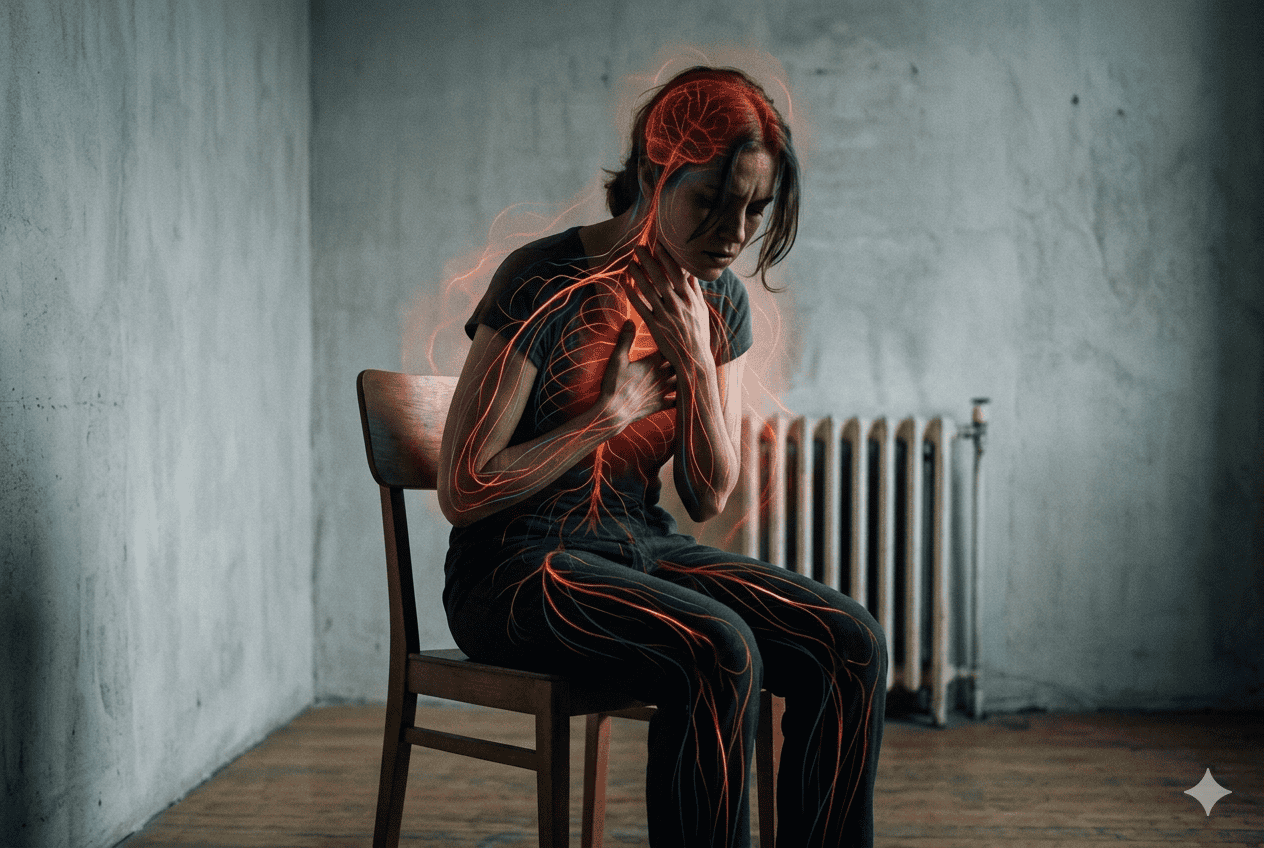
Why Anxiety Feels Physical
Anxiety & Nervous System Responses
Why Anxiety Feels Physical
Anxiety is not only emotional. Stress and anxiety can affect the body, nervous system, sleep, concentration, digestion, breathing, and overall physical functioning.
Many people experience physical symptoms of anxiety without immediately realizing that the nervous system may be playing a role. Understanding the body’s stress response can help reduce fear, confusion, and self-blame.
Start Here
Anxiety Activates the Body’s Stress-Response System
Anxiety activates the body’s stress-response system. When the brain perceives danger, uncertainty, or emotional threat, the nervous system prepares the body to respond. This is often described as the fight, flight, freeze, or shutdown response.
During stress activation, the body releases stress hormones and shifts energy toward survival. Heart rate may increase, muscles may tighten, breathing patterns may change, and attention may become more focused on possible danger or discomfort.
These reactions can be helpful during real emergencies. However, when stress becomes chronic or overwhelming, the nervous system may remain activated for long periods of time, contributing to ongoing physical symptoms.
Physical Anxiety Symptoms
Anxiety Can Show Up Throughout the Body
Anxiety symptoms can appear throughout the body. Some symptoms may feel mild and temporary, while others may feel intense, frightening, or exhausting.
Racing Heart or Chest Tightness
Anxiety may cause heart palpitations, chest discomfort, tightness, or a sense that the body is preparing for danger.
Breathing Changes
Stress activation may lead to shortness of breath, rapid breathing, air hunger, or difficulty slowing the breath.
Muscle Tension and Body Aches
The body may hold tension in the jaw, neck, shoulders, chest, stomach, back, or other areas during chronic stress.
Stomach Discomfort or Nausea
Anxiety can affect digestion, appetite, stomach comfort, nausea, and the body’s overall sense of ease.
Shaking, Dizziness, or Tingling
Some people experience trembling, sweating, dizziness, lightheadedness, tingling sensations, or physical unease.
Sleep Disruption and Fatigue
Anxiety may make it difficult to relax, fall asleep, stay asleep, or wake feeling physically restored.
The Nervous System and Chronic Stress
When Stress Continues, the Body May Stay on Alert
When stress continues over time, the nervous system may remain in a heightened state of activation. The body may begin reacting to everyday situations as though danger is present, even when there is no immediate threat.
Some individuals describe feeling constantly “on edge,” unable to fully relax, or physically tense throughout the day.
Chronic Stress Activation May Contribute To:
- Hypervigilance
- Irritability or emotional exhaustion
- Muscle tension
- Sleep disruption
- Panic symptoms
- Physical discomfort
- Difficulty concentrating
- Feeling unable to fully relax
Why Anxiety Can Feel Frightening
Physical Sensations Can Create a Fear Feedback Loop
Physical anxiety symptoms can sometimes feel alarming because they involve the body directly. Chest tightness, dizziness, tingling sensations, rapid heartbeat, shaking, or breathing changes may cause a person to fear something dangerous is happening medically.
This can create a cycle where fear about the physical sensations increases anxiety further, which then intensifies nervous system activation and physical symptoms.
Medical evaluation may be important when symptoms are new, severe, sudden, one-sided, persistent, or concerning. Physical symptoms should never be automatically dismissed. At the same time, many individuals experience body-based stress responses connected to anxiety and trauma-related activation.
Trauma, Anxiety, and the Body
Trauma Can Make Physical Anxiety Symptoms More Intense
Trauma can increase nervous system sensitivity. A person who has experienced abuse, violence, victimization, persecution, chronic fear, or prolonged uncertainty may develop stronger physical stress responses over time.
Heightened Threat Sensitivity
Trauma survivors may become more reactive to stress, conflict, uncertainty, or reminders of danger.
Stronger Body Responses
The body may respond with tension, panic sensations, stomach symptoms, breathing changes, fatigue, or other physical stress responses.
Trauma Reminders
Symptoms may become stronger around conflict, uncertainty, court hearings, family stress, financial strain, or trauma reminders.
How Physical Anxiety Symptoms Can Affect Daily Functioning
Physical anxiety symptoms can interfere with work, parenting, concentration, relationships, driving, sleep, social functioning, and emotional regulation.
Some individuals begin avoiding situations that trigger physical symptoms, such as crowds, driving, meetings, travel, conflict, or unfamiliar environments.
Anxiety May Affect:
- Work and concentration
- Parenting and caregiving
- Sleep and recovery
- Driving or travel
- Relationships and communication
- Confidence and emotional stability
- Willingness to attend stressful appointments
Immigration Evaluations and Anxiety Symptoms
Anxiety Symptoms May Be Clinically Relevant in Immigration Psychological Evaluations
Anxiety symptoms may be relevant in immigration psychological evaluations when individuals experience chronic stress, uncertainty, trauma exposure, family separation, abuse-related stress, victimization, or fear connected to immigration-related circumstances.
Evaluations may explore how anxiety affects sleep, emotional functioning, concentration, parenting, relationships, work performance, physical health, and daily routines.
A trauma-informed evaluation does not assume that all physical symptoms are psychological. Instead, the evaluator carefully explores the interaction between emotional stress, nervous system activation, medical concerns, and daily functioning.
Learning Center
Continue Learning About Anxiety, Panic, Trauma, and the Body
These related resources explain panic symptoms, body-based trauma responses, hypervigilance, PTSD symptoms, grounding skills, EMDR therapy, and immigration-related trauma.
Why Panic Symptoms Feel So Physical
Learn why panic can feel so intense and how nervous system activation may affect the body.
Trauma & Body-Based Symptoms
Review how trauma may show up through body tension, pain, panic sensations, fatigue, and sleep disruption.
Hypervigilance & Chronic Fear
Understand why the nervous system may stay alert after trauma and how chronic fear can affect sleep, relationships, and daily functioning.
Understanding PTSD Symptoms
Learn how intrusive memories, avoidance, emotional numbing, hypervigilance, sleep disruption, and body-based stress responses may show up after trauma.
Calm Place & Grounding Techniques
Review grounding and stabilization skills that may help the nervous system feel steadier during anxiety, panic, or trauma activation.
What Is EMDR Therapy?
Learn how EMDR therapy may support trauma processing, emotional regulation, and nervous system stabilization.
How Trauma Can Affect the Nervous System
Learn how trauma may affect the body’s alarm system, emotional regulation, relationships, concentration, and sense of safety.
Trauma in Immigration Cases
Learn how trauma histories, chronic fear, family separation, and immigration stress may affect emotional functioning.
2026 Immigration Psychological Evaluation Clinical Findings Report
Review clinical findings, trauma histories, diagnoses, symptom patterns, and functional impairments across immigration evaluations.
Key Takeaways
Anxiety Can Create Real Physical Symptoms
- Anxiety can create real physical symptoms because the nervous system and body are closely connected.
- Stress activation may affect breathing, heart rate, digestion, sleep, concentration, and muscle tension.
- Trauma and chronic stress can increase nervous system sensitivity and physical stress responses.
- Physical anxiety symptoms may interfere with work, relationships, parenting, and daily functioning.
- Trauma-informed support may help individuals better regulate stress responses and improve emotional functioning.
Start Counseling
Questions About Anxiety, Panic, or Trauma-Informed Counseling?
Motivations Counseling provides trauma-informed counseling, EMDR therapy, and immigration psychological evaluations for clients throughout Texas.

